
Skincare routine for 13 year old with pimples searches usually come from a worried place. A parent has watched breakouts arrive with puberty, and the internet is offering their child a ten step routine.
Here is the calm version, and it is shorter than the internet suggests. A 13 year old needs three steps, one treatment at most, and about eight weeks of patience.
This page is general information for families, built on the guidance dermatologists and children’s health services publish. It is not a diagnosis, and the red flags section explains exactly when a doctor takes over.
Everything a parent needs is here: the base routine, how to match a treatment to the pimple in front of you, what to keep off a 13 year old’s face entirely, and when to stop shopping and book an appointment.
The Short Answer: Morning and Night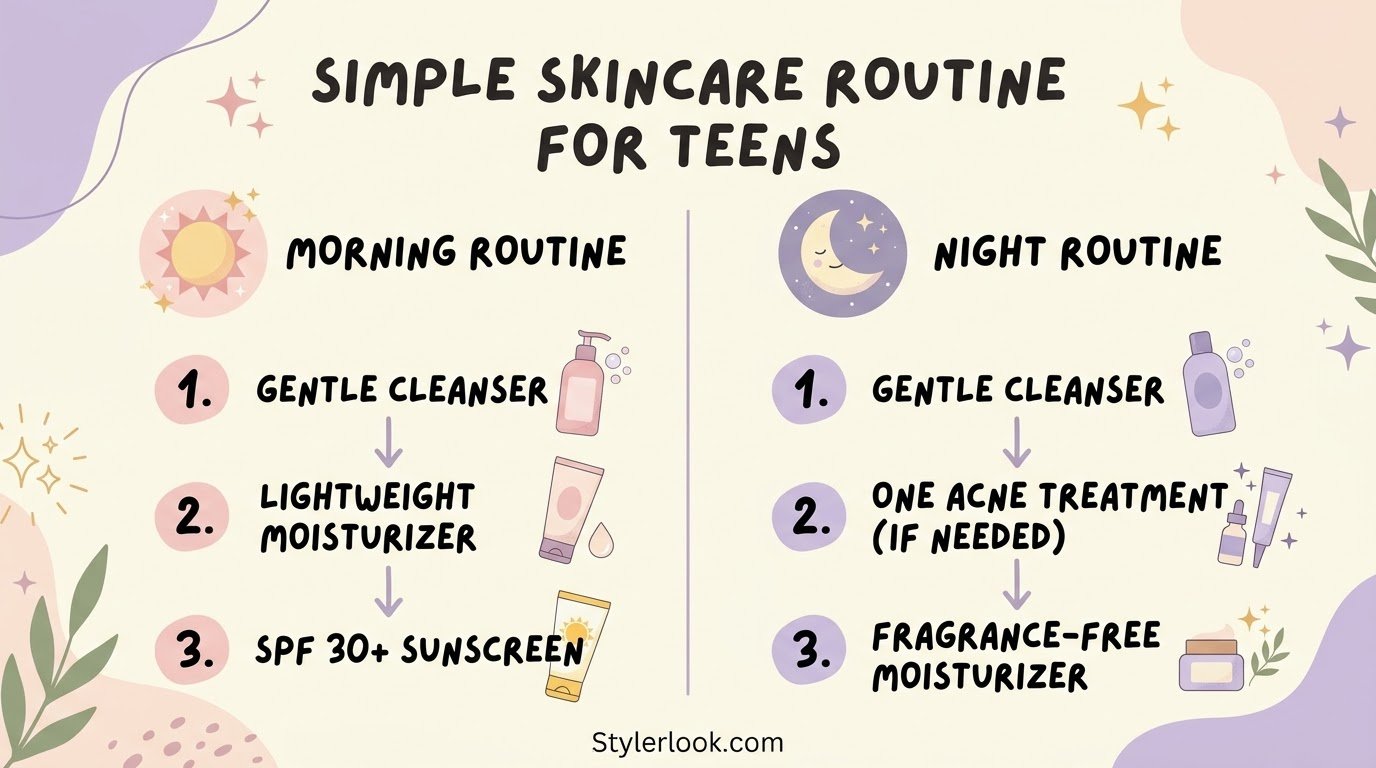
The routine fits on an index card. Cleanse, moisturize, protect in the morning; cleanse, treat if needed, moisturize at night.
|
Time |
Step 1 |
Step 2 |
Step 3 |
|---|---|---|---|
|
Morning |
Gentle cleanser, or a water rinse if skin is not oily |
Lightweight fragrance free moisturizer |
Broad spectrum SPF 30 or higher |
|
Night |
Gentle cleanser (the full wash) |
One acne treatment, only if pimples are regular |
Fragrance free moisturizer |
The AAD based teen routine guide states the same American Academy of Dermatology core. Wash with a gentle cleanser, use a fragrance free moisturizer, and wear a broad spectrum, water resistant sunscreen.
Notice what the table does not contain: no toner, no serum stack, no scrub, no mask schedule. At 13, missing steps are a safety feature, not a gap.
Keep the three basics running for about two weeks before adding any treatment. A stable base tells you what the treatment actually does, instead of everything changing at once.
The sequence follows the same skincare routine order adults use, with the treatment seat kept empty at first. Order matters less than gentleness at this age, but a fixed order is what makes a routine repeatable for a tired 13 year old.
Why Skin Changes at 13: It Is Physiology, Not Dirt
Puberty hormones called androgens switch oil glands into a higher gear. The glands produce more sebum, and the extra oil mixes with dead skin cells inside pores.
A blocked pore becomes a blackhead or whitehead. If acne associated bacteria multiply inside it and inflammation follows, it becomes a red pimple.
The forehead, nose, and chin break out first because that T zone carries the most active oil glands. The pattern is a map of the glands, not a map of hygiene failures.
The exact age 13 starter guide walks through the same puberty mechanics for this exact age. Increased sebum production driven by androgens is the engine; everything else in this page is traffic management around it.
The KidsHealth teen skin tips explain the same mechanics to teens directly. Hormones go into overdrive during puberty and the skin makes too much sebum, which is why acne arrives on schedule for almost everyone.
This matters emotionally as much as medically. A 13 year old with pimples has normal skin doing a normal thing, and the routine below is maintenance, not punishment.
Scrubbing cannot reach a blockage that forms inside the pore. That single fact retires half the products marketed at this age, starting with gritty scrubs.
Step One: The Gentle Cleanser, Done Properly
Wash twice a day at most: morning and night, plus a rinse or wash after sports and heavy sweating. More washing irritates skin and can make breakouts look worse.
Technique does the work that products promise. Fingertips only, lukewarm water, gentle circular motions for about 30 to 60 seconds, then pat dry with a clean towel.
Hot water, washcloth scrubbing, cleansing brushes, and gritty scrubs all belong on the skip list for now. The AAD advice for acne prone skin is fingertips and gentleness, repeated across every credible source.
Choose the cleanser by label, not by advertising: gentle, fragrance free, non comedogenic. A hydrating style suits dry or sensitive skin; a light foaming style suits an oily T zone.
For non oily skin, a lukewarm water rinse is an acceptable morning option, with the real cleanser wash kept for night. Oily skin usually does better with the gentle cleanser both times.
Hands come first, by the way. Wash hands before washing the face, or the routine starts by delivering the day back onto the skin.
Step Two: Moisturizer, Even With Pimples
Acne prone skin still needs moisturizer, and treatments make it need moisturizer more, not less. Dry, irritated skin is skin that quits routines.
Pick a lightweight, oil free, fragrance free moisturizer labeled non comedogenic. Gel styles suit oily skin; light lotions suit most everyone else.
Apply it morning and night on slightly settled skin. If a treatment is in the routine, the moisturizer is its support act on the same evening.
Sensitive and reactive teens can borrow the framework of the gentle skincare routine for dry sensitive skin. The label criteria and the patience transfer directly to younger skin.
Parents sometimes fear moisturizer causes pimples. The clogging risk lives in heavy, fragranced, comedogenic products, not in a light non comedogenic moisturizer doing barrier support.
Step Three: Sunscreen, the Mark Preventer
Morning ends with broad spectrum SPF 30 or higher. The AAD’s label criteria are SPF 30 plus, broad spectrum, and water resistant, and an acne friendly version adds non comedogenic.
A moisturizer with SPF 30 built in counts as steps two and three together. For a reluctant teen, one combined product beats two separate negotiations.
Sunscreen earns its place on acne grounds, not vanity grounds. Sun exposure darkens the flat marks pimples leave behind and inflames active breakouts.
Reapply at outdoor sports and long recess days. The habit built at 13 quietly protects skin at 30, which is a bonus the teen does not need to care about yet.
The full morning sequence lives in the morning skincare routine. This page borrows its last step and gives it an acne specific job.
Know Your Pimple: The Type Atlas
Treatments match types, not faces. Four kinds of spots cover nearly everything on a 13 year old’s skin, and each has its own rule.
|
Type |
What It Looks Like |
What Drives It |
First Response |
|---|---|---|---|
|
Blackhead |
Small dark dot, open pore |
Oil and dead cells, oxidized at the surface |
Salicylic acid, gentle routine |
|
Whitehead |
Small pale bump, closed pore |
Same blockage under a skin seal |
Salicylic acid, patience, no squeezing |
|
Inflamed pimple |
Red, sore, sometimes with pus |
Blockage plus bacteria plus inflammation |
Benzoyl peroxide, low strength |
|
Deep lump |
Large, painful, under the skin |
Deep inflammation |
Doctor territory, hands off |
The dark color of a blackhead is oxidized oil, not dirt. No amount of scrubbing washes it out, because the blockage sits below the surface.
Deep lumps get no home treatment and no squeezing, ever. They are the type that scars, and the type that books the dermatologist appointment described later.
Most 13 year olds have a mix: blackheads on the nose, whiteheads on the forehead, an inflamed pimple or two rotating through. Treat the dominant pattern first.
Adding One Treatment: Match It, Introduce It Slowly
If pimples are regular after two stable weeks, add one treatment at night. One, because two new actives make irritation unattributable and quitting likely.
Salicylic Acid: For Clogs and Blackheads
Salicylic acid works inside the pore, loosening the oil and cell blockage behind blackheads and whiteheads. It is the standard first match for clog dominated skin.
Beginner forms are gentle: a low percentage salicylic cleanser or a light leave on product used a few nights a week. Dryness is the signal to slow down, not to push through.
Benzoyl Peroxide: For Red, Inflamed Pimples
Benzoyl peroxide reduces acne bacteria and calms inflamed pimples. Start low, around 2.5 percent, as a wash or a thin gel layer, once a day or every other night at first.
Two practical warnings parents should hear early. It bleaches towels, washcloths, and pillowcases, so dedicate old ones. And early dryness or peeling usually means slow the schedule, not abandon the ingredient.
KidsHealth relays the AAD’s standard sequence: cleanse first, then the benzoyl peroxide step. That is the shape of the night routine for inflamed patterns.
Adapalene: The Labeled Medicine, Discussed First
Adapalene 0.1 percent gel is a topical retinoid made for acne, sold over the counter in the US since its FDA approval for ages 12 and older in 2016.
It is applied as a thin layer over the whole breakout area at night, not dabbed on single pimples, and it commonly starts every other night.
Because it is a real medicine with a real adjustment period, many families talk to a pediatrician or dermatologist first. That conversation is the responsible default at 13, not an overreaction.
Whichever treatment is chosen, the trial rule is fixed: 6 to 8 weeks of steady use before judging, with full clearing framed at 3 to 4 months. The age tiered beginner guide builds its age tiers around the same patience.
Apply treatments to the whole breakout zone, forehead or T zone, in a thin layer. Spot dabbing treats yesterday’s pimple while tomorrow’s forms beside it untreated.
The Skip List: What Stays Off a 13 Year Old’s Face
This section is the one social media hopes your family skips. Developing skin plus adult actives is the exact combination dermatologists keep warning about.
|
Skip Item |
Why It Is Wrong at 13 |
|---|---|
|
Cosmetic retinol serums |
Made for wrinkles and adult photoaging; irritation without a job to do |
|
Vitamin C serums |
An adult brightness and aging product; unnecessary and often stinging |
|
Strong AHA and BHA routines |
Treatment acids at adult frequency overwhelm a developing barrier |
|
Physical scrubs |
Grit on inflamed skin; the blockage is inside the pore anyway |
|
Alcohol heavy toners |
Stripping, stinging, and drying with no acne benefit |
|
Ten step trend routines |
Stacked actives; adverse reactions reported rising in tweens and teens |
|
Heavily fragranced products |
Irritation and allergy risk with zero therapeutic role |
|
Home remedies (toothpaste, lemon) |
Burns and irritation folklore, not treatment |
A 2025 paper in Clinics in Dermatology, cited in the age tiered beginner guide, reported a marked increase in adverse skin reactions among tweens and teens following social media skincare trends.
Read that as reported, and consistent with what clinics describe anecdotally everywhere: children layering adult percentages because a video made it look like self care.
The acne prone kids routine guide adds the guardrail from the brand side, unusually honestly for a seller. A simple routine must never delay appropriate treatment, and basics are a foundation, not a cure claim.
Adapalene is not an exception to this section; it is a labeled acne medicine with an age on the box. Cosmetic retinol is an anti aging product with no acne job at 13. The difference is the entire point.
When a viral product tempts, run one test: was it made and tested for a child’s skin, or borrowed from an adult shelf? Only the first category gets a hearing.
The Habit Layer: Where Routines Quietly Win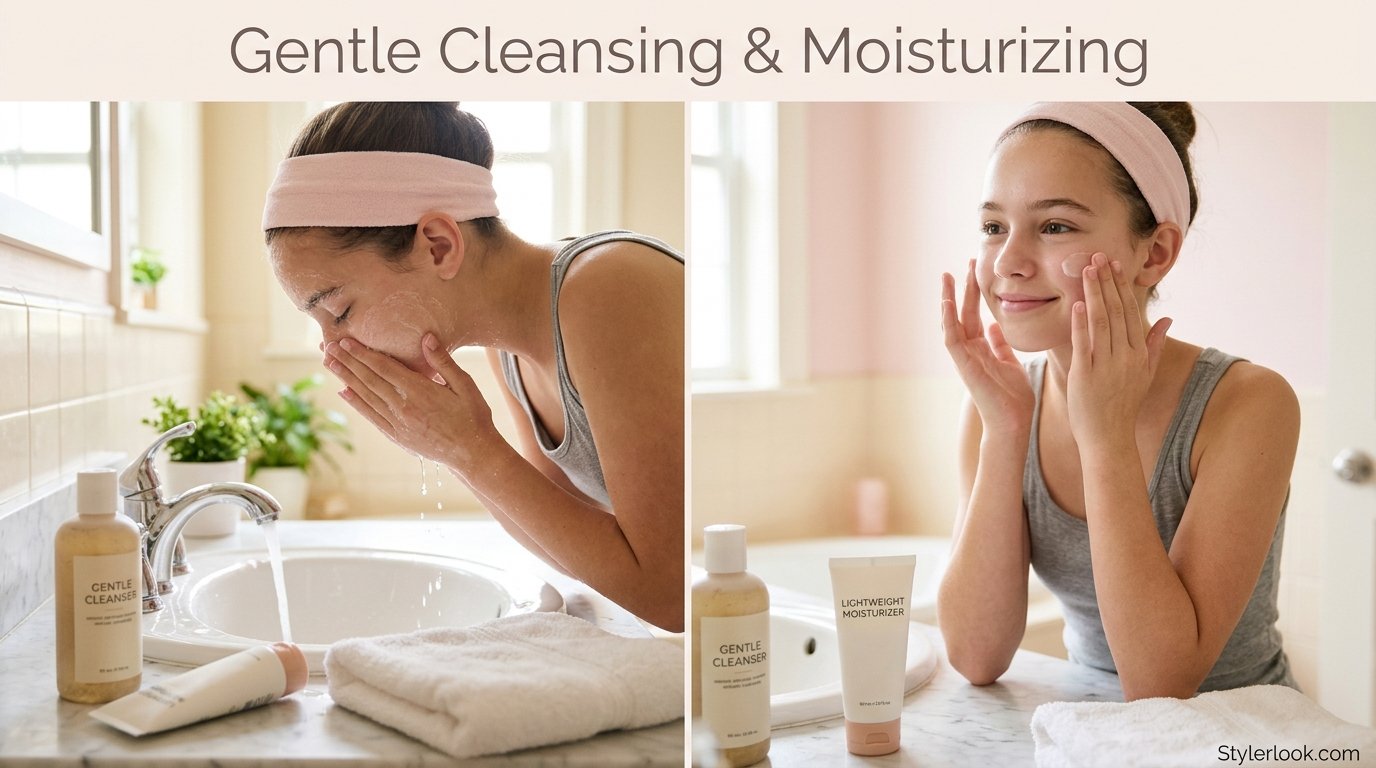
Products get the credit, but habits move the needle around the edges. None of these cost anything, and together they remove whole categories of breakouts.
- Hands off. Picking and squeezing push inflammation deeper and trade a week long pimple for a months long mark or a scar.
- Pillowcase rhythm. Change it regularly; oil, product, and hair residue redeposit nightly onto cheeks and forehead.
- Phone hygiene. Wipe the screen; a phone pressed to a cheek for an hour is a warm, oily compress.
- Hairline discipline. Styling products migrating onto the forehead clog pores (pomade acne). Keep products back from the hairline and hair off the face where practical.
- Sports protocol. Clean helmet straps and pads, a clean layer under gear, and wash skin soon after playing, since friction plus trapped sweat causes gear pattern breakouts.
- Makeup rules. Non comedogenic only, never shared, always removed before the night routine. Sleeping in makeup is a breakout subscription.
- Shaving gently. For boys shaving over acne: a clean blade or electric razor, light pressure, no harsh aftershave, and no pressing through pimples.
The nighttime skincare routine is where most of these habits cash out. Makeup off, gear grime off, treatment on, moisturizer on, phone down.
A Realistic Week: What Steady Actually Looks Like
Parents often ask what success looks like before the eight weeks end. It looks uneventful, and that is precisely the point.
Monday’s forehead pimple is last week’s pore finishing its cycle, not tonight’s cleanser failing. Treatments work on pimples that have not surfaced yet, which is why the payoff lags the effort.
By week three, expect texture clues instead of clear skin: fewer new blackheads on the nose, inflamed spots arriving smaller and settling faster.
Dryness usually peaks before results do. A treatment that flakes at week two and calms by week four is following the normal script, provided nothing burns, swells, or spreads.
Keep a one line Sunday note: better, same, worse, plus any irritation. Four Sundays of notes answer the week eight judgment better than daily mirror verdicts.
Sports days bend the schedule without breaking it. The post game wash simply replaces the evening wash if practice runs late; the total never exceeds the twice daily ceiling.
Sleepovers and trips test systems, not skin. Three basics fit in a small pouch, and a missed night is a missed night, not a reset. Consistency is a batting average, not a streak.
Reading Labels Like a Parent: A Two Minute Skill
Labels decide purchases better than influencers do. Three phrases do most of the work on any teen product: fragrance free, non comedogenic, and broad spectrum SPF 30 or higher where relevant.
Check the active ingredient and its percentage on treatment products. That line, not the front of the bottle, tells you whether you are holding the salicylic match or the benzoyl peroxide match.
Scan the directions for an age line on medicines. Adapalene’s labeled 12 plus is the model: when a treatment prints an age, the age is part of the instructions.
Be suspicious of miracle vocabulary: instant, overnight cure, guaranteed clear, dermatologist inspired without a name. Real acne guidance talks in weeks and percentages, not miracles.
If a product lists ten actives, it is not ten times better. At 13 it is ten chances of irritation wearing a premium price tag, and the skip list logic applies.
Store products upright, capped, and not shared. A teen’s cleanser is personal equipment, like a toothbrush, and bathroom shelf hygiene quietly supports everything else.
When the Drugstore Is Not Enough: Red Flags
Skincare has a ceiling, and honest pages publish it. Book a pediatrician or dermatologist when any row of this table shows up.
|
Red Flag |
Why It Matters |
|---|---|
|
Deep, painful, or cystic breakouts |
The scarring type; needs medical treatment |
|
Scars or dark marks forming |
Early treatment limits permanent marks |
|
Acne on chest or back, widely spread |
Larger territory than home care handles well |
|
No improvement after 2 to 3 months of steady care |
The routine has had its fair trial |
|
Acne hurting confidence or mood |
A medical issue with a quality of life dimension |
Either door works for the first visit. A pediatrician knows the child and can treat or refer; a dermatologist specializes in skin and manages the prescription range.
Prescription options exist beyond the drugstore shelf: stronger topicals, time limited antibiotics, hormonal options for some girls, and closely supervised isotretinoin for severe scarring acne. Those are doctor managed medicines, named here so parents know escalation is real, not as recommendations.
Do not wait for scarring to start the conversation. Scars are the one outcome in this whole topic that does not fade on a school holiday schedule.
Mood belongs in this table on purpose. Acne that makes a teen avoid friends, photos, or school deserves the same prompt appointment as acne that hurts physically.
A Note for Parents: Expectations, Mood, and Money
Your job is logistics and patience, not daily skin inspection. Stock the three basics where they are easy to reach, and let the routine belong to your teen.
Track progress with a monthly photo in the same light rather than nightly commentary. Skin changes on a calendar teens cannot feel day to day, and photos prove the trend without arguments.
Set the money expectation early and keep it low. The entire base is drugstore basics, and one treatment product covers most mild acne; expensive routines are marketing, not medicine, at this age.
Watch mood as carefully as skin. Sadness lasting two weeks or more, social withdrawal, or dread about school are reasons to involve your pediatrician, with or without an acne appointment attached.
Resist buying the fix of the week. Every product swap restarts the irritation lottery and the 6 to 8 week clock, which is how families spend a year and conclude nothing works.
If your teen wants the trend product anyway, negotiate with information, not bans: read the label together, find its adult purpose, and park it on a later list. Thirteen is not a no forever; it is a not yet with reasons.
The wider routine context for the family lives in the skincare routine hub. The teen version stays deliberately smaller than the adult one, and that difference is protective.
The Stylerlook skincare collection is written for adult skin and adult concerns. Browse it for yourself by all means; just do not hand its routines down a generation.
Mistakes to Avoid
Most teen acne harm is enthusiasm harm. Every mistake below is common, well meant, and fixable by subtraction.
- Washing four times a day. Irritation dressed as diligence. Twice is the ceiling, and skin that feels squeaky is skin that has been stripped.
- Starting three products on Monday. When the rash arrives Thursday, nobody knows the culprit. One change at a time, two weeks apart.
- Scrubbing for the blackheads. The blockage is inside the pore; the scrub only injures the surface above it.
- Spot dabbing only. Treatments prevent tomorrow’s pimples across the whole zone. A dab on today’s spot is archaeology, not treatment.
- Judging at two weeks. Acne treatments are 6 to 8 week instruments. Early verdicts kill working routines and fund the product carousel.
- Squeezing the event pimple. The mark will attend more events than the pimple would have. A patch, patience, or a dermatologist’s in office treatment are the options.
- Copying an adult influencer routine. Adult skin, adult percentages, adult marketing. The skip list exists because this mistake now arrives by algorithm.
- Waiting out scarring acne at home. Months of hope against the scarring type is the costliest delay in teen skincare. The red flag table outranks optimism.
How to Start This Week
Setup takes one shopping trip and five minutes a night. Run the base alone first, and let the calendar do the compounding.
- Buy the three basics. A gentle fragrance free cleanser, a lightweight non comedogenic moisturizer, and a broad spectrum SPF 30 or higher. Drugstore is correct.
- Run the base for two weeks. Morning cleanse or rinse, moisturize, SPF. Night cleanse properly, moisturize. Nothing else, however tempting the shelf looks.
- Photograph and note the pattern. Which type dominates: clogs, red pimples, or both? That observation chooses the treatment in step four.
- Add one treatment at night if pimples are regular: salicylic for clogs, benzoyl peroxide low strength for red pimples. Thin layer, whole zone, slow start.
- Mark week eight on the calendar. Judge then, not before. If red flags appear at any point, the appointment replaces the calendar.
That is the whole launch. The how to start a skincare routine covers the same habit building logic for the wider family, and this page is its youngest, most careful application.
For older siblings and parents building their own routines, the skincare routine for oily skin applies the same match the treatment thinking at adult strength. The 13 year old’s version stays the gentlest in the house on purpose.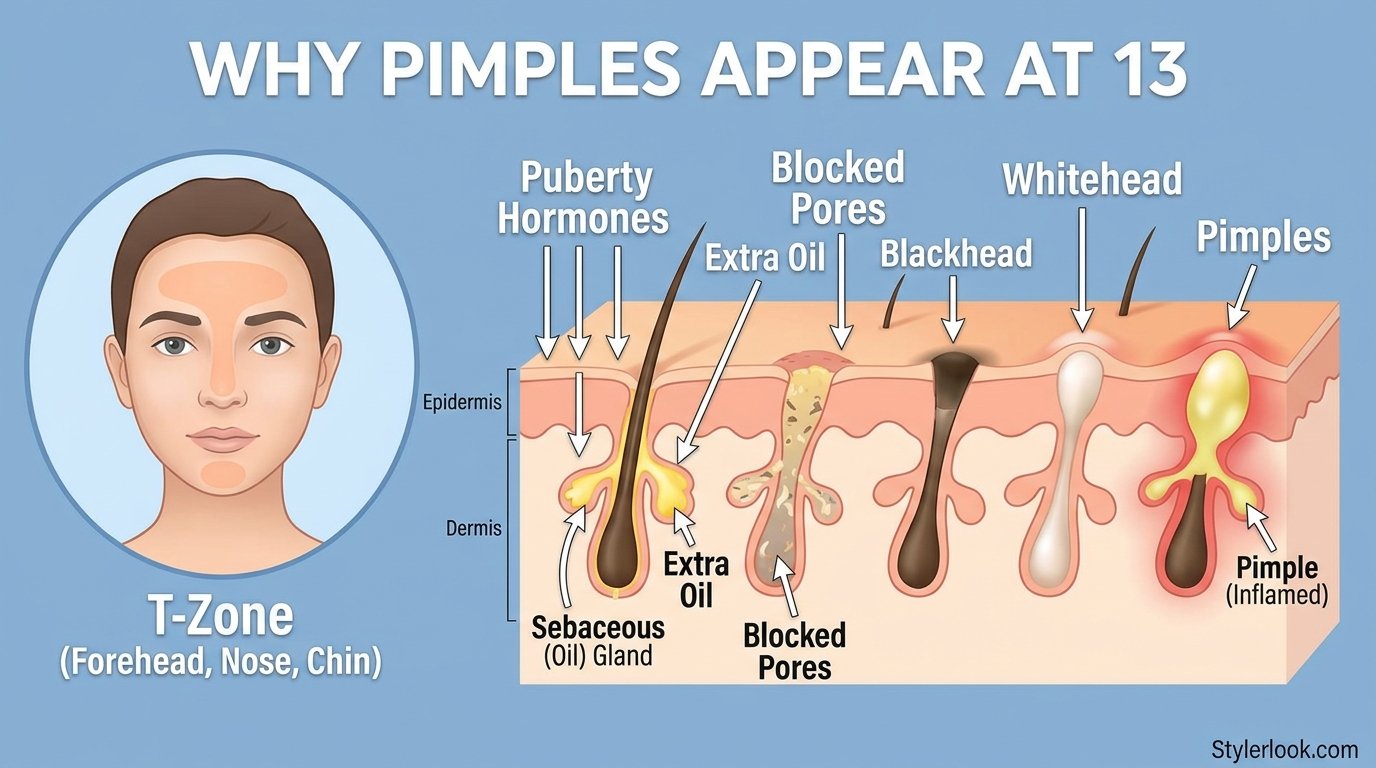
Frequently Asked Questions
What is a good skincare routine for a 13 year old with pimples?
Three steps, twice a day: wash with a gentle cleanser, apply a fragrance free moisturizer, and add broad spectrum SPF 30 or higher in the morning.
If pimples are regular, add one acne treatment at night matched to the pimple type. That is the routine dermatologists describe for this age.
How often should a 13 year old wash their face?
Twice a day at most, morning and night, plus after sports or heavy sweating. More washing does not clear acne; it irritates skin and can make breakouts look worse.
What cleanser should a 13 year old use?
A gentle, fragrance free cleanser, washed with fingertips and lukewarm water for about 30 to 60 seconds. Look for non comedogenic on the label, and avoid scrubs with gritty beads and high alcohol toners.
Does a 13 year old with pimples still need moisturizer?
Yes. Acne prone skin still needs moisture, and treatments dry skin out. A lightweight, oil free, fragrance free moisturizer keeps the barrier comfortable so the routine can continue.
What sunscreen is best for a teenager with acne?
A broad spectrum SPF 30 or higher sunscreen labeled non comedogenic or oil free. A moisturizer with SPF 30 counts as a combined morning step. Sunscreen also stops dark marks from old pimples getting darker.
What is the best first treatment for pimples at 13?
Match the ingredient to the pimple: salicylic acid for blackheads and clogged pores, benzoyl peroxide (starting low, around 2.5 percent) for red, inflamed pimples. Introduce one product only, and give it 6 to 8 weeks.
Is benzoyl peroxide safe for a 13 year old?
It is a standard over the counter acne ingredient used in teen care, typically labeled for ages 12 and up. Start low and slowly, expect some dryness or peeling early, and know it bleaches towels and pillowcases.
Ask a doctor for younger children or if irritation is severe.
Is salicylic acid safe for a 13 year old?
It is the common first choice for blackheads and clogged pores and appears in many teen cleansers at low percentages. Start with one product, watch for dryness, and do not stack it with other strong actives.
Can a 13 year old use adapalene?
Adapalene 0.1 percent gel is sold over the counter in the US and was FDA approved for OTC acne use in 2016 for people 12 and older.
It is a real acne medicine, not a starter cosmetic: many families discuss it with a pediatrician or dermatologist first, and it is applied as a thin layer over the whole breakout area at night.
Should a 13 year old use retinol?
No, not the cosmetic retinol sold for wrinkles and anti aging. Retinol, vitamin C serums, and strong exfoliating acids target adult concerns a 13 year old does not have.
Adapalene is a different, acne specific retinoid with a labeled age; the anti aging shelf is a skip at 13.
What skincare products should a 13 year old avoid?
Adult anti aging actives (retinol, vitamin C serums, strong AHA routines), harsh scrubs, alcohol heavy toners, heavily fragranced products, and multi step trend routines built for adults. Developing skin plus stacked actives is the combination dermatologists keep warning about.
Are social media skincare routines safe for 13 year olds?
Caution is warranted: dermatology literature in 2025 reported a marked increase in adverse skin reactions among tweens and teens following social media skincare trends. Adult products are formulated, tested, and marketed for adult skin.
Simple and boring is the safe aesthetic at 13.
How long does teen acne treatment take to work?
Give any treatment 6 to 8 weeks of steady use before judging it, and expect full clearing to take 3 to 4 months in AAD framing. Switching products every two weeks restarts the clock and irritates skin.
Why is my teen’s acne getting worse after starting treatment?
Early dryness, peeling, and a temporary flare can happen in the first weeks as skin adjusts and pores clear. Severe burning, swelling, or worsening pain is different: stop the product and talk to a doctor.
Should you squeeze a pimple before a big event?
No. Squeezing raises infection and scarring risk, and scars outlast events. A dermatologist can often treat a single important pimple in office with less risk, as KidsHealth notes.
Ice or a warm compress and a pimple patch are the home options.
Do pimple patches work for teens?
They can protect a single surface pimple from picking and absorb fluid overnight, which helps some teens leave spots alone. They are an occasional tool, not a treatment for ongoing acne.
What causes pimples at 13?
Puberty hormones (androgens) increase oil (sebum) production. Extra oil plus dead skin cells blocks pores, and acne associated bacteria grow in the blocked pore: blackheads, whiteheads, and inflamed pimples follow. It is physiology, not dirt or poor hygiene.
Why are pimples mostly on the forehead, nose, and chin?
That T zone has the most active oil glands, and puberty turns them up first. Hair products along the hairline and hats or straps pressing on the forehead add their own breakouts there.
Can hair products cause forehead pimples?
Yes. Oils and styling products migrating onto the forehead can clog pores (often called pomade acne). Keep products off the hairline, wash after heavy styling days, and keep hair off the face where practical.
How do sports and helmets affect teen acne?
Friction, pressure, heat, and trapped sweat from helmets, chin straps, and pads cause breakouts where gear touches (acne mechanica). Clean padding regularly, wear a clean layer under gear, and wash skin soon after playing.
Should teens wash their face after sports?
Yes. Rinse or cleanse soon after sweating, and always at night. Leaving sweat, sunscreen, and grime on skin through the evening is a reliable breakout recipe.
Can makeup cause pimples at 13?
Makeup can contribute if it is comedogenic, shared, old, or slept in. Choose non comedogenic products, never share them, and remove makeup gently every night before the routine.
Does diet cause teen acne?
Evidence is mixed and no food is proven to cause acne for everyone. A generally balanced diet is sensible health advice; singling out foods as acne cures or causes overstates what studies show. Persistent questions belong with a clinician.
Does stress make teen acne worse?
Stress does not create acne from nothing, but many teens flare around exams and pressure, and stress also worsens picking and sleep. Sleep, steady routines, and perspective are the practical responses.
How can a parent help without nagging?
Stock the three basics where they are easy to reach, keep expectations realistic (weeks, not days), photograph progress monthly rather than inspecting daily, and watch mood as carefully as skin. Teens do routines that feel like theirs.
When should a 13 year old see a dermatologist for acne?
When acne is deep, painful, or cystic.
When it leaves scars or dark marks; when it covers the chest or back; when 2 to 3 months of steady over the counter care has not helped; or when acne is hurting confidence or mood.
Do not wait for scarring to start the conversation.
Pediatrician or dermatologist: who first for teen acne?
Either door works. A pediatrician knows your child and can start treatment or refer; a dermatologist specializes in skin. Families often start with the pediatrician and escalate if acne is severe, scarring, or not improving.
What prescription treatments exist for teen acne?
Clinicians can prescribe stronger topical treatments, antibiotics for defined periods, hormonal options for some girls, and closely supervised isotretinoin for severe scarring acne. These are doctor managed medicines with monitoring, described here as general information only.
Can a 13 year old’s acne scar?
Yes, especially deep, inflamed, picked, or long untreated acne. Scars are the strongest argument for early steady care and for seeing a professional at the red flags instead of months later.
What are the dark marks left after pimples?
Post inflammatory hyperpigmentation: flat dark spots where inflammation was, common and usually slow fading over months. Daily sunscreen keeps them from darkening, and picking makes them worse. A dermatologist can help if marks are extensive.
Is it normal for acne to flare before a period?
Yes, hormonal fluctuation commonly flares acne in the days before a period for many teen girls. Tracking the pattern helps set expectations; severe or irregular patterns are worth raising with a doctor.
Should a 13 year old boy shave with acne?
Carefully: a clean single blade or electric razor, gentle technique, no pressing over pimples, and no harsh aftershaves. If shaving regularly worsens irritation, ask a clinician about technique and timing.
Can a 13 year old use a face mask or scrub for pimples?
Scrubs are a skip: grit plus inflamed skin equals irritation, and acne starts inside the pore, not on the surface. Occasional gentle masks are cosmetic extras, not treatment, and fragrance heavy versions are better avoided.
What should a teen do if a product burns or stings badly?
Stop the product, return to the gentle three step base, and let skin settle. Burning, swelling, hives, or a spreading rash needs a doctor promptly. Mild tingling with a new treatment is common; pain is not the price of progress.
How do you patch test a new product for a teen?
Apply a small amount to a small area (inner forearm or behind the ear) for a few nights and watch for rash, itching, or swelling before using it on the whole face.
Introduce one new product at a time so reactions have an obvious suspect.
Why did a routine work for a friend but not for my teen?
Skin type, pimple type, hormones, and habits all differ, and copied routines copy the mismatch too. Match the treatment to your teen’s pimple type and keep the base identical; that is the adjustable part.
How much should a teen skincare routine cost?
Little. A drugstore cleanser, moisturizer, and sunscreen cover the base, and one treatment product covers most mild acne. Expensive routines are marketing, not medicine, at this age.
Can twins or siblings share acne products?
Products themselves should not be shared for hygiene, and the same treatment may not suit both siblings anyway. Hands, towels, and products stay personal in acne care.
Should a 13 year old wash with just water in the morning?
For non oily skin, a lukewarm water rinse in the morning is a reasonable option mentioned in teen guidance, with cleanser kept for the night wash. Oily T zones usually do better with the gentle cleanser both times.
What is the difference between a blackhead, a whitehead, and a pimple?
A blackhead is an open clogged pore (the dark color is oxidized oil, not dirt). A whitehead is a closed clogged pore. A pimple usually means an inflamed spot: red, sometimes sore, sometimes with pus.
The type decides the treatment match.
Will acne go away on its own?
Teen acne often improves as hormones settle with age, but ‘often’ and ‘eventually’ can mean years, and waiting risks marks and scars. Steady simple care now, and professional help at the red flags, is the balanced position.
Where can parents read trustworthy teen acne guidance?
The American Academy of Dermatology’s public acne pages and Nemours KidsHealth are the standard parent and teen references, and both are written for families rather than shoppers. Your pediatrician’s office can point to the right pages for your child.
Conclusion
A skincare routine for 13 year old with pimples problems needs less than the internet is selling. Three gentle steps, one matched treatment, eight weeks of steadiness, and a clear line where doctors take over.
The physiology is puberty, not failure, and the routine is maintenance, not a verdict on anyone’s hygiene. Keep the skip list posted, keep hands off, and let the calendar work.
Start with the three basics this week, photograph the starting point, and give the routine its fair eight weeks.
If the red flags appear instead of progress, book the appointment and bring the photo series with you; it is exactly what a good clinician wants to see.
*This page is general information about skincare for teenagers. It is not medical advice and does not replace your pediatrician or dermatologist.
If your child’s acne is painful, scarring, widespread, or affecting their mood, or if you are unsure whether a product is appropriate for your child, speak with a qualified clinician.*
