
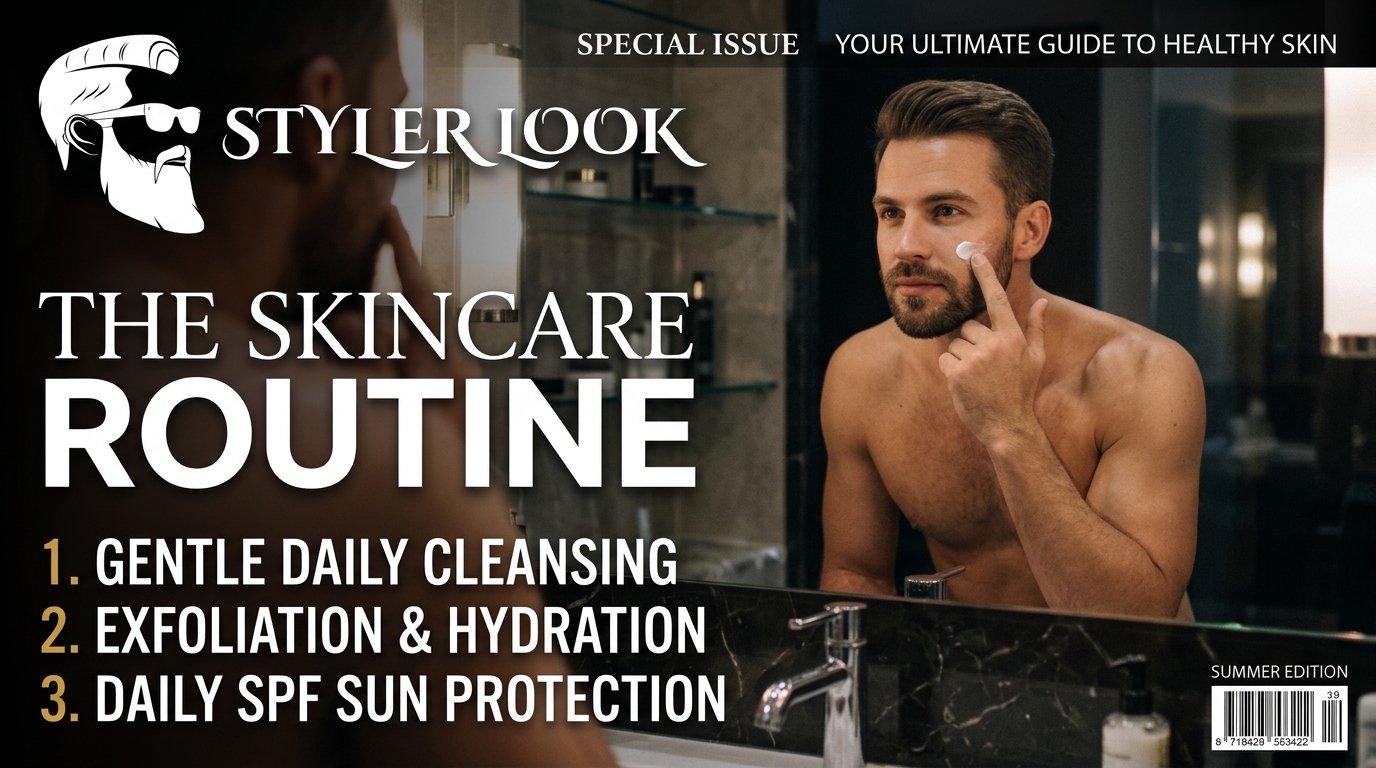
Skincare routine success starts with three products, a consistent order, and daily sunscreen, not with ten new products at once. Beginners often buy too much, change products weekly, and then cannot tell what helped or hurt their skin.
A simple core routine makes cause and effect clear, protects the skin barrier, and leaves room for one targeted treatment later.
The Simple Core: 3 Products to Start

Cleanse Gently Twice a Day
A gentle cleanser removes sweat, oil, sunscreen, makeup residue, and daily grime without stripping skin tight. Lukewarm water works better than hot water, which often increases dryness and redness. Wash for about 30 seconds, using fingertips in small circles, then rinse fully and pat dry.
Morning cleansing can stay light, especially for dry or sensitive skin. A water rinse or gentle cleanser both suit mornings, depending on overnight oiliness and comfort. Night cleansing matters more, since sunscreen, makeup, and pollution build up during the day.
Moisturize for Barrier Support
A moisturizer supports the skin barrier, reduces water loss, and keeps skin comfortable after cleansing. Apply it to slightly damp skin when possible, since damp skin often absorbs product more comfortably. Choose texture by skin type, not by marketing claims alone, and keep fragrance low for sensitive skin.
Gel creams suit oily skin, lotions suit combination skin, and richer creams suit dry skin. Oily skin still needs moisturizer, because dehydration can make oiliness feel worse and increase tightness. Skipping moisturizer rarely fixes breakouts, and it often increases irritation instead.
Protect With Daily Sunscreen
Daily broad-spectrum sunscreen protects against UVA and UVB exposure, sunburn, and visible sun damage over time. Use SPF 30 or higher for daily face use, following label directions for amount and reapplication. Sunscreen goes last in the morning routine, after moisturizer, so it forms an even protective layer.
Cloudy days, windows, and short outdoor trips still involve UV exposure, even without direct sun. Reapply after swimming, heavy sweating, and towelling, and more often during extended outdoor time. Sunscreen does not replace hats, shade, or sunglasses, and all three help together.
| Starter product | What to choose | When to use |
|---|---|---|
| Gentle cleanser | Gel for oily skin, cream for dry or sensitive skin | Morning and night |
| Moisturizer | Gel cream, lotion, or cream by skin type | Morning and night |
| Sunscreen | Broad-spectrum SPF 30 or higher | Morning, last step, reapply as labelled |
The 2 to 4 Week Baseline Rule
Use the three starter products alone for 2 to 4 weeks before adding any treatment product. Baseline weeks reveal whether cleansing, moisturizing, and sunscreen alone improve comfort, dryness, or breakouts. Adding five products at once hides the source of any reaction.
One dermatology summary suggests waiting at least 8 weeks before judging a new treatment, and that timing is a competitor summary, not a universal rule. Skin changes slowly, and early irritation often reflects overuse rather than product failure. Patience protects both skin and budget, since fewer products mean fewer wasted purchases.
One New Product at a Time
Add only one treatment after the baseline period, and patch test it first. Patch testing means applying a small amount to one discreet area, such as behind the ear or along the jawline, for several days. Stop immediately if burning, swelling, or spreading rash appears, and seek care for severe reactions.
Keep other products unchanged while testing a new treatment, so any change remains traceable. Record start date, product type, frequency, and skin response in simple notes. Notes prevent repeated mistakes, especially when several products look similar in packaging.
Morning Skincare Routine Order
Morning Step 1: Cleanse
Morning cleansing removes overnight oil, sweat, and any night cream residue. Use a gentle cleanser matched to skin type, with lukewarm water and fingertips only. Avoid harsh scrubs, strong soaps, and hot water in the morning, since they increase dryness.
Dry and sensitive skin often tolerates a light cleanse or water rinse best in the morning. Oily skin usually benefits from a gentle gel cleanser, which removes overnight oil without stripping. Rinse fully, pat dry with a clean towel, and avoid rubbing skin roughly.
Morning Step 2: Optional Serum
Morning serum is optional, not required for a working routine. Vitamin C serum suits mornings for many people, since it layers well under sunscreen and adds antioxidant support. Niacinamide serum also suits mornings, especially for oily or combination skin seeking oil and redness appearance support.
Use only one serum at first, in a thin layer over clean skin. Wait about one minute before moisturizer, allowing the serum to settle without pilling. Skip serum entirely on busy mornings, since cleanser, moisturizer, and sunscreen still form a complete routine.
Morning Step 3: Moisturize
Morning moisturizer should feel light and comfortable under sunscreen and makeup. Gel creams and lotions suit most daytime routines, while richer creams suit very dry skin or cold weather. Apply a pea-sized to almond-sized amount, adjusting to face size and product thickness.
Moisturizer on slightly damp skin often spreads more evenly and feels less heavy. Avoid applying thick night cream in the morning when makeup or sunscreen will follow, since pilling increases. Daytime comfort matters, because a routine that pills or feels greasy rarely survives daily use.
Morning Step 4: Sunscreen Last

Sunscreen always goes last in the morning, after serum and moisturizer. Applying sunscreen before moisturizer reduces its even coverage, and rubbing moisturizer over sunscreen breaks the protective film. Allow sunscreen to set for a few minutes before makeup, if makeup follows.
Use enough sunscreen to cover face, ears, and neck, following label directions for amount. A common competitor heuristic uses two finger lengths for the face, but that amount is a heuristic, not an official dose. Reapply as labelled during outdoor time, swimming, or heavy sweating.
| Morning order | Product | Purpose |
|---|---|---|
| 1 | Gentle cleanser | Remove overnight oil and sweat |
| 2 | Serum, optional | Targeted antioxidant or hydration support |
| 3 | Moisturizer | Barrier support and daytime comfort |
| 4 | Sunscreen | Broad-spectrum UV protection, applied last |
Morning Routine for Busy Days
Busy mornings still support a complete routine in under five minutes with three steps. Cleanse gently, moisturize lightly, and apply sunscreen last, skipping serum and extras without guilt. Consistency beats complexity, especially when time pressure tempts people to skip sunscreen entirely.
Keep morning products visible and grouped together, reducing decision time before work or school. Travel sizes help on busy mornings, but decanting products into unlabelled containers creates confusion and contamination risk. Keep original labels whenever possible, so ingredients and expiry dates stay clear.
Night Skincare Routine Order
Night Step 1: Remove Makeup and Sunscreen
Night cleansing starts with removal, especially after makeup or water-resistant sunscreen. An oil cleanser, cleansing balm, or micellar water removes makeup and sunscreen more effectively than a single water-based cleanser alone. Use gentle pressure, avoid eye rubbing, and rinse or wipe as the product label directs.
Double cleansing means two steps: an oil-based first cleanse, then a water-based second cleanse. Double cleansing suits makeup and sunscreen days, but it is not required every night for everyone. Bare skin days often need only one gentle water-based cleanse, and over-cleansing increases dryness.
Night Step 2: Cleanse Again Gently
Follow removal with a gentle water-based cleanser, using lukewarm water and fingertips. Second cleansing removes remaining residue without requiring harsh scrubbing or strong cleansers. Rinse fully, pat dry, and avoid hot water, which increases tightness and redness.
Sensitive skin may prefer a cream cleanser for the second step, while oily skin may prefer a gel cleanser. Combination skin can use gel on oily zones and cream on dry zones, but separate zone cleansers add complexity for beginners. One gentle cleanser usually works well enough for the whole face at first.
Night Step 3: One Treatment Only
Night treatment should stay one active at a time, especially for beginners. Retinoid, exfoliant, or niacinamide can each serve as the night treatment, but stacking several new actives increases irritation risk sharply. Choose the treatment matching the main concern, and use it only on scheduled nights at first.
Retinoids suit night use for many adults seeking texture and fine line appearance support, with slow introduction and sunscreen the next morning. Exfoliants suit night use for texture and dull appearance, but frequency must stay low at first. Niacinamide suits night use for oil and redness appearance, and it layers more gently than stronger actives.
Night Step 4: Moisturize and Seal
Night moisturizer can feel richer than daytime moisturizer, especially in dry weather or after active use. Apply moisturizer after treatment, allowing a few minutes between layers when possible. Richer creams help barrier comfort overnight, while gel creams suit oily skin even at night.
Face oil, when used, goes after moisturizer as a final sealing layer, not before serum or treatment. Oily skin rarely needs face oil, and adding oil by default can increase congestion appearance. Dry skin may benefit from a thin oil layer in winter, applied sparingly over moisturizer.
| Night order | Product | Purpose |
|---|---|---|
| 1 | Oil cleanser or micellar water, when needed | Remove makeup and sunscreen |
| 2 | Gentle water-based cleanser | Clean remaining residue gently |
| 3 | One treatment | Targeted active, scheduled nights only |
| 4 | Moisturizer | Barrier support and overnight comfort |
Night Routine for Sensitive Skin
Sensitive skin needs a shorter night routine, with fewer actives and longer rest periods between treatments. Skip double cleansing when no makeup or sunscreen was worn, and choose cream cleansers over foaming cleansers. Fragrance-free products reduce one common irritation source, though fragrance-free does not guarantee no reaction.
Introduce treatments every other night or twice weekly at first, increasing only when skin stays calm for several weeks. Sandwich method, described later, helps sensitive skin tolerate retinoids by buffering with moisturizer layers. Stop and simplify immediately when burning, peeling, or persistent redness appears.
Skincare Routine by Skin Type
How to Identify Your Skin Type
Skin type identification starts with clean skin observation, not with a single online quiz. Wash gently, wait 30 minutes without products, and observe shine, tightness, and comfort. Oily skin looks shiny across the face, dry skin feels tight or flaky, and combination skin shows oil in the T-zone with dry cheeks.
Skin type can change with season, climate, hormones, medication, and age, so recheck periodically. Sensitive skin reacts easily with stinging, redness, or rash, and it needs clinician guidance when reactions persist. Normal skin feels balanced, neither very oily nor very tight, after cleansing.
| Skin type | Morning focus | Night focus | Texture preference |
|---|---|---|---|
| Oily | Gel cleanser, light gel cream, sunscreen | Gel cleanser, one treatment, gel cream | Gel, lightweight lotion |
| Dry | Cream cleanser, richer moisturizer, sunscreen | Cream cleanser, rich moisturizer | Cream, richer lotion |
| Sensitive | Cream cleanser, fragrance-free moisturizer, sunscreen | Cream cleanser, gentle treatment, rich moisturizer | Cream, fragrance-free |
| Combination | Gel or lotion cleanser, lotion moisturizer | Gel or lotion cleanser, one treatment | Lotion, gel cream |
| Acne-prone | Gentle cleanser, light moisturizer, sunscreen | Gentle cleanser, one treatment, light moisturizer | Gel, oil-free lotion |
Oily Skin Routine
Oily skin routines should control shine appearance without stripping skin aggressively. Gel cleansers, lightweight gel creams, and oil-free moisturizers suit oily skin well. Harsh cleansers often increase oiliness rebound, since stripped skin feels tight and uncomfortable.
Niacinamide suits oily skin mornings or nights, with oil appearance support and gentle tolerance for many users. Exfoliants with salicylic acid suit some oily skin, but frequency must stay low and irritation monitored closely. Sunscreen for oily skin should feel matte or lightweight, since heavy creams increase shine.
Blotting papers help midday shine without adding another cleanser or product layer. Powder makeup can reduce shine appearance, but heavy powder over sunscreen may disturb coverage. Reapply sunscreen as labelled, using powder or spray formats only when label directions support that use.
Dry Skin Routine
Dry skin routines should prioritize barrier support, gentle cleansing, and richer moisture layers. Cream cleansers, richer creams, and ceramide moisturizers suit dry skin well. Hot water, harsh soaps, and frequent exfoliation increase dryness and flaking for dry skin.
Hyaluronic acid serum suits dry skin when layered under moisturizer on slightly damp skin. Glycerin and panthenol also support hydration, and they appear in many gentle moisturizers already. Avoid layering several hydrating serums at once, since one well-chosen moisturizer often suffices.
Winter dry skin may need richer night cream and a thin oil layer over moisturizer. Indoor heating, long hot showers, and strong cleansers all worsen dryness, so shorter lukewarm showers help. Seek dermatologist guidance when dryness involves cracking, bleeding, or persistent rash.
Sensitive Skin Routine
Sensitive skin routines should stay short, fragrance-free, and predictable, with one change at a time. Cream cleansers, fragrance-free moisturizers, and mineral sunscreen options suit many sensitive users, though individual tolerance varies. Patch testing matters more for sensitive skin, since reactions occur more easily.
Avoid alcohol-based toners, strong fragrances, and multiple new actives in the same week. Introduce treatments slowly, with rest nights between active nights, and stop when stinging persists. Sensitive skin with persistent redness, scaling, or rash needs dermatologist assessment, not stronger over-the-counter products.
New products should be tested on a small area for several days before full-face use. Keep a simple product diary, noting start date, frequency, and response, to identify triggers. Sensitive skin routines improve through subtraction, not addition, when irritation appears.
Combination Skin Routine
Combination skin routines should balance oily T-zone care with dry cheek care, without treating the whole face as one type. Lotion cleansers and lotion moisturizers suit combination skin well as a middle ground. Zone-specific products can help, but they add complexity and cost for beginners.
Use gel cream on oily zones and richer cream on dry patches only when zone differences are clear and persistent. One lotion moisturizer often works well enough for combination skin, especially in mild weather. Adjust texture seasonally, lighter in humid summer and richer in dry winter.
Niacinamide suits combination skin for oil appearance support, while hyaluronic acid suits dry patches under moisturizer. Avoid strong exfoliants across the whole face when only one zone needs texture support. Spot treatment, when used, should stay limited to the concerned zone, not spread broadly.
Acne-Prone Skin Routine
Acne-prone skin routines should stay gentle and consistent, since harsh scrubbing worsens irritation without clearing breakouts. Gentle cleansers, lightweight moisturizers, and daily sunscreen suit acne-prone skin well. Picking and squeezing increase scarring risk and infection risk, and they should be avoided.
One treatment at a time, such as a gentle exfoliant or retinoid alternative, suits beginners with acne-prone skin. Introduce treatments slowly, monitor for irritation, and allow several weeks before judging response. Persistent, painful, cystic, or scarring acne needs dermatologist guidance, since over-the-counter routines cannot treat all acne types.
Non-comedogenic is a marketing term, not a regulated US standard, so it does not guarantee no breakouts. Ingredient lists, texture, and personal tolerance matter more than a single label claim. Keep pillowcases, towels, and phone screens clean as general hygiene, without expecting hygiene alone to treat acne.
Mature Skin Routine
Mature skin routines should focus on hydration, barrier support, and sun protection, with appearance language only. Cream cleansers, richer moisturizers, and daily sunscreen suit mature skin well, especially in dry climates. Fine lines and texture appearance respond slowly, and no product guarantees reversal.
Retinoids suit some mature skin at night, with slow introduction and moisturizer buffering for comfort. Vitamin C serum suits mornings for many mature users, layered under sunscreen. Avoid stacking several strong actives, since mature skin often tolerates irritation less well than younger skin.
Hydration layers, such as hyaluronic acid serum under moisturizer, help dryness appearance for mature skin. Richer night creams support overnight comfort, while daytime textures should stay light enough for sunscreen and makeup. Seek dermatologist guidance for new spots, changing moles, or non-healing sores.
Layering Order: Thinnest to Thickest
The Core Layering Rule
Layer products from thinnest to thickest, so light serums reach skin before heavier creams seal them. Toners and essences, when used, go first after cleansing, followed by serums, then moisturizer. Sunscreen remains the exception, always last in the morning, even though it may feel thicker than moisturizer.
Wait about one minute between layers, allowing each product to settle without pilling. Pilling, where product rolls into small balls, often signals too much product, incompatible textures, or insufficient wait time. Reduce amount, simplify layers, or wait longer before adding the next step.
Where Toner and Essence Fit
Toner is optional, not required for a working routine, despite its popularity in longer routines. Hydrating toners suit dry skin, while exfoliating toners count as treatments and should not be stacked with other exfoliants. Alcohol-based toners often increase dryness and irritation, especially for sensitive skin.
Essence is a lightweight hydrating layer, similar to toner, and it also remains optional. Essence suits dry skin seeking extra hydration under moisturizer, but it adds little when moisturizer already hydrates well. Skip toner and essence entirely when budget, time, or simplicity matters more.
Where Eye Cream and Face Oil Fit
Eye cream is optional, since regular moisturizer often suffices around the eyes for many people. Eye cream suits people seeking a lighter texture or specific eye-area comfort, but it does not require a separate active ingredient. Apply eye cream before moisturizer when used, using a tiny amount and gentle pressure.
Face oil goes after moisturizer, as a final sealing layer, never before serum or treatment. Face oil suits dry skin in winter, while oily skin rarely needs it. Use only a few drops, pressed gently over moisturizer, and stop when congestion or breakouts increase.
How to Add Actives Without Irritation
Vitamin C in the Morning
Vitamin C serum suits morning use for many people, layered under sunscreen for antioxidant support. Competitor ranges often cite 10 to 20 percent vitamin C, but concentration alone does not determine tolerance or benefit. Start with a lower strength or gentler derivative when skin is sensitive or new to actives.
Vitamin C can cause tingling, especially at higher strengths or on irritated skin. Patch test first, use it on alternate mornings at first, and stop when persistent redness appears. Store vitamin C away from light and heat, and discard it when colour, smell, or texture changes markedly.
Niacinamide for Oil and Redness Appearance
Niacinamide suits morning or night use, with gentle tolerance for many skin types. It supports oil appearance, redness appearance, and barrier comfort, without the irritation risk of stronger actives. Niacinamide layers well under moisturizer, and it can combine with many other ingredients at low frequencies.
Use niacinamide once daily at first, increasing only when skin stays calm for several weeks. Avoid combining several new serums containing niacinamide at once, since total concentration becomes hard to track. One niacinamide product, clearly labelled, keeps routine logic simple and traceable.
Hyaluronic Acid for Hydration
Hyaluronic acid serum suits hydration support, especially under moisturizer on slightly damp skin. It attracts water to the skin surface, improving dryness appearance and comfort. Apply it after cleansing, before moisturizer, and seal it with moisturizer to reduce water loss.
Hyaluronic acid alone rarely replaces moisturizer, since it needs an emollient or occlusive layer to hold hydration. Dry climates may require richer moisturizer over hyaluronic acid, while humid climates may need lighter sealing. Stop when tightness or flaking increases, since product layering may need adjustment.
Retinoid at Night: Slow Introduction
Retinoid use should start slowly, with low frequency and moisturizer buffering for comfort. Begin twice weekly at night, on clean dry skin, followed by moisturizer. Increase frequency only after several calm weeks, and never add another new active in the same week.
Retinoid irritation includes dryness, peeling, redness, and sensitivity, especially during early weeks. Sunscreen the next morning becomes even more important during retinoid use, since sun sensitivity increases. Seek clinician guidance for pregnancy, breastfeeding, or medical skin conditions before starting any retinoid product.
The Sandwich Method
Sandwich method means moisturizer, then retinoid, then moisturizer again, buffering direct retinoid contact. Sensitive skin and beginners often tolerate sandwich method better than retinoid directly on bare skin. Apply a thin moisturizer layer, wait briefly, apply retinoid, then apply moisturizer again.
Sandwich method may reduce irritation, but it can also reduce treatment intensity, which suits beginners well. Use sandwich method for several weeks before trying direct application, if direct application ever feels necessary. Stop and simplify when irritation persists despite buffering and rest nights.
AHA and BHA Exfoliants
AHA exfoliants suit texture and dull appearance, while BHA exfoliants suit oily and acne-prone skin texture. Both count as treatments, and neither should stack with retinoid on the same night for beginners. Start once weekly at night, increasing only when skin stays calm for several weeks.
Exfoliant overuse causes redness, peeling, tightness, and barrier damage that mimics breakouts. Chemical exfoliants need sunscreen the next morning, since sun sensitivity increases after use. Physical scrubs should stay gentle and infrequent, since harsh scrubbing increases irritation without improving texture reliably.
| Active | Best time | Start frequency | Caution |
|---|---|---|---|
| Vitamin C | Morning | Alternate mornings | Tingling, light and heat sensitivity |
| Niacinamide | Morning or night | Once daily | Stacking several niacinamide products |
| Hyaluronic acid | Morning or night | Daily under moisturizer | Needs moisturizer seal, dry climate adjustment |
| Retinoid | Night only | Twice weekly | Irritation, sun sensitivity, clinician guidance for pregnancy |
| AHA exfoliant | Night | Once weekly | Do not stack with retinoid same night |
| BHA exfoliant | Night | Once weekly | Do not stack with retinoid same night |
Ingredient Interaction Table
| Combination | Guidance for beginners |
|---|---|
| Retinoid plus AHA or BHA same night | Avoid, alternate nights instead |
| Retinoid plus vitamin C same routine | Use vitamin C morning, retinoid night, not together at first |
| Niacinamide plus vitamin C | Often tolerated, patch test first, one product at a time |
| AHA plus BHA same night | Avoid stacking, choose one exfoliant type |
| Exfoliant plus physical scrub same day | Avoid, choose one exfoliation method |
| Multiple new actives same week | Avoid, add one active, wait several weeks |
Sunscreen: Amount, Type, and Reapplication
Broad-Spectrum SPF 30 or Higher
Daily sunscreen should be broad-spectrum, covering both UVA and UVB, with SPF 30 or higher for face use. SPF measures UVB protection, while broad-spectrum labelling indicates UVA protection under US testing. Higher SPF does not replace adequate amount, even coverage, or reapplication.
US Food and Drug Administration sunscreen labelling uses SPF and broad-spectrum terms, while PA ratings appear mainly on non-US products. PA ratings should not be presented as US ratings, since US labels use different testing and wording. Read the US drug facts label for active ingredients, directions, and warnings.
Physical Versus Chemical Sunscreen
Physical sunscreen uses zinc oxide or titanium dioxide, sitting on skin and scattering UV light. Chemical sunscreen uses UV filters that absorb UV light and convert it to heat. Both types can provide broad-spectrum protection when used in adequate amounts and reapplied as labelled.
Physical sunscreen often suits sensitive skin, though white cast varies by formula and skin tone. Chemical sunscreen often feels lighter and clearer, suiting daily makeup wear. Choose texture and tolerance first, since the best sunscreen remains the one used daily in adequate amounts.
| Sunscreen type | Feel | Sensitive skin note | Makeup note |
|---|---|---|---|
| Physical, zinc oxide or titanium dioxide | Often thicker, possible white cast | Often tolerated, patch test still needed | May pill with heavy makeup, test layering |
| Chemical, UV filters | Often lighter, clearer finish | Patch test, fragrance can irritate | Layers well under makeup for many users |
| Tinted sunscreen | Adds tone evening, may reduce white cast | Check tint and fragrance tolerance | Can replace light foundation for some users |
How Much Sunscreen and How Often
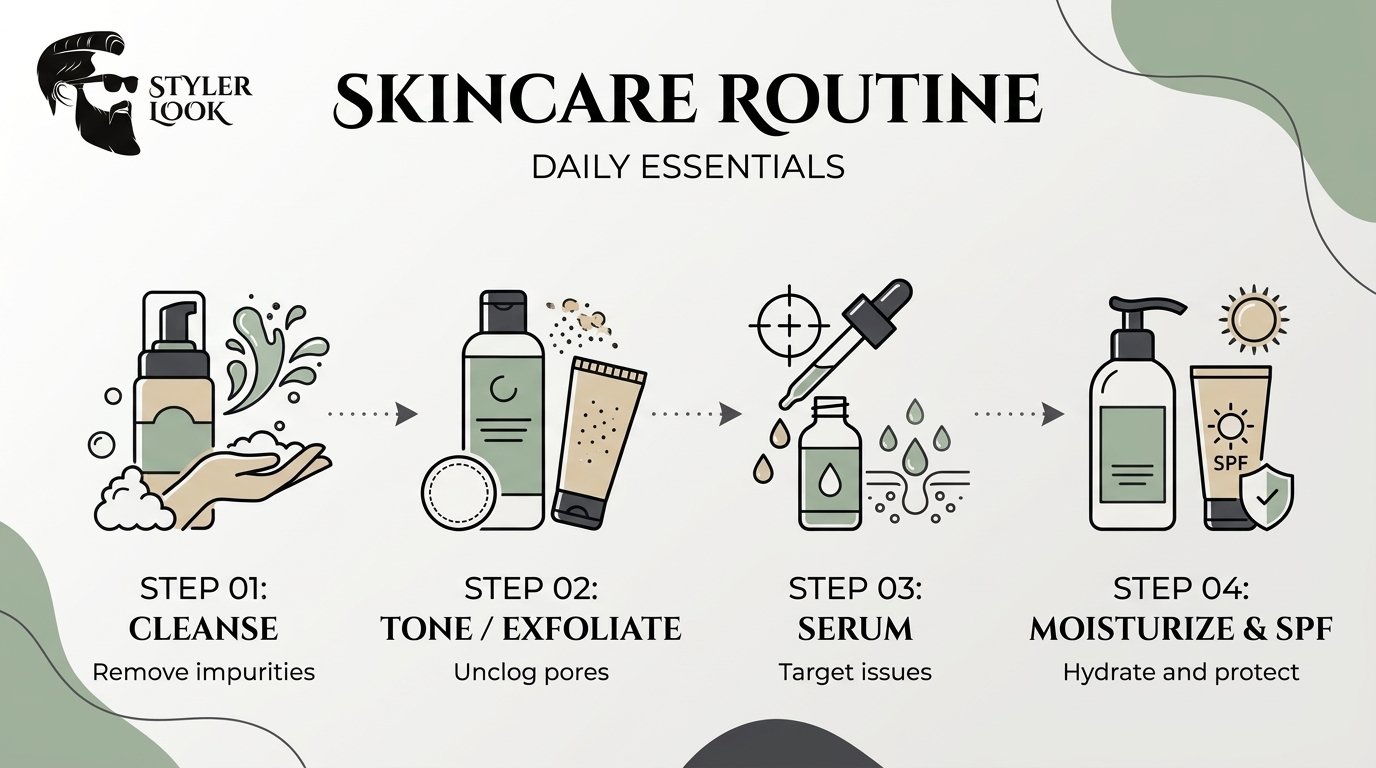
Sunscreen amount matters more than SPF number alone, since thin application reduces protection sharply. Follow label directions for amount, covering face, ears, neck, and any exposed skin evenly. Two finger lengths for the face is a competitor heuristic, not an official dose, so treat it as a practical guide only.
Reapply every two hours during outdoor time, and sooner after swimming, sweating, or towelling, following label directions. Powder and spray reapplication formats suit makeup wearers, but only when label directions support that use. Indoor days with window exposure still benefit from morning sunscreen, though reapplication needs depend on exposure.
Sunscreen Over Makeup
Makeup over sunscreen should wait a few minutes after sunscreen sets, reducing pilling and disturbance. Apply makeup gently, pressing rather than rubbing vigorously, to preserve sunscreen coverage. Primer and foundation layers can disturb sunscreen when rubbed heavily, so light application helps.
Reapplying sunscreen over makeup remains challenging, and powder or spray formats help some users. Reapplication still matters during outdoor time, even with makeup, since sunscreen wears off. Seek shade, hats, and sunglasses as additional protection during extended outdoor makeup wear.
Patch Test, Purging, and Barrier Repair
Patch Test Steps
- Choose a discreet area, such as behind the ear or along the jawline.
- Apply a small amount of the new product once daily for several days.
- Keep other products unchanged during patch testing.
- Watch for burning, itching, swelling, redness, or spreading rash.
- Stop immediately and seek care for severe or spreading reactions.
- Use full-face application only after several calm patch days.
Patch testing does not guarantee full-face tolerance, but it reduces widespread reaction risk. New actives deserve longer patch periods than gentle moisturizers, since irritation may appear after several uses. Record patch results, so future purchases avoid repeat triggers.
Purging Versus Breakout
| Feature | Purging pattern | Breakout or irritation pattern |
|---|---|---|
| Timing | Starts after a new active, often within weeks | Starts after a new product, sometimes immediately |
| Location | Areas where breakouts usually occur | New areas, or widespread rash |
| Duration | Often improves within several weeks | Persists, worsens, or spreads |
| Appearance | Similar to usual breakouts, small bumps | Painful, itchy, swollen, or blistering |
| Action | Continue cautiously, monitor, seek guidance if worsening | Stop product, simplify routine, seek care if severe |
Purging, when it occurs, usually reflects increased cell turnover from a new active, bringing existing congestion forward. Irritation reflects barrier stress, allergy, or overuse, and it needs product stopping, not persistence. Seek dermatologist guidance when breakouts are painful, cystic, scarring, or worsening despite simplification.
Barrier Damage Signs and Repair
Barrier damage signs include tightness, flaking, redness, stinging from gentle products, and increased sensitivity. Over-exfoliation, stacked actives, harsh cleansers, and hot water all contribute to barrier stress. Barrier damage often mimics dryness and breakouts, tempting people to add more products instead of simplifying.
Barrier repair means stopping actives, using gentle cleanser, rich fragrance-free moisturizer, and daily sunscreen. Keep the repair routine for one to two weeks, or longer when symptoms persist, and seek dermatologist guidance for lasting symptoms. Reintroduce actives one at a time, slowly, only after skin feels calm and comfortable again.
Common Mistakes to Avoid
- Adding five new products in one week, hiding the source of any reaction.
- Skipping sunscreen on cloudy days, indoors near windows, or during short trips.
- Using hot water and harsh scrubs, increasing dryness and redness.
- Stacking retinoid plus exfoliant on the same night as a beginner.
- Applying too little sunscreen, reducing protection despite a high SPF number.
- Rubbing skin roughly with towels, cloths, or cleansing tools daily.
- Copying another person’s routine without considering skin type or tolerance.
- Expecting visible change in days, then switching products before judging fairly.
- Ignoring expiry dates and changed smell, colour, or texture in products.
- Treating persistent, painful, or scarring skin conditions with over-the-counter products alone.
Tips That Make Routines Stick
- Keep morning products together and night products together, reducing decision time.
- Use notes or a tracker for new products, frequency, and skin response.
- Apply moisturizer to slightly damp skin for better spread and comfort.
- Use lukewarm water and fingertips, avoiding harsh tools daily.
- Keep sunscreen visible near the door or makeup area for daily use.
- Simplify immediately when irritation appears, rather than adding soothing layers endlessly.
- Buy one size at first, testing tolerance before buying large or bulk sizes.
- Store products away from heat, light, and humidity, following label directions.
- Wash hands before applying products, reducing contamination and transfer.
- Review routines seasonally, adjusting texture for humidity, dryness, and climate changes.
Seasonal, Travel, and Gym Adjustments
Summer and Humid Weather
Summer routines should stay lightweight, with gel cleansers, gel creams, and lightweight sunscreen. Humidity increases oiliness appearance, but stripping cleansers still increase irritation risk. Reapply sunscreen more often during outdoor, swimming, and sweating periods, following label directions.
Sweat and sunscreen residue need gentle cleansing after outdoor activity, without harsh scrubbing. Keep products in cool storage during travel, since heat degrades many formulas. Shade, hats, and sunglasses remain important summer protection alongside sunscreen.
Winter and Dry Weather
Winter routines should use richer textures, cream cleansers, and richer moisturizers for barrier support. Indoor heating, cold wind, and hot showers all increase dryness, so shorter lukewarm showers help. Night cream can feel richer in winter, while daytime moisturizer should still layer well under sunscreen.
Exfoliant and retinoid frequency may need reduction in winter, when dryness and sensitivity increase. Face oil over moisturizer suits some dry skin in winter, applied sparingly. Seek dermatologist guidance when winter dryness involves cracking, bleeding, or persistent rash.
Travel and Gym Routines
Travel routines should stay simple and labelled, with cleanser, moisturizer, and sunscreen as the core. Decanting into unlabelled containers creates confusion, so keep original labels or clear ingredient notes. Avoid starting new actives during travel, since reactions become harder to manage away from home.
Gym routines should include gentle cleansing after sweating, lightweight moisturizer, and sunscreen for outdoor activity. Avoid heavy makeup during workouts when possible, since sweat and makeup together increase congestion appearance. Keep a clean towel and gentle cleanser accessible, without adding harsh post-workout scrubs.
When to See a Dermatologist

Checklist for Professional Care
- Persistent acne that does not improve with gentle, consistent care.
- Painful, cystic, or scarring breakouts, or breakouts leaving lasting marks.
- Eczema, rosacea, or dermatitis symptoms, including persistent redness, scaling, or itching.
- Changing moles, new spots, non-healing sores, or unusual growths.
- Severe reactions to products, including swelling, blistering, or spreading rash.
- Pigmentation concerns that worsen, spread, or cause distress.
- Hair loss, nail changes, or skin symptoms linked to medication or illness.
Dermatologist care includes diagnosis, prescription options when appropriate, and in-office procedures when indicated. General information routines cannot diagnose or treat medical skin conditions, and delaying care can worsen scarring or disease. Bring product lists, notes, and photos of reactions to appointments when possible.
Frequently Asked Questions
What is the correct order for a skincare routine?
Correct order follows thinnest to thickest, with sunscreen last in the morning. Morning order is cleanser, optional serum, moisturizer, then sunscreen. Night order is removal when needed, cleanser, one treatment, then moisturizer.
What are the steps of a morning skincare routine?
Morning steps are cleanse gently, apply optional serum, moisturize lightly, and apply sunscreen last. Serum remains optional, and busy mornings can use cleanser, moisturizer, and sunscreen alone. Sunscreen needs adequate amount and reapplication as labelled during outdoor time.
What are the steps of a night skincare routine?
Night steps are remove makeup and sunscreen when needed, cleanse gently, apply one treatment, then moisturize. Double cleansing suits makeup and sunscreen days, while bare skin days often need one gentle cleanse. Night moisturizer can feel richer than daytime moisturizer, especially in dry weather.
How many steps should a skincare routine have?
Beginner routines work well with three to five steps, including cleanser, moisturizer, sunscreen, and optional serum or treatment. Longer routines add optional layers, but they do not guarantee better results. Fewer products make cause and effect clearer, especially when irritation appears.
What is the simplest skincare routine for beginners?
Simplest beginner routine uses gentle cleanser, moisturizer, and broad-spectrum SPF 30 sunscreen daily. Use those three products for 2 to 4 weeks before adding any treatment. Add one treatment only after baseline comfort, patch testing it first.
Do I need toner in a skincare routine?
Toner is optional, not required for a working routine. Hydrating toners suit dry skin, while exfoliating toners count as treatments and should not stack with other exfoliants. Skip toner entirely when simplicity, budget, or sensitivity matters more.
Do I need eye cream in a skincare routine?
Eye cream is optional, since regular moisturizer often suffices around the eyes. Eye cream suits people seeking lighter texture or specific eye-area comfort. Apply a tiny amount gently before moisturizer when eye cream is used.
Do I need face oil in a skincare routine?
Face oil is optional, going after moisturizer as a final sealing layer. Dry skin in winter may benefit from a few drops over moisturizer. Oily skin rarely needs face oil, and adding it by default can increase congestion appearance.
Should I wash my face in the morning?
Morning washing suits most people, using gentle cleanser or water rinse depending on skin type. Dry and sensitive skin often tolerates a light rinse best, while oily skin benefits from gentle gel cleansing. Avoid harsh soaps and hot water in the morning.
Should I wash my face twice a day?
Twice-daily gentle cleansing suits most people, morning and night. Night cleansing matters more after sunscreen, makeup, and daily grime. Over-cleansing with harsh products increases dryness, so gentleness matters more than frequency alone.
What is double cleansing?
Double cleansing means an oil-based first cleanse, followed by a water-based second cleanse. First cleanse removes makeup and sunscreen, while second cleanse removes remaining residue gently. Double cleansing suits makeup and sunscreen days, not every bare skin night.
Does serum go before or after moisturizer?
Serum goes before moisturizer, on clean skin, in a thin layer. Moisturizer follows serum, sealing hydration and supporting the barrier. Sunscreen goes after moisturizer in the morning, as the final step.
Does sunscreen go before or after moisturizer?
Sunscreen goes after moisturizer in the morning, as the final step. Applying moisturizer over sunscreen breaks its even film and reduces protection. Allow sunscreen to set briefly before makeup, if makeup follows.
How much sunscreen should I use on my face?
Follow label directions for amount, covering face, ears, and neck evenly. Two finger lengths for the face is a competitor heuristic, not an official dose. Thin application reduces protection sharply, even with high SPF numbers.
How often should I reapply sunscreen?
Reapply every two hours during outdoor time, and sooner after swimming, sweating, or towelling, following label directions. Indoor days need morning application, with reapplication depending on window exposure and outdoor breaks. Powder and spray formats help over makeup only when labels support that use.
Do I need sunscreen indoors?
Indoor sunscreen helps near windows and during outdoor breaks, since UVA passes through glass. Windowless indoor days involve lower exposure, but morning application still suits most daily routines. Reapplication needs depend on actual exposure, not on a fixed indoor rule.
What is the difference between physical and chemical sunscreen?
Physical sunscreen uses zinc oxide or titanium dioxide, scattering UV light from skin. Chemical sunscreen uses UV filters that absorb UV light and convert it to heat. Both can provide broad-spectrum protection when used adequately and reapplied as labelled.
How do I know my skin type?
Wash gently, wait 30 minutes without products, then observe shine, tightness, and comfort. Oily skin looks shiny, dry skin feels tight or flaky, and combination skin shows T-zone oil with dry cheeks. Skin type can change with season, climate, and age, so recheck periodically.
How do I patch test a new skincare product?
Apply a small amount to a discreet area, such as behind the ear or jawline, once daily for several days. Keep other products unchanged, watching for burning, itching, swelling, or spreading rash. Use full-face application only after several calm patch days.
How long does a skincare routine take to work?
Skin changes slowly, and several weeks of consistent use usually precede visible comfort or texture changes. One dermatology summary suggests at least 8 weeks before judging a treatment, labelled as a competitor summary, not a universal rule. Stop and simplify when irritation persists, rather than waiting through worsening symptoms.
What is skin purging?
Purging means existing congestion surfacing after a new active increases cell turnover. Purging usually appears in usual breakout areas and improves within several weeks. Widespread rash, pain, swelling, or worsening symptoms suggest irritation, not purging, and need product stopping.
Can I use vitamin C and retinol together?
Beginners should use vitamin C in the morning and retinoid at night, not together in one routine. Same-routine stacking increases irritation risk, especially for sensitive skin. Patch test each active separately, with several calm weeks between introductions.
How often should I exfoliate?
Beginners should exfoliate once weekly at night, increasing only after several calm weeks. Exfoliant overuse causes redness, peeling, tightness, and barrier damage. Do not stack exfoliant with retinoid on the same night as a beginner.
Should I use retinol if I am pregnant?
Seek clinician guidance before starting any retinoid product during pregnancy or breastfeeding. No direct safety verdict for a specific product appears here, since individual medical history matters. Dermatologist or obstetric care teams can advise based on personal circumstances and current guidance.
When should I see a dermatologist about my skin?
See a dermatologist for persistent, painful, cystic, or scarring acne, eczema, rosacea, changing moles, non-healing sores, severe reactions, or worsening pigmentation. General routines cannot diagnose or treat medical skin conditions. Bring product lists and reaction notes to appointments when possible.
Conclusion
Skincare routine success comes from three starter products, a clear morning and night order, and patience with one new active at a time. Gentle cleansing, barrier-supporting moisturizer, and daily broad-spectrum sunscreen form a routine that works across skin types, seasons, and budgets. Skin-type textures, single treatments, and sunscreen amount adjustments refine that core, without requiring ten products or daily overhauling.
Start tonight with a gentle cleanser, a moisturizer matched to your skin type, and a plan for sunscreen tomorrow morning. Patch test any new treatment, keep notes for several weeks, and simplify immediately when irritation appears. Seek dermatologist guidance for persistent or concerning skin conditions, and let consistency, not product count, carry your skincare routine forward.

3 thoughts on “Skincare Routine: Morning, Night & Beginner Steps”