Some haircuts ask for a lot of effort. A well-cut layered bob does the opposite. It looks styled the moment you walk out of the salon, and it keeps looking good with very little work.
The shape is simple: a bob that sits somewhere between the nape and the shoulders, with layers that add movement, body, and texture. Yet that small change turns a flat, heavy bob into something light and alive.
The catch is that the same layered bob can look sharp on one person and limp on another. Face shape, hair thickness, and texture all change the result.
Table of Contents
What Is a Layered Bob?
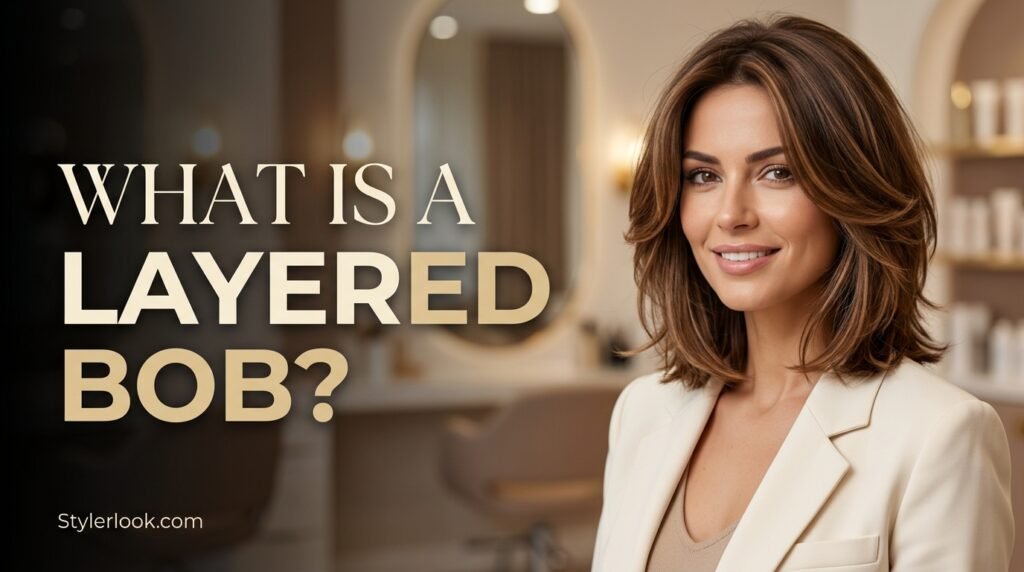
A layered bob is a bob haircut cut with layers of different lengths. The layers remove weight, add volume, and give the shorter shape the movement of longer hair.
It typically sits around the chin, jaw, or collarbone, and it can be sleek, tousled, or textured.
A layered bob is a short to mid-length cut with graduated layers that add volume, texture, and movement. It works with or without bangs and can be styled sleek or messy.
How It Differs From a Blunt Bob
A blunt bob has one solid, straight edge with no layering. It looks sharp and polished but can feel heavy.
A layered bob softens that edge with movement and body.
Where It Sits
Most layered bobs fall between the chin and the shoulders. Some stylists say a length just below the chin or grazing the shoulders feels more current than a very short cut.
Longer versions are often called lobs.
Why Layers Matter
Layers remove weight from thick hair and add lift to fine hair. They also help curls keep their spring instead of falling into a heavy triangle shape.
That is why one cut works across so many textures.
Why the Layered Bob Is So Popular
Short and mid-length cuts are easy to live with. This one adds personality without extra daily effort.
It also adapts to trends without losing its core shape.
It Is Quick to Style
Shorter hair dries faster and needs less product. Many people can finish their routine in minutes.
Dry shampoo helps extend freshness between washes.
It Adds Body to Flat Hair
Layers lift the roots and create volume. Fine or flat hair looks fuller without heavy products.
Stacked and graduated layers are especially good at this.
It Reduces Bulk in Thick Hair
Thick hair can feel heavy in a bob. Layers and thinned ends remove weight and add movement.
The result is lighter, easier to style, and more flattering.
It Grows Out Gracefully
Layers help a bob grow out more softly. You can stretch time between appointments and still look polished.
A collarbone length also leaves room to grow it longer.
Layered Bob vs. Other Bob Styles
Many bob names sound alike. Understanding the differences helps you ask for exactly what you want.
| Bob Style | Key Feature | Best For |
|---|---|---|
| Layered bob | Layers through the length for movement | Almost every hair type |
| Blunt bob | One solid edge, no layers | Straight, thick hair |
| Stacked bob | Shorter, stacked back with longer front | Adding volume at the back |
| Graduated bob | Soft layers, shorter back, longer front | Soft shape with body |
| Inverted bob | Back shorter than the front, angled | Sleek, angled looks |
| A-line bob | Angled shorter at back, longer at front | Elongating the neck |
| Shaggy bob | Choppy, heavy texture | Edgy, relaxed looks |
| Lob | Long bob near shoulders | Easy grow-out and versatility |
Layered vs. Stacked
A stacked bob concentrates short layers at the back to create a rounded shape. A layered bob spreads layers throughout.
The two can be combined for extra volume.
Layered vs. Graduated
A graduated bob is cut shorter at the back, with length increasing toward the front. It has a polished but relaxed look.
Stylists say it can elongate the neck and sharpen the jawline.
Layered vs. Shaggy
A shaggy bob uses heavier, choppier layers for an undone feel. A layered bob can be soft and subtle.
Choose based on how much texture you want.
Types of Layered Bobs
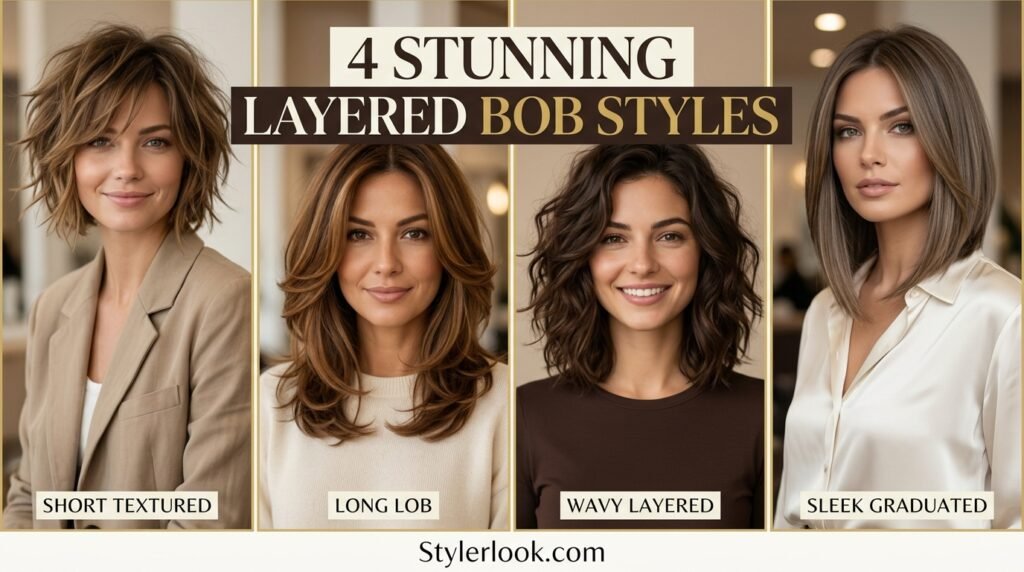
There is no single layered bob. Cut, length, and finish create very different looks.
Here are the most popular versions.
Short Layered Bob
This version sits around the jaw or above. Layers add volume and shape.
It suits people who want a bold, low-maintenance cut. For more ideas, see these short layered hairstyles.
Chin-Length Layered Bob
A chin-length bob has soft layers that frame the face and add body. It is one of the most flattering lengths.
It works well for many face shapes.
Long Layered Bob
A long layered bob, or lob, sits near the shoulders. It has flippy layers and is long enough to tie up.
It is a good choice if you are growing out longer hair.
Stacked Layered Bob
Shorter layers at the back create a rounded, voluminous shape. The front stays longer.
It is great for fine hair that needs lift.
Graduated Layered Bob
The back is shorter, and the length builds toward the front. Soft graduation adds movement.
It looks polished without being rigid.
Inverted Layered Bob
The back is cut shorter than the front, creating an angled line. Layers add texture.
It suits people who like a sleek, modern shape.
A-Line Layered Bob
An A-line bob angles from shorter at the back to longer at the front. Layers add softness.
It elongates the neck and frames the jaw.
Wavy and Curly Layered Bob
Layers help waves and curls keep their bounce. Barrel curls, ringlets, and coils all work.
It prevents the heavy triangle shape.
Shaggy and Tousled Layered Bob
Choppy layers and a messy finish give a rock-inspired look. It suits people who like an undone style.
If you enjoy edgy shapes, see these modern mullet haircut ideas.
Butterfly and Bottleneck Layered Bob
Butterfly layers fan out like wings from a center part. Bottleneck shapes taper to a gently choppy finish.
Both add movement and volume.
Layered Bob With Bangs
Bangs add a fresh, face-framing finish. Curtain, wispy, side-swept, and full fringe all work.
A nape-length cut with bangs feels chic and bold.
Layered Bob by Face Shape
Face shape guides length and layer placement. Treat these as guidelines, not rules.
A good stylist adjusts the cut to your features.
| Face Shape | Suggested Layered Bob Approach |
|---|---|
| Oval | Most styles work; angled or short layered bobs look balanced |
| Round | Front sits about an inch below the jawline with face-framing layers |
| Square | Soft face-framing layers and chin-length shapes to soften the jaw |
| Heart | Angled or short layered bobs; curtain bangs or a deep side part |
| Diamond | Angled or short layered bobs with soft layers near the cheekbones |
| Long or oblong | Bangs to shorten the look and layers that add width |
Layered Bob for Oval Faces
Oval faces suit nearly every bob. Angled and short layered bobs look especially balanced.
Choose by hair texture and styling habits.
Layered Bob for Round Faces
Round faces often look best when the front falls about an inch below the jawline. Face-framing layers add shape.
Avoid lengths that end right at the widest part of the cheeks.
Layered Bob for Square Faces
Square faces have a strong jaw. Face-framing layers soften angles, and chin-length cuts suit angular features.
A deep side part can also soften the look.
Layered Bob for Heart-Shaped Faces
Heart-shaped faces have a wider forehead and narrower chin. Angled or short layered bobs balance them.
Curtain bangs or a deep side part soften the forehead.
Layered Bob for Diamond Faces
Diamond faces have prominent cheekbones. Angled bobs with soft layers add balance.
Curtain bangs can enhance cheekbones.
Layered Bob for Long Faces
Long faces benefit from bangs that shorten the look. Layers that add width at the sides help too.
Avoid adding too much height on top.
Layered Bob With Glasses
Face-framing layers and a deep side part can soften the look around frames. Shorter bangs may collide with the frames.
Try on photos with and without glasses before choosing.
Layered Bob by Hair Type
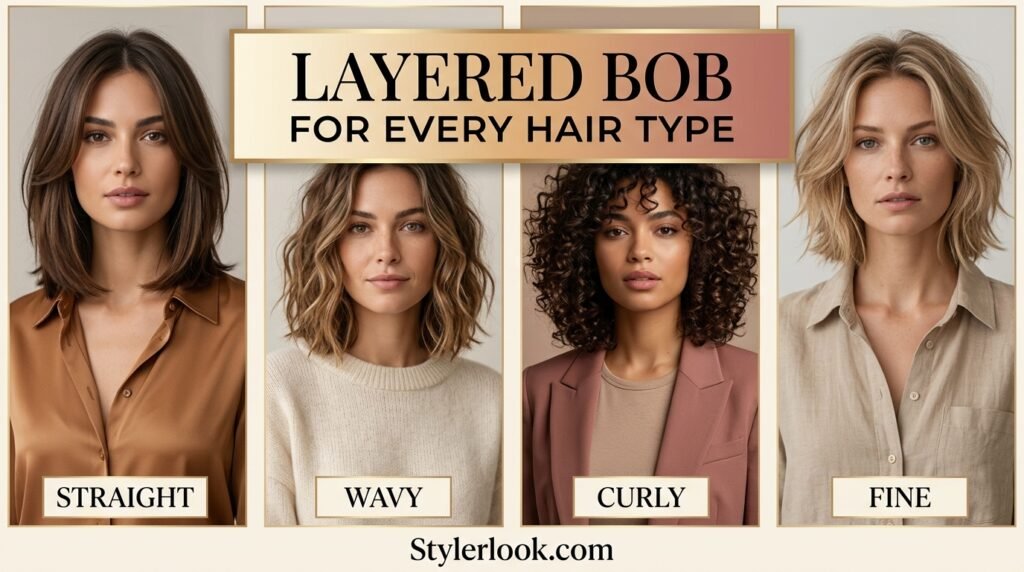
Hair texture and density change how layers behave. The same cut can look very different on two people.
Match the cut to your hair, not only your face.
Layered Bob for Fine Hair
Fine hair can look thin if layers are too choppy. Keep layers longer and softer.
Stacked or graduated layers add volume. A blunt or lightly textured cut can make hair look denser.
Layered Bob for Thick Hair
Thick hair benefits from layers that remove bulk. Point cutting or thinning shears blend the layers.
Avoid too much weight near the ends. See this guide to layered haircuts for thick hair for more ideas.
Layered Bob for Straight Hair
Straight hair shows every line, so layers should blend smoothly. A sharply angled bob adds interest without heavy styling.
Graduated layers add body.
Layered Bob for Wavy Hair
Wavy hair carries layers beautifully. Choppy layers enhance natural texture.
A little mousse or cream defines the pattern.
Layered Bob for Curly Hair
Curly hair often needs layers to prevent a heavy, triangular shape. Layers help curls keep their spring.
Choose a stylist experienced with curly cuts.
Layered Bob for Coily Hair
Coily hair has shrinkage, so layers look shorter when dry. Cutting in the natural pattern helps predict the final shape.
Afro bobs with layers look striking and bouncy.
Layered Bob for Gray Hair
Gray hair often has a different texture and can look dry. Highlights at the front or part can help blend it.
A gloss or shine product adds polish.
Layered Bob for Damaged or Fragile Hair
Razor cutting does not suit every hair type. Frizzy or fragile hair may do better with shears.
Ask your stylist which tool is safest for you.
Layered Bob for Different Ages
A layered bob works at every age. The key is choosing the length and texture that feels right.
Stylists often adjust the shape for comfort and styling ease.
In Your 20s and 30s
Trendy versions, such as shaggy or butterfly bobs, feel playful. Longer lobs give flexibility.
Experiment with bangs and color.
In Your 40s and 50s
Soft, face-framing layers and chin-length shapes look polished. They add lift without heavy styling.
Highlights add dimension.
In Your 60s and Beyond
Soft layers can add body to finer hair. Short layered bobs feel fresh and easy to care for.
A gloss treatment adds shine.
Layered Bob With Bangs
Bangs and a layered bob make a powerful pair. They frame the face and add personality.
Choose bangs that suit your forehead and routine.
Curtain Bangs
Curtain bangs part in the middle and sweep to the sides. They blend easily into layers.
They enhance cheekbones and grow out gracefully.
Wispy Bangs
Wispy bangs are light and see-through. They soften the forehead without heaviness.
They suit fine hair.
Side-Swept Bangs
Side-swept bangs flow across the forehead. They flatter many face shapes.
They are easy to tuck behind the ear.
Full Fringe
Full bangs make a bold statement and add volume at the crown. They suit wavy and curly textures.
They need frequent trims.
Bottleneck Bangs
Bottleneck bangs are a hybrid of curtain bangs and shorter fringe. They blend into face-framing layers.
They give a soft, modern finish.
Layered Bob and Hair Color
Color shows off layers and adds dimension. The right placement makes a big difference.
Talk to your colorist before choosing.
Highlights and Balayage
Soft highlights add depth to layers. Lighter pieces around the face brighten the complexion.
Bring photos to show your stylist.
Copper and Blonde Tones
Warm tones look striking on layered bobs. Both need regular upkeep to prevent fading or brassiness.
Use color-safe products and toning care.
Dark and Natural Hair
Layers show on solid color too. A glossy finish helps them catch the light.
Shine treatments help dark hair look rich.
Fashion Colors
Vivid shades make layered bobs look edgy and modern. They need extra care to stay bright.
Plan for regular touch-ups.
How to Ask Your Stylist for a Layered Bob
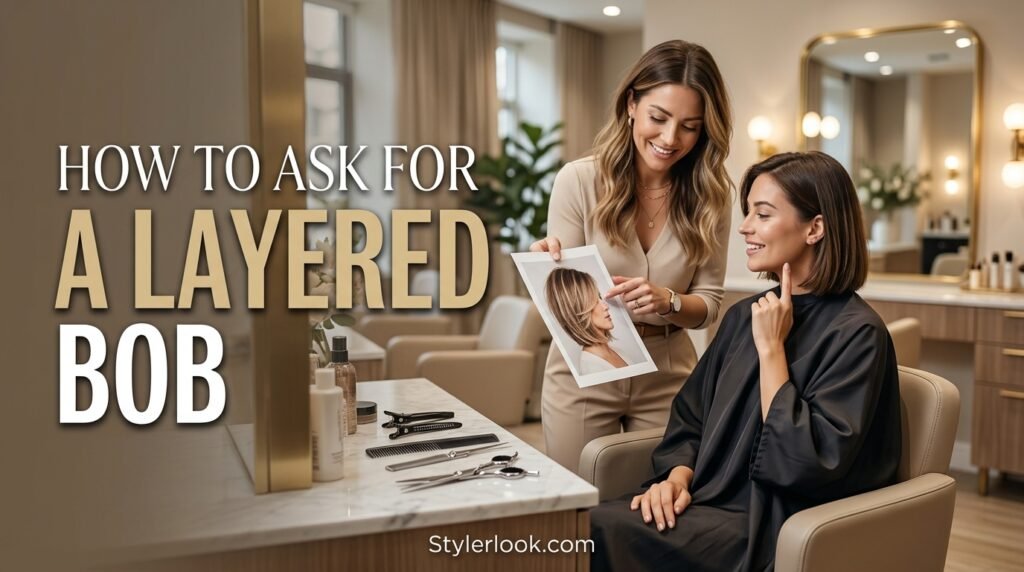
Clear communication prevents disappointment. Prepare before your appointment.
Specific requests lead to better results.
Bring Reference Photos
Choose photos of people with a similar hair texture, thickness, and face shape. Include one example of what you do not want.
Photos show details that words miss.
Name the Length
Say where you want the bob to fall: chin, jaw, collarbone, or shoulder. Mention how much you are willing to lose.
Remember that longer hair needs longer layers.
Describe the Layers
Say whether you want soft, barely-there layers, stacked layers, or choppy texture. Mention how much volume you want.
Ask where the layers will start.
Talk About Your Routine
Tell your stylist how you style your hair. Layers can cause hair to point inward, which may take extra styling time.
Honest answers help them tailor the cut.
Ask About Technique
Ask whether they will use scissors, a razor, or thinning shears. Each creates a different finish.
Some hair types are better with shears.
Questions to Ask Before You Cut
- How long will the front and back be?
- Where will the layers start?
- How will this work with my hair thickness and texture?
- How do I style it each morning?
- How often will I need trims?
- How will it grow out?
How Stylists Cut a Layered Bob
You do not need to know every technique. A basic idea builds trust.
Methods vary by stylist and hair type.
Setting the Shape
The stylist first cuts the outline of the bob. The perimeter sets the length and angle.
Sharp shears help create clean lines.
Adding Layers
The hair is divided into sections and layered at set angles. Lifting the hair higher creates shorter layers.
The angle controls how much volume appears.
Point Cutting
Point cutting snips into the ends to soften edges. It blends layers and removes bulk.
It is common on thick hair.
Razor Cutting
A razor adds wispy, textured ends. It suits many textures but not all.
Fragile or frizzy hair may fare better with shears.
Texturizing
Thinning shears or texturizing tools remove weight without changing length. They are used carefully on fine hair.
Too much texturizing can leave ends sparse.
Checking the Finish
The stylist dries and refines the cut to see how it falls. Some do this on dry hair to see natural movement.
Small adjustments perfect the shape.
How to Style a Layered Bob
Layered bobs are forgiving, but a few techniques bring out the best. Style to match your texture and mood.
Start with clean, heat-protected hair.
The Round Brush Blowout
Apply heat protectant and mousse or volumizing spray. Blow-dry with a round brush, lifting at the roots.
Roll the ends under or outward for shape.
The Sleek Finish
Smooth the hair with a flat iron or paddle brush. Add a little serum for shine.
Sleek styles show off a sharp outline.
The Tousled Look
Use a large barrel curling iron to create loose bends. Wrap hair away from the face and add a small flick at the ends.
Finish with texture spray or paste.
The Beachy Air-Dry
Apply sea salt spray, scrunch, and let your hair dry. Keep touches to a minimum.
This works best on wavy or curly hair.
The Spiky or Edgy Finish
Work in long-hold gel and blow-dry upward. Finger-style for an edgy look.
It suits shorter, shaggier bobs.
Change Your Part
Moving your part changes the look quickly. A deep side part adds volume and softens the face.
A center part gives a balanced, classic feel.
Step-by-Step: A Simple Daily Routine
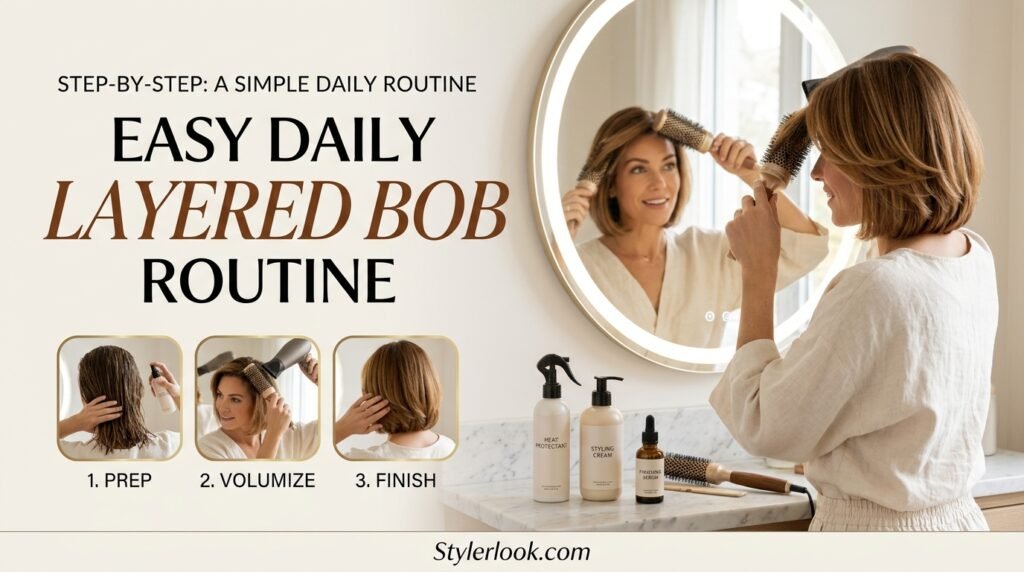
Follow this routine for a polished finish. Adjust it to your hair type.
- Wash and condition, then gently squeeze out water.
- Apply heat protectant and lightweight mousse at the roots.
- Blow-dry with a round brush, lifting the roots and shaping the ends.
- Use a curling iron or flat iron on the face-framing pieces.
- Add texture spray or serum, depending on your look.
- Finish with flexible hairspray for hold.
Best Products for a Layered Bob
Products should add shape without weight. Choose by hair type and finish.
Use less than you think you need.
| Goal | Product Type |
|---|---|
| Heat protection | Heat protectant spray or cream |
| Volume | Volumizing mist or mousse |
| Texture | Texture paste, pomade, or spray |
| Beachy waves | Sea salt spray |
| Shine | Shine spray or serum |
| Hold | Flexible or strong-hold hairspray |
| Freshness | Dry shampoo |
| Curls | Curl cream, gel, or pudding |
| Spiky finish | Long-hold gel |
Fine Hair Products
Use volumizing mist and mousse. Avoid heavy oils and creams.
Dry shampoo adds lift.
Thick Hair Products
Use smoothing serum and cream to control frizz. A light oil can add shine.
Avoid overloading the ends.
Curly Hair Products
Use curl cream, gel, or pudding on damp hair. Scrunch and diffuse or air-dry.
Keep hands off while the curls dry.
Tools for Styling a Layered Bob
A few tools cover most looks. Choose ones with adjustable heat.
You do not need a full collection.
- Round brush: Adds lift and shape.
- Paddle brush: Smooths the hair while drying.
- Large-barrel curling iron: Creates loose bends.
- Flat iron: Smooths or adds subtle waves.
- Hot rollers: Add volume with less effort.
- Diffuser: Helps waves and curls keep their pattern.
- Wide-tooth comb: Detangles without disturbing curls.
How Often Should You Trim a Layered Bob?
Short and mid-length cuts show growth quickly. Regular trims keep the shape sharp.
Your stylist can tailor the schedule to your hair.
| Service | Typical Schedule |
|---|---|
| Shape trim | Every 4 to 6 weeks |
| Color maintenance | Every 6 to 8 weeks |
Signs You Need a Trim
The bob loses its shape or looks heavy. Ends look frayed or uneven.
Layers no longer fall in a flattering way.
Between Appointments
Use gentle shampoo and a light conditioner. Limit heat and always use protectant.
Ask your salon about quick neckline or fringe tidy-ups.
Layered Bob Hair Health Tips
Layers create more visible ends, so ends need care. Healthy hair holds shape better.
Protect your hair to keep the cut sharp.
Limit Heat Damage
Use heat protectant and moderate temperatures. Let hair air-dry when you can.
Damaged ends make layers look uneven.
Moisturize Regularly
Use conditioner and a weekly mask if your hair is dry. Apply a little serum to the ends.
Focus on the mid-lengths and ends.
Care for the Scalp
A clean scalp supports healthy growth. Use a clarifying shampoo occasionally if you use a lot of product.
Rinse thoroughly.
Protect Against Humidity
Humidity can make layers frizz or lose shape. Use an anti-humidity hairspray or smoothing product.
This keeps face-framing layers in place.
Can You Cut a Layered Bob at Home?
Some people trim their own bobs. It can work for a tiny trim, but mistakes show quickly.
Short hair has little room to hide errors.
Why a Professional Is Safer
Stylists understand angles, tension, and how hair falls. They adjust the cut to your face and texture.
An uneven bob is hard to correct.
If You Still Want to Try
Use sharp hair-cutting scissors, not household ones. Work on clean, dry hair and cut tiny amounts.
Check often and stop early.
Safer Alternatives
Ask your stylist for a quick neckline tidy between visits. Many salons offer inexpensive trims.
Bring photos and notes to your appointment.
Pros and Cons of a Layered Bob
Every haircut has trade-offs. Weighing them helps you decide.
| Pros | Cons |
|---|---|
| Quick to style | Needs regular trims |
| Adds volume to fine hair | Layers can make hair point inward |
| Reduces bulk in thick hair | Fine hair can look thin if over-layered |
| Works with many textures | Short length limits updos |
| Flatters many face shapes | Needs a skilled stylist for best results |
| Grows out gracefully | Can need product for texture |
Common Layered Bob Mistakes
Most disappointments are preventable. Watch for these errors.
- Asking for “layers” without describing the look.
- Over-layering fine hair.
- Choosing a length that ends at the widest part of the face.
- Using a razor on frizzy or fragile hair.
- Skipping heat protectant.
- Using heavy products that flatten the layers.
- Waiting too long between trims.
- Ignoring hair texture and density.
- Choosing a stylist inexperienced with curls.
- Expecting a photo to look identical on your hair.
How to Choose the Right Layered Bob
Use this guide to narrow your options. Start with your main goal.
| If You Want | Consider |
|---|---|
| Volume for fine hair | Stacked or graduated layered bob |
| Less bulk for thick hair | Layered bob with thinned ends |
| Low maintenance | Soft, barely-there layers |
| An edgy look | Shaggy or tousled layered bob |
| A polished finish | Sleek A-line or angled layered bob |
| To grow it out | Long layered bob or lob |
| A face-framing touch | Layered bob with curtain bangs |
| Curl bounce | Layered curly bob |
Layered Bob for Different Occasions
A layered bob adapts to many settings. A few tweaks change the mood.
Plan your style around the day.
Everyday and Work
A smooth blowout with soft layers looks polished. Keep products light and styling quick.
Tuck one side behind your ear.
Evenings and Events
Add loose waves and a touch of shine. Finish with flexible hold.
Pin one side back with a sleek clip.
Weekends
Air-dry with sea salt spray for relaxed texture. Add a headband.
Soft, tousled layers look effortless.
Active Days
Short layers may not fit a ponytail, so use clips and headbands. A long layered bob can be tied up.
Choose length with your routine in mind.
Growing Out a Layered Bob
Growing out a bob takes patience. Layers help the grow-out look softer.
Plan the transition to avoid awkward stages.
Ask for Blending Trims
Request light trims that keep the layers soft. This prevents harsh steps as the hair grows.
Tell your stylist your goal length.
Style Creatively
Use clips, headbands, and half-up styles to manage in-between lengths. Wave or curl the ends.
Texture spray makes the phase look intentional.
Keep Hair Strong
Healthy hair grows with fewer breaks. Use conditioner and protect from heat.
Strong ends make growing out easier.
Layered Bob Trends
Trends change, but the core idea stays the same. Here are popular directions.
Choose what suits your hair, not only what is popular.
- Soft graduated shapes: Polished but relaxed, inspired by the 2000s.
- Shaggy and wolf-inspired bobs: Textured, undone, and bold.
- Butterfly layers: Voluminous and bouncy.
- Bobs with curtain bangs: Face-framing and easy to grow out.
- Collarbone-length bobs: Short enough to feel fresh, long enough to style.
- Retro bobs: French-girl, 60s mod, 70s, and 90s-inspired shapes.
For more cut ideas, explore these medium length layered haircuts and this guide to layered hairstyles for long hair.
Choosing the Right Stylist
Your stylist matters as much as the cut. Choose someone experienced with your hair type.
Take your time.
Check Portfolios
Look through photos of past work. Search for clients with similar hair, especially bobs.
Social media pages show a stylist’s range.
Find a Specialist for Curls
Curly and coily hair need specific cutting skills. Look for a stylist who specializes in curly cuts.
Ask about cutting dry or in the natural pattern.
Book a Consultation
Many salons offer short consultations. Use one to discuss your goals.
Notice how well they listen.
Speak Up
Be open to advice but voice concerns. A good stylist welcomes questions.
You should leave feeling heard.
Real-World Examples
These are illustrative scenarios, not case studies of named people. They show how the principles apply.
Your own results depend on your hair and stylist.
The Flat Bob
Someone with fine, straight hair has a blunt bob that looks flat. Their stylist adds soft graduated layers and a little stacking at the back.
The cut gains lift and movement without losing its shape.
The Heavy Bob
A person with thick hair feels weighed down by a blunt bob. Point cutting and thinned ends remove bulk.
The bob moves freely and dries faster.
The Curly Triangle
Someone with curly hair wears a heavy, triangular bob. A stylist who specializes in curls adds layers cut to the natural pattern.
The curls bounce and the shape feels balanced.
The Round Face Adjustment
A person with a round face chooses a bob that ends at the cheeks. They switch to a length just below the jawline with face-framing layers.
The new shape elongates the face.
Layered Bob Checklist
Use this list before booking. Check each item.
- I know my face shape and hair type.
- I have two or three reference photos.
- I know the length I want.
- I can describe my daily styling routine.
- I have decided on bangs or no bangs.
- I’m ready for trims every few weeks.
- I’ve chosen a stylist experienced with my texture.
- I have heat protectant and basic tools at home.
Authoritative Resources for Hair Care
Reliable sources help you care for your hair safely. Check them for updates.
- American Academy of Dermatology Association for hair and scalp care advice.
- U.S. Food and Drug Administration: Cosmetics for guidance on hair product safety.
- Professional Beauty Association for industry resources.
- National-Interstate Council of State Boards of Cosmetology for information on licensed professionals.
For more hair ideas, explore these old money haircut ideas and these short mod cut ideas.
Also Read:
- Short Layered Hairstyles: The Complete Guide to Cuts, Styling and Face Shape Matches (2026)
- Medium Length Layered Haircuts: 25 Styles, Face Shape Matches and Styling Tips for 2026
- Layered Hairstyles for Long Hair: The Complete Guide to Cuts, Styling and Face Shape Matches 2026
- Layered Haircuts for Thick Hair: 30 Styles, Cutting Techniques and Styling Tips for 2026
- 20 Old Money Haircuts for Men That Signal Wealth
- Stunning Short Mod Cuts You’ll Absolutely Love
- Ice Cream Haircut: Before & After That’ll Blow Your Mind
- Burst Fade Buzz Cut: 33 Must-Try Styles for Men in 2026
- 27 Best Burst Fade Haircut Ideas for Men (2026) + Complete Barber Guide
- Modern Mullet men Haircut Ideas That Are Trending
- Drop Fade Haircut Ideas: Modern Styles for Men of All Ages
- 15 Popular Low Taper Fade Blowout Haircut 2026
- Low Taper Fade with Beard: 17 Best Styles for Men 2026
- 22 Trendy Low Taper Fade Short Haircut for Men 2026
- 20 Trendy Low Taper Fade With Long Hair Styles 2026
- 27 Stylish Low Taper Fade Wavy Hair 2026
- 27 Stylish Low Taper Fade Curly Haircuts for Men 2026
- Low Taper Fade Afro: 20 Best Afro Haircuts for Black Men
- 22 Trendy Low Taper Fade Quiff Haircuts for Men 2026
- 15 Best Low Taper Fade for Kids 2026
- Low Taper Fade Blonde Hair: 15 Cool Styles for Men 2026
- 25 Low Taper Fade Buzz Cut Styles for Men 2026
Frequently Asked Questions (FAQs)
What is a layered bob?
It is a bob haircut with layers of different lengths. The layers add volume, texture, and movement to a short or mid-length shape.
What is the difference between a layered bob and a blunt bob?
A blunt bob has one solid edge and no layers. A layered bob softens that edge with movement and body.
Who does a layered bob suit?
It suits most hair types and face shapes when adapted correctly. A stylist adjusts length and layers to your features.
Does a layered bob work for fine hair?
Yes, with soft, longer layers or stacked layers that add volume. Avoid over-layering, which can make fine hair look thin.
Does a layered bob work for thick hair?
Yes. Layers and thinned ends remove bulk and add movement. Point cutting blends the layers smoothly.
Does a layered bob work for curly hair?
Yes. Layers help curls keep their spring and avoid a triangle shape. Choose a stylist experienced with curly cuts.
Does a layered bob work for straight hair?
Yes. Graduated layers add body, and an angled shape adds interest without much styling.
What face shape suits a layered bob best?
Oval faces suit almost any version. Every face shape has a flattering length and layer placement.
What length should a layered bob be for a round face?
Many stylists suggest the front sit about an inch below the jawline. Face-framing layers add shape.
What is a graduated bob?
It is a bob with a shorter, stacked back and length that builds toward the front. It adds soft volume and frames the face.
What is a stacked bob?
A stacked bob concentrates short layers at the back for a rounded, voluminous shape. The front stays longer.
What is a long layered bob?
A long layered bob, or lob, sits near the shoulders with flippy layers. It is long enough to tie up.
Can I get a layered bob with bangs?
Yes. Curtain, wispy, side-swept, and full bangs all pair well and frame the face.
How do I ask my stylist for a layered bob?
Bring photos, name the length, describe the layers, and explain your routine. Ask where the layers will start.
How do I style a layered bob?
Blow-dry with a round brush for volume, or use a curling iron for loose bends. Finish with texture spray or serum.
Is a layered bob low maintenance?
Many versions are quick to style, but they need regular trims. Soft, barely-there layers are usually the easiest.
How often should I trim a layered bob?
Many stylists suggest every four to six weeks to keep the shape sharp. Color usually needs attention every six to eight weeks.
Do layers make a bob look thinner?
They can on fine hair if overdone. Keep layers soft and longer, or choose stacked layers for volume.
Why does my layered bob point inward?
Layers can cause the ends to turn in, which may take extra styling time. A round brush or flat iron helps.
Is razor cutting safe for a layered bob?
It depends on your hair. Frizzy or fragile hair may do better with shears, so ask your stylist.
What products work best for a layered bob?
Heat protectant, volumizing mist, texture spray, serum, and dry shampoo cover most needs. Choose by hair type.
Can I air-dry a layered bob?
Yes. Use sea salt spray or a styling cream and scrunch. This works best on wavy or curly hair.
Can I cut a layered bob myself?
You can trim a little, but mistakes show quickly on short hair. A professional trim is safer.
How do I grow out a layered bob?
Ask for light blending trims and use clips or headbands in the awkward stage. Keep your hair healthy to speed growth.
What should I do first before getting a layered bob?
Know your face shape and hair type, collect reference photos, and book a consultation with a stylist experienced with your texture.
Conclusion
A layered bob gives short and mid-length hair what a blunt cut cannot: movement, body, and a style that looks effortless. Done well, it flatters your face, suits your texture, and takes little time to style.
The best results come from matching length and layers to your face shape and hair type. Fine hair needs soft, longer layers, thick hair needs weight removed carefully, and curly hair needs a stylist who understands curls.
Bring clear photos, tell your stylist how you really style your hair, and plan trims every few weeks to keep the shape sharp.
Book a consultation, show what you love, and let a well-cut layered bob make your daily routine easier and your style sharper.
