
Modern day shag haircut today is a softer, blended, wearable version of a famous 70s cut. It keeps crown volume and face framing, but it removes the hard, choppy, all-over feathering that made the original look dated. The result reads as lived-in texture, not as a costume revival.
Modern day shag haircut today works because density stays in the back while movement sits mainly around the face. That single shift changes the silhouette, the styling time, and the grow out. It also explains why the same word, shag, can now mean very different haircuts in different salons.
Modern day shag haircut today suits straight, wavy, curly, and coily hair when the layers are tuned to texture. It suits short, medium, and long lengths when the perimeter is protected. It fails mainly when a stylist copies the 70s version literally, with heavy fringe, dramatic layers everywhere, and blunt, stacked ends.
Quick Answer: What Changed in One View
Back density is the clearest change in the modern version. The back keeps enough weight to look full, healthy, and intentional, even on day three. The old version thinned the back as much as the front, which made hair look wispy, fragile, and uneven as it grew.
Front movement is the second clear change in the modern version. Layers around the cheekbones, jaw, and collarbone create soft motion without cutting short pieces through the whole head. That placement flatters the face, frames the eyes, and keeps the overall length visible from behind.

Blending is the third clear change in the modern version. Layers melt into each other instead of stacking in visible steps. Point cutting, slide cutting, and careful texturizing create air and separation, while the outline stays smooth. The cut should look deliberate when still and textured when it moves.
Fringe choice is the fourth clear change in the modern version. Curtain bangs, wispy bangs, bottleneck bangs, or no bangs can all work, because fringe is now tailored to face shape. The 70s version often forced a heavy, full fringe on every face, which overwhelmed small features and shortened long faces.
Today Versus the 70s Original
| Feature | 70s original | Modern day version |
| Back weight | Thinned through the whole head | Density kept in the back |
| Movement zone | Layers everywhere | Movement mainly in the face frame |
| Layer finish | Choppy, feathered, hard lines | Soft, blended, diffused layers |
| Fringe | Heavy, full, dramatic | Curtain, wispy, bottleneck, or none |
| Ends | Often blunt in the 70s cut described by stylists | Wispy, textured, and tapered |
| Styling time | Directional blow dry, page claim of 20 minutes minimum | Under 10 minutes, page claim for the modern routine |
| Grow out | Hard lines showed quickly | Softer grow out, variant dependent |
| Best test | Looked obviously like a shag | Looks like great layered hair with movement |
SheFinds reports a stylist named Gradilone making the back density point directly. The quote, as reported on that page, says today stylists maintain density in the back with movement mainly in the face frame area, versus old school shags with movement and layers throughout the whole head. That quote is a stylist observation, not a universal rule, and it matches the modern work seen in current salon galleries.
TotalBeauty reports two stylist voices that support the same shift from a different angle. Edward Tricomi, co-founder of Warren Tricomi Salon, is quoted saying 70s ends were cut very blunt, while the modern shag is more wispy around the face and more intricate. Sal Salcedo of Ramirez Tran Salon is quoted saying the modern shag is all about texture, and new styling tools and texturizing products changed the game.
The Hair Standard gives the cleanest modern versus classic summary in its shag glossary. Classic means heavy fringe and dramatic layers, very obviously a shag. Modern means versatile, from a full retro look with curtain bangs to a subtle, soft blended texture through the mid-lengths. That range matters, because modern does not mean one look.
What Stayed the Same
Crown volume stayed, because a shag without crown lift is just long layers. Shorter layers at the crown create lift, shape, and air at the top of the head. That lift is what separates a shag from a blunt cut or a simple layered cut.
Face framing stayed, because the shag has always been a face-first cut. Pieces that start near the cheekbones or jaw draw attention to the eyes and cheekbones. Modern framing is softer and more tapered, but the placement idea is unchanged.
Texture as the point stayed, because the shag was never meant to look sleek and flat. Movement, separation, and a slightly undone finish are still the goal. Modern texture is simply controlled, so hair looks effortless rather than messy.
What Changed Most
Weight removal changed most, because modern stylists remove weight inside the cut, not from the outline. Internal layers and careful mid-shaft thinning lighten thick hair without making the ends look thin. That control protects fine hair too, because the perimeter stays solid while the inside gains air.
Fringe tailoring changed most, because fringe now follows face shape and hairline. Square faces get longer curtain bangs to soften a sharper jaw, long faces get fringe to shorten the look, and heart faces get shorter curtain bangs to balance forehead width. Those face shape notes come from the hush cut page on Latest Hairstyles, and they work as starting guidance, not as fixed law.
Styling changed most, because modern products and tools support air drying and quick refreshes. Texture spray, root lift, and a diffuser or round brush do work that once needed a long, directional blow dry. That shift is why modern shags fit busy mornings better than the original did.
The Core Formula Today
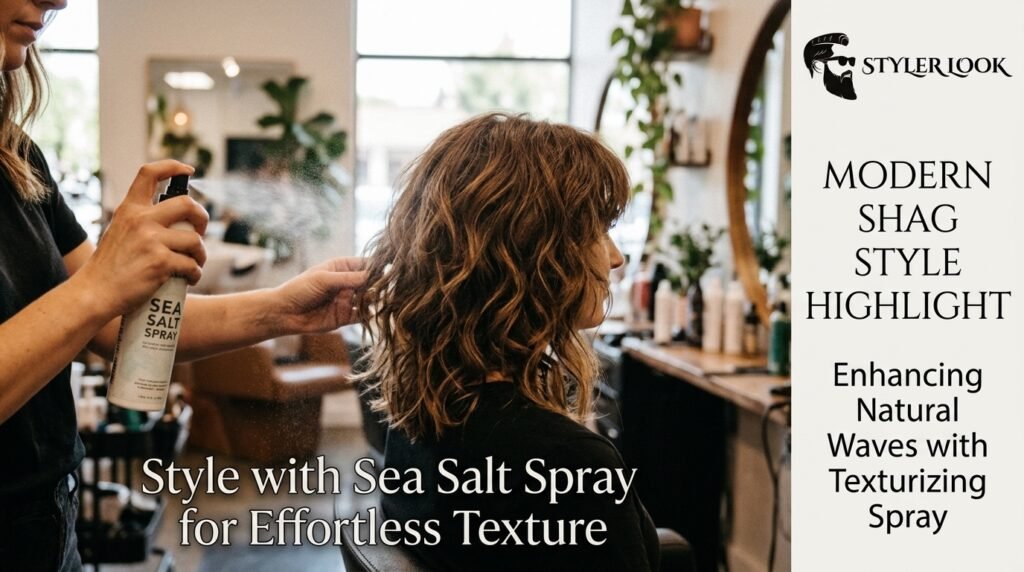
Back density plus front movement is the formula to repeat at consultation. Back density means the back keeps weight, length, and a clean outline when viewed from behind. Front movement means the face frame has shorter, blended pieces that move, curl, and separate naturally.
Blended layers plus tapered ends complete the formula for most hair types. Blended layers prevent visible steps, while tapered ends prevent a heavy, shelf-like line at the bottom. Together they create the soft, diffused effect described on the ArtFasad oval face page, where layers blend rather than stack.
Crown lift plus airy texture gives the cut its signature shape without stiffness. Crown layers should lift the top, while texture through the mid-lengths keeps hair from looking flat or helmet-like. Too much texturizing makes ends look thin, while too little makes the cut look like regular layers, a balance point noted by The Hair Standard.
How to Test the Formula at Home
Stand sideways in a mirror and check where movement starts. Modern movement should start near the face frame, not at the very top of the back. If the back looks thin and wispy from the side, the cut leans retro or wolf-like, not modern.
Shake your head gently and watch the ends. Modern ends should separate and fall back into place, with soft points rather than hard wings. If the ends flick outward in stiff, uniform wings, the feathering is too hard and too vintage for the modern version.
Check the back view with a second mirror or a photo. Modern backs look full, with length still visible and layers melting into the outline. A back that looks short, choppy, and disconnected from the front is a different cut, even if the front looks shaggy.
Hush Cut: The Softest Modern Alias
Hush cut is a useful alias for the softest modern shag, and it helps at consultation. Latest Hairstyles quotes expert Marcela Hernandez describing the hush cut as a modern-day shag with a soft, feathery, and wispy touch. That wording is a stylist definition on that page, not an official industry standard, but it captures the modern softening well.
Hush layers are airy and feathered, with less contrast between short and long pieces. The cut feels light, quiet, and low drama, even on thick hair. It suits readers who want shag movement without a bold, choppy silhouette.
Hush fringe follows face shape, and the Latest Hairstyles hush page gives clear starting points. Square faces suit longer curtain bangs that soften sharper jaw points. Long faces suit fringe bangs that make the face look shorter and more balanced. Heart faces suit shorter curtain bangs that reduce forehead width visually.
Hush texture tuning matters by hair type, and the same page gives useful direction. Dense hair gains a lightweight finish from shorter layers and bulk removal from mid-shaft to ends. Thin hair gains volume from airy face layers that lift without thinning the perimeter. Both routes keep the outline soft, not harsh.
Hush products named on that page include IGK Class of 93 Curl Cream for curly hair, Redken Frizz Dismiss Rebel Tame Cream as a blowout cream for straight hair, and EVO Root Canal as a root lifter. Product names are competitor page mentions, so check current lines, sizes, and prices before buying. The principle matters more than the brand, which is light hold, soft separation, and no crunch.
When Hush Is the Right Word
Use hush when you want softness first and edge second. Hush suits fine hair, wavy hair, and readers who dislike visible choppy layers. It also suits workplaces where a bold wolf cut would feel too strong, but flat layers feel too plain.
Avoid hush when you want strong contrast between a short top and long bottom. That contrast belongs to the wolf cut, not to hush. Avoid hush when you want a sharp, graphic fringe, because hush fringe is meant to melt, not announce itself.
Say hush plus modern shag together at consultation if the salon knows one term better than the other. A useful sentence is, I want a modern shag with hush softness, with back density, front movement, and blended layers. That pairing prevents a retro choppy result while keeping the soft goal clear.
Soft Shag: The Middle Ground Version
Soft shag sits between simple long layers and a full traditional shag. Soft shag pages describe it as a modern, updated version of the classic rock-and-roll 70s shag, with feathered or point-cut layers that blend. Face framing pieces usually start around the cheekbones or jawline, and crown volume tapers to thinner, wispier ends.
Soft shag fringe is flexible, with curtain bangs as the most popular choice and wispy, see-through bangs as another option. That flexibility makes soft shag easier to wear than a heavy fringe shag, because fringe can grow out without a hard line. Soft shag also suits readers who want movement but fear a dramatic change.
Soft shag sources need a caution note, because several soft shag pages found in research carry paid or ad parameters in their URLs. Premieropolis, CreatorRule, and Organizertone pages describe soft shag well, but their paid page signals mean their descriptions should be treated as page claims, not as verified salon data. Use their layer descriptions, and verify trim, cost, and face claims elsewhere.
Soft shag versus wolf cut is the key middle ground test. Soft shag has more structure than simple layers, but less edge and less contrast than a wolf cut or a traditional shag. Wolf cuts go shorter and heavier on top, longer and wispier below, with more disconnection. Soft shag keeps the top and bottom connected and blended.
Soft Shag Checklist
Check crown volume first, because soft shag still needs lift at the top. Flat crowns make soft shag look like ordinary layers with no shag character. Lift should come from layers, not from heavy backcombing or stiff product.
Check face framing second, because soft shag framing should start near the cheekbones or jaw. Framing that starts too high can look like a short fringe cut, while framing that starts too low can disappear. The right start point depends on face length and hairline, so show photos.
Check ends third, because soft shag ends should taper and wisp, not blunt out. Tapered ends move, separate, and grow out more gracefully. Blunt ends can work for a layered lob, but they fight the soft shag silhouette.
How Length Changes the Modern Version
Length changes layer placement, not just overall size. Short shags need more structure, medium shags need balanced framing, and long shags need interior layers to prevent weight from pulling the shape flat. Shaggy lobs need the most careful perimeter work, because a clean outline matters more at shorter lengths.
Short Modern Shag
Short modern shag usually sits at chin to collarbone length, with more structure than longer versions. Layers stay closer together, crown volume stays strong, and face framing stays visible and deliberate. Short versions need more frequent fringe trims, because short framing grows out faster.
Short modern shag suits oval faces, heart faces, and readers who like a bold but wearable shape. It suits wavy and curly hair well, because short layers spring up and create natural volume. It needs caution on very thick hair, where short layers can expand outward without enough weight to pull them down.
Short modern shag styling works best with texture spray, a diffuser, or a quick round brush pass. Air drying gives a tousled, lived-in finish, while a round brush gives a smoother, more polished finish. Both routes need only a small amount of product, because too much product flattens short layers.
Medium Modern Shag
Medium modern shag usually sits at shoulder to collarbone length, and it is the most common modern version. Medium length balances crown volume, face framing, and back density better than any other length. It also grows out more gracefully, because layers have room to blend as they lengthen.
Medium modern shag suits most face shapes, most hair types, and most lifestyles. Round faces gain elongation from longer medium layers, square faces gain softness from wispy framing, and long faces gain width from side volume. That flexibility is why salons often start first-time shag clients at medium length.
Medium modern shag styling suits air drying, diffusing, and blow drying equally well. Wavy hair can air dry with curl cream and scrunching, straight hair can blow dry with a round brush for bend, and curly hair can diffuse for defined, separated curls. Medium length also handles second day refreshes well, with dry texture spray at the roots.
Long Modern Shag
Long modern shag sits below the shoulders, with interior layers doing most of the work. Interior layers remove weight and create movement without cutting the overall length short. Face framing still matters, but it should stay longer and more gradual than on a medium shag, or the front can look disconnected.
Long modern shag suits thick hair, wavy hair, and readers who want movement without losing length. It suits long faces less well when layers start too high, because high layers can lengthen the face further. It suits round faces well when framing stays below the chin, because longer framing elongates rather than widens.
Long modern shag styling needs attention to ends, because long ends show dryness and split ends first. Regular trims, bond repair treatments, and heat protection matter more at long lengths. Air drying works for wavy hair, while straight hair may need a large round brush or loose bends with a curling iron for movement.
Shaggy Lob
Shaggy lob means a shag at chin to shoulder length, with a lob outline and shag layers inside. The lob gives a clean, modern perimeter, while shag layers give movement, texture, and face framing. That combination suits readers who want a fresh, current cut without committing to a long shag.
Shaggy lob grow out has a specific page claim that needs labelling. The ArtFasad oval face page claims a modern shag lob can grow out cleanly for 12 to 14 weeks without looking unkempt. That figure is a page claim for the shag lob variant only, not a general trim rule, and it conflicts with general 6 to 8 week and 8 to 12 week ranges. Treat it as an optimistic variant claim, and plan a fringe check sooner than a full cut.
Shaggy lob face framing should stay soft and slightly tapered, not flicked outward hard. The ArtFasad oval page notes oval face framing should be soft and slightly tapered rather than flicked outward. That advice works for most faces, because hard outward flicks read as vintage wings, not modern movement.
| Length | Best modern use | Watch point |
| Short, chin to collarbone | Bold, structured, wavy volume | Fringe grows out fast |
| Medium, shoulder to collarbone | Most flexible, best first shag | Keep back density, not thin back |
| Long, below shoulders | Movement without losing length | Interior layers, protect ends |
| Shag lob, chin to shoulder | Clean outline plus shag texture | Grow out claim is page only, 12 to 14 weeks |
Modern Shag by Hair Type
Hair type decides layer depth, not just layer length. Fine hair needs lift without thinning, thick hair needs weight removal without frizz, and curly hair needs curl pattern respect over strict layer lengths. Straight hair needs bend and texture, because straight shags can fall flat without styling or product help.
Fine Hair
Fine hair means thin strands, not necessarily few strands, and that distinction changes the cut. Fine hair needs blended layers for lift, with no thinning shears on the perimeter. Thinning shears on fine ends make hair look thinner and more fragile, which defeats the shag goal.
Fine hair modern rules start with a solid perimeter, then add soft layers inside. Crown layers create lift, face framing creates movement, and the back outline stays full. Texture spray at the roots, not heavy cream at the ends, gives lift without weighing fine hair down.
Fine hair mistakes include over layering, over thinning, and heavy oils. Over layering removes too much weight, over thinning creates see-through ends, and heavy oils flatten crown lift. A good fine hair shag should look fuller, not thinner, after the cut.
Thick Hair
Thick hair means many strands or coarse strands, and weight is the main problem. Thick hair needs internal layers and weight removal, with longer blended layers that prevent a triangle shape. Weight removal should happen inside the cut, not by thinning the ends to nothing.
Thick hair modern rules use longer layers, careful texturizing, and a solid but not blunt perimeter. Internal layers lighten the bulk, face framing softens the outline, and the back keeps enough weight to hang well. Too much texturizing can create frizz, so stylists should texturize in stages and check the dry result.
Thick hair styling benefits from smoothing cream on mid-lengths, root lift at the crown, and a diffuser or round brush for control. Air drying can work for wavy thick hair, but straight thick hair may need heat styling to show layer movement. Regular trims prevent thick shags from growing into a heavy, shapeless mass.
Wavy Hair
Wavy hair is the easiest modern shag texture, because waves already create movement and separation. Wavy shags need layers that follow the natural wave pattern, not layers that fight it. Cutting wavy hair dry or mostly dry helps stylists see where waves spring and fall.
Wavy hair modern rules use blended layers, face framing that follows wave bends, and light hold products. Curl cream, sea salt spray, or light mousse enhance waves without crunch. Scrunching while damp, then air drying or diffusing, gives a soft, beach-like finish that suits the modern shag well.
Wavy hair mistakes include cutting too many short layers, which can make waves poof outward, and using heavy wax, which can separate waves into stringy pieces. Keep layers longer on the sides for wavy hair, and let wave pattern guide length, not a fixed inch measurement.
Curly Hair
Curly hair needs curl pattern first, length second, and layer theory third. Curly shags should be cut dry or low tension when possible, because wet curls shrink and spring up unpredictably. Layers should follow curl clumps, not cut across them in a straight, wet line.
Curly hair modern rules use longer layers, face framing that respects curl shrinkage, and a blended gradient rather than disconnected contrast. Beach Wave Perm notes a blended gradient shag versus a disconnected contrast wolf, and that distinction matters for curls. Blended curls look soft and intentional, while disconnected curls can look accidental.
Curly hair styling benefits from curl cream, gel with light hold, and diffusing on low heat. Scrunching, praying hands application, and minimal touching while drying reduce frizz. Second day curls can be refreshed with water mist and a small amount of cream, not a full rewash.
Coily Hair
Coily hair needs shape control and shrinkage awareness above all else. Coily shags should be cut with low tension and dry awareness, because tight coils shrink far more than waves or loose curls. Layers should create shape without removing so much weight that hair loses its outline.
Coily hair modern rules use longer layers, crown shape that avoids a pyramid, and face framing that frames without frizzing out. Moisture, leave-in conditioner, and curl defining cream matter more than texture spray for coily hair. Protective styling between cuts can help maintain shape, but the shag shape should still read when hair is worn out and defined.
Coily hair mistakes include cutting wet to a target length, which becomes much shorter dry, and thinning coily ends, which can create frizz and breakage. Always ask how the stylist cuts coily texture specifically, and show photos of coily shags, not just wavy shags.
Straight Hair
Straight hair needs bend, texture, and product to show shag movement. Straight shags can look flat if layers are too long, too blended, and unstyled. That does not mean straight hair cannot wear a shag, because it can, with the right styling routine.
Straight hair modern rules use texture spray, alternating bends with a curling iron, and a round brush blowout for lift. Bends should alternate direction, so hair moves rather than curling in one uniform wave. Root lift at the crown prevents straight shags from looking limp at the top.

Straight hair styling routines include a quick texture spray refresh, a five minute second day routine, and a full blowout for events. The Latest Hairstyles mixie page notes a five minute second day routine for a related shag style, and that time frame fits modern straight shags too, when layers are blended and not over layered.
| Hair type | Modern layer rule | Main styling help |
| Fine | Blended layers, no thinning shears, solid perimeter | Root lift, light texture spray |
| Thick | Internal layers, weight removal, longer blends | Smoothing cream, staged texturizing |
| Wavy | Follow wave pattern, longer side layers | Curl cream, scrunch, air dry or diffuse |
| Curly | Dry or low tension, follow curl clumps | Curl cream, diffuser, low heat |
| Coily | Low tension, longer layers, avoid pyramid | Leave-in, defining cream, moisture first |
| Straight | Bend and texture, alternating curls | Texture spray, round brush, root lift |
Modern Shag by Face Shape
Face shape decides framing start point, fringe length, and side volume placement. The goal is balance, not a fixed template, because two round faces can have different hairlines, jaw widths, and lengths. Use face shape as a starting guide, then adjust with photos and consultation.
Round Face
Round face modern shag needs height on top and longer layers at the sides. Height elongates the face, while longer layers slim the sides visually. Chin length or shorter shags can widen a round face, so longer medium or long versions usually work better.
TotalBeauty notes a round face warning attributed to Sal Salcedo, saying a shag should not be chin length or shorter for a round face, and should stay longer to elongate. That note is a stylist opinion on that page, not a hard rule, but it matches the elongation principle used by many stylists. If a short shag is wanted, add crown height and longer fringe to offset width.
Round face fringe should stay longer, with curtain bangs or side swept framing rather than a short, full fringe. Short full fringe can shorten and widen a round face at the same time. Longer curtain pieces that fall past the cheekbones create a vertical line that elongates.
Square Face
Square face modern shag needs soft, wispy framing to ease a strong jaw. Wispy layers around the jaw soften angles without hiding the natural bone structure. Longer curtain bangs also help, because they create a diagonal soft line across the forehead and cheek.
Square face fringe should be longer curtain bangs, as noted on the hush cut page, to hide sharper jaw points visually. That wording means soften, not hide, because the goal is balance, not disguise. Avoid blunt, straight fringe that ends at the jaw, because blunt lines can echo jaw angles rather than soften them.
Square face layers should stay soft and tapered, with movement mainly in the face frame. Hard, choppy layers at jaw level can look too graphic on a square face. Blended layers with tapered ends give softness while keeping the modern shag shape.
Oval Face
Oval face modern shag is the most flexible, because oval faces balance length and width well. Most lengths, most fringe types, and most layer depths can work on oval faces. That flexibility makes oval faces a good test case for new shag variations, including hush and soft shag.
Oval face framing should stay soft and slightly tapered, not flicked outward hard. The ArtFasad oval page notes framing should be soft and slightly tapered rather than flicked outward, and that advice prevents a vintage wing effect. Oval faces can wear a shaggy bob at chin length, as noted on that page with L’Oreal Paris stylists cited, but framing still needs softness.
Oval face styling can range from air dried waves to sleek blowouts, because oval balance handles both. The main oval risk is over layering, which can make even a balanced face look narrow or over textured. Keep back density strong, and let framing do the movement work.
Heart Face
Heart face modern shag needs side balance, because heart faces are wider at the forehead and narrower at the chin. Side volume at jaw and below helps balance forehead width, while fringe helps reduce forehead emphasis. Shorter curtain bangs, as noted on the hush page, can help balance forehead width for heart faces.
Heart face layers should add fullness at the sides and ends, not only at the crown. Crown only volume can make a heart face look top heavy. Layers that create movement at jaw and collarbone level give a more balanced silhouette.
Heart face fringe should be curtain, bottleneck, or wispy, not heavy and full. Heavy fringe can make the forehead look wider by contrast when it ends in a hard line. Softer fringe that blends into face framing keeps the transition gentle.
Long Face
Long face modern shag needs width at the sides, not height on top. Side volume, waves, and framing that adds width help balance length. Crown height should stay moderate, because too much crown lift can lengthen the face further.
Long face fringe helps, because fringe shortens the forehead visually. The hush page notes long faces suit fringe bangs for a shorter look, and that principle works for modern shags too. Curtain bangs, wispy bangs, or bottleneck bangs can all shorten, as long as they do not sit too high or too blunt.
Long face layers should start at cheekbone or jaw level and create side fullness. Layers that start too high and stay too short can make a long face look even longer and narrower. Medium length with side waves usually balances long faces best.
Diamond Face
Diamond face modern shag needs volume below the cheekbones and at the jaw, not at the cheekbones. Diamond faces are widest at the cheekbones, so adding volume there can widen the widest point. Volume at jaw level balances cheekbone width and creates a more oval silhouette.
Diamond face framing should be longer and softer, with pieces that fall past the cheekbones. Framing that ends right at the cheekbones can emphasise width there. Longer framing that moves toward the jaw gives a softer transition.
Diamond face fringe should be light and side swept, not heavy and straight. Light fringe softens the forehead without adding bulk at cheekbone level. Curtain bangs that part softly work well, because they create vertical lines rather than horizontal width.
Fuller Face
Fuller face modern shag needs longer layers past the chin, collarbone length, and curtain bangs. Longer layers elongate, collarbone length keeps the neck area open, and curtain bangs create a vertical frame. Those three choices together prevent a shag from widening the face visually.
Fuller face layers should stay blended and tapered, with movement in the face frame but not bulk at the sides. Side bulk at cheek level can widen, while longer, tapered framing slims. Back density still matters, because a thin back can make the front look heavier by contrast.
Fuller face styling benefits from root lift, side part softness, and waves that fall below the chin. Waves that stop at chin level can widen, while waves that continue past the chin elongate. Keep product light at the sides, and focus volume at the crown in moderation.
| Face shape | Modern framing rule | Fringe starting point |
| Round | Height on top, longer side layers | Longer curtain bangs |
| Square | Soft wispy framing at jaw | Longer curtain bangs |
| Oval | Soft tapered framing, most flexible | Curtain, wispy, or bottleneck |
| Heart | Side balance at jaw and below | Shorter curtain bangs |
| Long | Width at sides, moderate crown | Fringe bangs for shorter look |
| Diamond | Volume at jaw, not cheekbones | Light side swept fringe |
| Fuller | Longer layers past chin, collarbone length | Curtain bangs, vertical frame |
Modern Shag After 40 and After 50
Modern shag after 40 works when layers are softer, more personal, and tailored to face shape. Hairlogs notes modern versus vintage as same bones, softer and personal, with 1970s choppy uniform layers and heavy curtain fringe versus today softer customized layers, fringe tailored to face shape, and texture tuned to hair type. That summary fits after 40 styling well, because personalisation matters more than trend copying.
After 40 face framing placement deserves attention, because framing placement changes how features read. Hairlogs notes chin length pieces highlight cheekbones, longer angled layers lengthen a round face, and wispy curved layers ease a strong jaw. Those placements are useful starting points, and they should be adjusted with photos and hairline checks.
After 40 styling time is a practical modern benefit, not a beauty promise. Hairlogs includes a midlife check noting 10 minutes, not 40 minutes, for hair, which matches the modern under 10 minute styling claim from ArtFasad. Those times are page claims about routine length, not guarantees, and they depend on hair type, length, and product choice.
Modern shag after 50 works when framing flatters a mature face without overwhelming it. Lovely N Stylish notes today’s shag is not the dated cut remembered, with softer layering, face framing pieces, and fringes such as curtain, bottleneck, and wispy that flatter a mature face instead of overwhelming it. That page lists 20 looks, including classic short shag, midi shag with curtain bangs, wolf leaning shag, curly shag with soft fringe, silver shag with long fringe, shaggy bob with razored ends, long shag with face framing, choppy shag with wispy bangs, wavy shag with blonde balayage, chin length shag with side swept bangs, wispy shag for fine hair, pixie shag, shag with bottleneck bangs, curly shaggy lob, salt and pepper midi shag, and shag with flipped ends.
After 50 fine or thinning hair benefits from layers that fake fullness, a point made on the Lovely N Stylish page. Layers create lift and movement that can make fine hair look fuller, but only when the perimeter stays solid. Over thinning after 50 can make hair look thinner, not fuller, so protect the outline and keep layers blended.
After 50 colour note matters, because colour is secondary to layer architecture. Silver, salt and pepper, and blonde balayage looks on that page are editorial choices, not requirements for a modern shag. A modern shag works in natural colour, grey, silver, or coloured hair, as long as layers, framing, and density are right.
No younger appearance promise should be attached to any after 40 or after 50 shag. SheFinds and Hairlogs pages use younger appearance framing in their titles and collections, but those are page claims about appearance, not measured outcomes. A modern shag can look fresh, current, and flattering, and that wording is honest and useful without promising age change.
Modern Shag for Men: The Grown Out Version
Modern shag for men in 2026 research leans grown out, soft, and lived in, not sharp and graphic. Accio trend summary notes grown out shag for men, feathered shag, modern shag, and shaggy bob, with a shift toward softer, more natural, lived-in variations. That summary is a trend summary without methodology, so treat it as direction, not as data, and check salon work locally.
Men shag anatomy from Diffsense gives a useful structure, with a caution note. That page describes crown layers that are shorter for volume, choppy layers through mid-lengths and ends, fringe skimming eyebrows or hanging just past, and clean fade contrast framing. Crown advice matters, because if the top is too heavy, the whole cut collapses and looks flat.
Diffsense caution matters for trust, because that page contains unrelated inserted content and search metadata showing a very old update date. Use its anatomy description as a page claim to verify, not as verified history, and do not copy its Sally Hershberger name or gender neutral architecture claim as verified history. Those names and claims are page claims only.
Men grown out styling suits air drying and salt spray, as noted in the Accio summary for grown out shag. Air drying keeps texture soft and natural, while salt spray adds separation without stiffness. Men with wavy hair benefit most, because waves create natural movement without heavy product.
Men shag versus wolf cut needs a clear line, because men pages often blend them. Modern men shag keeps back density and blended layers, while wolf cuts add stronger top to bottom contrast and mullet influence. If a men shag looks like a short top plus long back, it has crossed into wolf or mullet territory.
Men shag maintenance follows the same variant rule as women shags, with shorter versions needing more frequent trims. Short men shags need 4 to 6 week trims to keep shape, while grown out medium versions can stretch longer. Fringe and neckline cleanups between full cuts keep grown out shags looking intentional, not overgrown.
Seven Section Shag: What Readers Need to Know
Seven Section Shag, or SSS, is a modern-day shag technique taught as a professional course, not a reader haircut name. The Francesca Rivetti course page describes SSS as one technique for all lengths and textures, created with scissors or razor, using seven section placements and head shape mapping. Demo content on that page includes scissor and razor control, blowdrying, detailing, and finishing.

Seven sections for readers means the head is divided into seven mapped sections, so layers fall consistently around the head shape. That mapping helps stylists place crown, side, back, and fringe layers in a planned way, rather than cutting freehand without a map. Readers do not need to memorise section names, but understanding the idea helps at consultation.
Seven section benefits for readers include more predictable layer placement, better grow out, and a cut that respects head shape, not just hair length. Head shape mapping matters, because two people with the same length can have different crown heights and skull curves. A mapped cut adapts to those differences better than a one size template.
Seven section course cost is separate from reader haircut cost, and that separation must stay clear. The Francesca Rivetti course page lists the online SSS course at 222 US dollars. That figure is a professional training price, not a salon haircut price, and it should never be quoted as what a reader will pay for a haircut.
Seven section endorsement claim on that page says the technique is endorsed by industry professionals and taught at industry shows, private in-salon classes, and online, with mentor Nicholas French named on the page. Treat endorsement as a page claim, not as verified industry consensus, because no independent endorsement list was verified in research. Readers should judge SSS by salon results and consultation, not by course marketing.
How to Ask About Seven Section Without Overcomplicating It
Ask if the stylist maps sections and head shape before cutting, rather than asking for SSS by name alone. A useful question is, do you section and map the head shape before placing shag layers. That question works even if the salon does not use the SSS brand name.
Ask about scissors versus razor for your hair type, because SSS allows both tools. Scissors give more control on fine hair, while razors can create softer, wispier ends on thick or wavy hair. Razor work needs caution on fine, damaged, or highly textured hair, because razors can increase frizz if used aggressively.
Ask about grow out after a mapped cut, because mapping should improve grow out, not just day one shape. A mapped shag should grow out with softening layers, not hard lines. If grow out is a priority, say so clearly, and ask for blended layers and a solid perimeter.
Salon Script: Exact Wording for Today’s Version
Salon wording decides the result more than any single photo, because photos show length and colour, not layer logic. A good script names the version, the back, the front, the layers, and the things to avoid. That clarity prevents a retro copy, a wolf cut, or a mullet by accident.
Copy and adapt this script at consultation, and adjust length and fringe to your face and hair type. Say, I want a modern day shag haircut, today’s version, not the 70s version. I want back density kept, with movement mainly in the face frame, not layers through the whole head.
Continue the script with layer and fringe clarity. Say, I want soft, blended layers, not choppy, stacked, or heavily feathered layers. I want crown volume, tapered ends, and a solid perimeter, with no thinning shears on fine ends if your hair is fine. That sentence protects fine hair and prevents see-through ends.
Finish the script with fringe and avoidance lines. Say, I want curtain bangs, wispy bangs, bottleneck bangs, or no bangs, depending on your choice, tailored to my face shape and hairline. I do not want a wolf cut, with short heavy top and long wispy bottom, and I do not want a mullet, with short front and long back only.
10 Item Consultation Checklist
- Version: Say modern day, today versus 70s, with back density and front movement.
- Length: Name short, medium, long, or shag lob, with a photo at that length.
- Back: Confirm back density stays, with a clean outline from behind.
- Front: Name face framing start point, cheekbone, jaw, or collarbone.
- Layers: Ask for soft, blended layers, not choppy or stacked layers.
- Fringe: Name curtain, wispy, bottleneck, or none, with face shape reason.
- Hair type: State fine, thick, wavy, curly, coily, or straight, with texture concerns.
- Tools: Ask scissors, razor, dry cut, or low tension, based on texture.
- Styling time: State your real routine, under 10 minutes, diffuser, or blowout.
- Grow out: State trim tolerance, and ask for blended grow out, not hard lines.
Photos That Help, and Photos That Mislead
Helpful photos show the same hair type, same length, and same face shape as yours. Helpful photos also show back views and second day hair, not only fresh blowouts. Back views reveal back density, while second day photos reveal real texture and grow out.
Misleading photos show heavy filters, extensions, or editorial colour as the main feature. Bold colour looks, such as cobalt blue, neon yellow, pastel green, and neon green on ArtFasad gallery pages, are editorial choices, not shag requirements. Colour should never distract from layer architecture, framing, and density.
Photo questions to ask include, will my hair type hold this layer shape, and will this framing work with my hairline and parting. Parting matters, because a centre part shows curtain bangs differently from a side part. Chris Appleton parting advice appears in Woman Trend pages, but treat such quotes as unverified page mentions unless confirmed, and rely on your stylist’s parting check instead.
Styling Routines by Texture
Styling routine should match texture, not fight it. Air drying suits wavy and curly hair, diffusing suits curly and coily hair, and round brush blowouts suit straight and fine hair. Second day routines suit all textures, because modern shags are meant to refresh quickly, not require a full restyle daily.
Air Dry Tousled Routine
- Wash and condition with light products, and avoid heavy masks on fine hair.
- Apply curl cream or light mousse to damp hair, focusing on mid-lengths and ends.
- Scrunch gently upward, and avoid rough towel drying that creates frizz.
- Part hair as desired, and let face framing fall naturally around the face.
- Air dry without touching until mostly dry, then shake roots gently for lift.
- Finish with texture spray at roots and mid-lengths, in a light mist only.
Air dry benefits include soft movement, low heat damage, and a lived-in finish that suits modern shags. Air dry risks include flat roots on fine hair and frizz on curly hair if product is skipped. Root lift spray and curl cream solve most air dry problems without extra heat.
Diffuser Routine for Curly and Wavy Hair
- Apply curl cream and light gel to soaking wet or damp hair, using praying hands.
- Scrunch to encourage curl clumps, and avoid breaking clumps apart.
- Diffuse on low heat and low speed, cupping sections gently upward.
- Dry to about 80 percent, then air dry the rest to reduce frizz.
- Shake roots gently once fully dry, and separate curls only where needed.
- Finish with a light oil on ends only, avoiding roots and crown volume.
Diffuser benefits include defined curls, better crown lift, and faster drying than air drying alone. Diffuser risks include frizz from high heat, rough handling, and touching curls while wet. Low heat, low speed, and minimal touching give the softest modern result.
Round Brush Blowout Routine
- Apply root lift at the crown and heat protection through mid-lengths and ends.
- Rough dry to about 80 percent, lifting roots with fingers for volume.
- Blow dry sections with a round brush, bending ends under or outward softly.
- Alternate bend direction on face framing pieces, for movement not uniform curl.
- Cool shot each section briefly, to set bend and add shine.
- Finish with texture spray, brushed through lightly for soft separation.
Blowout benefits include smooth roots, controlled volume, and a polished modern finish for straight and fine hair. Blowout risks include over smoothing layers, which can hide shag texture, and overheating ends, which can cause dryness. Keep blowout soft, not sleek, so layers still show movement.
Second Day Five Minute Routine
- Shake roots and part hair, checking where framing has flattened overnight.
- Mist roots lightly with water or dry shampoo, only where needed.
- Apply dry texture spray at roots, lifting sections with fingers.
- Rebend two or three face framing pieces with fingers or a quick iron pass.
- Scrunch mid-lengths lightly for wavy and curly hair, to revive texture.
- Finish with a light mist, avoiding heavy product that flattens layers.
Second day benefits include speed, less washing, and better lived-in texture than day one. Second day risks include product buildup, flat roots, and oily fringe, especially on fine hair. Dry shampoo at roots, not ends, solves most second day flatness without rewashing full hair.
Styling Time: Then Versus Now
| Routine | Vintage claim | Modern claim | Note |
| Directional blow dry | 20 minutes minimum, ArtFasad page claim | Under 10 minutes, ArtFasad page claim | Page claims, not timed studies |
| Second day refresh | Full restyle often needed for hard feathering | About 5 minutes, related shag page note | Depends on texture and product |
| Air dry | Hard wings needed heat to hold shape | Air dry works for wavy and curly | Straight hair still needs bend help |
| Grow out styling | Hard lines showed quickly | Softer layers blend longer | Variant dependent, see trim table |
Vintage styling time on the ArtFasad oval page describes Farrah Fawcett heavy wings and hard feathering lines with a deliberate directional blow dry taking 20 minutes minimum. That figure is a page claim about a vintage routine, not a measured salon study, and it helps explain why vintage shags felt high maintenance.
Modern styling time on the same ArtFasad page describes modern diffused layers, airy effect, and styling time dropping to under 10 minutes. That figure is also a page claim, not a timed study, and it fits modern routines only when layers are blended and products are light. Thick, long, or curly hair may need more than 10 minutes for diffusing or blow drying.

Modern time honesty matters, because under 10 minutes should mean routine styling, not wash, condition, full blowout, and event styling. Wash day, diffusing, and heat styling for straight hair can take longer, and that is normal. The modern benefit is lower daily effort, not zero effort.
Products and Tools
Product restraint is a modern rule, because too much product flattens layers and hides texture. Light hold, soft separation, and root lift matter more than heavy wax, strong gel, or thick cream. Product choice should follow hair type, not trend, because fine hair, thick hair, and curly hair need different weights.
| Product type | Best modern use | Avoid when |
| Dry texture spray | Root lift, second day refresh, separation | Heavy buildup, fine hair overuse |
| Root lifter | Crown volume, fine and straight hair | Sticky roots, too much product |
| Curl cream | Wavy, curly, coily definition | Straight hair, heavy cream on fine hair |
| Light mousse | Wavy lift, air dry body | Crunchy finish, over application |
| Blowout cream | Smooth blowout, straight hair control | Curly hair definition, air dry routines |
| Sea salt spray | Beach texture, wavy grown out shag | Dry hair, overuse on fine hair |
| Light oil, ends only | Shine, frizz control on ends | Roots, crown volume, fine hair |
| Dry shampoo | Second day roots, oil control | Ends, buildup, daily overuse |
Product names from research should be treated as page mentions, not as current buying guides. Kristin Ess Dry Finish Working Texture Spray, R and Co Balloon Dry Volume Spray, Oribe Dry Texturizing Spray, Color Wow Raise the Root, K18, and Olaplex No. 4 and No. 5 bond repair appear in competitor styling pages. Check current lines, sizes, and prices before buying, because product lines change.
Hush page products include IGK Class of 93 Curl Cream for curly hair, Redken Frizz Dismiss Rebel Tame Cream as a blowout cream for straight hair, and EVO Root Canal as a root lifter. Those names are page mentions from Latest Hairstyles, and they illustrate texture tuning by hair type. The principle, light hold for curls, smoothing for blowouts, lift for roots, matters more than any single brand.
Tools that matter include a diffuser for curly hair, a large round brush for blowouts, and a curling iron for straight hair bends. Diffusers should run on low heat and low speed for curl definition. Round brushes should be large enough to create bend, not tight curl, for modern soft movement. Curling irons should be used for alternating bends, not uniform curls, on straight shags.
Tools to use with caution include thinning shears on fine hair, razors on damaged hair, and high heat on all hair types. Thinning shears can create see-through ends on fine hair. Razors can increase frizz on damaged or highly textured hair if used aggressively. High heat without protection can dry ends and shorten grow out quality.
Trim Schedule and Grow Out Plan
Trim schedule depends on variant, not on one fixed interval. Shorter, sharper shags need more frequent trims, while softer, longer shags grow out more gracefully. Fringe always needs more frequent attention than the full cut, because fringe framing grows out fastest.
| Variant | Full cut interval | Fringe check | Grow out note |
| Modern shag, general | 6 to 8 weeks, competitor range | 4 to 6 weeks | Soft grow out, blended layers |
| Soft grow out version | 8 to 12 weeks, Numi Hair range | 4 to 6 weeks | Softer outline, longer tolerance |
| Short, sharper shag | 4 to 6 weeks | 3 to 4 weeks | Shape shows quickly, trim sooner |
| Medium shag | 6 to 8 weeks | 4 to 6 weeks | Best balance of shape and tolerance |
| Long shag | 8 to 10 weeks | 4 to 6 weeks | Protect ends, interior layers grow well |
| Shag lob | 8 to 12 weeks general, plus page claim below | 4 to 6 weeks | See shag lob page claim note |
| Curtain bangs alone | With full cut | 4 to 6 weeks | Bangs, not full cut, drive visits |
Shag lob grow out page claim needs repeating clearly, because it is easy to misquote. The ArtFasad oval page claims a modern shag lob can grow out cleanly for 12 to 14 weeks without looking unkempt. That is a page claim for the shag lob variant only, not a general rule, and it sits above the general 6 to 8 week and 8 to 12 week ranges. Plan a fringe trim sooner, and judge grow out by mirror and photos, not by calendar alone.
Grow out stages help readers plan, because modern shags soften in stages rather than collapsing at once. Stage one, weeks one to three, shows fresh shape and full framing. Stage two, weeks four to seven, shows softening layers and longer fringe, which still looks intentional. Stage three, weeks eight to twelve, shows longer layers and a more layered lob or long layer look, which suits softer variants but needs a trim for sharper variants.
Grow out care includes regular end trims for long hair, bond repair for coloured or heat styled hair, and fringe trims between full cuts. Fringe trims are cheaper and faster than full cuts in many salons, and they extend the fresh face framing effect. Ask about fringe trim pricing at consultation, because it affects total upkeep cost.
Grow out mistakes include waiting until layers collapse, then cutting too much at once. Waiting too long can turn a shag into shapeless long layers, which then needs a bigger cut to restore shape. Smaller, regular trims preserve back density and framing better than rare, large cuts.
Cost: Reader Haircut Versus Stylist Course
Reader haircut cost and stylist course cost must never merge, because they answer different questions. Reader cost is what a client pays for a cut, wash, and blowout in a salon. Course cost is what a stylist pays for professional training, and it does not predict salon pricing.
| Cost item | Figure | Source label |
| Mid range US salon cut, wash, blowout | 45 to 90 dollars, plus 18 to 22 percent tip | Competitor reported, Expert Hairstylist range, verify locally |
| StyleSeat average range cited on ArtFasad | 45 to 75 dollars | Competitor reported, StyleSeat average via ArtFasad, verify locally |
| Salon school cut | About 30 to 40 percent lower than mid range | Competitor reported, verify locally |
| Seven Section Shag online course | 222 US dollars | Francesca Rivetti course page, professional training only |
| Fringe trim between cuts | Often lower than full cut, price varies | Ask salon, varies by location and stylist |
Cost variables include city, salon level, stylist experience, hair length, and add on services. Long hair, colour, treatments, and event styling raise total cost beyond a basic cut price. Always ask for a total quote at consultation, including wash, blowout, fringe trims, and tip guidance.
Cost honesty note matters, because competitor cost ranges conflict and go stale fast. The 45 to 90 dollar range and the 45 to 75 dollar range overlap but come from different competitor pages and methods. Use them as planning ranges, not as quotes, and verify with local salons before budgeting.
Course cost note matters again, because 222 dollars for SSS training is not a haircut price. Readers should not expect a 222 dollar haircut because a course costs 222 dollars, and stylists should not quote course cost as salon pricing. Keep training and client pricing in separate conversations.
Mistakes That Turn a Modern Cut Retro
- Copying a 70s photo literally, with heavy fringe, hard feathering, and layers everywhere.
- Thinning the back as much as the front, which removes back density and creates a wispy outline.
- Over thinning fine hair, especially with thinning shears on the perimeter, which creates see-through ends.
- Cutting curly or coily hair wet to a target length, which becomes much shorter dry and loses shape.
- Choosing a wolf cut by accident, with short heavy top and long wispy bottom, when a blended shag was wanted.
- Choosing a mullet by accident, with short front and long back only, when balanced framing was wanted.
- Using blunt ends on a shag, which can look like a layered lob and hide shag movement.
- Over texturizing thick hair, which can create frizz and thin ends instead of controlled weight removal.
- Using heavy product daily, which flattens crown lift and hides layer separation.
- Skipping fringe trims, which lets framing grow into eyes and lose face shape balance.
Retro test after the cut is simple, and it uses mirrors and movement. Check back density from behind, check front movement around the face, and check ends for soft taper rather than hard wings. If all three look modern, the cut is modern, even if it references 70s inspiration.
Fixing a retro result starts with a follow up consultation, not a full recut on day one. Ask the stylist to blend hard lines, restore back density visually, and soften fringe where possible. Some retro cuts need grow out time, because removed density cannot be restored instantly, and patience plus fringe trims can help.
Tips That Keep It Current
- Repeat back density plus front movement at every consultation, so the modern formula stays clear.
- Show back view photos, not only front photos, so back density is planned, not assumed.
- Show second day photos, so texture and grow out are judged realistically.
- Protect the perimeter on fine hair, and ask for blended layers without thinning shears on ends.
- Cut curly and coily hair dry or low tension when possible, and respect curl shrinkage.
- Tailor fringe to face shape, using longer curtain bangs for square faces and fringe for long faces as starting points.
- Use light product in small amounts, and add more only if texture needs it, rather than starting heavy.
- Refresh second day hair in five minutes, with root texture spray and two or three framing rebends.
- Book fringe trims between full cuts, to keep face framing fresh without a full recut.
- Judge grow out by shape, not calendar alone, and trim sharper variants sooner than softer variants.
Current versus trendy is a useful distinction for modern shags. Current means blended, wearable, and adapted to your hair, while trendy can mean copying a viral photo exactly. A current modern shag should still look good in six months, after grow out and routine styling, not only on day one in the salon.
Personalisation beats copying for modern shags, because hair type, face shape, lifestyle, and styling time all change the right version. A modern shag that fits a busy, air dry routine will differ from a modern shag for a blowout routine, even at the same length. State your routine honestly at consultation, and let the stylist tune layers to that routine.
Who Should Skip It, and What to Choose Instead
Skip a full shag if you want a sleek, blunt, polished look every day, because shags are textured by design. A blunt bob, blunt lob, or long layers with a clean perimeter will suit sleek goals better. Shag texture can be smoothed, but smoothing a shag daily defeats its purpose and adds styling time.
Skip a shag if you cannot commit to fringe trims and regular shape checks, especially for short shags. Short shags lose shape faster, and fringe grows into eyes quickly. A long layered cut with longer framing needs less frequent attention and may fit better.
Skip a heavy shag if your hair is very damaged, over processed, or breaking, because layers and texturizing can worsen breakage. Focus first on bond repair, trims, and moisture, then revisit a softer shag once ends are healthier. A soft, blended shag with minimal texturizing can be a later step, not a day one fix.
Choose a layered lob instead if you want shag movement with a cleaner outline and easier grow out. Layered lobs use layers for air, not a shaggy silhouette, and they suit sleek and textured styling both. Choose a wolf cut instead only if you want strong top to bottom contrast deliberately, not by accident.
Choose a hush cut instead if you want the softest modern shag with minimal edge. Hush suits fine hair, wavy hair, and readers who want movement without drama. Choose a soft shag instead if you want a middle ground, with more structure than layers but less edge than wolf.
Frequently Asked Questions
What is a modern day shag haircut?
Modern day shag haircut today means a soft, blended layered cut with crown volume, back density, and face framing movement. It differs from the 70s original by keeping weight in the back and placing movement mainly around the face. Layers blend rather than stack, ends taper rather than blunt out, and fringe is tailored to face shape.
How is a modern day shag different from a 70s shag?
70s shag used choppy, feathered layers through the whole head, heavy fringe, and hard wings. Modern day shag keeps back density, uses diffused, blended layers, and places movement in the face frame. Styling time is also lower in modern claims, with under 10 minutes versus a vintage 20 minute directional blow dry, both as page claims, not timed studies.
How is a modern day shag different from a modern shag?
Modern shag and modern day shag overlap heavily, and modern day is best used as a today versus then angle. Modern shag names the softer, wearable version, while modern day shag emphasises what changed from the 70s original. If a site already has a modern shag page, a modern day page should use the today versus then angle only, or canonicalize to the modern shag page, to avoid duplication.
What is a hush cut?
Hush cut is the softest modern shag alias, described on Latest Hairstyles by expert Marcela Hernandez as a modern-day shag with a soft, feathery, and wispy touch. Hush layers are airy, fringe follows face shape, and the overall effect is low drama and soft. Hush suits readers who want movement without choppy contrast.
What is a soft shag?
Soft shag is a middle ground modern shag, more structured than simple long layers but less edgy than a wolf cut or traditional shag. Soft shag layers are feathered or point-cut and blended, with face framing starting around cheekbones or jawline. Curtain bangs are the most popular soft shag fringe, with wispy bangs as another option.
What is a seven section shag?
Seven Section Shag, or SSS, is a professional cutting technique using seven mapped sections and head shape mapping. It works with scissors or razor, for all lengths and textures, according to the Francesca Rivetti course page. Readers do not need to learn section names, but mapped cutting can improve layer placement and grow out.
How much does a seven section shag course cost?
Seven Section Shag online course is listed at 222 US dollars on the Francesca Rivetti course page. That figure is a professional training price, not a salon haircut price. Reader haircut cost is separate, with competitor reported mid range salon ranges of 45 to 90 dollars and 45 to 75 dollars, both to verify locally.
Is a modern day shag good for fine hair?
Fine hair can wear a modern day shag well, when layers are blended and the perimeter stays solid. Fine hair needs blended layers for lift, with no thinning shears on the ends, and root lift rather than heavy cream. Over layering or over thinning makes fine hair look thinner, not fuller, so protect back density and outline.
Is a modern day shag good for thick hair?
Thick hair suits a modern day shag well, when weight is removed inside the cut. Thick hair needs internal layers, longer blends, and staged texturizing, not thinning of the ends to nothing. Too much texturizing can create frizz, so stylists should texturize gradually and check the dry result.
Is a modern day shag good for curly hair?
Curly hair suits a modern day shag well, when layers follow curl pattern. Curly shags should be cut dry or low tension when possible, because wet curls shrink unpredictably. Layers should form a blended gradient, not disconnected contrast, and diffusing on low heat helps define curls without frizz.
Is a modern day shag good for coily hair?
Coily hair can wear a modern day shag, when shape and shrinkage are respected. Coily shags need low tension cutting, longer layers, and moisture first styling. Avoid cutting wet to a target length, because tight coils shrink far more than waves, and avoid thinning coily ends aggressively.
Is a modern day shag good for straight hair?
Straight hair can wear a modern day shag, when bend and texture are added. Straight shags need texture spray, alternating bends, and root lift, or they can fall flat. A round brush blowout, loose iron bends, or a five minute second day refresh can show layer movement on straight hair.
What face shape suits a modern day shag best?
Oval faces are most flexible for modern day shags, but most faces can wear a version with tailored framing. Round faces need height and longer layers, square faces need soft wispy framing, heart faces need side balance, long faces need side width, diamond faces need jaw volume not cheekbone volume, and fuller faces need longer layers past the chin.
Should a round face avoid a short modern day shag?
Round faces should be cautious with chin length or shorter shags, because short length can widen. TotalBeauty notes a stylist opinion that shags should stay longer to elongate round faces. If a short shag is wanted, add crown height and longer curtain framing to offset width, and discuss the trade off at consultation.
What fringe works best with a modern day shag?
Curtain bangs are the most versatile modern shag fringe, with wispy and bottleneck bangs as softer options. Square faces suit longer curtain bangs, long faces suit fringe for a shorter look, and heart faces suit shorter curtain bangs, according to hush cut face guidance on Latest Hairstyles. No fringe also works, when face framing alone provides movement and softness.
How often should a modern day shag be trimmed?
Modern day shag general trim range is 6 to 8 weeks, with softer versions at 8 to 12 weeks, short sharper versions at 4 to 6 weeks, and curtain bangs at 4 to 6 weeks. Those ranges are competitor reported, not salon guarantees, and they vary by variant and growth rate. Fringe trims between full cuts extend fresh framing without a full recut.
How long does a modern shag lob grow out cleanly?
Modern shag lob grow out claim of 12 to 14 weeks comes from the ArtFasad oval face page, and it applies to the shag lob variant only. That figure is a page claim, not a general trim rule, and it conflicts with general 6 to 8 week and 8 to 12 week ranges. Judge grow out by shape in the mirror, and plan a fringe check sooner than a full cut.
How long does modern day shag styling take?
Modern styling claim is under 10 minutes on the ArtFasad oval page, versus a vintage claim of 20 minutes minimum for a directional blow dry. Both figures are page claims, not timed studies, and actual time depends on hair type, length, and routine. Air dry and second day refreshes fit under 10 minutes best, while diffusing and full blowouts can take longer.
Is a modern day shag low maintenance?
Modern day shag is lower maintenance than the 70s original, but it is not no maintenance. Blended layers grow out softer, second day refreshes are quick, and air drying works for many textures. Still, fringe trims, regular shape trims, and light product use are needed to keep the cut looking intentional.
What is the difference between a modern day shag and a wolf cut?
Wolf cut has stronger contrast, with a shorter, heavier top and longer, wispier bottom, plus mullet influence. Modern day shag keeps back density and blended layers, with movement mainly in the face frame. If the top and bottom look disconnected, the cut leans wolf, even if it was booked as a shag.
What is the difference between a modern day shag and a mullet?
Mullet concentrates length in the back, with short front and long back as the main contrast. Modern day shag balances crown volume, face framing, and back density, without making the back the only long zone. A shag can have back length, but it should not look like a short front plus long back only.
What is the difference between a modern day shag and a layered lob?
Layered lob has a cleaner perimeter, with layers for air but not a shaggy silhouette. Modern day shag has a textured, shaggy silhouette, with crown volume and face framing movement as the point. Layered lobs suit sleek styling better, while shags suit textured, lived-in styling better.
Does a modern day shag work after 40 or after 50?
Modern day shag works after 40 and after 50, when layers are softer and tailored to face shape. After 40 framing placement matters, with chin length pieces for cheekbones, longer angled layers for round faces, and wispy curved layers for strong jaws, according to Hairlogs. After 50 softer layering and tailored fringe flatter without overwhelming, according to Lovely N Stylish, with no younger appearance promise attached.
Does a modern day shag work for men?
Modern day shag for men works as a grown out, soft, lived-in cut, especially for wavy hair. Men shag anatomy includes crown volume, choppy mid-length layers, fringe near eyebrows, and clean fade contrast framing, according to Diffsense as a page claim. Air drying and salt spray suit grown out men shags, while short men shags need 4 to 6 week trims.
What should I say at the salon for a modern day shag?
Say modern day, today’s version, not the 70s version, with back density kept and movement mainly in the face frame. Add soft, blended layers, crown volume, tapered ends, and a solid perimeter, plus your fringe choice tailored to face shape. Add what to avoid, namely wolf contrast and mullet back only length, to prevent a different cut by accident.
What products should I avoid with a modern day shag?
Avoid heavy wax, heavy cream, and heavy oil at roots, because they flatten crown lift and hide layer separation. Avoid daily high heat without protection, because dry ends shorten grow out quality. Use light texture spray, root lift, curl cream by texture, and light oil on ends only, in small amounts first.
Conclusion
Modern day shag haircut today succeeds when back density, front movement, and blended layers work together. That formula separates a current, wearable cut from a retro copy, a wolf cut, and a mullet, even when inspiration comes from the 70s. Length, hair type, and face shape then tune the formula, from hush softness to soft shag middle ground, from short structure to long interior layers, and from fine hair lift to thick hair weight control.
Modern day shag haircut today also rewards honest consultation, realistic styling time, and variant based trims. A clear salon script, back view photos, and a fringe trim plan prevent most disappointments, while light products and a five minute second day refresh keep the cut lived-in rather than high maintenance. Treat page claims, cost ranges, and grow out figures as planning guidance, verify locally, and judge the final cut by density, framing, and movement in the mirror.
Book a consultation with a stylist who cuts your hair type regularly, bring photos at your length and texture, and use the modern day script in this guide section on salon wording to ask for today’s version, not the 70s version.
