
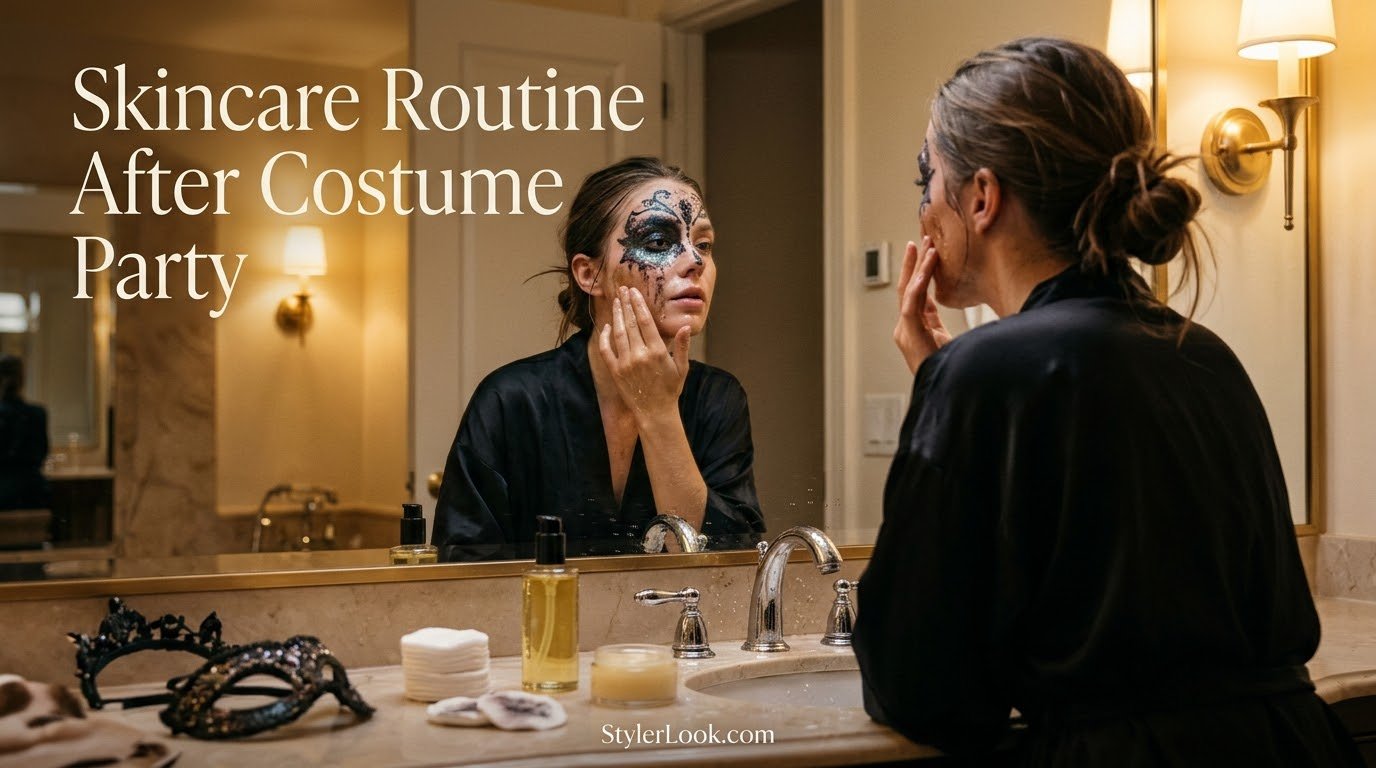
Skincare routine after costume party starts at the sink, not in bed. The ten minutes you spend removing makeup tonight decide how your skin behaves for the next four days.
Costume makeup is not daily makeup with more color. It is heavier pigment, adhesives, glitter and setting spray, worn for hours, usually on skin that is tired and dehydrated.
That combination explains the pattern everyone recognizes: the breakout that arrives on day three, the stinging moisturizer, the skin that feels fine at midnight and furious by morning.
What follows is the complete timed system: removal in six steps tonight, a calm morning after, the 48 hour rules, the breakout window, and the prep that makes the next party easier.
Why Costume Makeup Is Harder on Skin Than Daily Makeup
Occlusion is the core problem. Thick layers of paint, foundation and setting spray sit on skin for six or more hours, trapping oil, sweat and bacteria against pores that cannot breathe normally.
Facial therapists explain the delayed effect: some costume ingredients are comedogenic, and they can seed microcomedones under the surface that only appear as breakouts days later.
Add the party itself: late nights, alcohol, dancing heat and dry indoor air all dehydrate skin while the makeup is still on. Recovery has to answer all of it, not just wash the surface.
Expert guidance for costume makeup suggests keeping heavy wear to under about eight hours where you can. That figure is professional guidance, not a medical rule, but the logic is sound: stress builds with time.
Before You Start: Three Rules for the Whole Night
Rule one: never sleep in it. Every recovery source, from dermatologists to spas, treats same night removal as the non negotiable step. Everything else is repair; this one is prevention.
Rule two: melt, do not scrub. Harsh rubbing on stressed skin can create microtears, the tiny surface damage behind next day dryness and stinging. Oil and patience remove more makeup than force does.
Rule three: lukewarm water, soft hands. The American Academy of Dermatology recommends a gentle, non abrasive cleanser applied with fingertips in lukewarm water, then patting dry. Hot water strips a barrier that is already struggling.
Lay out what you need before you start: your oil cleanser or balm, micellar water and pads, your gentle cleanser, moisturizer, and a clean soft cloth. Preparation is what tired people skip, and it is why they scrub.
The Night Of: Removal in Six Steps
Work in the order below. The sequence exists because adhesives and embellishments need different handling than paint, and paint needs melting before washing.
Step 1: Embellishments, lashes and adhesives first
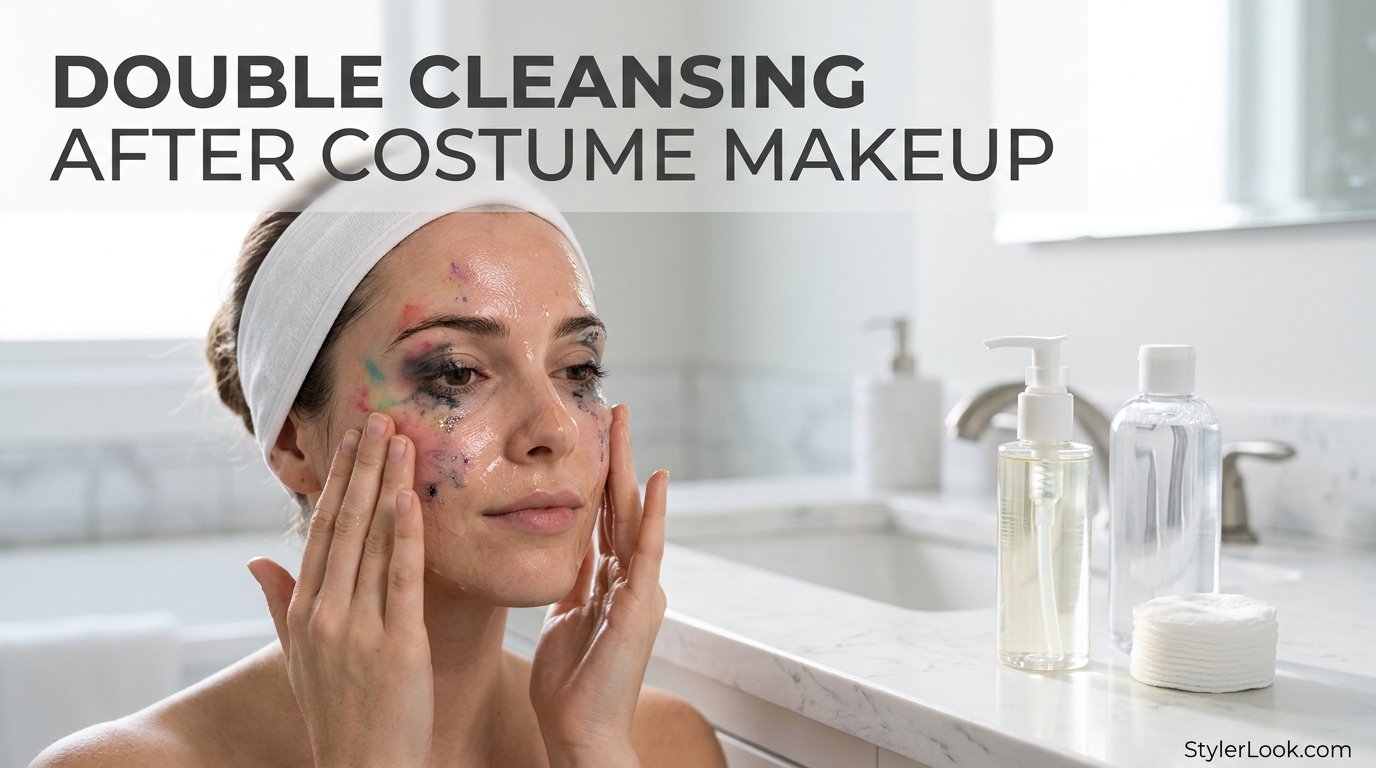
Remove gems, sequins, prosthetics and lashes before touching the rest of the face. Picking at them dry scratches skin and tears at the adhesive bond.
Saturate the edges with an oil based remover and give it a minute.
The US Food and Drug Administration advises removing costume glue the way the product label directs. Oil is the gentle standard the labels and dermatologists point to.
Peel slowly, supporting the skin with your other hand. If an edge resists, add more oil and wait. Adhesive always loses to patience; skin loses to force.
For lash glue along the lash line, roll an oil dipped cotton bud gently along the residue until it balls up and lifts. Never pull strips of glue off dry lashes.
Step 2: Melt with oil, balm or micellar water
This is the step that does the heavy lifting. Dermatologists explain it simply: like dissolves like, so an oil based cleanser dissolves the oil based pigments, waterproof formulas and setting spray films that water cannot touch.
Massage your cleansing oil or balm over dry skin for a full minute, in small circles. Watch the paint break apart and float; that melting is the removal happening without friction.
For moderate makeup, micellar water on soaked pads does the same job: press each pad onto an area, hold for several seconds, then lift away. Press and lift, never drag.
Work in sections (forehead, each cheek, chin, nose) and change pads as they load up. A dirty pad redeposits pigment, which is why one pad marathons end with gray skin.
Add a little water and massage again to emulsify the oil until it turns milky, then rinse with lukewarm water. Your face will look messy mid step; that is the process working.
Step 3: The gentle second cleanse
Now wash the skin itself. The first cleanse removed the makeup; this second cleanse is the actual face wash, and it is what the double cleansing method is named for.
Use a mild, hydrating, water based cleanser, the kind your skin already knows. Tonight is not the night for foaming acne washes or anything that stings; strong formulas on sensitized skin create tomorrow’s problem.
Wash for about sixty seconds with fingertips, lukewarm water, then pat dry with a clean soft towel. If a tint of color remains at the hairline or nostrils, repeat the oil step there rather than scrubbing.
The double cleanse is the heart of the Korean approach to skincare as well; the site’s Korean skincare routine works through that full method if you want the deeper system behind tonight’s two steps.
Step 4: Hydrate in layers
Freshly cleansed post party skin is thirsty, not dirty. Give it water based hydration while it is still slightly damp, when humectants work best.
Press in a hydrating toner or essence with your palms, then a hyaluronic acid or glycerin serum if you use one. Thin layers, thirty seconds apart, beat one thick layer tonight.
A hydrating sheet mask is a good optional step here for dry or tight skin, ten to fifteen minutes, then remove it and move on. It delivers water; it does not replace the cream that seals it.
Step 5: Seal the barrier
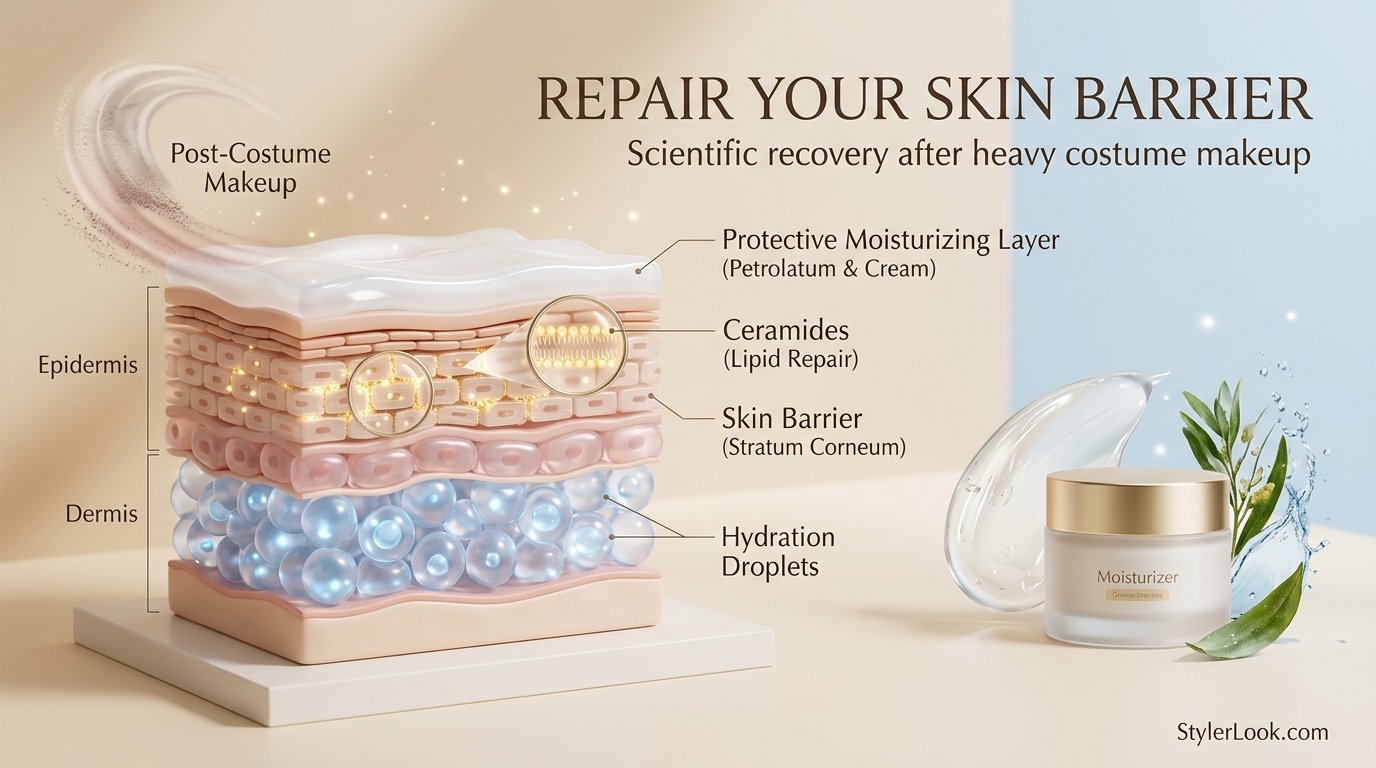
Finish with a ceramide rich moisturizer, applied generously. Ceramides are the barrier’s own building material, and tonight the barrier has earned reinforcements.
For very dry or sore areas, add a thin petrolatum layer over the moisturizer (the practice often called slugging), or two drops of a bland facial oil like squalane pressed on top.
Keep the seal bland on purpose: no fragrance heavy night creams, no new miracle product your skin has never met. Recovery is a short ingredient list.
Step 6: Eyes and lips
Eyes need fresh pads and fresh patience. Soak a pad in oil based or micellar remover and hold it on the closed lid for thirty to sixty seconds.
Then slide downward gently. The soak does the work, not the pressure.
Repeat until the pad comes away clean. Never rub side to side; the eye area is the thinnest skin on the face and the first to show a rough night.
Lips need the same oil to lift long wear lipstick, then a thick layer of lip balm or petrolatum overnight. Dark pigments stain; the stain fades in a day or two and is not damage.
Under eye puffiness is a morning problem, handled below. Tonight, hydration and sleep do more than any eye product applied at 1 a.m.
The two minute version, for when you are exhausted

Some nights the six steps will not happen, and honesty beats guilt. Do this instead: micellar soaked pads, pressed and lifted section by section, until the worst is off.
Follow with a splash of lukewarm water or a wipe of cream cleanser, then moisturizer, then bed. Imperfect removal beats sleeping in makeup by a wide margin.
Save the full double cleanse for the morning shower. The system forgives a tired shortcut; it does not forgive a full night of occlusion.
The Morning After
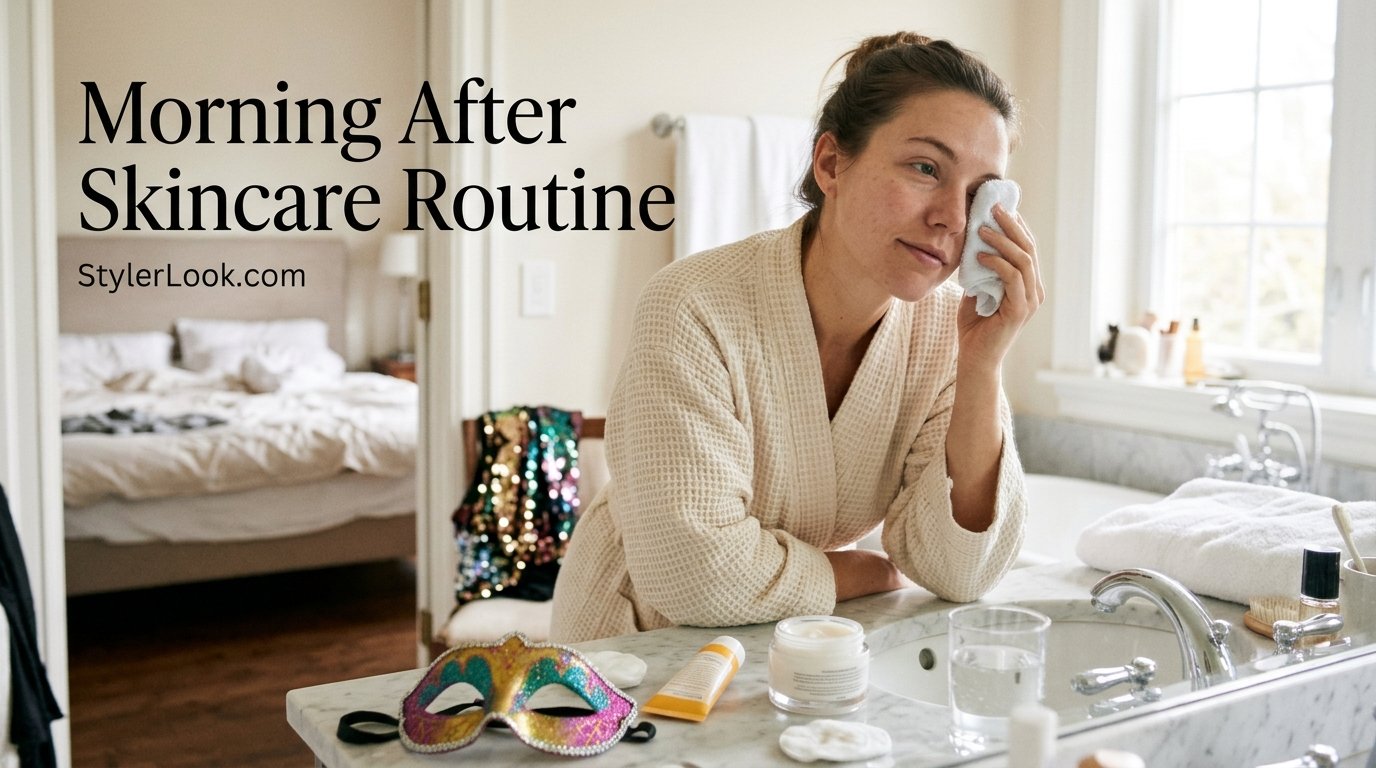
Wake up skin is dehydrated and slightly sensitized, even when it looks calm. Treat the morning as observation plus water, not as a second deep clean.
Cleanse gently or just rinse. If last night’s removal was thorough, lukewarm water or a brief gentle cleanse is enough. Stripping morning skin starts the irritation cycle again.
Reapply moisturizer generously, and add a hydrating mask or a second moisturizer layer if tightness persists. Drink water; the dehydration is systemic, not just topical.
Puffy eyes: a cool compress for five minutes, then your usual eye product if you use one (caffeine formulas are the common pick). It is fluid and fatigue, and it settles.
SPF returns today. If you are going outside, sunscreen goes on as normal; freshly recovered skin is not a reason to skip it, and gentle formulas exist for sensitive days.
Keep the daytime routine boring: cleanser if needed, moisturizer, SPF. The interesting products wait for the timeline below. If you are rebuilding a daily routine generally, the site’s skincare routine hub is the place to start.
The 48 Hour Rules and the Recovery Timeline
The barrier needs about two calm days before it wants challenges again. This timeline is the piece readers assemble from five different websites; here it is in one table.
|
When |
Do this |
Keep paused |
|---|---|---|
|
Night of |
Six step removal, hydrate, seal |
Everything else |
|
Morning after |
Gentle rinse or cleanse, moisturizer, SPF |
Actives, scrubs, new products |
|
Day 2 |
Normal gentle routine, optional hydrating mask |
Strong acids, retinoids |
|
About 48 hours |
Gentle exfoliation returns if skin feels calm |
Anything that stings on application |
|
Day 3 to 4 |
Reintroduce your usual actives one at a time |
Layering multiple actives at once |
|
Day 5 to 7 |
Normal routine fully restored |
Nothing, if skin stayed calm |
Exfoliation timing follows the logic beauty editors use in post Halloween recovery guidance: wait about 48 hours.
Late night cleansing leaves skin temporarily sensitized. After two days, use a gentle enzyme or mild acid exfoliant, not a gritty scrub.
Retinol returns once plain moisturizer no longer stings, typically night three or four. Reintroduce at your usual strength, alone, and watch the response before rebuilding your full rotation.
If you follow a structured routine with ordered steps, the site’s skincare routine order guide helps slot these returning actives back into their correct places without collisions.
The Breakout Window: Days 2 to 4
This is the section nobody warns you about at the party. Breakouts seeded on the night often surface two to four days later, as the microcomedones formed under occlusion work their way up.
Expect small congestion and a spot or two if your skin is breakout prone, especially along the jaw, hairline and anywhere prosthetics or heavy paint sat longest.
What helps: consistent gentle cleansing, your normal moisturizer, and patience. A standard spot treatment on day three, on calm skin, is reasonable for many people.
What harms: attacking sensitized skin with strong benzoyl peroxide blasts, picking at forming spots, or exfoliating daily to “get ahead of it”. All three convert a small breakout into a week long event.
If congestion is still building after a week, or breakouts are deep and painful, that is the point where a professional facial or a dermatologist earns their fee. Home care has a ceiling, and this is it.
Prevention lives at the party, not after it.
Choose makeup labeled oil free or non comedogenic where possible, as the American Academy of Dermatology recommends for acne concerns, and keep the same night removal non negotiable.
Choosing Your First Cleanse: Oil, Balm or Micellar
All three melt makeup; they differ in strength, mess and skin feel. Pick by what is actually on your face tonight.
|
First cleanse |
Best for |
Strengths |
Watch outs |
|---|---|---|---|
|
Cleansing oil |
Heavy paint, waterproof everything, adhesives nearby |
Strongest melt, rinses clean when emulsified |
Needs the emulsify step done properly |
|
Cleansing balm |
Theatre weight makeup, travel, dry skin |
Precise, no dripping, very gentle friction profile |
Can leave a film if under rinsed |
|
Micellar water |
Moderate makeup, sensitive skin, exhausted nights |
No rinse needed, pad control per section |
Many pads on heavy looks; rubbing risk if impatient |
The household substitutes, honestly: plain plant oils melt makeup in a genuine pinch, and home guides suggest them. Coconut oil in particular is comedogenic for many people and rinses poorly, so it is a backup, not the recommendation.
Whatever you choose, the technique outranks the product: dry hands, dry face, a full minute of massage, then emulsify and rinse. Thirty seconds of any product loses to sixty seconds of a basic one.
The Party Season Kit: Build It Once
One small kit covers every event in the season, and buying it rested beats improvising at midnight. Keep it where the costume comes off, not in a cabinet across the house.
|
Kit item |
Job |
Notes |
|---|---|---|
|
Cleansing oil or balm |
Melts paint, pigment, adhesive residue |
The non negotiable item |
|
Micellar water plus pads |
Sections, eyes, exhausted version |
Large soft pads, not rough cotton balls |
|
Gentle water based cleanser |
The second cleanse |
One your skin already knows |
|
Ceramide moisturizer |
Barrier seal |
Fragrance free preferred |
|
Petrolatum or barrier balm |
Sore spots, lips, slugging |
Small tube lasts a season |
|
Hydrating sheet masks |
Day two water boost |
Fragrance light formulas |
|
Lip balm |
Overnight lip recovery |
Apply thicker than feels reasonable |
|
Clean soft cloths |
Press and lift removal |
Wash after every party night |
Total cost is drugstore modest, and most items double as daily staples. The kit is the difference between a routine you follow and a routine you admire.
Recovery by Event Type
Cosplay and conventions
Convention skin faces makeup plus wig caps, adhesives and long days under lights. Add the hairline and wig line to your oil pass, and treat multi day conventions as a season: gentle routine daily, no heroics between days.
Theater and performance runs
Stage makeup is the heaviest category, and performers repeat it nightly. The multi event discipline applies: barrier support daily, intensive hydration twice a week, and professional grade removers made for stage weight products.
Festivals
Festival skin adds sunscreen layers, dust and heat to the makeup load. The first cleanse has more to dissolve; give it the full minute, and expect the second cleanse to matter more than usual.
Weddings and formal events
Guest makeup is lighter but worn longer than a workday, with photographs as the stakes. The standard six steps suffice; add the morning after puffiness protocol, since cameras continue tomorrow.
Brushes, Sponges and the Hygiene Reset
Your skin is not the only thing wearing the party. Brushes and sponges hold pigment, oil and bacteria after a costume night, and using them unwashed reseeds everything you just cleaned.
Wash applicators with gentle soap or brush cleanser during recovery week, rinse until the water runs clear, and dry them fully before the next use. Sponges that stay stained or start to smell get replaced, not negotiated with.
Towels and washcloths from removal night go straight to the laundry. Reusing a paint loaded cloth on day two is a quiet way to restart irritation.
If you shared makeup at the party, be honest about hygiene.
Shared pencils and lip products are a known infection route at the best of times. Party season is not the best of times. Your own kit, next time.
When to See a Professional
Home care handles the normal arc: removal, calm, a possible small breakout, normal by day three or four.
Escalate when the pattern leaves that arc: spreading redness, swelling, blistering, pain, breakouts that are deep and multiplying after a week, or congestion that home cleansing clearly is not moving.
A dermatologist is the right call for reactions and anything worsening. A professional hydrating facial is the right call for stubborn congestion on otherwise calm skin, which is why spas run post Halloween recovery menus.
Knowing the ceiling of home care is part of the system, not a failure of it. The routine above is designed so that needing a professional is the exception, and a recognizable one.
Sleep, Water and the Inside Half of Recovery
Topical steps are half the system. Sleep is when barrier repair runs, and a short, alcohol fragmented night shows on skin the next day regardless of products.
Drink water before bed and on waking. Alcohol at the party dehydrates systemically; no serum applied at midnight outruns that arithmetic.
Change the pillowcase after party night. Residual pigment, glitter and product transfer back onto freshly cleaned skin for eight hours otherwise, which quietly undoes good removal.
None of this is glamorous, and all of it is free. The inside half is why two people can follow the same six steps and wake up looking different.
A light, early breakfast and a normal, unhurried morning routine rhythm help far more than any expensive rescue product ever will. Skin reads the whole system, not just the bathroom shelf, and after a party the system is what needs the kindness.
Adjustments by Skin Type
Acne prone skin
Your risk is the breakout window, so your discipline is removal and restraint. Same night removal without exception, bland recovery, and no heroic spot treating on sensitized skin.
When actives return, reintroduce one at a time. Readers who follow a product led routine like the site’s The Ordinary skincare routine should treat this week as a pause in that program, not a failure of it.
Sensitive, eczema prone or rosacea prone skin
Your risks are reaction and flare, so your discipline is selection: fragrance free everything, the gentlest oil method, and shorter wear time where you can manage it.
Patch testing is your superpower (next section). If theatrical products have flared you before, ask your dermatologist before the event, not after it.
Dry skin
Your risk is water loss. Lean into the seal: richer ceramide cream, the petrolatum layer, a hydrating mask on day two, and skip even gentle exfoliation until tightness is fully gone.
Oily and combination skin
Your instinct will be to over cleanse tomorrow. Resist it: oil cleansing tonight does not make skin oilier, and stripping tomorrow triggers rebound shine plus irritation.
Choose lighter gel cream moisturizers for the seal, keep the exfoliation appointment at 48 hours, and let the timeline do its work.
Men and first time costume makeup wearers
Plenty of tonight’s painted faces belong to people who never remove makeup. The method is identical; the learning curve is the only difference.
The site’s men’s skincare routine covers daily routines built for male skin, and every step tonight applies the same way: melt, wash gently, moisturize, sleep.
Parents: removing kids’ face paint
Use the same method, gentler: a bland oil or micellar water on a soft cloth, no scrubbing, lukewarm water, simple moisturizer after.
The American Academy of Pediatrics recommends testing Halloween makeup on a small area of the arm several days before the event. That one habit prevents most party night tears, theirs and yours.
Troubleshooting and Reaction Protocol
Stinging with plain moisturizer: your barrier is protesting. Drop to the minimum (gentle rinse, bland cream, petrolatum on sore spots) and give it another 48 hours before judging.
Redness that is spreading, swelling, blistering or itching that escalates: that pattern is a reaction, not dryness. Remove everything gently, stop all products except bland moisturizer, and contact a dermatologist.
Eye involvement (swelling, pain, vision changes) or any breathing symptoms are medical problems, not skincare problems. Seek care promptly and skip the home remedies.
A single forming spot: leave it alone until day three, then treat it as you normally would. Picking at sensitized skin is how one spot becomes a mark that outlasts the memory of the party.
Glitter still appearing on day two: it migrates from hairlines, brows and pillowcases. Another gentle oil pass lifts it. Wash pillowcases and towels after party night as part of the reset.
Mistakes That Make Recovery Worse
Sleeping in it is mistake one, the only unforgivable one. It converts a ten minute task into a four day project.
Scrubbing with wipes and hot water is mistake two. Wipes have a place as a tired first pass; as a method, they drag pigment across stressed skin and leave residue behind.
Exfoliating the same night is mistake three. The urge to feel completely clean is understandable and counterproductive; the appointment is at 48 hours.
Restarting every active at once is mistake four. Retinol plus acid plus vitamin C on day two is how calm recovered skin becomes a flare.
Trying a brand new product during recovery week is mistake five. New products need calm skin for a fair test, and reactions need a short suspect list.
Using craft glitter or craft paint in the first place is mistake zero. They are not made or approved for faces, which the FDA’s guidance on novelty makeup makes plain.
Next Time: Prep That Makes Recovery Easy
Recovery quality is decided before the party. Four habits change everything, and they take less time than one breakout.
Patch test new face paint on the inner arm 24 to 48 hours ahead, the step dermatologists and pediatric guidance agree on. Redness, itching or swelling means that product does not touch your face.
Build a barrier before paint: gentle cleanse, hydrating serum, moisturizer, and a primer or barrier cream under the makeup. Paint sits on the barrier instead of in your pores, and removal gets easier.
Choose face rated products and check labels, including which colors are approved near the eyes. Expired makeup goes in the bin; dermatology practices see the reaction spike every year, and old products are a repeat cause.
Pack the removal kit with the costume. Oil cleanser, pads, gentle wash, moisturizer.
Deciding removal supplies at home, sober and rested, beats improvising at midnight. The site’s best skincare routine guide can help you assemble the daily staples the kit borrows from.
Frequently Asked Questions
What is the best skincare routine after a costume party?
Remove embellishments and adhesives first, then melt makeup off with an oil cleanser, balm or micellar water. Follow with a gentle water based cleanser.
Then hydrate in layers and seal with a barrier cream. Keep actives paused for about 48 hours.
How do I remove heavy costume makeup without scrubbing?
Let oil do the work. Massage a cleansing oil or balm over dry skin until pigment melts, emulsify with water, rinse lukewarm, then wash once more gently. Press a soft cloth rather than rubbing.
Why does double cleansing matter after face paint?
The first cleanse dissolves oil based pigment, glitter binder and adhesive residue. The second cleanse actually cleans the skin and pores. One wash either leaves residue behind or forces scrubbing, and scrubbing damages the barrier.
Can I just use makeup wipes after a party?
Wipes mostly move makeup around and encourage rubbing, which irritates stressed skin. They are acceptable as a tired first pass on a bad night, never the whole routine; skin still needs a real cleanse and moisturizer.
How do I get glitter off safely?
Lift it, never drag it. Soak a pad in micellar water or oil, press until the binder loosens, and lift away. Repeat rather than scrub, keep loose glitter away from eyes, and never use craft glitter on skin.
How do I remove spirit gum and prosthetic adhesive?
Follow the product label first, as the FDA advises for costume glues. Oil based removers are the gentle standard: saturate the edge, let it sit, peel slowly while supporting the skin. Never rip adhesive off dry.
What should I do if my skin is red and stinging after makeup removal?
Stop all actives, rinse lukewarm, and go minimal: bland ceramide moisturizer, petrolatum on the sorest spots. If redness, swelling or blistering persists or spreads, that is a reaction, and a dermatologist should see it.
When can I exfoliate after heavy makeup?
Wait about 48 hours. Late night cleansing leaves skin temporarily sensitized; acids and scrubs land better once the barrier has had two days. Then choose a gentle enzyme or mild acid over a gritty scrub.
When can I use retinol again after a costume party?
Once skin feels normal, typically after two to three calm nights. Reintroduce at your usual strength only if plain moisturizer no longer stings, and add other actives back one at a time.
Why do breakouts appear days after the party?
Occlusion plus residue. Some costume ingredients are comedogenic and can seed microcomedones that surface as breakouts days later, especially after long wear. Thorough same night removal is the prevention.
Is it really that bad to sleep in costume makeup once?
Yes, it is the single worst move in this topic. Pigment, adhesive and setting spray occlude skin all night, and every recovery source treats same night removal as non negotiable. Ten tired minutes beats a week of recovery.
How long should costume makeup stay on?
Expert guidance suggests ideally under eight hours, because occlusion and barrier stress build with time. Plan removal as part of the evening, not the next morning.
Micellar water, balm or oil: which first cleanse is best?
All three melt makeup; choose by mess and skin type. Balms and oils handle theatre level paint and adhesive best. Micellar water suits moderate makeup and sensitive skin, and needs no rinsing before the second cleanse.
How do I remove waterproof mascara and lash glue?
Soak a pad in an oil based or dual phase remover and hold it on the closed lid for 30 to 60 seconds, then slide downward.
For lash glue, an oil dipped cotton bud rolled along the lash line loosens residue without pulling.
What do I do about dark lipstick staining and dry lips?
Remove with an oil based cleanser, skip scrubs that night, and seal with thick lip balm or petrolatum overnight. The stain is cosmetic and fades in a day or two; gentle exfoliation belongs to day two or three.
My eyes are puffy the morning after. What helps?
Sleep, water, a cool compress for five minutes, and a caffeine eye product if you use one. Puffiness after a late night is mostly fluid and fatigue, and it settles within a day for most people.
Should I use a sheet mask after removing party makeup?
A hydrating, fragrance light sheet mask is a good step once skin is clean, especially for dry or tight skin. It delivers water, not a seal; follow it with moisturizer.
What ingredients help skin recover fastest?
Ceramides and petrolatum for the barrier, hyaluronic acid and glycerin for water, panthenol and centella for calm. Recovery is a short ingredient list on purpose; this is not the night for experiments.
What should I avoid for 48 hours after heavy makeup?
Strong acids, retinoids, harsh spot treatments, physical scrubs, alcohol based toners, very hot water, and any brand new product. Also avoid layering multiple returning actives at once.
How do I prep skin before a costume party so recovery is easier?
Moisturized skin plus a barrier: gentle cleanse, hydrating serum, moisturizer, primer or barrier cream under paint. Patch test new face paint on the inner arm 24 to 48 hours ahead.
Is face paint safe for skin?
Paint made for faces and used as directed is formulated for skin.
The FDA advises following label directions and watching which colors are approved near the eyes. Craft products are not face products.
How do I remove kids’ face paint gently?
The same method, gentler: bland oil or micellar water on a soft cloth, no scrubbing, lukewarm water, simple moisturizer. Patch testing ahead, as pediatric guidance recommends, prevents most reactions.
What if I have acne prone skin?
Choose makeup labeled oil free or non comedogenic where possible, as dermatology guidance recommends, remove it the same night without fail, and keep recovery bland. Do not attack new spots with strong treatments on sensitized skin.
How long until skin feels normal again?
For most people, two to three days of gentle care after one heavy makeup night. Breakouts seeded at the party can appear inside that window; barrier soreness worsening after day two deserves a professional look.
Can I wear makeup the day after a costume party?
Light makeup on calm skin is fine. If skin stings with moisturizer, give it a bare day; makeup over a protesting barrier usually looks and feels worse.
What is slugging and does it help after a party?
Slugging is sealing moisturizer with a thin petrolatum layer overnight. On freshly cleansed, calm skin it cuts water loss and speeds comfort. Skip it over active breakouts or if petrolatum breaks you out.
Are expensive recovery products necessary?
No. The routine is technique plus bland staples: an oil cleanser, a gentle wash, a ceramide moisturizer, petrolatum. Drugstore versions cover every step of the system.
How do I remove makeup when I am completely exhausted?
Use the two minute version: micellar pads pressed and lifted section by section, a splash of lukewarm water or cream cleanser, moisturizer, bed. Do the full double cleanse in the morning shower.
What should be in a costume party skincare kit?
An oil cleanser or balm, a gentle cleanser, micellar water and pads, a ceramide moisturizer, petrolatum or barrier balm, a hydrating mask, and lip balm. Bought once, it covers every event in the season.
Does double cleansing dry skin out?
Not with the right products: oil first, then a mild non stripping cleanser. Dermatology aligned guidance notes that gentle cleansers help maintain barrier function and hydration rather than harming them.
How do I remove face paint from my hairline and behind my ears?
Work the oil cleanser along the hairline before the second cleanse, and shampoo as usual. Pigment hides at the hairline, jaw and behind the ears more than anywhere else.
Can I use coconut oil to remove costume makeup?
It melts makeup in a pinch, but it is comedogenic for many people and rinses poorly. A formulated cleansing oil or balm rinses cleaner and is the safer default.
What about fake blood and liquid latex?
Fake blood gels usually melt with oil cleansing; check staining dyes on a cloth first. Liquid latex peels once its edges are fully loosened with oil, slowly, never ripped. Label directions govern both.
Is toner necessary after a party cleanse?
No, but a hydrating milky toner or essence is a comfortable water layer before moisturizer for dry or tight skin. Skip alcohol based and exfoliating toners entirely that night.
Why does my skin feel tight after removing face paint?
Barrier stress plus cleansing: long occlusion, removers and hot water all raise water loss. Lukewarm water, gentle products and an occlusive seal usually restore comfort within a night or two.
Should I book a facial after party season?
If skin stays congested a week later, a professional hydrating facial can clear what home cleansing missed, which is why spas run post Halloween recovery services. It is an escalation step, not a requirement.
How do I care for skin during a run of parties or performances?
Treat it as a season, not a night: gentle routine daily, intensive hydration twice a week, strict same night removal every time. Cumulative stress, not one night, produces the multi week problems.
What if a reaction starts during the party?
Remove the product gently right away, rinse lukewarm, and do not reapply. Spreading redness, swelling or eye involvement are medical problems, not skincare problems; seek care promptly.
Conclusion
Skincare routine after costume party is a promise you keep at the sink: melt it off, wash gently, hydrate, seal, and give the barrier its 48 hours.
Do that, and the party costs your skin nothing but a night. Skip it, and the same night bills you for a week, in stinging, flaking and day three breakouts.
The costume comes off in minutes. With this system, so does every trace of it, and your normal skin, and your normal routine, are back before the next invitation arrives.
For everyday routine building beyond party season, explore the StylerLook skincare and style library for more guides.
