
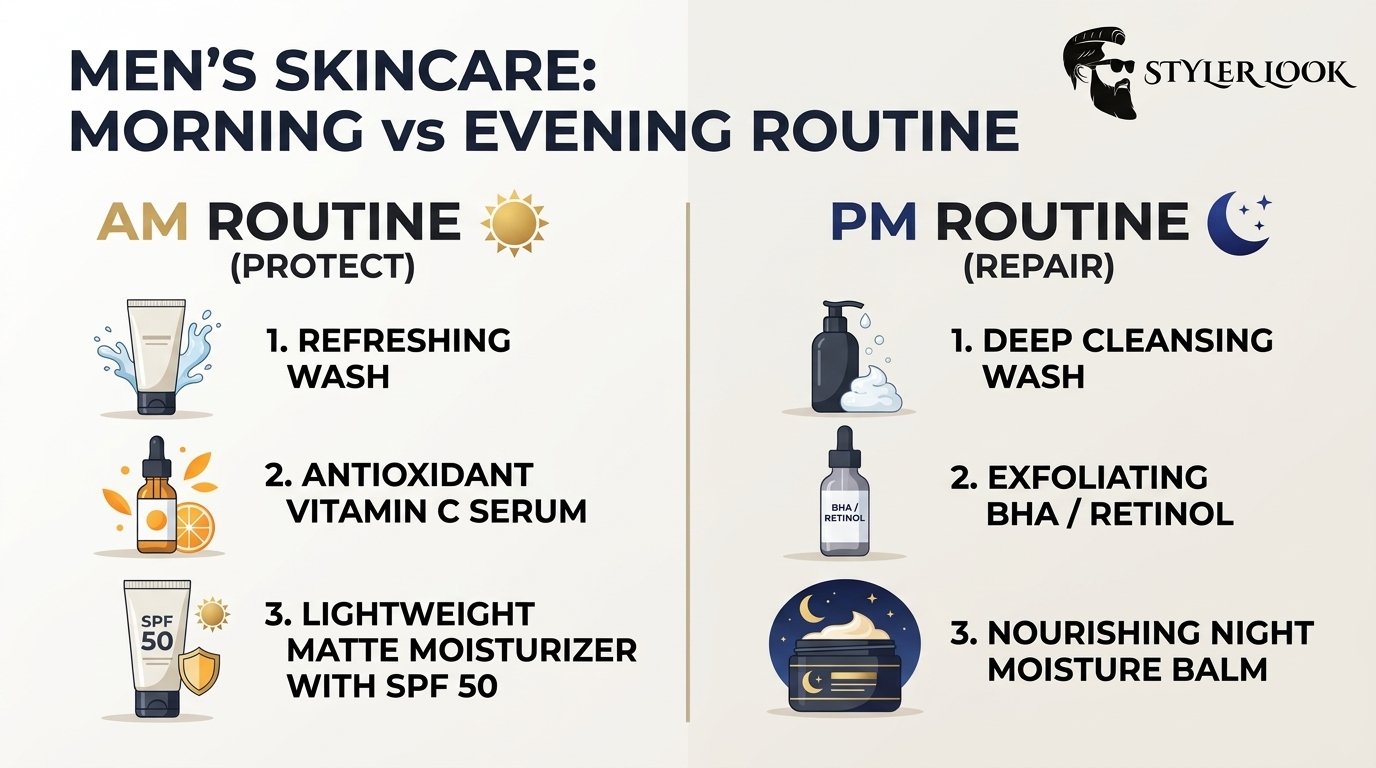
Men’s skincare routine success starts with three steps, careful shaving, and daily sunscreen, not with a shelf full of bottles. A short routine used every day beats a long routine abandoned after three weeks.
Consistency matters more than product count for most men. Simple routines survive busy mornings, gym days, travel days, and outdoor work far better than complex routines.
General information only follows here, not medical advice. Persistent acne, painful ingrown hairs, persistent greasy flaking, changing moles, or scarring bumps need a board-certified dermatologist.
The Short Answer
The Three Step Core
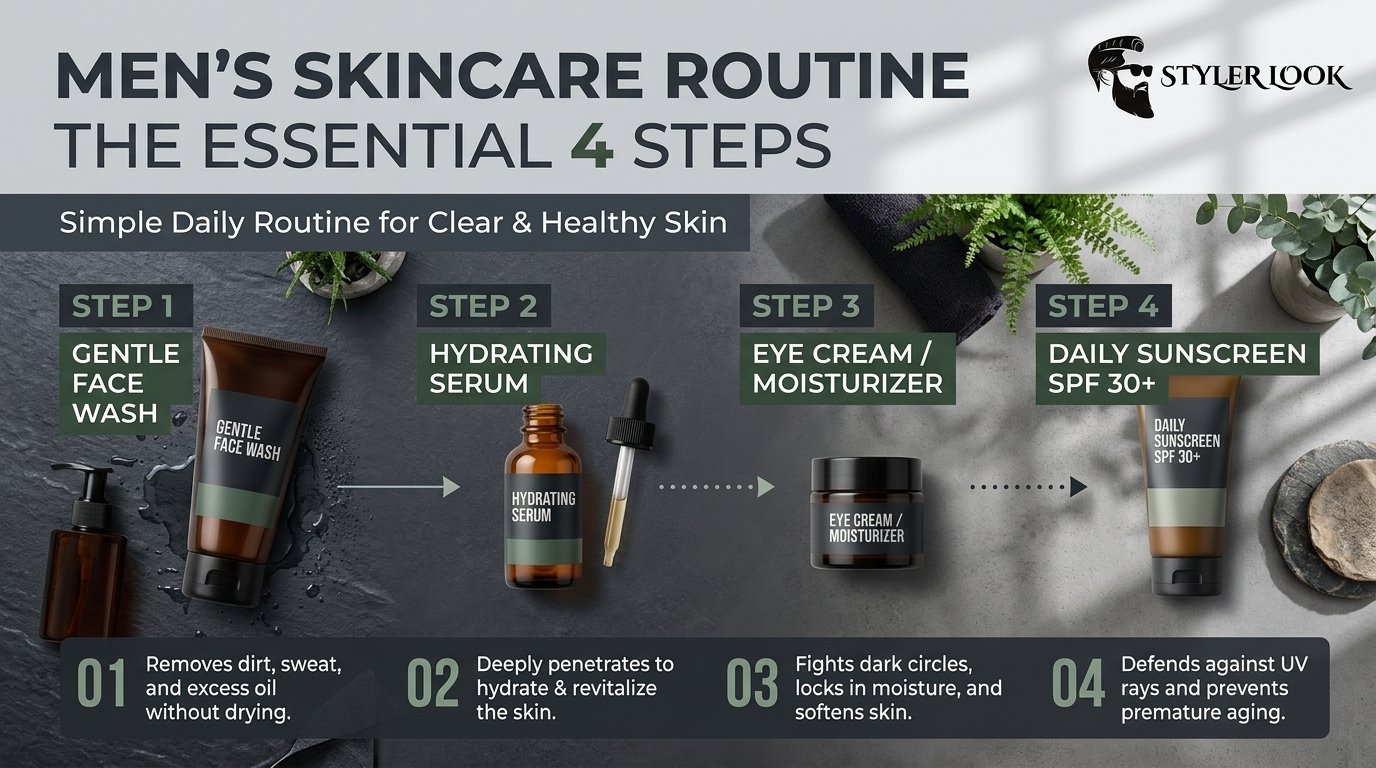
Morning routine runs gentle cleanser, moisturizer, then broad spectrum sunscreen. Sunscreen needs SPF 30 or higher, applied generously across face, neck, and ears.
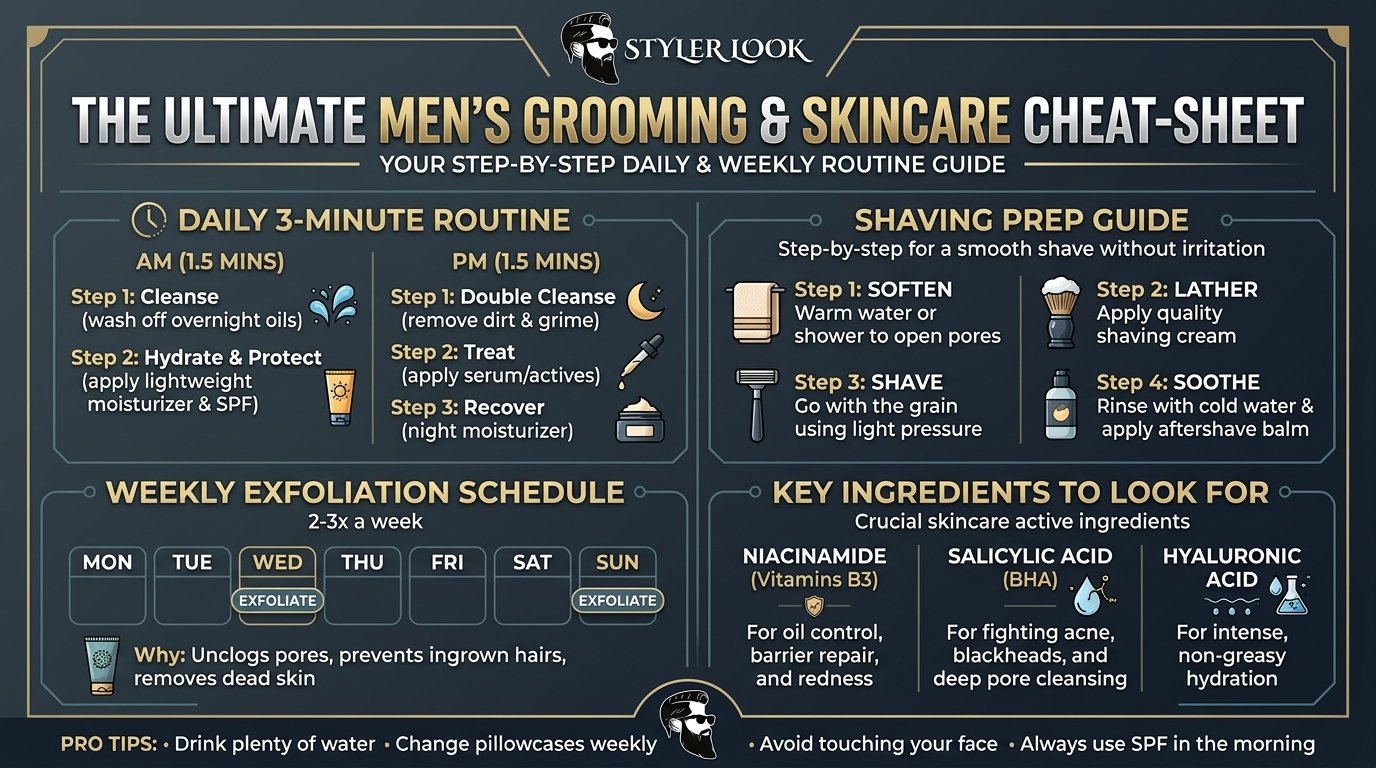
Night routine runs gentle cleanser, then moisturizer. Night washing matters most, because sunscreen, sweat, oil, and pollution sit on skin all day.
Three steps take about two to three minutes morning and night. Short routines fit real life, which explains why they outperform longer routines for most men.
Core routine should run for two weeks before any upgrade joins. Two calm weeks prove tolerance and create a baseline for future changes.
Shaving Day Changes in One View
Shaving day adds warm water softening, moisturizing shaving cream, and careful blade work. Shaving itself exfoliates skin, so daily shavers rarely need a separate scrub.
After shaving, moisturizer goes on immediately while skin stays slightly damp. Fragrance free moisturizer calms freshly shaved skin better than alcohol heavy splash.
Non shaving days follow the normal core routine without extra steps. Exfoliation, when used, belongs on non shaving days to avoid double irritation.
Why Men’s Routines Differ in Practice
Oil, Pores, and Thicker Skin
Male skin often produces more oil through larger sebaceous glands. Oilier skin shows shine by midday, larger pores, and more blackheads for many men.
Male skin also tends to run thicker with higher collagen density. Thicker skin often shows lines later, then shows them more abruptly when aging becomes visible.
Biology differences remain smaller than marketing suggests for product choice. Skin type, shaving frequency, and sun exposure matter more than gender labels on bottles.
Gel textures suit oily skin, lotion suits combination skin, cream suits dry skin. Texture choice should follow skin behaviour, not packaging colour or scent.
Shaving Is Exfoliation
A razor removes hair plus a layer of surface skin cells. Shaving therefore acts as mechanical exfoliation, whether or not a man calls it skincare.
Daily shavers rarely need gritty scrubs or daily acids on shaved areas. Scrub plus shave together often turns mild irritation into persistent redness.
Shaving irritation signals barrier damage plus friction, not dirty skin. Gentler technique, sharper blades, and moisturizer fix most irritation faster than stronger products.
Razor burn differs from ingrown hairs, acne, and allergic reactions. Each problem needs different handling, so diagnosis before treatment prevents wasted effort.
The Men’s Label Myth
Products labelled for men differ mainly in fragrance, packaging, and texture. Active ingredients, concentrations, and safety rules stay the same across gender labels.
Women’s products work for men when formula matches skin type. Ingredient list and feel matter more than marketing claims on the front label.
Strong masculine fragrance often irritates freshly shaved or sensitive skin. Fragrance free options suit shaving days better than heavily scented products.
Price differences between men’s and women’s versions rarely reflect formula differences. Compare ingredient lists, not labels, when choosing between similar products.
Why Most Men’s Routines Fail
Complexity causes most routine failures, not laziness or forgetfulness. Seven steps, perfect timing, and many bottles collapse under busy schedules.
Abandoned product sets teach men that skincare does nothing. Consistency with three products beats enthusiasm with seven products every time.
Bathroom counter clutter also hides which product caused irritation. Fewer products make troubleshooting fast when redness or breakouts appear.
Routines tied to existing habits stick better than standalone rituals. Pair morning skincare with brushing teeth, and night skincare with showering.
Find Your Skin Type in 60 Seconds
The Bare Face Test
Wash with a gentle cleanser, pat dry, and wait one hour without products. Skin behaviour during that hour reveals type more reliably than online quizzes.
Shine across the whole face suggests oily skin. Shine only across forehead, nose, and chin suggests combination skin.
Tightness, flaking, or roughness suggests dry skin. Comfort with few visible problems suggests normal skin, though normal skin still needs protection.
Redness, stinging, or quick reactions suggest sensitive or reactive skin. Sensitivity can overlap with any type, so treat it as an extra filter.
Oily, Dry, Combination, Normal, and Sensitive Signs
Oily skin often shows shine by midday, larger pores, and frequent blackheads. Oil production alone never means skin needs no moisturizer.
Dry skin often feels tight after washing and looks dull or flaky. Dry skin needs richer moisture, gentler cleansing, and slower active introduction.
Combination skin mixes oily zones with normal or dry cheeks. Zone based care helps, with lighter layers on oily zones and richer layers on dry zones.
Sensitive skin reacts to fragrance, strong acids, scrubs, and frequent changes. Short, fragrance free routines with slow introductions protect reactive skin best.
Dehydrated, Dry, and Oily Confusion
Dehydrated skin lacks water, while dry skin lacks oil and barrier lipids. Dehydrated skin can still look shiny, which confuses many men into skipping moisturizer.
Tight cheeks plus a shiny forehead often signal dehydration, not true oily skin. Humectant layers plus light moisturizer usually help more than harsh oil control.
Harsh cleansing worsens dehydration by stripping water and barrier lipids together. Gentle cleansing plus hydration layers restore comfort faster than stronger acids.
The Morning Routine for Men
Morning Steps in Order
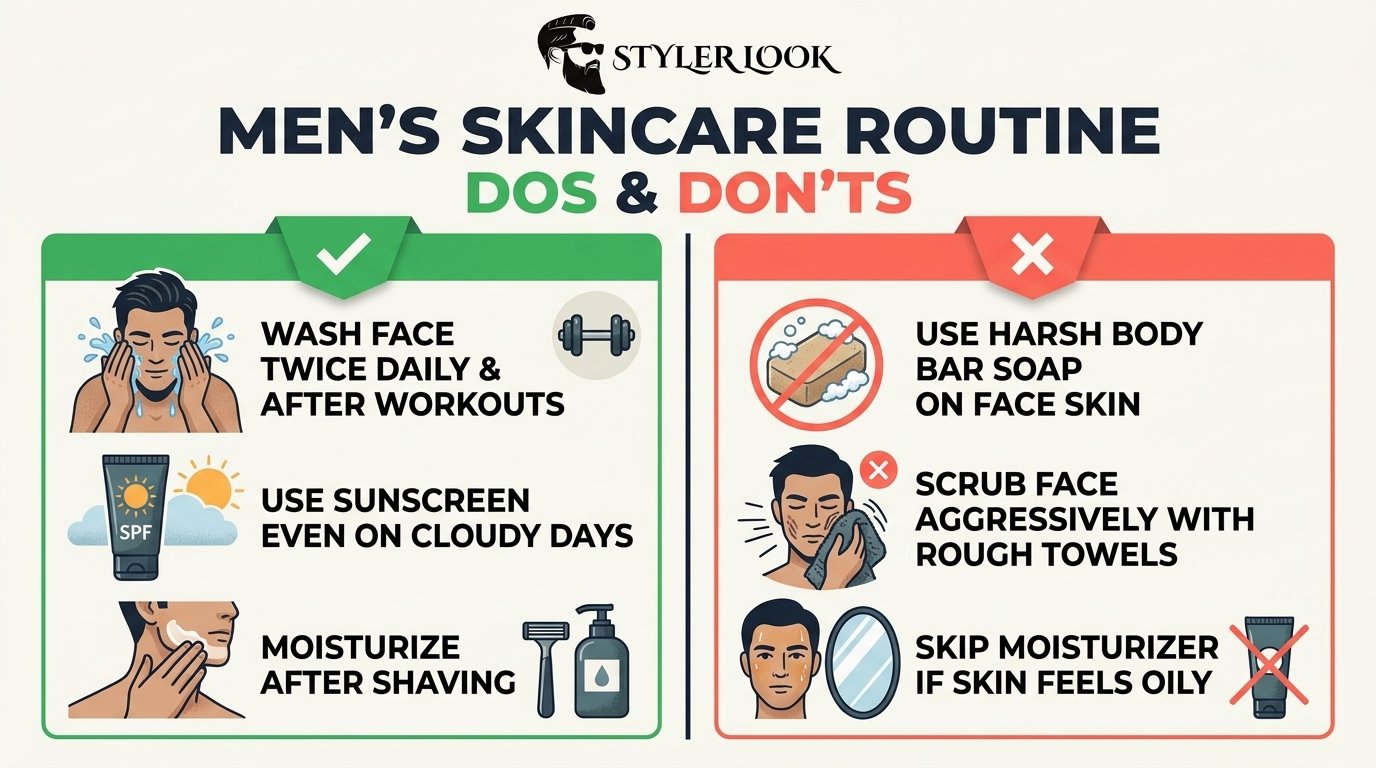
Morning routine order runs cleanser, moisturizer, then sunscreen. Thinnest textures go first, richest layers go last, with sunscreen always final.
Oily skin usually benefits from a gentle morning cleanse. Dry or calm skin can rinse with water in the morning when night products felt comfortable.
Wait about thirty to sixty seconds between layers so each layer settles before the next layer goes on. Waiting reduces pilling under sunscreen.
Apply sunscreen generously across face, neck, ears, and scalp edges. About one teaspoon commonly covers the face, though label directions take priority.
Sunscreen Amount, Order, and Reapplication
Sunscreen goes last in the morning routine, before any grooming products. Sunscreen mixed into other products weakens coverage unpredictably.
Reapply every two hours during extended outdoor exposure, sweating, or swimming. Daily indoor routines still benefit from midday reapplication near windows or driving.
Missed spots commonly include ears, hairline, neck, and tops of hands. Sunscreen should cover every exposed area, not only the central face.
Mineral sunscreen uses zinc oxide or titanium dioxide as active filters. Chemical sunscreen uses organic filters that absorb ultraviolet energy before skin damage occurs.
Moisturizer With SPF
Moisturizer with SPF simplifies mornings when it offers broad spectrum SPF 30 or higher. Combined products work only when applied generously and reapplied as directed.
Most men under apply moisturizer with SPF, which reduces actual protection. Separate sunscreen often delivers more reliable coverage than a thin moisturizer layer.
Moisturizer with SPF suits calm indoor days better than outdoor work days. Outdoor work needs dedicated sunscreen plus reapplication every two hours.
Check SPF labelling carefully, because moisturizer SPF claims vary widely. Broad spectrum, water resistant, and SPF 30 or higher form the minimum standard.
The Night Routine for Men
Night Steps in Order
Night routine order runs cleanser, one treatment when used, then moisturizer. Face oil, when used, goes last at night to seal lighter layers beneath it.
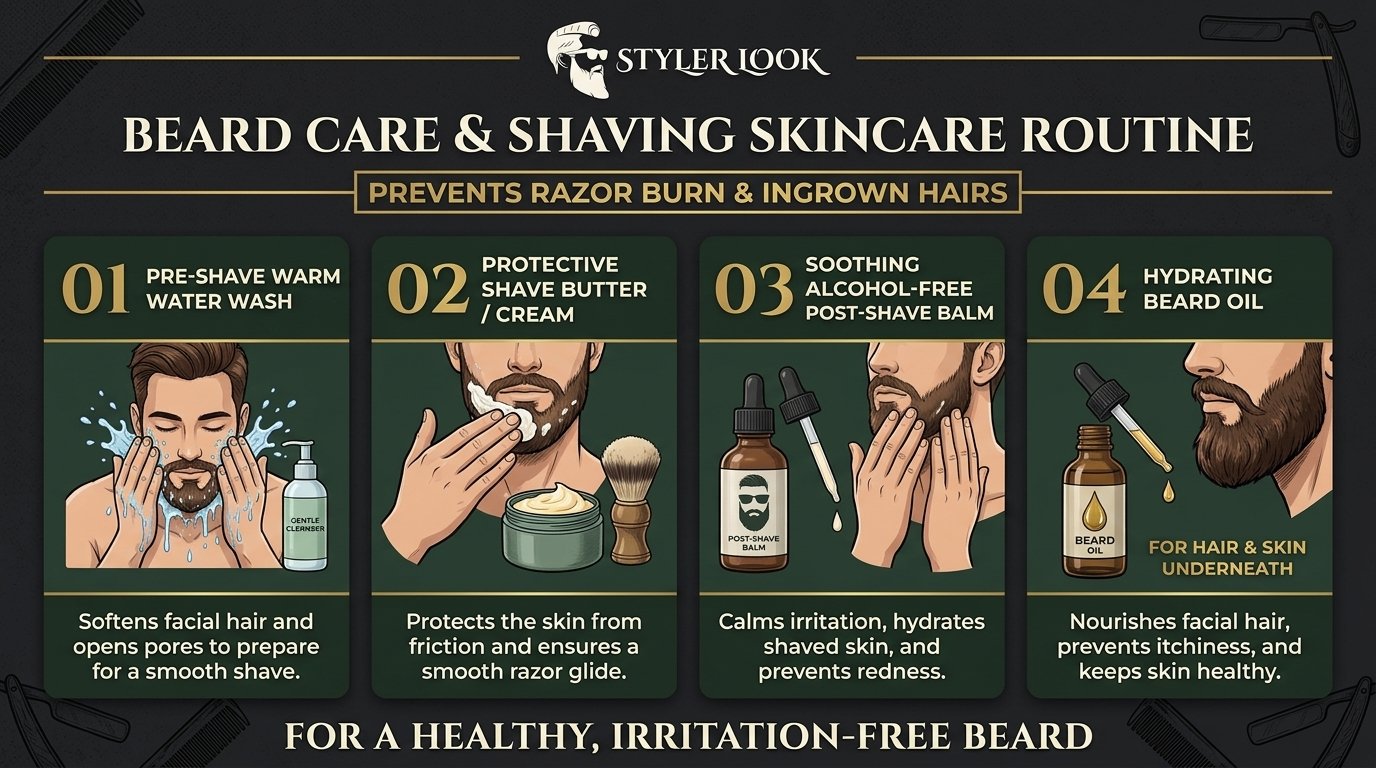
Night cleansing removes sunscreen, sweat, oil, and pollution from the day. Skipping night washing lets congestion build overnight, especially for oily skin.
Night moisturizer can run richer than morning moisturizer. Richer night cream supports barrier repair during sleep without makeup or sunscreen concerns.
Treatment products belong at night for retinoids and many acids. Night timing reduces sun sensitivity concerns and lets treatments work during sleep.
The Night Wash That Matters Most
Evening washing matters more than morning washing for most men. Morning washing refreshes skin, while evening washing removes the full day.
After gym sessions, wash as soon as practical to remove sweat and salt. Salt and oil left on skin can irritate skin and worsen breakouts.
Lukewarm water protects barrier lipids better than hot water. Hot water strips natural oils and worsens dryness, redness, and sensitivity.
Pat skin dry gently instead of rubbing with towels. Rubbing creates friction irritation, especially for sensitive and acne prone skin.
One Treatment at a Time
One treatment per night prevents most beginner irritation. Retinoid, acid, or benzoyl peroxide each deserve separate introduction weeks.
Add one upgrade every two weeks minimum, so triggers stay traceable. Multiple new products hide which product caused irritation or breakouts.
Treatment frequency builds slowly, from two nights weekly upward. Frequency increases only when skin feels calm the morning after treatment nights.
Recovery nights use only cleanser and moisturizer, without treatment. Recovery nights let skin rest after retinoid or acid nights.
Shaving Without Razor Burn
Before Shaving: Warm Water and Softening
Wet skin and facial hair with warm water before shaving. Warm water softens hair and makes cutting easier with less tugging.
Shave after a shower when possible, because hair stays softest then. Post shower shaving reduces friction and blade drag across skin.
Apply moisturizing shaving cream or gel and leave it for two to three minutes. Softening time matters, especially for coarse or curly facial hair.
Pre shave oil suits very dry or coarse hair, but never replaces shaving cream. Pre shave oil adds glide, while shaving cream provides cushion and visibility.
Gentle, fragrance free shaving cream suits sensitive and shaving irritated skin. Fragrance and alcohol in shaving products often sting freshly shaved skin.
During Shaving: Grain, Strokes, and Blade Care
Shave in the direction of hair growth, known as with the grain. With the grain shaving cuts hair cleanly without pulling hair beneath skin surface.
Use short strokes and go over each area only once or twice. Multiple passes increase irritation, especially on neck and jawline areas.
Rinse the blade after each stroke to clear hair and cream buildup. Clean blades cut smoothly, while clogged blades tug and skip across skin.
Press lightly and never stretch skin taut while shaving. Skin stretching changes hair angle and increases ingrown hair risk significantly.
Never dry shave, even when rushed or travelling. Dry shaving creates friction damage that moisturizer cannot fully repair afterward.
After Shaving: Cool Cloth and Moisturizer
Rinse with lukewarm water after shaving, then pat skin dry gently. Lukewarm rinsing removes cream residue without shocking freshly shaved skin.
Hold a cool, damp cloth on irritated areas for a few minutes. Cool cloths calm redness and reduce burning after difficult shaves.
Apply fragrance free moisturizer immediately while skin stays slightly damp. Damp skin application helps moisturizer lock in water and calm irritation.
Skip alcohol heavy aftershave splash on irritated or freshly shaved skin. Alcohol splash stings, dries skin, and delays barrier recovery after shaving.
Aftershave balm often works as moisturizer on shaving days. Check balm ingredients for alcohol levels, because high alcohol balms still dry skin.
Blade Replacement and Razor Care
Change blades after five to seven shaves, or sooner when tugging appears. Dull blades tug hair, skip across skin, and increase razor burn.
Rinse blades thoroughly after each shave and store them dry. Wet storage dulls blades faster and encourages bacterial buildup on blades.
Replace blades immediately after nicking skin repeatedly or feeling drag. Blade drag signals dullness, even when blade age seems low.
Multi blade cartridges offer closeness, but can increase ingrown hair risk. Closer cuts leave hair tips beneath skin surface, where curling causes bumps.
Single blade razors suit many men with razor bumps, because cuts stay less close. Less close cuts leave hair slightly above skin, reducing ingrown risk.
Shaving Day Compared With Non Shaving Day
| Step | Shaving day | Non shaving day |
|---|---|---|
| Morning cleanse | Gentle cleanser or warm water rinse | Gentle cleanser |
| Shaving | Warm water, shaving cream, with grain, moisturizer after | No shaving steps |
| Exfoliation | Skip scrubs and acids on shaved areas | Gentle exfoliation allowed, one to two times weekly |
| Moisturizer | Fragrance free moisturizer immediately after shaving | Normal moisturizer morning and night |
| Sunscreen | Broad spectrum SPF 30 or higher, after moisturizer | Broad spectrum SPF 30 or higher, after moisturizer |
| Night treatment | Skip strong acids on freshly shaved areas | Retinoid or acid treatment allowed, one at a time |
Ingrown Hairs and Razor Bumps
Razor Burn Compared With Ingrown Hair Compared With Acne
| Problem | What it looks like | Main cause | First action |
|---|---|---|---|
| Razor burn | Redness, burning, stinging after shaving | Friction, dull blade, dry shaving | Cool cloth, fragrance free moisturizer, shaving break |
| Ingrown hair | Painful bump with trapped hair, often on neck and jaw | Hair curling back into skin after close shaving | Gentle technique, leave-on acid on non shaving nights, trimmer option |
| Acne | Pimples, blackheads, whiteheads across face | Clogged pores, oil, bacteria, hormones | Gentle cleansing, one acne treatment, barrier moisturizer |
| Folliculitis | Red bumps around hair follicles, sometimes infected looking | Irritated or infected follicles | Stop picking, gentle care, dermatologist if painful or spreading |
Razor burn appears quickly after shaving and fades within days. Ingrown hairs appear later, persist longer, and often feel painful or itchy.
Acne appears across face, not only in shaved areas. Ingrown hairs cluster in beard and neck areas where hair curls most.
Picking ingrown hairs worsens inflammation and can cause dark marks or scarring. Hands off care plus technique changes help more than squeezing.
Pseudofolliculitis Barbae Explained
Pseudofolliculitis barbae means ingrown hairs causing inflammatory bumps in beard areas. Short, curly hairs grow outward, then curve back into skin.
Curly and coarse facial hair increases pseudofolliculitis risk significantly. Men with curly hair and men with darker skin tones face higher risk.
Close shaving increases risk, because hair tips sit beneath skin surface. Hair tips then curl inward instead of growing outward normally.
Repeated ingrown hairs can leave dark marks and, in severe cases, scarring. Early technique changes matter more than later product fixes.
Severe, scarring, or persistent bumps need dermatologist assessment. Dermatologists can discuss medical treatments and laser options for persistent cases.
Technique Fixes That Matter Most
Shave after warming and softening hair, never on dry skin. Warmth and softening reduce tugging and hair breakage beneath skin.
Use a sharp blade, avoid stretching skin, and shave with the grain. Each technique fix reduces hair angle changes that cause ingrown growth.
Take short strokes and avoid going over the same area repeatedly. Repeated passes increase irritation and hair tip damage.
Consider a trimmer leaving at least one millimetre of hair for problem areas. Longer stubble curls less and stays above skin surface better.
Grow hair out during severe flare ups when work and life allow. Hair growth breaks the ingrown cycle and lets bumps heal.
Leave On Acids on Non Shaving Nights
Leave on salicylic acid helps keep follicle openings clear for ingrown prone skin. Salicylic acid works inside oil filled pores, which suits beard areas.
Glycolic acid also helps surface cell turnover around follicles. Glycolic acid suits non shaving nights, never freshly shaved skin.
Acid frequency for ingrown prone skin commonly runs two to three nights weekly. Acid nights stay separate from retinoid nights initially.
Stop acids during acute flare ups and return only after bumps calm. Acids on inflamed bumps worsen redness and pain.
Acids never replace technique fixes for ingrown hairs. Technique changes matter as much as any leave on product.
When to Grow Out, Trim, or See a Dermatologist
Grow hair out when bumps persist despite technique changes. Growth removes the close shaving trigger entirely for many men.
Trim with a guard when clean shaven looks cause repeated bumps. Trimmers leave hair above skin, reducing curl back risk.
See a dermatologist when bumps turn painful, look infected, or scar. Infection signs include spreading redness, warmth, pus, and fever.
See a dermatologist when bumps persist for months despite technique changes. Persistent cases may need prescription treatment or laser discussion.
Laser treatment discussion belongs with experienced clinicians, especially for darker skin. Laser experience with skin of color reduces complication risk.
Blade and Shaver Comparison
| Razor type | Closeness | Ingrown hair risk | Cost pattern | Best for |
|---|---|---|---|---|
| Single blade safety razor | Moderate, less close | Lower | Low blade cost, higher learning curve | Razor bumps, curly hair, budget long term |
| Multi blade cartridge | Closest | Higher | Higher cartridge cost, easy use | Smooth finish, low irritation when technique is gentle |
| Electric foil shaver | Moderate, less close | Lower to moderate | Higher upfront cost, low ongoing cost | Sensitive skin, travel, quick shaves |
| Electric rotary shaver | Moderate | Moderate | Higher upfront cost, low ongoing cost | Contours, neck areas, convenience |
| Trimmer with guard | Least close, stubble length | Lowest | Low ongoing cost | Ingrown prone skin, beard maintenance, neckline cleanup |
Single Blade Compared With Multi Blade
Single blade razors cut hair once at skin level, not below skin level. Single cuts leave hair tips above skin, reducing curl back risk.
Multi blade razors lift and cut hair below skin level for closer finishes. Below skin cuts increase ingrown risk for curly hair.
Single blade razors need technique practice, angle control, and light pressure. Learning curve pays off for men with persistent razor bumps.
Multi blade razors suit men without ingrown problems who want convenience. Convenience matters, especially for rushed mornings and travel.
Electric Shaver Compared With Razor
Electric shavers cut hair above skin, reducing close cut ingrown risk. Electric shavers suit sensitive skin and ingrown prone skin often.
Electric shavers need clean, dry skin and regular cleaning for best results. Dirty shavers tug hair and irritate skin like dull blades.
Electric shavers rarely match blade closeness, especially on neck contours. Closeness trade offs matter less when ingrown prevention matters more.
Foil shavers suit straight strokes and flat areas better. Rotary shavers suit contours and neck areas better for many men.
Cost per Month by Razor Type
Cartridge razors cost most monthly, through frequent cartridge replacement. Blade change every five to seven shaves adds up quickly.
Safety razor blades cost least monthly, often cents per blade. Safety razor handles cost more upfront, then blade costs stay low.
Electric shavers cost most upfront, then least ongoing monthly. Replacement foils and cleaning supplies add occasional costs.
Trimmers cost low monthly, with occasional blade oil and cleaning. Trimmer guards last long with basic care.
Cost calculations should include shaving cream, moisturizer, and sunscreen. Razor cost alone hides total routine cost per month.
Beard Skin Care
Wash Skin Under Beard, Not Only Hair
Beard hair traps oil, sweat, dead skin, and product residue against skin. Skin under beard still produces sebum, sheds cells, and gets dry.
Massage cleanser through beard down to skin surface during washing. Hair washing alone leaves skin underneath dirty and congested.
Rinse beard thoroughly, because cleanser residue irritates skin underneath. Residue buildup causes itching, flaking, and breakouts under beards.
Pat beard and skin dry gently, leaving slight moisture behind. Moisturizer massaged into skin under beard works better on slightly damp skin.
Wash beard skin daily, even when beard hair looks clean. Daily washing prevents buildup that hair alone hides.
Beard Oil Compared With Moisturizer
| Product | Main job | Skin benefit | Hair benefit |
|---|---|---|---|
| Beard oil | Conditions beard hair, reduces frizz | Low, unless worked down to skin | High, softer and shinier hair |
| Moisturizer | Hydrates skin, supports barrier | High, direct skin hydration | Low, hair feels softer indirectly |
| Beard balm | Styles hair, adds light hold | Moderate, if worked to skin | High, shape and control |
| Aftershave balm | Calms freshly shaved skin | High on shaved areas | Low, not a beard product |
Beard oil conditions hair more than skin, unless deliberately worked to surface. Oil sitting on hair never reaches skin underneath effectively.
Moisturizer hydrates skin under beard directly, which oil cannot replace. Skin under beard needs water based hydration, not only oil sealing.
Use both products when beard hair feels dry and skin feels dry. Moisturizer first on skin, beard oil second on hair, works best.
Sensitive skin under beard suits fragrance free moisturizer over scented beard oil. Fragrance under beard traps scent against skin all day.
Beard Dandruff Compared With Seborrheic Dermatitis
Beard dandruff commonly means dry flaking from dry skin under beard. Dry flaking improves with moisturizer, gentle washing, and hydration.
Seborrheic dermatitis means greasy, yellowish flaking with redness and itching. Greasy flaking involves yeast thriving in oily areas, not simple dryness.
Persistent, itchy, greasy flaking needs medical opinion, not more beard oil. More oil can worsen yeast driven flaking instead of helping.
Targeted dandruff shampoo on beard areas helps some flaking cases. Dandruff shampoo use on face needs care, because facial skin differs from scalp.
Wash beard skin regularly, moisturize skin underneath, and avoid heavy oils during flaking. Heavy oils trap flakes and worsen congestion under beards.
Sunscreen on a Bearded Face
Beard hair provides partial shading at best, never full sun protection. Cheeks, nose, forehead, and neck remain fully exposed on bearded faces.
Apply sunscreen to exposed skin first, then work remaining sunscreen around beard edges. Sunscreen under beard edges protects skin near hairline and neckline.
Sunscreen sprays and sticks suit bearded faces better than thick creams sometimes. Spray and stick formats reach skin without heavy beard residue.
Reapply sunscreen every two hours outdoors, even with a beard. Beard hair never replaces reapplication for exposed skin areas.
Neck, ears, and scalp edges need sunscreen on bearded faces too. Missed neck and ear areas show sun damage early for outdoor workers.
Neckline and Cheek Line Trimming
Trim neckline after a warm shower when hair stays soft. Soft hair cuts cleanly with less tugging and irritation.
Use shaving gel or cream when cleaning neckline with a blade. Blade cleanup without lubrication causes neckline bumps quickly.
Shave neckline with the grain, using light pressure and short strokes. Neck hair often grows in multiple directions, so check growth patterns first.
Keep cheek lines full and natural, trimming only stray hairs. Aggressive cheek line shaping creates irritation and uneven regrowth.
Moisturize neckline and cheek line after trimming, just like shaved areas. Trimmed skin needs the same barrier care as shaved skin.
Men’s Routine by Skin Type
| Skin type | Morning routine | Night routine | Avoid |
|---|---|---|---|
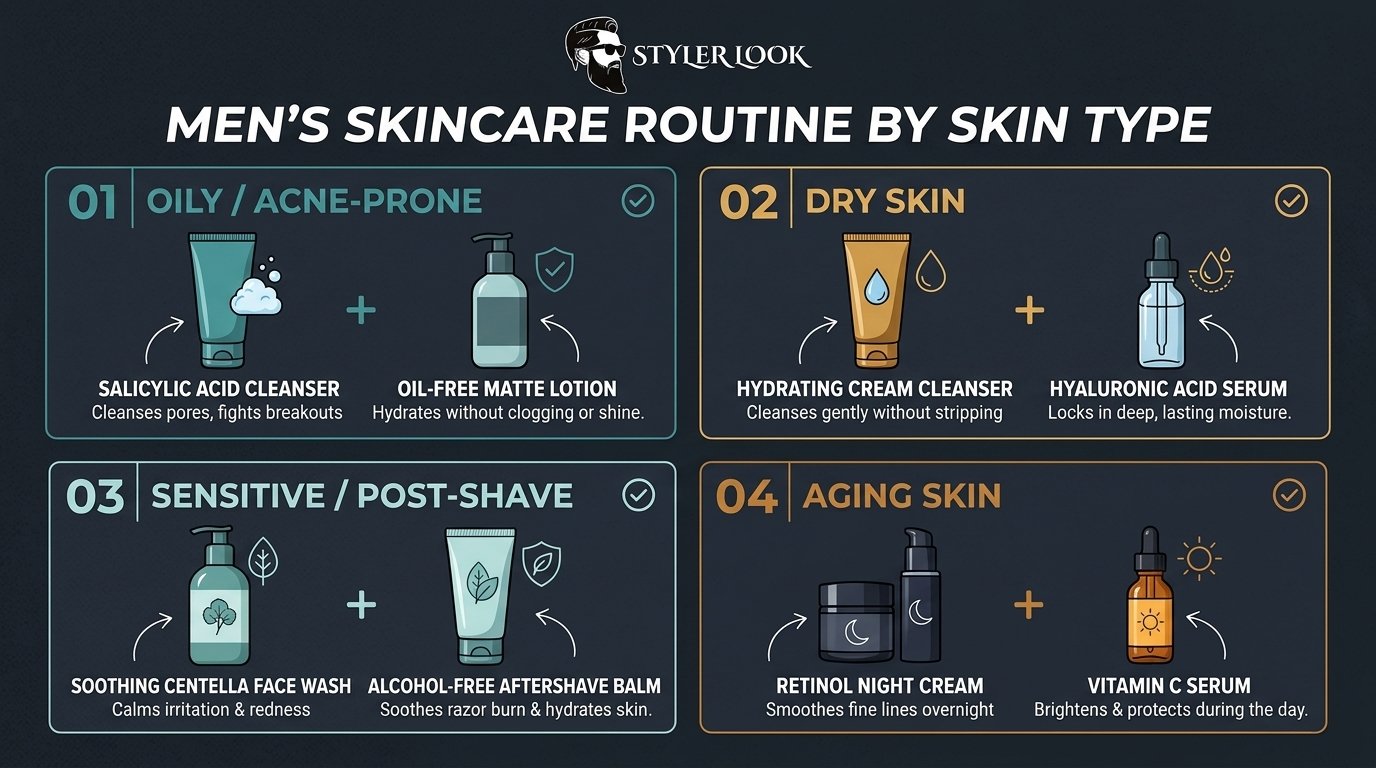
| Oily | Gel cleanser, niacinamide serum, gel moisturizer, sunscreen | Gel cleanser, salicylic acid or retinoid alternate nights, light moisturizer | Heavy cream, harsh scrubs, skipping moisturizer |
| Dry | Cream cleanser, hyaluronic acid serum, rich cream, sunscreen | Cream cleanser, gentle treatment, rich cream | Foaming cleanser, daily acids, alcohol splash |
| Combination | Gentle foaming cleanser, vitamin C serum, lotion, sunscreen | Gentle cleanser, niacinamide or retinoid, lotion | One heavy product everywhere, harsh T zone scrubs |
| Sensitive | Water rinse or gentle cream cleanser, barrier moisturizer, mineral sunscreen | Gentle cleanser, very gentle treatment only, barrier cream | Fragrance, strong acids, frequent new products |
| Normal | Gentle cleanser, vitamin C serum, lotion, sunscreen | Gentle cleanser, retinoid or peptide treatment, lotion | Overloading a balanced routine with many actives |
| Acne prone | Gel cleanser, niacinamide serum, light moisturizer, sunscreen | Gel cleanser, retinoid or salicylic acid, light moisturizer | Heavy oils, picking, harsh drying washes |
| Skin of color | Gentle cleanser, vitamin C or niacinamide serum, moisturizer, sunscreen | Gentle cleanser, retinoid or azelaic acid, moisturizer | Harsh benzoyl peroxide routines without barrier support |
Oily and Acne Prone Routines
Oily skin needs oil control without barrier stripping. Gentle foaming or gel cleanser removes excess oil while preserving comfort.
Niacinamide serum helps oil appearance, pores, and redness for many oily types. Niacinamide pairs well with most morning routines and rarely adds heaviness.
Salicylic acid suits pores and blackheads, because it works inside oil filled pores. Salicylic acid concentrations around half to two percent appear commonly.
Retinoid treatment at night also helps oil glands and pore congestion over time. Alternate retinoid nights with acid nights, never stack both initially.
Light, non comedogenic moisturizer prevents treatment dryness without clogging pores. Gel cream textures suit most acne prone routines better than heavy creams.
Dry and Sensitive Routines
Dry skin needs cream cleanser, humectant layers, and richer sealing moisture. Cream cleanser preserves natural lipids better than foaming cleanser.
Hyaluronic acid serum works best on damp skin, followed immediately by moisturizer. Damp skin application helps humectants draw water inward.
Ceramide cream supports barrier lipids, cholesterol, and fatty acids. Barrier support reduces tightness, flaking, and sensitivity during cold weather.
Sensitive skin needs the shortest routine that still cleans, hydrates, and protects. Fragrance free cleanser, barrier moisturizer, and mineral sunscreen form a safe core.
Sensitive flare ups need strip back to cleanser, moisturizer, and sunscreen only. Strip back routines remove variables and let skin recover.
Combination, Normal, and Skin of Color Routines
Combination skin needs balance, not one extreme product everywhere. Gentle foaming cleanser cleans oily zones without stripping dry cheeks.
Lotion moisturizer offers a middle texture for most combination routines. Richer cream can target dry cheeks only, while gel targets oily zones only.
Normal skin needs maintenance, protection, and one targeted treatment. Balanced skin already handles daily stress well, so prevention matters most.
Skin of color routines need extra care around post acne marks and irritation. Irritation often leaves dark marks that last longer than original breakouts.
Gentle acids, niacinamide, vitamin C, and azelaic acid suit tone concerns carefully. Slow introduction prevents irritation driven pigmentation from aggressive treatments.
Upgrades, One at a Time
Vitamin C in the Morning
Vitamin C serum suits dullness, uneven tone, and post acne marks. Concentrations around ten to twenty percent appear commonly, with lower strengths suiting beginners.
Ferulic acid and vitamin E often pair with vitamin C for stability. Stable formulas matter, because oxidized vitamin C can irritate skin.
Sensitive skin should start with gentler vitamin C forms or lower frequency. Daily strong vitamin C can sting reactive skin, so alternate mornings work better.
Vitamin C never replaces sunscreen, even though both protect against environmental damage. Sunscreen blocks ultraviolet damage directly, while antioxidants support defence.
Retinoid at Night
Retinoid products support cell turnover, pores, texture, and fine lines. Over the counter retinol suits beginners, while stronger prescription retinoids need clinician guidance.
Start retinoid use two to three nights weekly, then build slowly. Pea sized amounts cover the whole face, and more product increases irritation without faster results.
Sandwich method places moisturizer before and after retinoid products. Moisturizer buffers penetration, reducing stinging and peeling for sensitive skin.
Retinoid use increases sun sensitivity, so morning sunscreen becomes even more important. Skipping sunscreen during retinoid use undermines treatment benefits.
Salicylic Acid for Pores and Ingrowns
Salicylic acid clears pore congestion and helps follicle openings stay clear. Pore clearing helps blackheads, acne, and ingrown prone beard areas.
Salicylic acid frequency commonly runs two to four nights weekly. Frequency should follow tolerance, season, and other actives in the routine.
Salicylic acid nights stay separate from retinoid nights initially. Alternate nights prevent cumulative irritation from stacked treatments.
Salicylic acid cleansers offer gentler introduction than leave on acids. Cleanser contact time stays short, so irritation risk stays lower.
Niacinamide for Oil and Redness
Niacinamide pairs with vitamin C, retinoids, acids, and peptides for most routines. Bridge ingredients simplify routines by supporting many concerns at once.
Niacinamide concentrations around two to five percent suit most daily routines. Higher concentrations offer little extra benefit and can irritate sensitive skin.
Niacinamide suits oily pores, redness, barrier support, and uneven tone together. Multi benefit ingredients reduce the need for many separate serums.
Eye Cream: Optional, Not Essential
Eye cream stays optional unless eye area needs specific hydration or treatment. Regular moisturizer often suffices for normal eye area skin.
Eye cream helps when eye area feels dry, crepey, or sensitive to stronger actives. Pea sized amounts, patted gently, prevent product migration into eyes.
Under eye puffiness often reflects sleep, fluid, and structure more than products. Eye cream offers modest help, never a complete fix for puffiness.
Compatibility Matrix
| Active | Best paired with | Avoid in same step | Frequency | Time |
|---|---|---|---|---|
| Retinoid | Niacinamide, peptides, ceramides | Vitamin C, acids, benzoyl peroxide | Two to five nights weekly | Night |
| Vitamin C | Ferulic acid, vitamin E, sunscreen | Retinoid, strong acids same step | Once daily | Morning |
| Salicylic acid | Niacinamide, hydrators | Retinoid same night initially | Two to four nights weekly | Night |
| Glycolic acid | Niacinamide, hydrators | Retinoid, scrubs same day | One to three times weekly | Night |
| Benzoyl peroxide | Gentle cleanser, moisturizer | Retinoid same step | As directed, often daily spot use | Morning or night |
| Niacinamide | Almost all actives, ceramides, hyaluronic acid | Very strong acid same step for sensitive skin | Once or twice daily | Morning or night |
| Azelaic acid | Niacinamide, moisturizer, sunscreen | Strong acids same step initially | Once or twice daily | Morning or night |
Men’s Routine by Age
Teens and Simple Acne Focus
Teen routines need gentle cleansing, light moisturizer, and daily sunscreen. Acne treatment belongs in one targeted step, not across every product.
Salicylic acid cleanser or spot treatment suits many teen breakouts. Retinoid treatment needs clinician or parent guidance for younger teens.
Teen routines should avoid strong anti aging actives and multi acid stacks. Young skin needs barrier protection more than aggressive resurfacing.
Makeup removal at night matters less for most teens than consistent washing. Night washing removes oil, sweat, and sunscreen before sleep.
Twenties With Prevention
Twenties routines need protection, hydration, and one preventive active. Vitamin C in the morning plus sunscreen covers most prevention needs.
Retinoid introduction in the late twenties suits texture and early fine lines. Start slowly, two nights weekly, then build tolerance over months.
Twenties routines should avoid chasing every trend at once. Trend hopping creates irritation and hides which product actually helped.
Sun protection in the twenties prevents visible aging in later decades. Ultraviolet damage accumulates early, even when skin looks healthy now.
Thirties With Retinoid Introduction
Thirties routines benefit from vitamin C plus retinoid structure. Morning antioxidant protects, night retinoid treats texture and tone.
Peptide moisturizer adds firming support for retinoid sensitive skin types. Peptides suit mornings or recovery nights without adding irritation.
Hormonal breakouts around jawline and chin need gentle, consistent treatment. Aggressive spot treatments often worsen adult breakouts through barrier damage.
Richer night cream supports skin that feels drier than in the twenties. Texture upgrades should follow comfort, not age labels alone.
Forties and Beyond With Richer Moisture
Mature skin often needs cream cleanser, rich moisturizer, and gentler retinoid forms. Barrier support matters more as natural oil production declines.
Retinoid tolerance may drop, so sandwich method and lower frequency help. Gentle retinoid use still supports texture without constant peeling.
Hydrating serum on damp skin plus ceramide cream restores comfort quickly. Layered hydration beats single heavy cream for many mature routines.
Mole checks matter more with age, especially for outdoor workers. New or changing moles need dermatologist examination, not product experimentation.
Men’s Routine by Budget
| Budget tier | Morning routine | Night routine | Best for |
|---|---|---|---|
| Under 40 dollars | Gentle cleanser, moisturizer, sunscreen | Gentle cleanser, moisturizer | Beginners, students, first routines |
| 40 to 90 dollars | Gentle cleanser, vitamin C serum, moisturizer, sunscreen | Gentle cleanser, retinoid or acid, moisturizer | Balanced routines, one concern focus |
| 90 dollars and above | Gentle cleanser, vitamin C serum, hydrating serum, moisturizer, sunscreen | Cleanser, treatment serum, peptide cream | Targeted routines, mature skin, multiple concerns |
Budget figures above are planning tiers, not live prices. Prices change by retailer, size, and date, so verify current United States prices before buying.
Under 40 Dollar Starter Routine
Starter routines need only cleanser, moisturizer, and sunscreen to succeed. Three reliable products beat ten cheap products that irritate together.
Drugstore cleanser and moisturizer often match luxury formulas on core ingredients. Ceramides, glycerin, and hyaluronic acid appear across price tiers.
Sunscreen deserves the largest share of a starter budget. Daily sunscreen gets used generously, so texture and comfort determine continued use.
Starter routines should run four weeks before adding any treatment serum. Four calm weeks prove core tolerance and create a baseline.
40 to 90 Dollar Balanced Routine
Balanced routines add one morning antioxidant and one night treatment. Vitamin C in the morning and retinoid at night cover most concerns.
Balanced budgets allow better sunscreen texture and one stable serum. Texture comfort matters, because uncomfortable products get skipped.
Balanced routines still need slow introduction for each new active. Add vitamin C first, wait two weeks, then add retinoid slowly at night.
Balanced routines suit combination, normal, oily, and dry skin with texture adjustments. Product types change by skin type, while structure stays constant.
90 Dollar and Above Targeted Routine
Targeted routines add hydrating serum, peptide cream, or beard care as needed. Extra layers should target a named concern, not duplicate existing actives.
Targeted budgets suit mature skin, multiple concerns, or sensitive skin needing buffering. Richer textures and gentler formulas often cost more per unit.
Targeted routines still need the same core discipline as starter routines. Extra products never excuse skipped sunscreen, harsh cleansing, or stacked actives.
Luxury price never guarantees better results, tolerance, or stability. Ingredient list, concentration, packaging, and consistency matter more than price alone.
Where to Save and Where to Spend
- Save on cleanser: Gentle cleansing needs thirty seconds, not luxury texture.
- Save on basic moisturizer: Ceramide, glycerin, and simple textures work across prices.
- Spend on sunscreen: Comfortable sunscreen gets used daily, which drives all other results.
- Spend on one stable treatment: Stable vitamin C or gentle retinoid deserves careful selection.
- Save on toner and essence: Optional layers rarely justify premium prices for beginners.
- Spend on blade quality: Sharp blades prevent razor burn better than expensive aftershave.
Gym, Outdoor Work, and Travel Routines
Post Gym Wash and Kit
Post gym washing should happen as soon as practical after training. Sweat, salt, and oil left on skin irritate skin and worsen breakouts.
Gym bag kit needs gentle cleanser, moisturizer, and sunscreen only. Gym kits stay simple, because post workout skin needs cleaning and comfort first.
Avoid harsh antibacterial washes after every gym session. Harsh washes strip barrier lipids and increase sensitivity over time.
Clean towels, clean pillowcases, and hands off face support gym routines. Shared equipment hygiene matters, but face touching transfers more bacteria daily.
Shaving after gym sessions needs extra care, because sweat irritates freshly shaved skin. Shave after showering and cooling down, not immediately after intense training.
Outdoor Work Reapplication and Protection
Outdoor work routines need dedicated sunscreen plus reapplication every two hours. Moisturizer with SPF rarely survives outdoor work, sweating, and dust.
Hat and sunglasses support sunscreen for outdoor workers. Shade and protective clothing reduce ultraviolet exposure beyond sunscreen alone.
Wind and dust dry skin during outdoor work, so moisturizer matters too. Barrier moisturizer before sunscreen protects against wind and dust irritation.
Neck, ears, scalp edges, and hands need sunscreen during outdoor work. Missed areas show sun damage early for men working outside daily.
Sunscreen sticks suit outdoor reapplication over beards and hairlines. Stick formats reach skin without mess during work breaks.
Travel Shaving Kit
Travel kits need gentle cleanser, moisturizer, sunscreen, and one razor type. Travel routines should mirror home routines, not introduce new products.
Store blades dry and protected during travel to prevent dulling and injury. Blade guards and dry cases protect blades and luggage alike.
Travel sunscreen needs broad spectrum SPF 30 or higher, in travel size. Travel sunscreen should match home sunscreen texture for consistent use.
Avoid trying new shaving products during important trips. New products risk irritation when dermatologist access and recovery time stay limited.
Seasonal Adjustments
Winter With Richer and Gentler Care
Winter routines need richer cream, gentler acids, and stronger barrier support. Cold air plus indoor heating depletes moisture and increases sensitivity.
Reduce exfoliation to once weekly during harsh winter weeks. Barrier focus matters more than resurfacing when skin feels tight or flaky.
Humidifier use at night supports skin hydration during dry heating seasons. Indoor humidity helps moisturizer layers work more effectively overnight.
Sunscreen stays daily in winter, because ultraviolet light reflects off snow and clouds. Winter sun protection matters even when temperatures feel cold.
Summer With Lighter and Stronger Reapplication
Summer routines need gel textures, lighter moisturizer, and stronger sunscreen reapplication. Heat, humidity, and sweat increase oil, congestion, and sun exposure together.
Salicylic acid cleanser can help summer congestion for oily skin types. Summer acids still need alternate nights from retinoids to protect the barrier.
Sweat and sunscreen reapplication matter more than extra serums in summer. Reapply sunscreen every two hours outdoors, after swimming, and after heavy sweating.
Light layers prevent summer pilling under sunscreen and grooming products. Gel moisturizer plus thin serum layers absorb better in humid weather.
Mistakes Men Make
Bar Soap on the Face
Bar soap made for body skin often dries facial skin severely. Body soap pH and surfactants differ from gentle facial cleanser formulas.
Tight feeling after bar soap signals stripping, not cleanliness. Tight skin needs gentler cleansing and moisturizer, not stronger soap.
Facial cleanser costs little more than bar soap per month. Gentle cleanser investment prevents barrier damage and irritation cycles.
Skipping Moisturizer Because Skin Feels Oily
Oily skin still needs hydration and barrier support every day. Skipping moisturizer can increase oil appearance through dehydration compensation.
Gel moisturizer hydrates oily skin without heaviness or shine. Lightweight textures suit oily routines better than skipping moisture entirely.
Oil control products work better on hydrated, comfortable skin. Dehydrated oily skin often looks shinier and breaks out more easily.
Daily Scrub on a Shaved Face
Daily scrub plus daily shaving creates double exfoliation damage. Double exfoliation turns mild irritation into persistent redness quickly.
Shaving already removes surface cells, so scrubs stay unnecessary for daily shavers. Gentle chemical exfoliation on non shaving days suits most men better.
Scrub particles can also spread bacteria across freshly shaved skin. Scrubs on irritated skin increase infection risk and inflammation.
Too Many New Products at Once
Multiple new products hide which product caused irritation or breakouts. One introduction every two weeks keeps diagnosis clear and simple.
New routine excitement often drives full shelf changes overnight. Full changes overwhelm skin and waste money when several products fail together.
Keep a simple product log with start dates and skin reactions. Logs turn guesswork into clear patterns within four weeks.
The 12 Week Build
| Weeks | Morning routine | Night and shaving routine | Goal |
|---|---|---|---|
| Weeks 1 to 2 | Cleanser, moisturizer, sunscreen | Cleanser, moisturizer, gentle shaving technique | Core tolerance |
| Weeks 3 to 4 | Add vitamin C serum | Cleanser, moisturizer, shaving technique review | Morning active tolerance |
| Weeks 5 to 6 | Cleanser, vitamin C, moisturizer, sunscreen | Add retinoid two nights weekly, non shaving nights | Night active tolerance |
| Weeks 7 to 8 | Same morning routine | Retinoid three nights weekly, recovery nights otherwise | Treatment rhythm |
| Weeks 9 to 10 | Same morning routine | Add acid one night weekly, separate from retinoid | Gentle exfoliation |
| Weeks 11 to 12 | Same morning routine | Review, adjust frequency, keep winners only | Stable routine review |
Weeks 1 to 2 With Core and Shaving
Core weeks prove cleanser, moisturizer, sunscreen, and shaving technique tolerance. Calm skin after two weeks creates a reliable baseline.
Track comfort, breakouts, redness, and shaving irritation during core weeks. Simple notes help identify triggers when later actives join.
Core weeks also build habit without treatment pressure. Morning and night consistency matters more than treatment strength early.
Weeks 3 to 8 With One Upgrade at a Time
Vitamin C joins first, because morning tolerance is easier to observe. Morning stinging, redness, or breakouts point clearly to the new serum.
Retinoid joins after vitamin C feels comfortable for two weeks. Night retinoid changes need separate tracking from morning vitamin C changes.
Retinoid frequency builds from two nights to three nights weekly. Frequency increases only when skin feels calm the morning after treatment nights.
Weeks 9 to 12 With Review
Acid exfoliation joins only after retinoid tolerance feels stable. Acid nights stay separate from retinoid nights during review weeks.
Review weeks ask which products helped, which irritated, and which added nothing. Products adding nothing should leave the routine, even when expensive.
Stable routines after twelve weeks need seasonal adjustments, not constant changes. Seasonal texture changes preserve routine structure while adapting to weather.
Quick Answers for Common Decisions
- Best starter routine: Gentle cleanser, moisturizer, sunscreen, used daily for four weeks.
- Best shaving rule: Warm water, shaving cream, with the grain, sharp blade, moisturizer after.
- Best ingrown fix: Technique first, trimmer option second, leave on acid third on non shaving nights.
- Best beard rule: Wash skin under beard, moisturizer on skin, beard oil on hair.
- Best morning active: Vitamin C serum for dullness and uneven tone, under sunscreen.
- Best night active: Retinoid treatment for texture, pores, and fine lines, used slowly.
- Best oily skin texture: Gel cleanser, gel moisturizer, lightweight sunscreen.
- Best budget rule: Save on cleanser, spend on sunscreen comfort and blade quality.
Frequently Asked Questions About Men’s Skincare Routine
What is a good skincare routine for men?
Good men’s routine runs gentle cleanser, moisturizer, and sunscreen daily. Night routine runs cleanser and moisturizer, with one treatment added slowly later.
Good routines stay short enough to use every day, morning and night. Shaving technique matters as much as product choice for most men.
How many products do men really need?
Men need three products to start: cleanser, moisturizer, and sunscreen. Upgrades join one at a time, only for a named concern.
Three products cover cleaning, hydration, barrier support, and sun protection. Extra products add value only when they solve a specific problem.
Do men need skincare products made for men?
Men do not need products labelled for men to get good results. Formula, ingredients, and skin type match matter more than gender labels.
Men’s labelled products differ mainly in fragrance, packaging, and texture. Compare ingredient lists, not labels, when choosing products.
Can men use women’s skincare products?
Men can use women’s skincare products safely when formula matches skin type. Skin care ingredients work the same regardless of packaging gender.
Fragrance and texture preferences may differ, but efficacy does not depend on labels. Choose products by skin behaviour, not by target audience.
Can men use their partner’s skincare?
Men can use a partner’s skincare when formula matches their skin type. Shared products work well for cleanser, moisturizer, and sunscreen basics.
Treatment products need individual tolerance checks, even when shared. Patch testing still matters before full face use of shared treatments.
Should men use moisturizer if skin feels oily?
Men with oily skin need moisturizer every day, preferably gel texture. Moisturizer supports barrier comfort and reduces dehydration driven oil appearance.
Skipping moisturizer often worsens shine, congestion, and treatment irritation. Hydrated oily skin tolerates acids and retinoids better.
Should men wear sunscreen every day?
Men should wear broad spectrum SPF 30 or higher sunscreen every morning. Ultraviolet light passes through windows and clouds during daily life.
Daily sunscreen prevents sunburn, dark spots, and visible aging over time. Sunscreen protection matters indoors, outdoors, and on cloudy days.
How much sunscreen should men apply to the face?
About one teaspoon commonly covers the face, though label directions take priority. Neck and ears need additional sunscreen beyond face coverage.
Thin sunscreen layers leave gaps and reduce stated protection significantly. Generous, even coverage matters more than sunscreen brand or price.
How often should men reapply sunscreen?
Reapply sunscreen every two hours during extended outdoor exposure. Reapply immediately after swimming, heavy sweating, or towel drying.
Daily indoor routines benefit from midday reapplication near windows. Reapplication needs actual sunscreen, not grooming spray alone.
Is a moisturizer with SPF enough?
Moisturizer with SPF works when it offers broad spectrum SPF 30 or higher. Combined products work only when applied generously and reapplied as directed.
Most men under apply moisturizer with SPF, reducing actual protection. Separate sunscreen often delivers more reliable coverage for outdoor days.
How do I stop razor burn?
Stop razor burn with warm water, shaving cream, sharp blades, and light pressure. Shave with the grain, rinse blades often, and moisturize immediately after.
Cool damp cloths calm existing razor burn, while shaving breaks help recovery. Alcohol splash worsens razor burn and should be skipped.
Should I shave with or against the grain?
Shave with the grain for most men, especially with ingrown prone skin. With the grain cutting reduces hair curling back into skin.
Against the grain shaving offers closer finishes but increases ingrown risk. Against the grain passes suit only calm, non ingrown prone skin occasionally.
How often should I change my razor blade?
Change blades after five to seven shaves, or sooner when tugging appears. Dull blades tug hair, skip across skin, and increase razor burn.
Rinse blades thoroughly after each shave and store them dry. Wet storage dulls blades faster and encourages bacterial buildup.
Single blade or multi blade razor: which is better?
Single blade razors suit razor bumps and curly hair better, with lower ingrown risk. Single cuts leave hair tips above skin, reducing curl back.
Multi blade razors suit men without ingrown problems who want convenience and closeness. Closeness trade offs matter less when ingrown risk stays low.
Is an electric shaver better for ingrown hairs?
Electric shavers often help ingrown hairs, because cuts stay above skin level. Electric shavers suit sensitive skin and ingrown prone skin frequently.
Electric shavers rarely match blade closeness, especially on neck contours. Closeness trade offs matter less when ingrown prevention matters more.
What is the best routine for ingrown hairs?
Best ingrown routine starts with technique: warm water, sharp blade, with grain, no skin stretching. Trimmer options and leave on acids follow technique fixes.
Leave on salicylic acid on non shaving nights helps follicle openings stay clear. Severe or scarring ingrown cases need dermatologist assessment.
What is pseudofolliculitis barbae?
Pseudofolliculitis barbae means ingrown hairs causing inflammatory bumps in beard areas. Short, curly hairs grow outward, then curve back into skin.
Curly and coarse facial hair increases pseudofolliculitis risk significantly. Close shaving increases risk, because hair tips sit beneath skin surface.
Should I pick ingrown hairs?
Never pick ingrown hairs, because picking worsens inflammation and scarring risk. Picking can cause dark marks, infection, and persistent bumps.
Hands off care plus technique changes help ingrown hairs heal faster. Dermatologist care helps painful, infected, or persistent bumps.
When should I see a dermatologist for razor bumps?
See a dermatologist when bumps turn painful, look infected, or scar. Infection signs include spreading redness, warmth, pus, and fever.
See a dermatologist when bumps persist for months despite technique changes. Persistent cases may need prescription treatment or laser discussion.
Aftershave splash or balm: which is better?
Aftershave balm suits most men better than alcohol heavy splash. Balm moisturizes and calms skin, while splash often stings and dries.
Splash suits calm, non irritated skin when alcohol levels stay low. Irritated or freshly shaved skin should skip splash entirely.
Should I use aftershave at all?
Aftershave stays optional when moisturizer already calms shaved skin. Fragrance free moisturizer often replaces aftershave completely.
Aftershave balm helps when shaved skin feels tight or irritated after washing. Balm adds soothing moisture without extra product layers.
Do I need a toner or eye cream?
Toner and eye cream stay optional for most men’s routines, never essential. Toner layers should never duplicate serum actives unnecessarily.
Eye cream helps when eye area feels dry or sensitive to stronger actives. Regular moisturizer often suffices for normal eye area skin.
Should men exfoliate, and how often?
Men should exfoliate one to two times weekly, on non shaving days. Daily shavers rarely need scrubs, because shaving already exfoliates skin.
Gentle chemical exfoliation suits most men better than gritty scrubs. Scrubs on shaved skin increase irritation and infection risk.
Should I shave every day or every other day?
Shaving frequency should follow skin tolerance and ingrown risk, not habit alone. Every other day shaving gives skin recovery time between blade passes.
Daily shaving suits calm skin with sharp blades and gentle technique. Ingrown prone skin often improves with less frequent shaving or trimming.
Should I wash my face after the gym?
Wash face as soon as practical after gym sessions to remove sweat and salt. Salt and oil left on skin irritate skin and worsen breakouts.
Post gym washing needs gentle cleanser, not harsh antibacterial wash. Harsh washes strip barrier lipids and increase sensitivity over time.
Conclusion on Men’s Skincare Routine
Men’s skincare routine success comes from three core steps, careful shaving, daily sunscreen, and one upgrade at a time. Short routines protect the barrier, while shaving technique prevents most razor burn and ingrown problems before products enter the picture.
Start with cleanser, moisturizer, and sunscreen for two calm weeks. Fix shaving technique first, care for beard skin second, and add vitamin C or retinoid slowly only after core tolerance feels stable.
Choose the men’s skincare routine that fits your skin type, shaving frequency, beard, budget, and daily life, then keep it stable for twelve weeks. Review results, keep winners, remove products adding nothing, and seek dermatologist guidance whenever skin conditions persist, worsen, or change unexpectedly.

4 thoughts on “Men’s Skincare Routine: Simple, Shave-Safe, and Built to Stick”