

The best skincare routine for men is three steps done twice a day: cleanse, moisturize, and protect with sunscreen in the morning, then cleanse, treat, and moisturize at night. Everything else is an upgrade, not a requirement.
What makes a routine best for men specifically is not the label on the bottle. It is whether the routine survives shaving, handles oilier skin, and takes two minutes instead of twenty. Adherence beats ambition.
This page is the selection layer: which steps matter, which product types fit which skin, where shaving sits in the order, and what to add by decade. The mechanics of a general men’s skincare routine are covered on their own page.
One boundary first. This is general information about cosmetic care, not medical advice. Acne that scars, spreading rashes, and bumps that will not settle belong with a board certified dermatologist.
The Short Answer: Three Steps, Twice a Day
|
Step |
Morning |
Night |
|---|---|---|
|
Gentle cleanser, or water rinse if dry |
Gentle cleanser, the day’s full cleanse |
|
Shave after cleansing, if you shave |
One treatment on assigned nights, or none |
|
Moisturizer matched to skin type |
Moisturizer, richer if skin runs dry |
|
Sunscreen SPF 30+, always last |
Optional extra cream on dry zones |
The American Academy of Dermatology frames men’s care plainly in the American Academy of Dermatology’s skin care tips for men: men’s skin is thicker, but the basic elements of an effective plan remain the same as anyone’s.
That sentence does real work. It means you choose products by skin type, not by gender marketing, and you judge a routine by whether it fits your skin and your mornings.
If you are starting from zero, the how to start a skincare routine pacing applies in full: three products for the first weeks, nothing more. Every routine on this page is built to be entered at that speed.
Why Men’s Skin Needs Its Own Plan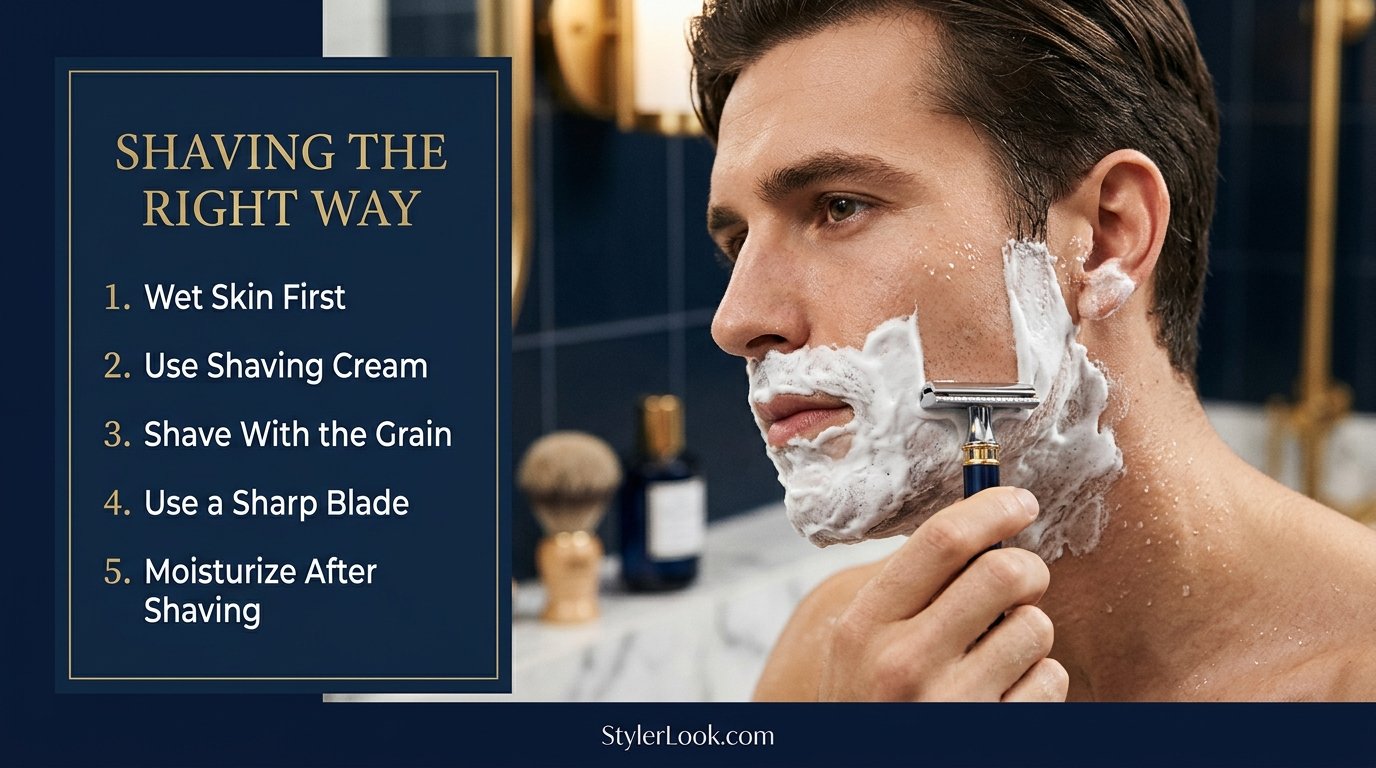
Men’s skin differs from women’s skin in degree, not in kind, and three differences shape product choices. Reviews of male and female skin describe the pattern consistently, so treat the points below as review level summary.
First, men’s skin is thicker, with higher collagen density. It tends to age later, but when lines arrive they often run deeper, especially across the forehead.
Second, men produce more sebum under androgen influence. Oilier faces, larger looking pores, and blackhead prone noses are the everyday result, which is why gel textures suit so many men.
Third, men shave. No other skincare population removes hair and surface cells from the same skin several times a week. That single habit drives razor burn, ingrown hairs, and half the irritation men blame on products.
Add behavior to biology. Men use less sunscreen on average and present later with skin cancers, which is why the protection step carries more weight here than any serum ever will.
The wider skincare routine framework on this site covers routine architecture for everyone. This page keeps the parts that change when the face is male, shaved, and short on patience.
The Morning Routine, Step by Step
Step 1: Cleanse, briefly. Lukewarm water, fingertips, a gentle cleanser worked in for about thirty seconds. Men with dry or sensitive skin can rinse with water alone and save the cleanser for night.
Step 2: Shave, if today is a shave day. Shaving sits after cleansing and before moisturizing, on softened skin, using the protocol in the next section. On non shave days this slot simply disappears.
Step 3: Moisturize. Apply while the skin is still slightly damp, including right after shaving. Gel or lotion textures for oily skin, creams for dry skin, fragrance free formulas for sensitive skin.
Step 4: Sunscreen, always last. Broad spectrum SPF 30 or higher, about two finger lengths for the face, plus ears, neck, and scalp where hair is thin. Reapply roughly every two hours outdoors.
The full protection logic lives in the morning skincare routine, the paired page to this one. The men’s difference is step 2: your routine has a razor in the middle of it, and the order has to respect that.
Men who train before work should cleanse after the workout, not before it. Sweat and gym bacteria are the load worth removing, and a second morning cleanse is built into the day that way.
Shaving Inside the Routine: The Dermatologist Protocol
Shaving is exfoliation with a blade, whether you planned it or not. The AAD’s men’s skin care guidance gives a specific technique sequence, and following it removes most razor burn and bump problems before products enter the discussion.
1. Wet the skin and hair first. Shave at the end of a shower, or hold a warm damp cloth on the face. Softened hair cuts with less force and curls back less.
2. Use a moisturizing shaving cream. Never dry shave. Men with very dry or sensitive skin should look for sensitive skin on the shaving cream label.
3. Shave in the direction hair grows. With the grain, especially on the neck. Against the grain cuts closer and irritates more, and it is the classic trigger for bumps.
4. Rinse the blade after each swipe. A clogged blade drags instead of cutting. Dragging is what turns one pass into three, and three passes into a raw neck.
5. Change the blade after five to seven shaves. Dull blades are the cheapest irritation to eliminate in the whole routine. Store the razor somewhere dry, not in the shower.
6. Moisturize immediately after. While the skin is still damp. A fragrance free aftershave balm or moisturizer does this job; an alcohol splash mostly performs the sting.
Bump prone men get two extra rules from the AAD’s razor bump prevention tips. Use a single or double blade razor instead of a multi blade cartridge, and do not stretch the skin taut while shaving.
Razor bumps have a medical name, pseudofolliculitis barbae: shaved hairs curl back into the skin and inflame it. Untreated, they can leave dark marks and scarring, which is why technique outranks treatment here.
Men with acne shave with special care: a sharp blade, light pressure, and never an attempt to shave over pimples. Experimenting with electric versus blade razors is the AAD’s practical suggestion for acne prone skin.
Timing matters too. Keep strong acids and retinoids away from freshly shaved skin where you can: exfoliate on non shave evenings, and let a morning shave settle before anything active touches it.
The Night Routine, Step by Step
Step 1: Cleanse the day off. This is the day’s full cleanse: sunscreen, sweat, and city buildup all come off. Sixty seconds of gentle contact with a mild cleanser does the work.
Step 2: One treatment, or none. A retinoid on its assigned nights, an exfoliant on its nights, or nothing but moisturizer on recovery nights. One active per night is the ceiling for almost every man.
Step 3: Moisturize, richer if needed. Night is when a heavier cream costs nothing: no shine shows at 2am. Dry zones can take an extra layer, and lips take a plain balm last.
Night is also where patience pays. Retinoids are judged at 8 to 12 weeks, and the man who runs three calm steps nightly beats the man running seven steps twice a week, every single time.
The layering logic behind these steps, thinnest to thickest, is the same skincare routine order taught across this site. Men’s routines are not exempt from physics; they just have fewer layers to order.
The Weekly Calendar: Exfoliation, Shaving and Retinoid Nights
Three activities compete for a man’s skin each week: exfoliation, shaving, and retinoid use. A simple calendar keeps them from stacking into one irritated weekend.
|
Day Pattern |
Morning |
Night |
|---|---|---|
|
Shave days (most men: 3 to 5 per week) |
Cleanse, shave, moisturize, SPF |
Cleanse, moisturize; retinoid only if skin is calm |
|
Exfoliation nights (2 to 3 per week) |
Usual morning |
Cleanse, one exfoliant, moisturizer; no retinoid |
|
Retinoid nights (start 2 to 3 per week) |
Usual morning, no shave conflict if settled |
Cleanse, retinoid on dry skin, moisturizer |
|
Recovery nights (the rest) |
Usual morning |
Cleanse and moisturize only |
Exfoliating before a shave day is the one deliberate overlap: a gentle exfoliant the night before lifts dead cells and can make the next morning’s shave smoother. Same night stacking is what to avoid.
Frequency is earned, not assigned. Start retinoid at two nights weekly, hold for several weeks, and let the skin’s response, not the calendar’s ambition, decide the increase.
Choosing Products by Skin Type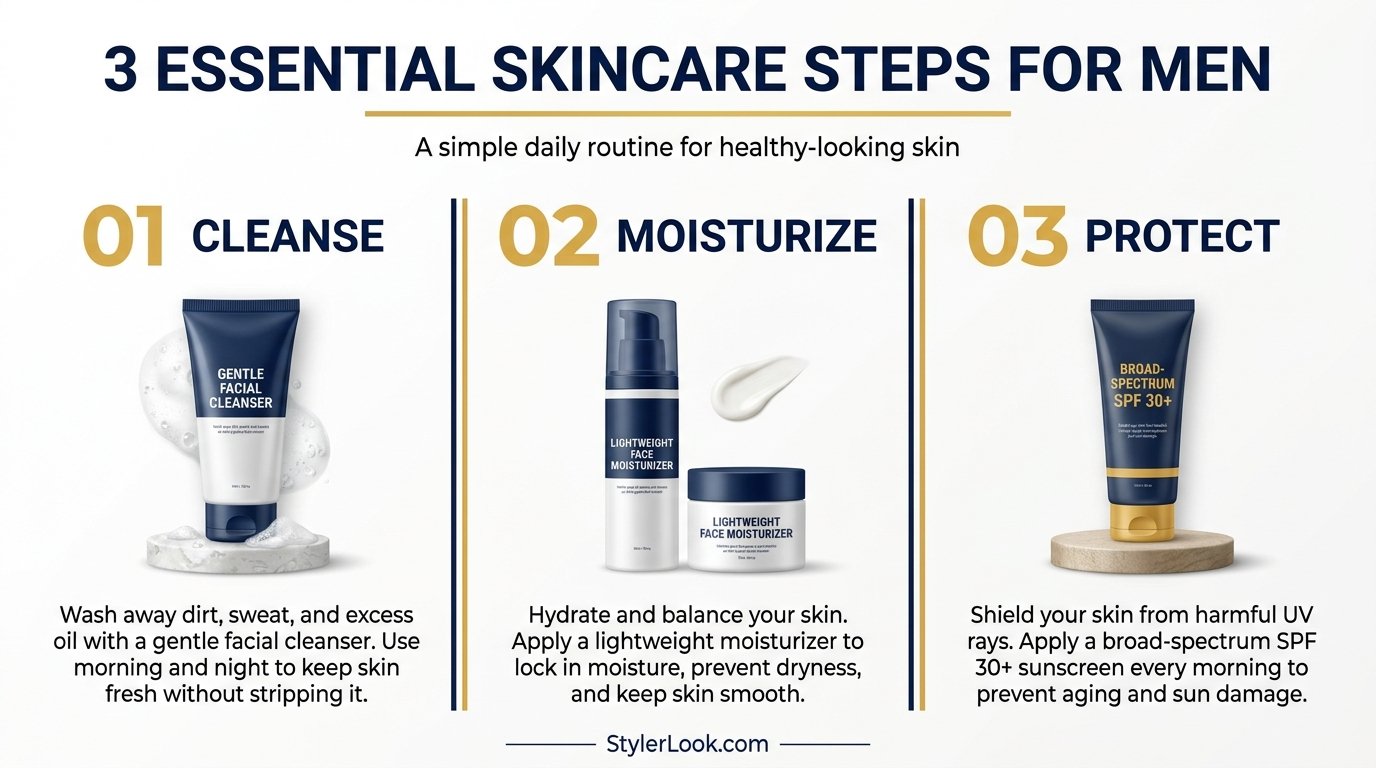
“Best” is a skin type statement before it is a brand statement. Find your row first; every product type decision on this page follows from it.
|
Skin Type |
Cleanser |
Moisturizer |
Treatment Priority |
|---|---|---|---|
|
Oily |
Gel or foaming; salicylic acid version if blackhead prone |
Gel or lotion, oil free |
Exfoliant 2 to 3 nights weekly |
|
Dry |
Cream or hydrating, non foaming |
Cream, ceramide rich |
Gentle retinoid, buffered, low frequency |
|
Sensitive |
Cream, fragrance free |
Fragrance free barrier cream |
Patch test everything; actives last |
|
Acne prone |
Gentle gel; salicylic acid option |
Non comedogenic gel cream |
One acne active, paced |
|
Combination |
Gentle gel |
Lotion; richer cream on dry zones only |
Exfoliant on the oily T zone |
Oily skin is the most common male starting point. The trap is aggression: harsh scrubs and hot water strip the barrier, and many men read the rebound shine as a reason to scrub harder.
Dry skin in men often hides behind the shave: tightness after shaving, flaking around the mouth, and stinging moisturizers are the tells. The skincare routine for oily skin covers the opposite pattern in full, and the dry pattern mirrors it.
Sensitive skin follows one rule above all: fragrance free, including in shaving products and aftershave. The gentle skincare routine for dry sensitive skin is the full severity graded version of this approach.
Acne prone skin keeps the core and adds one active. Salicylic acid, benzoyl peroxide, and adapalene are alternatives to schedule, not a stack to combine, and persistent acne outranks any article.
Ingredient shortlists by goal, for label reading: niacinamide for oil balance and tone, salicylic acid for blackheads, ceramides and glycerin for barrier support, hyaluronic acid for lightweight hydration.
Multi product sets built around one brand’s actives, like The Ordinary skincare routine, can work well for ingredient focused men. The pacing rules do not change because the bottles match.
The Beard Zone Protocol
A beard changes the skin underneath it, and the skin under a beard is still skin. It gets dry, congested, and flaky while hidden, which is why beard care on this page means skin care first.
Cleanse through the beard. Work cleanser down to the skin with fingertips, not just over the hair. Rinse thoroughly; trapped cleanser is a common, invisible cause of itch and flakes.
Moisturize the skin beneath. Part the beard and work moisturizer to the skin surface. Beard oil goes on the hair for softness and shine; it is not a substitute for moisturizing the skin under it.
Treat flakes as a skin signal. Flaking in the beard is usually seborrheic dermatitis, the same process as scalp dandruff. Dermatologist guidance includes dandruff shampoo ingredients such as zinc pyrithione used on the beard area, and persistent cases need a clinician.
Mind the neckline. The shaved edge below the beard is bump territory: with the grain, single blade if bumps recur, and no dry touch ups. Ingrowns concentrate exactly where the beard meets the blade.
Brush and trim on clean skin. Trim after a shower, when hair is soft, and keep tools clean. A beard trimmer dragged over unwashed skin redistributes everything the cleanse was meant to remove.
Layered hydrating routines, including the Korean skincare routine approach, suit bearded men with dry skin particularly well: the extra hydration layers reach skin that a single cream often misses under hair.
Bald and Scalp Care: The Forgotten Surface
A shaved or bald scalp is facial skin at full sun exposure, and no top competitor in this search treats it as part of the routine. It belongs here, because the scalp is where men’s skin cancers frequently appear.
Sunscreen is the scalp routine. Broad spectrum SPF 30 or higher across the whole scalp, reapplied outdoors, with a hat as the primary barrier on long days. Stick and spray formats help coverage through stubble.
Cleanse and moisturize it like a face. The same gentle cleanser, the same moisturizer. Flaking scalps follow the dandruff logic above, and razor shaved heads follow the same shaving protocol as the face.
Watch it. New spots, sores that do not heal, and changing moles on a scalp are hard to see yourself. A partner check or a barber’s comment is worth acting on, not filing away.
Upgrades by Decade
The core never changes. What changes is which upgrade earns its place, and when. Buy for the decade you are in, not the one in the advertisement.
|
Decade |
Skin Reality |
The One Upgrade |
|---|---|---|
|
20s |
Oil, breakouts, late nights |
Exfoliant 2 to 3 nights weekly; SPF habit above all |
|
30s |
First lines, slower recovery |
Retinoid, started low and slow |
|
40s |
Deeper lines, sun spots, dryness |
Richer moisturizer; eye area attention |
|
50s plus |
Thinner feel, sensitivity, spot history |
Gentler everything; professional skin checks yearly |
In your 20s, the routine’s job is oil management and habit formation. The sunscreen you start now is worth more than every serum bought later, because sun damage is cumulative and largely preventable.
In your 30s, add the retinoid and nothing else that season. Forehead lines and uneven tone are the decade’s usual prompts, and one well paced active answers both better than three rushed ones.
In your 40s, moisture needs rise and spots from earlier decades surface. This is also when annual skin checks move from optional to sensible, particularly for outdoor workers and fair skin.
In your 50s and beyond, gentleness wins: richer creams, fewer actives, and a low threshold for showing a dermatologist anything new. The routine stays three steps; the surveillance is the upgrade.
For the wider framework of what best means across audiences, the best skincare routine compares routine designs side by side. This page’s decade table is the men’s edition of that same logic.
Kits vs Singles: What Best Actually Costs
Subscription kits built for men sell simplicity: matched products, a printed routine, no decisions. For a beginner who would otherwise buy nothing, that is a genuine service, and it is why the kits review well.
The trade offs are structural. Kit formulas are fixed, so an oily man and a dry man may receive near identical boxes. Sizes often run small, and the subscription renews whether your skin is ready for the next level or not.
|
Route |
Strengths |
Weaknesses |
|---|---|---|
|
Men’s skincare kit |
Zero decisions, matched steps, gift ready |
Fixed formulas, small sizes, subscription lock in |
|
Three drugstore singles |
Chosen by skin type, larger sizes, no lock in |
Requires three decisions, no printed plan |
|
Hybrid |
Kit first month, then replace empties with singles |
Needs one review moment at week 6 |
Prices move too fast to print responsibly here, and this site verifies US prices live before publishing figures. The durable rule: three singles matched to your skin type usually cost less per month than a premium kit.
Gift buyers should note the asymmetry. A kit is the better gift, because it arrives as a system. Singles are the better refill, once the recipient knows what his skin likes.
The Men’s Marketing Claims Audit
Men’s skincare marketing sells sensation and masculinity. Four claims deserve a calm audit before money moves, because the routine that works is usually the quieter product.
The menthol tingle. Tingling feels like action and is usually just fragrance chemistry. Sensitive and freshly shaved skin pays for that feeling. Tingle is not efficacy, and burning is never a progress signal.
“Formulated for men’s thicker skin.” Mostly a texture statement. Stronger products are not automatically better for thicker skin, and the AAD selects by skin type regardless of the label’s gender.
The 2 in 1 compromise. A moisturizer with SPF 20 sounds efficient and sits below the SPF 30 standard dermatologists recommend. Two in one is fine for steps that tolerate compromise; sun protection is not one of them.
Charcoal everything. Charcoal is a fine absorbent ingredient and a better photograph. It does not detox skin, pull out blackheads by magnetism, or replace an exfoliant. Buy it as a cleanser texture, not as a mechanism.
After the Gym: The Third Cleanse Occasion
Men who train create a third skincare occasion the standard routine ignores. Sweat, friction, and shared surfaces drive face and back breakouts more reliably than any product choice.
Cleanse as soon as practical after heavy sweating, or rinse and change the shirt at minimum. A gentle cleanser in the gym bag is the entire system; elaborate post workout stacks are marketing.
Back and chest breakouts follow the same logic: shower after training, loose clean layers against the skin, and one body appropriate active if breakouts persist. Shared towels and unwashed gym kit undo good products quietly.
Mistakes That Undo a Man’s Routine
- Face washing with body bar soap. Too alkaline and stripping for facial skin. A gentle facial cleanser is the cheapest upgrade in the entire routine.
- Dry shaving or rushing the shave. No prep, no cream, against the grain, dull blade. Four errors that present as one red neck blamed on sensitive skin.
- Alcohol aftershave on fresh skin. The sting is irritation, not disinfection theater. A fragrance free balm moisturizes the barrier the razor just thinned.
- Skipping sunscreen because it feels greasy. Modern gel and matte formulas exist for exactly this objection. The answer to a texture problem is a texture change, not skipping protection.
- Starting retinol, an acid, and a kit in the same week. Three new variables, one face, no way to know what caused the flare. One change at a time.
- Judging at week two and quitting. Oil balance shifts over 4 to 8 weeks and retinoids at 8 to 12. Most routines are abandoned inside their own loading period.
- Treating the beard as self maintaining. The skin under it flakes, congests, and burns in the sun like any other skin. It needs the same three steps, delivered through hair.
- Copying a ten step routine from social media. Step count is not seriousness. The load bearing steps are three, and the calendar, not the shelf, is where sophistication lives.
When a Routine Is Not Enough
A routine manages daily care; it does not diagnose. Persistent or scarring acne, spreading rashes, suspected rosacea or eczema, and razor bumps that scar all belong with a board certified dermatologist.
One check deserves emphasis for this audience. Any spot that changes, bleeds, crusts, or does not heal needs a professional look, on the scalp and ears as much as the face. Men present late with skin cancers; a low threshold is the entire strategy.
More Skincare Guides on StylerLook
The men’s skincare routine page covers the general how to mechanics this page builds on, including starter pacing for complete beginners.
Readers who want the full library in one place will find every routine, calendar, and skin type edition collected at stylerlook.com, from the hub framework to brand specific sets.
Frequently Asked Questions
What is the best skincare routine for men?
A three step core done twice daily: gentle cleanser, moisturizer, and broad spectrum SPF 30 or higher in the morning; cleanser, an optional treatment, and moisturizer at night. The AAD notes men’s skin is thicker but the basic elements remain the same, selected by skin type.
How many steps should a man’s skincare routine have?
Three steps cover most men: cleanse, moisturize, protect. A treatment step at night and exfoliation two to three times a week are the standard additions. Published dermatologist routines and the strongest competitors converge on three to five steps, not ten.
Do men really need a skincare routine?
Men’s skin produces more sebum, loses collagen steadily, and faces daily shaving stress and high lifetime UV exposure. A basic routine manages oil, shaving irritation, and sun damage. It is maintenance and prevention, not vanity, and it takes about two minutes twice a day.
What is the correct order of a men’s skincare routine?
Morning: cleanser, moisturizer, sunscreen last. Night: cleanser, treatment such as retinol on its assigned nights, moisturizer. Shaving sits after cleansing and before moisturizing in the morning. Thinnest to thickest governs any extra layers.
Should men cleanse before or after shaving?
Before. The AAD advises wetting skin and hair to soften it, and cleansing first removes oil and dead cells that clog the razor. Shave with a moisturizing shaving cream, in the direction of hair growth, then moisturize while the skin is still damp.
How often should men wash their face?
Twice daily is the standard ceiling: morning and night, plus after heavy sweating. More than that strips the barrier and can increase oil rebound. Men with very dry or sensitive skin often do better with a water only rinse in the morning.
Do men need a different cleanser than women?
Not by gender. The AAD selects products by skin type, not sex: sensitive, normal, dry, oily, or combination. Men’s marketed cleansers often add fragrance and menthol, which some skin dislikes. A gentle fragrance free cleanser marketed to anyone beats a harsh one marketed to men.
Is men’s skin really different from women’s skin?
Yes in degree, not in kind. Reviews describe men’s skin as thicker, with higher sebum output and higher collagen density, ageing later but wrinkling more deeply. The AAD’s practical position: the basic elements of an effective plan remain the same, chosen by skin type.
What is the best face wash for men with oily skin?
A gentle foaming or gel cleanser, with salicylic acid as the common upgrade for oily, blackhead prone skin. Forefront Dermatology’s guide makes the same call. Avoid bar soap and harsh scrubs, which strip the barrier and can trigger more oil, not less.
What moisturizer should men use?
By skin type: gel or lotion textures for oily skin, creams for dry skin, fragrance free formulas for sensitive skin. Men who hate residue should look for fast absorbing, matte finish products. A moisturizer with SPF can cover two morning steps for minimalists.
Should men wear sunscreen every day?
Yes. The AAD recommends broad spectrum, water resistant SPF 30 or higher on all exposed skin, including ears, neck, scalp, and lips. Men have higher lifetime skin cancer rates and lower sunscreen use, which is why this is the highest value step in the routine.
What SPF should men use on their face?
SPF 30 or higher, broad spectrum. Amount matters as much as the number: about two finger lengths for the face, reapplied roughly every two hours outdoors. A moisturizer with SPF 30 is acceptable for daily life if applied generously; dedicated sunscreen wins outdoors.
Can men use retinol?
Yes. Retinol is used the same way: pea sized amount at night, starting two to three nights a week, judged at 8 to 12 weeks, always paired with morning sunscreen. Men new to actives should add it only after four to six weeks of a stable basic routine.
When should men start anti aging skincare?
Prevention starts with sunscreen at any age. Retinoids are typically a late 20s to 30s addition. By decade guidance helps: 20s are for basics and acne control, 30s add a retinoid, 40s and beyond add richer moisture and professional skin checks.
How do men get rid of razor bumps?
Razor bumps, pseudofolliculitis barbae, happen when shaved hairs curl back into skin. AAD prevention: soften hair first, moisturizing shaving cream, shave with the grain, rinse after each swipe, change blades after five to seven shaves, and try a single or double blade without stretching skin taut.
Why does shaving irritate my skin?
Shaving removes surface cells along with hair and creates micro abrasions, so freshly shaved skin tolerates less. Alcohol based aftershaves, dull blades, dry shaving, and applying strong actives immediately after are the usual amplifiers. Moisturizing aftershave balm and pacing actives to non shave moments help.
Should men exfoliate, and how often?
Two to three times a week is the standard range, matching Forefront Dermatology and brand guides. Exfoliating before shaving on those days lifts dead cells and can improve the shave. Redness, flaking, or burning means the frequency or the product is wrong.
Is toner necessary for men?
No. Toner is optional in modern routines. Hydrating toners can comfort dry skin; astringent alcohol toners mostly add irritation. An exfoliating toner counts as the exfoliation step, not an extra. Most men should skip toner and spend the money on sunscreen.
Do men with beards need skincare?
Yes, for the skin under the beard as much as the beard itself. Beard area skin gets dry, flaky, and congested, and beard dandruff is seborrheic dermatitis territory. Cleanse through the beard, moisturize the skin beneath, and use beard oil on the hair, not as a skin substitute.
What is the best routine for men with acne?
Gentle cleanser, one acne active such as salicylic acid or adapalene on a paced schedule, and a non comedogenic moisturizer. Shaving needs special care over breakouts: sharp blade, light pressure, never shaving over pimples. Persistent acne belongs with a dermatologist.
What is the best routine for men over 40?
Keep the three step core, add a nightly retinoid as tolerated, a richer moisturizer, and eye area attention. Forehead lines and sun spots dominate this decade. Annual professional skin checks matter more now, because cumulative UV exposure starts presenting its bill.
How much should a men’s skincare routine cost?
A drugstore core of cleanser, moisturizer, and SPF commonly runs in the tens of dollars per product and lasts for months. Kits trade a premium for simplicity and matched steps. Matched singles by skin type usually give the lowest cost per month of daily use.
Are skincare kits for men worth it?
Kits solve decision fatigue and guarantee compatible basics, which is why subscription sets review well for beginners. The trade offs are fixed formulas that may not match your skin type, small sizes, and subscription lock in. Three singles chosen by skin type usually cost less.
Can men use women’s skincare products?
Yes. Products are formulated by skin type and concern, not by gender. The AAD frames selection by skin type for everyone. Men’s versions often differ mainly in fragrance and packaging. If a partner’s gentle cleanser suits your skin, it is a valid cleanser.
What is the best nighttime routine for men?
Cleanse, one treatment on its assigned nights, moisturizer. Night is when retinoids belong and when richer creams cost nothing socially. Men who shave in the morning should keep strong acids for non shave evenings where possible, or apply them well after the morning shave has settled.
What should men do after a workout for their skin?
Cleanse as soon as practical after heavy sweating, or at minimum rinse and change out of the sweaty shirt. Sweat, gym bacteria, and friction drive face and back breakouts. A gentle cleanser kept in the gym bag is the whole system; avoid scrubbing with shared gym towels.
Do men need eye cream?
Optional. The eye area is thin and shows fatigue and sun damage early, and men’s media roundups recommend eye creams consistently. A plain moisturizer applied carefully does the basic job. Buy the eye cream for puffiness and dark circle concerns, with modest expectations.
How long until a men’s routine shows results?
Hydration and shave comfort improve within days. Oil balance and breakouts shift over 4 to 8 weeks of consistency. Retinoid texture changes are judged at 8 to 12 weeks. Affiliate guides citing 6 to 8 weeks are stating the common practical window, labelled here as editorial consensus.
What are the biggest skincare mistakes men make?
Using body bar soap on the face, skipping sunscreen, dry shaving against the grain, stacking new actives in week one, and quitting at week three. Alcohol aftershave on fresh skin completes the classic list. Every one is a habit error, not a budget error.
Is bar soap bad for men’s faces?
Traditional bar soap is usually too alkaline and stripping for facial skin and leaves the barrier tight and dry. Syndet cleansing bars are gentler but still not ideal. A dedicated gentle facial cleanser is the standard dermatologist recommendation, and it is one of the cheapest upgrades available.
Should men moisturize after shaving?
Yes, immediately, while the skin is still slightly damp. The AAD’s shaving guidance ends with moisturizing, and post shave is when the barrier most needs support. Choose a fragrance free balm or moisturizer over an alcohol splash, especially with dry or sensitive skin.
What does beard dandruff mean and how is it treated?
Flaking in the beard is usually seborrheic dermatitis, the same process as scalp dandruff, driven by skin barrier and yeast factors. Dermatologist guidance includes regular cleansing and dandruff shampoo ingredients such as zinc pyrithione used on the beard area. Persistent cases need a clinician, not stronger beard oil.
Can skincare help dark circles under men’s eyes?
Partly. Sleep loss, rubbing, sun exposure, and pigmentation all contribute, and each has a different fix. Sunscreen and sunglasses prevent the pigment share; sleep fixes the fatigue share. Creams help modestly. Sudden or one sided changes deserve a medical look rather than a product.
Do men get melasma and dark spots?
Yes. Sun driven pigmentation affects men too, especially outdoor workers, and post acne marks are common after breakouts. Daily SPF is the prevention, and brightening ingredients such as niacinamide or vitamin C are the cosmetic support. Spots that change shape or color need a dermatologist, not a serum.
What sunscreen should bald men use on their scalp?
The same broad spectrum SPF 30 or higher, applied to the whole scalp, plus a hat as the primary barrier. The scalp is a high exposure site and a common location for skin cancers in men. Spray and stick formats help coverage.
How should men’s routines change in winter?
Raise moisture and lower aggression: creamier cleanser, richer moisturizer, fewer exfoliation sessions, and lip balm with SPF outdoors. Indoor heating drops humidity while cold air holds less water. Retinoid frequency often needs to drop a night, the same rule as every skin type.
What is a good routine for men who know nothing about skincare?
Buy three products: a gentle cleanser, a moisturizer matched to whether your skin feels dry or oily by midday, and an SPF 30 sunscreen. Use them for six weeks before adding anything. The strongest beginner guides build their whole positioning on exactly this minimal entry.
Should men use face masks?
Optional, once a week at most. A clay mask genuinely helps oily skin and congested noses; a hydrating mask comforts dry skin. Masks are the garnish of the routine, not a step. No mask substitutes for daily sunscreen or a retinoid’s evidence base.
Can men do a Korean style multi step routine?
Yes, the layering principles are unisex, and hydrating layers suit dry or mature male skin well. The risk is time and actives stacking, which is why adherence drops. Borrow the hydrating layers, keep one active per night, and the routine stays both Korean inspired and survivable.
What skincare should men pack for travel?
The same three core products in travel sizes, plus lip balm with SPF. Hotel soap and borrowed products are the usual travel skin disruptors. Cabin air is dry, so moisturizer before a flight helps. Nothing new should debut on a trip, because reactions travel badly.
When should a man see a dermatologist about his skin?
For acne that scars or persists, spreading rashes, suspected rosacea or eczema, razor bumps that will not settle, and any spot that changes, bleeds, or does not heal. Men present later with skin cancers, which is the strongest argument for a low threshold.
Does drinking more water improve men’s skin?
Only up to normal hydration. The better guides make this point honestly: correcting dehydration helps skin look better, but drinking far beyond thirst has no proven cosmetic effect. Topical moisturizer and sunscreen change skin measurably; extra water beyond adequacy does not.
Conclusion
The best skincare routine for men is the one still running in month three: three steps, shaving placed inside the order, products chosen by skin type, and one upgrade at a time by decade.
Build the starter set this week: cleanser, moisturizer, and SPF 30. Then let the calendar, not the marketing, decide what gets added next.
General information only, not medical advice. Persistent acne, razor bumps that scar, and any changing or non healing spot belong with a board certified dermatologist.
