

Best skincare routine for oily skin advice usually starts a war: strip the oil, dry the shine, punish the pores. Dermatology starts somewhere else.
The American Academy of Dermatology’s guidance for oily skin is almost gentle: wash up to twice a day, use a mild cleanser, moisturize, wear sunscreen, and do not scrub.
That gentleness is not softness; it is mechanism. Stripped, dehydrated, irritated skin tolerates no treatment and feels oilier by the hour.
The routine below is built on the consensus that Forefront Dermatology’s five step routine for oily skin states as five steps and Mid-County Dermatology’s guide to managing oily skin anchors to the AAD.
Four steps, twice a day, one active at a time, and a midday protocol that manages shine without a third wash.
This page is the system view.
The step by step companion, our skincare routine for oily skin guide, walks the routine in daily order; here the emphasis is why each choice works, how the week is organized, and how the four oily subtypes adjust it.
Best Skincare Routine for Oily Skin at a Glance
|
Decision |
The Consensus Answer |
|---|---|
|
Washing |
Up to twice daily, plus after sweating; lukewarm, fingertips |
|
The two labels |
Oil free and noncomedogenic (AAD) |
|
Moisturizer |
Yes, always: gel or gel cream |
|
Morning finish |
Broad spectrum SPF 30+, oil free or matte |
|
Actives |
One at a time: salicylic, niacinamide, retinoid, by job |
|
Midday |
Blot, never rewash |
|
Judgment window |
6 to 8 weeks (8 to 12 for acne routines) |
Why Oily Skin Behaves This Way
Sebum is not a malfunction. Your sebaceous glands produce it on a schedule set mostly by genetics and hormones, and it protects the skin it coats.
Oily skin is that system running generously: shine by late morning, pores that look larger because they are working, and a talent for clogging when oil and dead cells mix.
The geography matters too. Glands concentrate in the T zone (forehead, nose, chin), which is why most oily skin is really combination in disguise: an oily center panel with normal cheeks.
Routines that treat the whole face identically over dry the cheeks and under serve the center; targeted application (primer, powder, and clay on the T zone) respects the map.
The rebound is the part nobody explains. Harsh cleansing, hot water, alcohol toners, and scrubbing damage the barrier; a damaged barrier loses water, feels tight, and leaves skin simultaneously dehydrated and shiny, while irritation feeds breakouts.
Most “my skin got oilier” stories are barrier stories.
So the doctrine is balance: remove the day’s excess without declaring war on the system producing it, hydrate with water based gels so the barrier stays calm, and use one well chosen active to do the pore and cell work that cleansers cannot.
Hormones steer the schedule more than any product does, which is why oiliness often crests in the teen years, fluctuates with cycles, and can reappear with hormonal shifts in adulthood.
That is also why sudden adult onset oiliness earns a dermatologist visit rather than a stronger cleanser: the cause sits upstream of the shelf.
What Oily Skin Gets Right
Balance cuts both ways, and fairness requires the credits. Oily skin’s surface stays supple without help, its barrier is naturally well lubricated, and it typically tolerates active ingredients, including retinoids, better than dry or sensitive skin does.
Several dermatologists in this space make that tolerance point explicitly: the skin type that frustrates its owner at noon is often the easiest to treat at night.
It also ages on its own terms: while the wrinkles less claim is folklore, oily skin does tend to keep a plumper surface appearance longer.
The routine above is designed to keep those advantages while removing the tax, shine, clogs, and marks, that comes with them.
The Morning Routine
1. Cleanse gently. A gel or foaming cleanser, lukewarm water, fingertips, 30 to 60 seconds. Skin should feel comfortable afterward, never squeaky. A salicylic acid cleanser is the reasonable upgrade for blackhead prone skin.
2. Treat lightly, or not at all. Morning is for light, compatible treatment: niacinamide for oil balance and marks, or vitamin C for dullness once the basics are stable. Heavy actives belong to the night shift; our morning skincare routine guide details morning layering across skin types.
3. Gel moisturizer. The step oily skin skips wrongly. A lightweight, oil free, noncomedogenic gel or gel cream with humectants (hyaluronic acid, glycerin) keeps the barrier quiet so the day’s oil stays manageable.
4. SPF 30+ to finish. Broad spectrum, oil free or matte finish, every morning. Sunscreen is what keeps breakout marks from darkening and photoaging from compounding; on oily skin it is chosen by texture, never skipped for texture.
Give it two minutes to set before makeup or heading out. That small pause is the difference between a sunscreen that stays a film and one that migrates into the eyes by ten.
The Night Routine
1. Remove the day, then cleanse. Makeup and water resistant sunscreen come off first (micellar water or an oil cleanser on those days), then the same gentle cleanser. Bare skin days need only the single cleanse.
2. One active. This is the system’s engine room, and it holds exactly one tool per night: salicylic acid for pores and blackheads, benzoyl peroxide for inflamed breakouts, a retinoid (adapalene 0.1 percent for acne prone skin) for turnover, azelaic acid for marks. Rotation across nights is how multiple goals coexist; our nighttime skincare routine guide covers the night architecture in full.
New actives enter like new employees: patch test first (a small area, watched for a day), start at two or three nights a week, and let two calm weeks pass before the frequency rises.
Retinoids especially reward this patience; the adjustment period is real, and moisturizer before or after the retinoid is a legitimate tolerance technique, not a dilution of its worth.
3. Moisturize to tolerate treatment. The same gel cream, applied after the active, is what makes a retinoid or acid sustainable for months instead of abandoned in week two.
4. Hands off. No picking, no squeezing. The night routine works while you sleep; interference is the only step that reliably makes marks.
The Weekly Cadence
|
Day Part |
Daily |
1 to 3 Times Weekly |
Weekly |
|---|---|---|---|
|
Morning |
Cleanse, gel moisturizer, SPF |
Niacinamide or vitamin C mornings |
|
|
Night |
Cleanse, one active, moisturize |
Exfoliation nights (chemical, scheduled) |
Clay mask session |
|
Midday |
Blot as needed |
Chemical exfoliation for oily skin means salicylic acid on a schedule, not a scrub on a whim. The clay mask is the week’s ritual extra: kaolin absorbs surface oil and gives pores a temporarily tighter look. Neither replaces a daily step.
On exfoliation nights, the scheduled acid is the night’s one active; the slot does not double. That accounting is what keeps a routine with exfoliation in it from quietly becoming a three acid stack with better branding.
Ingredients by Job
|
Ingredient |
Its Job |
Where It Sits |
|---|---|---|
|
Salicylic acid (BHA) |
Works inside the pore: blackheads, clogs, oil |
Cleanser or leave on, active nights |
|
Niacinamide |
Oil balance, redness, marks, barrier support |
Morning or night serum |
|
Benzoyl peroxide |
Inflamed, bacteria driven breakouts |
Spot or short contact, active nights |
|
Adapalene / retinol |
Cell turnover, acne prone maintenance, texture |
Night only, introduced gradually |
|
Azelaic acid |
Marks and gentle treatment, sensitive friendly |
Morning or night |
|
Hyaluronic acid, glycerin |
Water based hydration without oil |
Inside the gel moisturizer |
|
Kaolin clay |
Surface oil absorption |
Weekly mask |
Percentages worth knowing from the clinical field: salicylic acid 0.5 to 2 percent in OTC products, benzoyl peroxide starting at 2.5 to 5 percent, adapalene 0.1 percent, azelaic acid 10 percent and up in mark focused routines.
Strength is a dial to raise slowly, not a score to max out.
Toner, Settled Honestly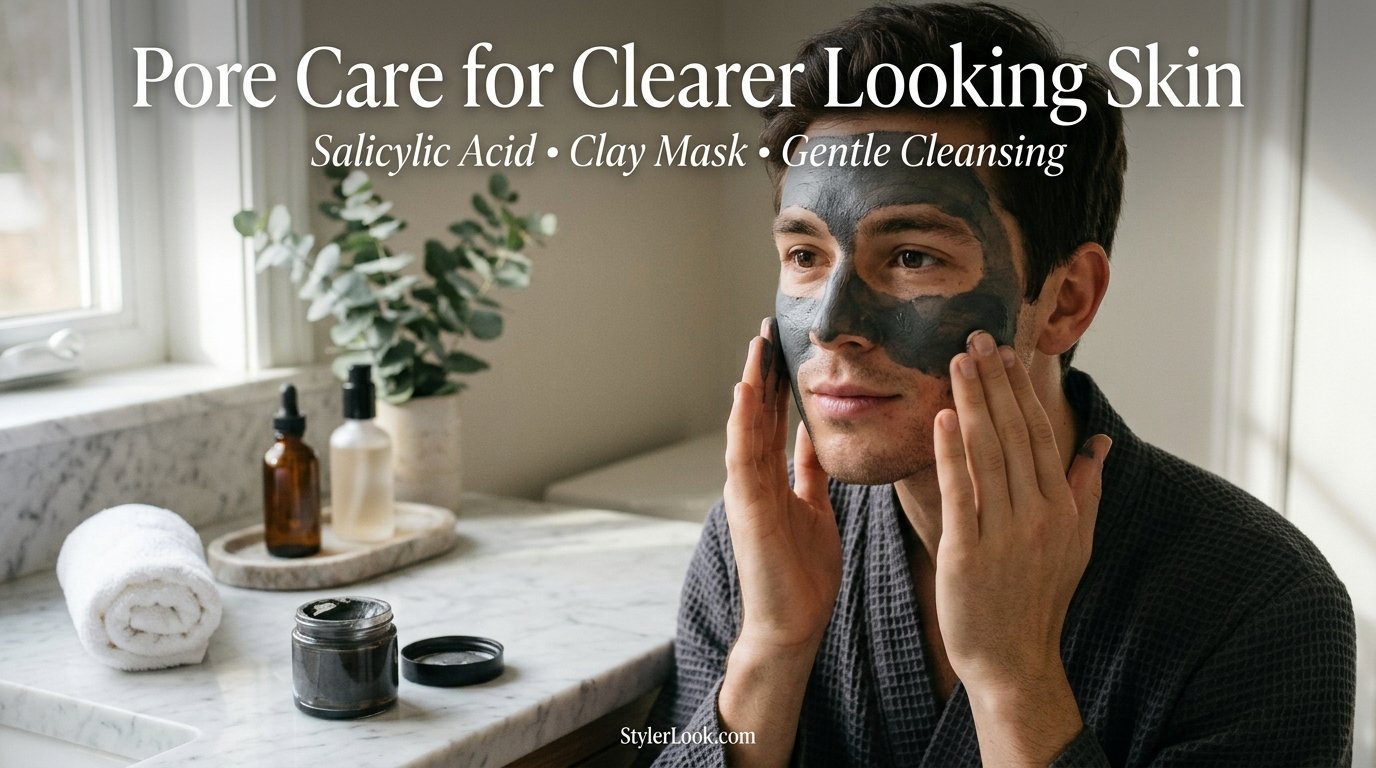
Toner is where oily skin advice argues with itself, so here is the settled version. The old case for toner was pH rescue after harsh cleansers; modern gentle cleansers made that rescue unnecessary.
The AAD’s oily skin guidance puts alcohol based products on the avoid list, and no clinic routine in the current field treats toner as a pillar.
What remains is preference: an alcohol free, hydrating toner can add a light water layer that some oily skins enjoy before serum. If that is you, keep it.
If your skin feels tight, dry, or irritated with one, the correct move is deletion, not a different bottle. A step that can be removed without consequence was never a pillar.
Building the Routine on a Budget
The four steps are cheap by design. Drugstore gel and foaming cleansers are a mature category; the cleanser examples clinic guides name, from CeraVe and La Roche-Posay, sit at pharmacy prices in the US.
Gel moisturizers and oil free sunscreens compete at the same counters. And the classic actives, salicylic acid, benzoyl peroxide, adapalene, are among the least expensive serious ingredients in skincare.
Spend order matters more than spend level: cleanser and SPF first (they are daily and non negotiable), gel moisturizer second, one active third. A toner, a second serum, and a mask wardrobe are what budgets buy last, because the routine works before they arrive.
The Midday Protocol: Blot, Do Not Rewash
Midday shine is sebum’s normal peak, not a routine failure. The protocol is three moves: blot with a blotting paper or clean tissue (press, do not rub), powder only if you wear makeup and only after blotting, and leave the morning layers alone.
What midday is not: a third wash. One clinic guide in this space prescribes a noon wash and fresh sunscreen; against the AAD’s twice daily guidance, that is the exception this article declines to copy. Blotting manages the symptom without stripping the system.
Reading Labels Like a Formulator
The AAD gives oily skin exactly two label phrases to hunt: oil free and noncomedogenic. Everything else on a front label is marketing until the ingredient list confirms it.
Gel and gel cream in the product name predict texture honestly most of the time; matte on a sunscreen predicts finish, not protection, so the SPF number and the words broad spectrum still need checking.
Ingredient lists reward a short scan: salicylic acid, niacinamide, benzoyl peroxide, or adapalene named where you expect them; alcohol denat high in a leave on product is the flag the AAD’s guidance teaches you to notice; fragrance is optional everywhere and unwelcome on sensitive oily skin.
One more label skill: percentages are information, not quality. A 2 percent salicylic cleanser used consistently outperforms a stronger product used resentfully twice a month, and the routine’s timelines assume ordinary strengths used faithfully.
Seasons: Summer Heat, Winter Heating
Summer raises sebum’s visibility and sunscreen’s burden. Keep gel textures, cleanse after heavy sweating, carry blotting papers, and expect the SPF to need its midday maintenance on outdoor days. The routine does not change; its shine management works overtime.
Winter runs the heating paradox: indoor air dehydrates the surface while glands keep their schedule, producing the oily but tight pattern. Gel cream replaces gel, water only mornings become reasonable, and active nights may space out.
SPF stays, because marks and photoaging do not observe seasons.
The transition rule for both directions: change one variable with the season, not the whole shelf, and give it two weeks before judging.
Skin type itself can drift with age, hormones, and climate, which is why the field’s guidance suggests rechecking your type about once a year.
Four Subtypes, Four Adjustments
Oily skin is a family, not a single condition, and the adjustments below are where most routines quietly fail or succeed.
Identify your branch honestly (the dehydrated branch is the most commonly misread as simply oily) and change the named variables only; the four step skeleton stays identical for all four.
Oily acne prone. The active slot becomes the anchor: adapalene nightly as tolerated, salicylic or benzoyl peroxide for the breakout pattern, moisturizer and SPF kept in place to make it survivable.
The 8 to 12 week window and the dermatologist triggers apply with full force.
Oily sensitive. Fragrance free everything, niacinamide or azelaic acid as the gentle actives, salicylic only in a rinse off cleanser, exfoliation rare. The routine’s skeleton holds; its aggression is what changes.
Oily dehydrated. The paradox subtype: shiny and flaky at once. Gentler cleansing (water only mornings are a legitimate dial here), gel cream instead of gel, fewer active nights, barrier first for a fortnight before judging oil at all.
Oily mature. Keep the oil management, add the retinoid’s second career (texture and fine lines) and vitamin C mornings. Gel cream textures usually beat gels, and SPF does its most valuable work here.
The Rotation Example: Three Goals, One Slot
One active slot sounds limiting until it is scheduled. A reader chasing pores and marks might run salicylic acid on Monday and Thursday nights, niacinamide on the other five (it is gentle enough to double as a daily), and call that a complete system.
An acne prone reader anchors adapalene most nights and lets salicylic appear as the morning cleanser instead, keeping the night slot single purpose.
A marks focused reader runs azelaic acid nightly and salicylic twice a week. Three different routines, one architecture: the slot is constant, the tool rotates by goal, and the skin is never asked to host a committee.
Small Habits That Compound
Cleanse after sweating, with the day’s second wash moved earlier if needed; dried sweat and oil are a clog recipe left sitting.
Change the pillowcase on a weekly rhythm, more often during breakout clusters; it is the cheapest surface your face touches.
Keep hands and phones honest: fingers transfer oil and pressure to the same zones that break out, and a phone screen against the cheek is a warm, oily compress. Wipe the screen, notice the hands.
Do not sleep in makeup is listed among mistakes because it deserves two mentions: overnight makeup plus sebum is the clog combination the whole routine exists to prevent.
None of these habits sells a product, which is presumably why the roundups skip them. Together they are worth a serum.
Makeup on Oily Skin
Let the SPF set before makeup. Choose oil free, noncomedogenic formulas, put mattifying primer only where oil actually breaks through (usually the T zone), and set with powder or spray.
Reapplying sunscreen over makeup is the honest compromise zone: a fresh liquid layer is ideal at long outdoor stretches; SPF sprays and powders maintain coverage on ordinary days. Blot before any touch up, because powder over oil sets into paste.
What to Avoid: The War on Oil Mistakes
The third wash. Stripping dressed as diligence; the rebound is the receipt.
Alcohol toners and harsh scrubs. Both sit on the AAD’s avoid list for this skin type, and both survive on the feeling of tightness they produce, which is damage misread as cleanliness.
Skipping moisturizer. The single most corrected mistake in every clinic guide in this space.
Stacking every active at once. Salicylic plus benzoyl peroxide plus retinoid in one layer is an irritation protocol. One active a night is also a diagnostic method: it is how you learn what actually works.
Judging in week one. Sebum behavior and cell turnover change over weeks. The routine gets 6 to 8 weeks before it gets a verdict.
Sleeping in makeup. The AAD names it; the clogged pores sign it.
Your First 8 Weeks: What Improves When
Weeks 1 to 2 are tolerance: skin adjusts to the active, shine patterns unchanged, tightness gone if cleansing is right. Weeks 3 to 5 bring the first trend: clogged pores easing, shine arriving later in the day.
Weeks 6 to 8 are the judgment window for oil balance and texture; acne directed routines keep going to week 12 before their verdict.
Track two numbers in a notes app: the hour shine becomes noticeable, and a weekly breakout count. Trends in those two numbers are the routine’s report card, and they are more honest than any mirror check on a humid afternoon.
The layering rules that keep all of this coherent, thinnest to thickest with treatments before creams, are set out in our skincare routine order guide, and the full routine library lives in the StylerLook skincare routine hub for the days your skin changes category.
As a reference point for what a complete routine looks like beyond one skin type, our best skincare routine guide is the generalist companion to this page.
A Day on the Routine, Hour by Hour
7 a.m. Cleanse, gel moisturizer, SPF. The skin starts matte because it starts clean and hydrated, not because it was stripped.
10 a.m. First light shine on the nose and forehead, normal sebum doing its job. Nothing to do; the routine expects this hour.
1 p.m. Peak oil. Blot once, properly, and the face resets without losing its sunscreen or its composure. This single habit replaces the third wash for most people within a week.
6 p.m. Home. If the day involved heavy sweating, the post sweat cleanse happens now instead of at bedtime; the twice daily count is about washes, not clock times.
10 p.m. Remove the day, cleanse, the night’s one active, gel cream. Done in five minutes, because a routine that takes twenty is a routine that gets skipped.
Read the day again and notice what never happened: no tightness, no emergency products, no third wash, no new purchase. Oily skin management at its best is boring, and boring is what consistent means.
When to See a Dermatologist
Three triggers, taken from clinic guidance: no meaningful improvement after 8 to 12 weeks of a consistent, sensible routine; painful, deep, or cystic acne at any point; and scarring, which is time sensitive. Sudden onset oiliness in adulthood also earns a visit.
Prescription retinoids, hormonal options, and in office treatments live beyond the OTC shelf, and reaching them early is a success of the system, not a failure of it.
General information only throughout: this article explains how dermatology guidance organizes an oily skin routine; it does not diagnose or treat any individual’s skin.
The Two Week Test: Adding Anything New
Every product change follows the same protocol, and it is the routine’s quality control.
Introduce one product against an otherwise stable routine, use it as directed for two weeks (three for an active), and judge it on the two tracked numbers plus comfort: shine hour, breakout count, and any stinging, tightness, or new texture of small bumps.
Pass, and the product stays; fail, and it leaves alone, so the verdict is clean. Simultaneous changes are how readers end up with five suspects and no culprit, usually discovered during a breakout they then treat with a sixth product.
The routine’s patience is not passivity; it is method.
This is also the honest answer to every “is X good for oily skin” question: plausibly, for someone, and your two week test on your stable base is the only review written about your skin.
Frequently Asked Questions
What is the best skincare routine for oily skin?
Four steps, twice a day. Morning: gentle gel or foaming cleanser, optional light treatment, gel moisturizer, broad spectrum SPF 30+. Night: cleanse, one active, moisturize.
Add chemical exfoliation one to three times weekly and a clay mask weekly. Balance, not aggression, controls oil.
How many times a day should I wash oily skin?
Up to twice a day, plus after sweating: that is the AAD’s guidance. Lukewarm water, fingertips, morning and night.
A third daily wash is the most common oily skin mistake; stripping the barrier leaves skin irritated and often oilier by afternoon.
Does oily skin need moisturizer?
Yes, and skipping it is counterproductive. Oily skin can be dehydrated, and a lightweight, oil free, noncomedogenic gel moisturizer keeps the barrier comfortable.
Every clinic guide in the top results makes the same point: moisturize anyway, choose the texture, not the absence.
What ingredients are best for oily skin?
By job: salicylic acid for pores and blackheads, niacinamide for oil balance and marks, benzoyl peroxide for inflamed breakouts, a retinoid for acne prone cell turnover, azelaic acid for marks, humectants for oil free hydration.
One active at a time is the rule that makes them work.
What is the best cleanser for oily skin?
A gentle gel or foaming cleanser that leaves skin comfortable, not tight. A salicylic acid cleanser suits blackhead prone skin.
The AAD advises against oil based and alcohol based cleansers for oily skin, and against scrubbing, even to remove makeup.
Is toner necessary for oily skin?
No. Toner is the routine’s most optional step, and alcohol based toners are on the AAD’s avoid list for oily skin.
If you enjoy one, choose alcohol free and hydrating. The honest clinic framing: only if needed, only if tolerated.
How often should oily skin exfoliate?
One to three times a week with a chemical exfoliant, salicylic acid first choice for oily skin. Not daily, never with harsh scrubs.
Over exfoliation irritates the barrier and can make oil and breakouts worse, the opposite of the goal.
Why is my face so oily by noon?
Sebum runs on its own schedule, and midday is its normal peak. Over washing in the morning, skipped moisturizer, heavy products, and humidity make noon worse.
The fix is the midday protocol: blot, do not rewash, and let the morning layers stay in place.
Can oily skin use retinol?
Yes, oily skin often tolerates retinoids well; dermatologists in the field call retinol a nighttime essential for this skin type. For acne prone skin, adapalene 0.1 percent is the standard starter.
Introduce it two to three nights a week. Avoid retinoids in pregnancy.
Salicylic acid or benzoyl peroxide: which is better for oily skin?
Different jobs. Salicylic acid is oil soluble and suits blackheads, clogged pores, and general oiliness. Benzoyl peroxide targets inflamed, bacteria driven breakouts.
Many routines alternate them by day or night part; layering both at once irritates most skin.
Does sunscreen make oily skin worse?
The wrong sunscreen feels worse; sunscreen itself is non negotiable. Choose oil free, noncomedogenic, broad spectrum SPF 30+, ideally a gel or matte finish.
Skipping SPF lets UV worsen post breakout marks and photoaging. No oil control win compensates for that.
What moisturizer texture is best for oily skin?
Gel and gel cream textures, oil free and noncomedogenic, with hyaluronic acid, glycerin, and ceramides.
Apply a modest amount to slightly damp skin. If shine appears immediately, reduce the amount before removing the step.
How long does an oily skin routine take to work?
6 to 8 weeks of consistency for oil balance and texture, 8 to 12 weeks for acne directed routines, the windows clinic guidance cites.
Judge by trends, fewer clogged pores and later shine onset, not by single days.
Can I use vitamin C with oily skin?
Yes. Vitamin C suits oily skin and addresses dullness and marks; some formulas pair it with salicylic acid for this skin type.
Keep it in the morning under SPF, and introduce it only after the basic four steps are stable.
Is double cleansing good for oily skin?
When there is something to remove: makeup, water resistant sunscreen, a heavy day. An oil cleanser or micellar step, then your gentle cleanser.
On bare skin days a single gentle cleanse is enough. Double cleansing is a tool, not a twice daily obligation.
Why is my skin oily but flaky?
That is oily dehydrated skin: surface oil over a water short, compromised barrier, usually from over washing or too many actives.
The fix runs opposite to instinct: gentler cleansing, fewer active nights, a proper gel cream, and patience.
What is the best routine for oily acne prone skin?
The base four steps with the active slot aimed at acne: salicylic acid or benzoyl peroxide, and a nightly retinoid such as adapalene as the anchor.
Cystic acne, scarring, or no improvement in 8 to 12 weeks means a dermatologist, per clinic guidance.
What is the best routine for oily sensitive skin?
The same skeleton, aggression removed: fragrance free gentle cleanser, niacinamide or azelaic acid as gentle actives, salicylic only in a rinse off cleanser if tolerated.
Patch test, add one product at a time, and treat exfoliation as a rare event.
Does diet affect oily skin?
The evidence is suggestive, not settled: some studies link high glycemic diets and certain dairy with acne in some people. Sebum is driven mainly by genetics and hormones.
No diet replaces the routine. If you test a change, keep the routine stable and observe for weeks.
Do blotting papers make skin produce more oil?
No. Blotting absorbs oil already produced; it does not signal glands to make more.
It is the dermatologist friendly midday tool precisely because it manages shine without washing, stripping, or disturbing sunscreen and makeup.
Can oily skin use facial oils?
It can, but it rarely needs to, and heavy or fragranced oils are a common clog source for this skin type. Hydration should come from humectant gels.
Nothing in the AAD’s oily skin guidance requires a facial oil.
How do I keep makeup from sliding off oily skin?
Let the morning SPF set first. Oil free, noncomedogenic makeup, mattifying primer on the T zone, and setting powder or spray extend wear.
At midday, blot before powdering; powder on oil makes paste.
What should men with oily skin do differently?
Very little: the same four steps and gel textures. Shaving is the variable: shave after cleansing, avoid alcohol heavy aftershaves, moisturize the shaved zone.
The minimalist four step version suits most men starting out.
Is a clay mask worth it for oily skin?
As a weekly extra, yes: kaolin style clay absorbs surface oil and gives pores a temporary tighter look.
It is a supplement, not a pillar. No mask compensates for skipped moisturizer or missing SPF, and daily clay would dry and irritate.
Why does my skin feel tight after washing?
Tightness means the cleanser overstayed: too harsh a formula, hot water, or washing too long. Skin should feel comfortable, not squeaky.
Switch to a gentler gel or foam, lukewarm water, 30 to 60 seconds, fingertips only, and moisturize promptly.
Niacinamide or salicylic acid: which should I start with?
Match the job. Blackheads and clogged pores: salicylic acid. Oil balance, redness, and marks: niacinamide, also the gentler first active for most beginners.
They can coexist in one routine on different steps or days once each is tolerated.
Can I use a salicylic acid cleanser every day?
Many oily skins tolerate it once or twice daily, because rinse off contact is brief, and guides suggest it for blackhead prone skin.
If dryness or stinging appears, drop to once daily or alternate days and review your other actives.
What age should an oily skin routine start?
The basics (gentle cleanser, moisturizer, SPF) suit teens and are the whole routine for most teenagers. Actives enter by need, salicylic for clogged pores first.
Retinoids and multi active stacks are adult territory or clinician guided.
Does oily skin age better?
The claim that oily skin wrinkles less is folklore with good PR, not a promise dermatology makes. Oily skin carries its own aging burdens: larger looking pores, breakout marks, photoaging from skipped SPF.
Wear the sunscreen either way.
How do I reapply sunscreen on oily skin during the day?
Blot first, then reapply, every two hours outdoors per standard guidance. Over makeup, an SPF spray or powder maintains coverage as a supplement.
Mostly indoors, the morning application plus a touch up around outings is the accepted practical pattern.
What is the best routine for oily skin in summer?
The same routine, tuned: gel textures everywhere, cleanse after heavy sweating, blotting papers on hand, clay weeks kept.
Summer is when matte finish SPF and the midday protocol earn their keep.
What about winter? My skin is oily but dry in winter.
Indoor heating dehydrates the surface while glands keep producing: the oily dehydrated pattern. Swap gel for gel cream, consider water only winter mornings, moisturize more generously.
Do not abandon SPF; winter UV still drives marks and photoaging.
Can hot water and scrubbing really make oil worse?
They damage the barrier, and barrier damage is the common thread in every rebound story: irritation, dehydration, oilier feeling skin, more breakouts.
The AAD advises against scrubbing oily skin, even to remove makeup. Lukewarm water and fingertips are the technique.
Should I use products labelled for oily skin only?
Labels are a starting filter: oil free and noncomedogenic are the two that matter, per the AAD. Formulation beats marketing after that.
A gentle cleanser for all skin types can suit oily skin better than a harsh one labelled for it. Judge over weeks.
What order do I apply products for oily skin?
Thinnest to thickest, treatments before creams: cleanser, toner if any, serums, gel moisturizer, SPF last in the morning.
At night the active goes on clean skin before moisturizer. Pilling usually means too much product, not wrong order.
How do I know if a product is clogging my pores?
Give each new product a two to three week solo trial against a stable routine. New clusters of small bumps in the product’s zone are the signal.
Noncomedogenic labels reduce the odds but guarantee nothing, which is why the one at a time rule exists.
Is witch hazel good for oily skin?
It appears in toners across the field for its astringent feel; alcohol free versions are the tolerable form. It is optional, not foundational.
No clinic guide treats it as a pillar the way salicylic acid, moisturizer, and SPF are pillars. If it stings or dries, drop it.
Can stress make skin oilier?
Stress hormones can nudge sebum and inflammation, and breakouts do cluster in high stress weeks for many people. It is a modifier, not a root cause.
Keep the routine boringly consistent during stressful periods; that is when overhaul temptation peaks.
When should I see a dermatologist about oily skin?
Three triggers from clinic guidance: no improvement after 8 to 12 weeks of a consistent routine, painful or cystic acne, or any scarring.
Prescription options exist beyond the OTC shelf, and sudden adult onset oiliness also deserves a visit.
Can I just rinse with water in the morning instead of cleansing?
Some oily skins tolerate a water only morning rinse, especially in winter or when the barrier feels stressed. The AAD baseline remains washing up to twice daily.
If shine and clogged pores worsen on water only mornings, return to the gentle cleanser. Your two week response is the measurement.
Can I shrink my pores?
Pores do not open and close, and size is largely genetic, but appearance is very manageable: salicylic acid clears the clogs that stretch them, niacinamide and retinoids improve surrounding clarity.
Any product promising to close pores permanently is marketing, not dermatology.
What is the simplest routine that still works for oily skin?
Four products: a gentle gel or foaming cleanser, a gel moisturizer, broad spectrum SPF 30+, and one active matched to your main problem.
Three steps morning, three at night, one weekly exfoliation rhythm. That skeleton kept for eight weeks beats every elaborate routine abandoned in week two.
Conclusion
The best skincare routine for oily skin is a truce with good terms: cleanse gently twice, moisturize in gel, protect with SPF 30+ every morning, run one active a night by job.
Exfoliate on a schedule, blot at noon, and give the system its 6 to 8 weeks.
Start with the four products and the midday protocol this week, nothing more, nothing theatrical, just the basics done daily.
Add a second active only after the first has earned its place, and let the two numbers, shine hour and breakout count, tell you the truth about how it is going.
