

Pixie haircuts work when matched to your face, your hair and your mornings, not copied fom someone else’s photo. This page is a matching engine: answer three questions, then read only your families.
A pixie is the shortest mainstream women’s cut: cropped back and sides, a longer top, built from proportion, not length. Get the proportions right and it is the easiest hair you will ever own. Get them wrong and no product rescues it, so every pixie here is filed by face shape, texture and cadence.
Pixie Haircuts in 60 Seconds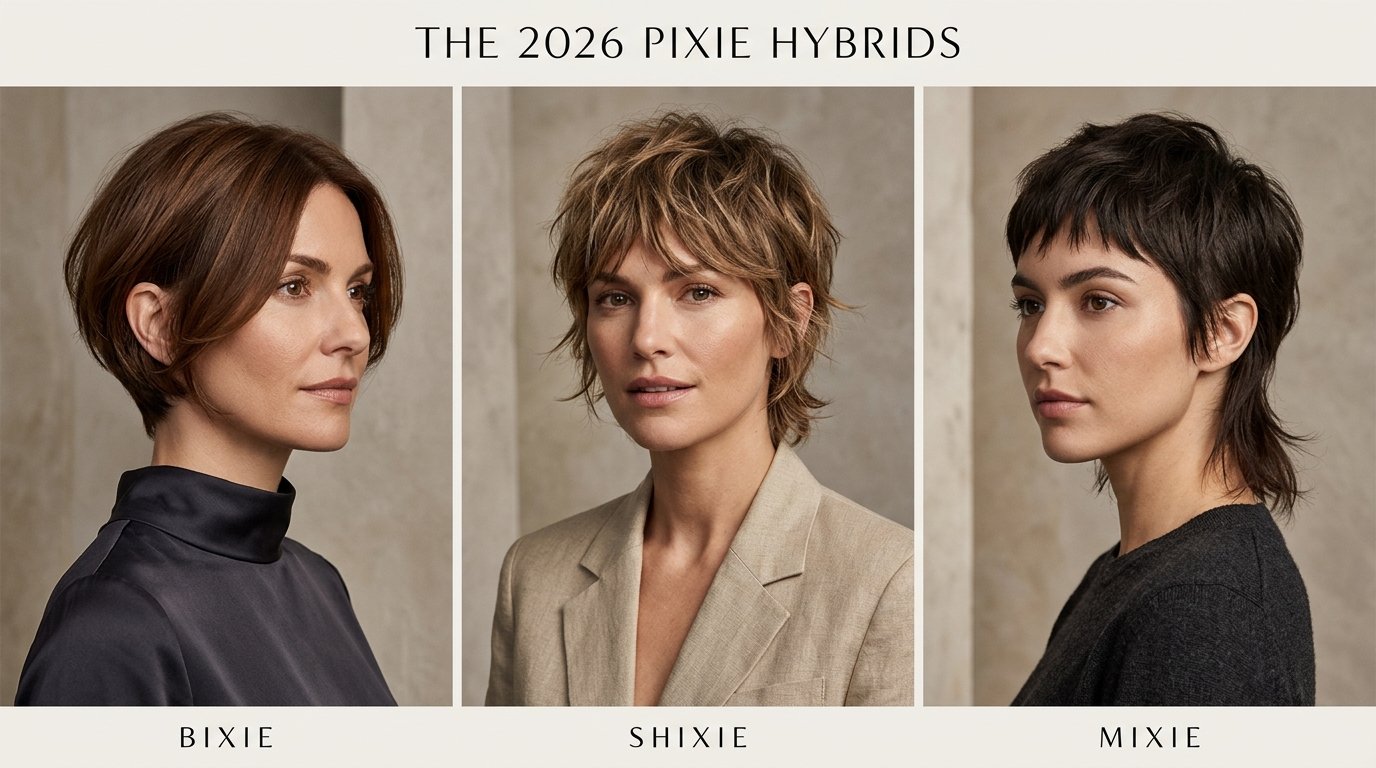
Short answer: a pixie cut is a short cropped style, close at back and sides, longer on top. The right one is chosen by face shape, texture and trim frequency.
- Face shape first: crown height, side width and fringe placement do the flattering, not the name.
- Texture second: fine hair needs controlled texture, thick hair weight removed, curls a dry cut.
- Upkeep third: most pixies hold their shape for four to six weeks between trims, per stylist guidance.
- The families: classic, long, pixie bob, undercut, with bangs, choppy, asymmetrical, curly, and sleek, spiky or micro.
- The honest cost: not a price tag. A pixie costs appointments: frequency is the real commitment; no invented prices here.
What Is a Pixie Cut?
Short answer: a pixie is a cropped cut: tapered nape, short sides, a longer textured top, above the ears and off the neck, shorter than a bob.
The Shape Every Pixie Shares
Every pixie is built from three zones: a short back following the head, close sides around the ears, and a longer top carrying the style. Change the balance and the family changes.
The top carries your personality: swept forward, lifted, parted or spiked. The back and sides carry the maintenance; that perimeter grows out of shape first.
Length strands vary by source; treat them as approximate: classic tops are often described around two to four inches, sides shorter. Ask for proportions, not chart inches.
Pixie, Bixie and Bob: Where the Lines Sit
A pixie ends above the jaw, ears and neckline exposed. A bob reaches the jaw or below and covers the neck. Between them sits the bixie, pixie-short layers with bob-length edges.
The lines matter because upkeep follows them: the shorter the perimeter, the sooner growth shows. For bob behaviour with pixie energy, the bixie and pixie bob are the middle ground, covered in the gallery.
Find Your Pixie: The Three-Question Match
Short answer: answer three questions and the gallery narrows itself. Face shape picks the silhouette, texture the cutting method, styling minutes how precise the cut can be.
The Decision Table
|
Your answer |
Start with this family |
Why it fits |
|---|---|---|
|
Round face, any texture |
Classic or asymmetrical pixie |
Crown height and a diagonal fringe lengthen the face |
|
Square face, any texture |
Long pixie or choppy pixie |
Soft, wispy edges take corners off the jaw |
|
Heart face, any texture |
Pixie with side-swept or curtain bangs |
Fringe softens forehead width, fullness at the jaw |
|
Long face, any texture |
Pixie bob or pixie with full bangs |
Width at the sides, never height on top |
|
Fine or thin hair |
Choppy, textured pixie |
Controlled point-cut layers read as volume |
|
Thick or dense hair |
Undercut or tapered pixie |
Internal weight removal stops sides bulking out |
|
Curly or coily hair |
Curly pixie, cut dry |
Built on the curl pattern, not against it |
|
Ten styling minutes or fewer |
Classic, long or micro pixie |
Forgiving shapes that air-dry close to salon form |
|
Growing out long hair |
Long pixie first |
The softest first step, easiest grow-out path |
Read the face shape and texture sections for your row, then jump to that family in the gallery. Every entry repeats five fields: suits, skip, length, trims and product, so entries compare cleanly.
Pixie Cuts by Face Shape
Short answer: face shape decides where a pixie puts height, width and fringe. Height lengthens, width widens, a fringe shortens the face it covers. Match those levers and most families become wearable.
One expert correction first: stylist Karie Bennett, quoted in Byrdie’s pixie gallery, notes a great pixie depends on your head shape and bone structure, not face shape alone.
Round Face: Add Height, Keep the Sides Close
Goal: length. A round face needs vertical lift, nothing at cheek level, its widest point.
Choose a classic or asymmetrical pixie with height at the crown, sides close, and a side-swept fringe cutting a diagonal across the forehead.
Skip round, even shapes, cheek-level volume and blunt fringes. A fringe ending at the cheeks underlines width; one sweeping past breaks the circle.
Oval Face: The Open Field
Goal: choice. An oval face is balanced, so almost every pixie family works; the decision moves to texture, upkeep and taste.
This shape can carry the bold rows: micro pixies, spiky tops, deep side parts, strong asymmetry. If you are oval and hesitating, your question is maintenance.
Square Face: Soften the Jaw
Goal: softness. A square face has a strong jaw and forehead: blur edges rather than echo them.
Choose a longer pixie or a choppy, feathered cut with wispy edges and face-framing pieces near the jaw, soft layers taking the corners off.
Skip boxy, jaw-level shapes, blunt fringes and hard-lined undercuts. A straight shelf at the jaw doubles the angle you were softening.
Heart Face: Balance the Forehead
Goal: balance. A heart face is wide at the forehead, narrow at the chin: quiet the top, give the jaw something to look at.
Choose a pixie with a side-swept or curtain fringe, keeping some fullness low at the jaw and ears. The soft split of curtain bangs does this beautifully at short length.
Skip very short, slicked-back tops with no fringe: they put the whole forehead on display.
Long Face: Width, Not Height
Goal: width. A long face needs the eye travelling sideways: volume at the sides, a quiet crown.
Choose a pixie bob or a pixie with a fuller fringe, sides keeping softness and movement. A fringe is a genuine tool here: it shortens the visible face.
Skip tall crowns, quiffs and pompadour styling, adding height this shape does not need, and very close sides under a long top, which stretches a long face.
Diamond Face: Width at the Forehead
Goal: forehead width. A diamond face is widest at the cheekbones, narrower at forehead and jaw: widen the top of the frame.
Choose a pixie with a fringe and soft side pieces near the forehead. A textured top with width balances the cheekbones; a side part keeps the frame open.
Skip severe centre-parted sleek styles and heavy cheek-level volume, exaggerating the widest point.
Pixie Cuts by Hair Texture and Density
Short answer: texture decides how the pixie is cut, not whether you can have one. Fine hair is cut for density’s illusion, thick hair for weight control, curls dry, on their pattern.
Density and texture differ. Texture is the thickness of each strand; density is how many strands you have. Fine hair can be dense, thick hair sparse.
Fine Hair: Texture That Reads as Volume
Fine hair is where pixies shine, because short hair cannot drag itself flat. The method is controlled choppy layers: point cutting and light texturising for piecey ends and crown movement.
Control is the key word. Layers cut too enthusiastically leave fine ends see-through and wispy, reading as thinner, not fuller. Texture through the top and crown, perimeter stronger.
Your product spec is lightweight everything: mousse, texture spray, styling powder. Heavy products flatten fine hair.
Thick Hair: Remove Weight Inside
Thick hair fails as a pixie when sides bulk into a helmet. The fix is internal weight removal: graduation, texturising inside the cut, and, for the densest hair, an undercut.
Ask where the weight will live. A good thick-hair pixie holds shape because the inside is engineered, not sprayed into submission.
Your product spec can carry more hold: clay, paste, pomade. Thick hair is where stronger products earn their place.
Curly and Coily Hair: Cut Dry, Keep the Pattern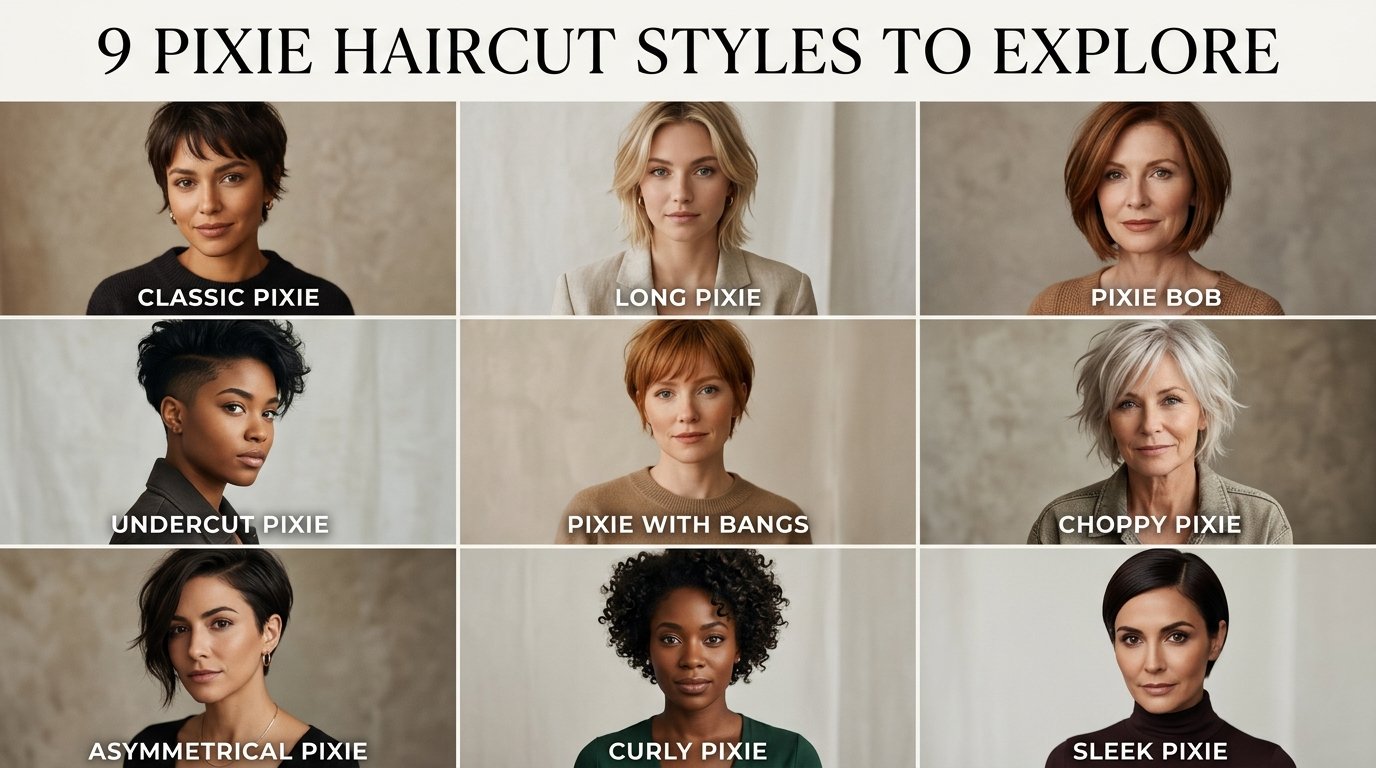
Curly hair should be cut dry, in its natural pattern, because wet curls stretch and spring back shorter. Cut wet, the shape is a guess; cut dry, what you see is what you keep.
Shrinkage is the planning number: curls sit shorter than stretched, so leave more length than the photo suggests, refining once the pattern settles. Your stylist works curl by curl.
Your product spec is moisture and definition: curl cream through damp hair, hands off while it dries. Never brush a dry curly pixie unless frizz is the goal.
Wavy Hair: Work With the Bend
Wavy hair is the pixie’s easiest texture: the bend does the styling. Tousled, shaggy and feathered pixies borrow the wave’s movement, looking styled on a two-minute morning.
The method is loose layering letting waves stack, not puff. Keep the top long enough for the wave to complete its bend; too short and waves stand as undefined fuzz.
Your product spec is light: sea salt spray scrunched through damp hair, mousse for hold. Wavy pixies reward touching less.
Straight Hair: Sleek, Parted, Asymmetrical
Straight hair shows every line, making it the precision texture. Sleek pixies, deep side parts and asymmetrical cuts read sharp and deliberate on it, because nothing blurs the silhouette.
The trade-off is honesty: straight hair shows every growing-out millimetre and cutting flaw. Choose a stylist who cuts short hair often; the trim cadence matters more for you.
Your product spec is polish: smoothing paste or light pomade, root lift at the part, a mini flat iron for formal days. Straight hair shows product overload as grease.
The Pixie Gallery by Family
Short answer: nine families cover nearly every pixie you will ever see photographed. Each entry carries the same five fields, suits, skip, length, trims and product, so you can compare families instead of collecting screenshots.
Length figures are strands from stylist guidance, varying by source; treat them as approximate consultation starting points, never specifications. Trim cadences are likewise labelled strands.
Classic Pixie
The original: tapered back and sides, a slightly longer textured top, nothing extreme. The reference point every other family varies on; the safest first pixie.
- Suits: oval and round faces first; fine to medium textures, low drama.
- Skip if: you want a strong statement, or your crown grows flat and you dislike daily lifting.
- Length strand: tops often described around two to four inches, sides shorter.
- Trim strand: about every four weeks in variant guidance, inside the usual range.
- Product by function: paste for definition, texture spray on fine, pomade on thick.
Long Pixie
The long pixie keeps more length on top and around the ears, softening every edge of the classic shape. The softest entry into short hair, suggested to nervous clients.
- Suits: square faces, first-time short hair, anyone growing out colour or damage.
- Skip if: you want the full short-hair effect immediately; this reads as a crop, not a statement pixie.
- Length strand: around four to five inches on top in stylist descriptions, length near the ears.
- Trim strand: every five to six weeks in variant guidance, the most forgiving cadence.
- Product by function: mousse for body, texture spray for separation, paste for sleek.
Pixie Bob and Bixie
The pixie bob keeps longer front pieces toward the jaw over a cropped back. The bixie is the same hybrid idea; salons use the names interchangeably, so do not pay for the distinction.
- Suits: long faces needing width, round faces wanting softness, anyone bridging bob and pixie.
- Skip if: you hate hair touching your face, or want the nape exposed.
- Length strand: front pieces in ear to jaw territory, back in pixie graduation.
- Trim strand: inside the usual four to six week range; the front edge grows out first.
- Product by function: paste for piecey fronts, serum on straight, spray on wavy.
Undercut Pixie
An undercut pixie clips or shaves the sides, the nape, or both, under a longer top falling over the clipped zone. It removes bulk; the gallery’s strongest silhouette.
- Suits: thick and dense hair first, oval faces, edgy lines and cool necks.
- Skip if: you dislike frequent appointments, or need the most conservative short hair.
- Length strand: the clipped section is often described around a quarter inch, under a disconnected top.
- Trim strand: the highest upkeep here; clipped sections show growth at the range’s early end.
- Product by function: clay or paste for the top, pomade for contrast, spray for softness.
Pixie With Bangs
Bangs change a pixie’s whole expression, so treat the fringe as a system: type, face shape and cadence together. Variants: side-swept, wispy, micro, baby, full and curtain.
|
Fringe type |
Best for |
Behaviour to know |
|---|---|---|
|
Side-swept |
Round and heart faces |
The diagonal lengthens round faces, softens wide foreheads |
|
Wispy |
Square faces, fine hair |
Feathered edges soften a jaw; light enough for fine hair |
|
Micro and baby |
Oval faces, strong brows |
Sits high on the forehead; the boldest, least forgiving fringe |
|
Full and blunt |
Long faces, straight hair |
Covers forehead length; needs precision and regular trims |
|
Curtain |
Heart and diamond faces |
A soft centre split framing both sides of the face |
A short curtain fringe is a real pixie variant: it parts centrally and sweeps both ways at brow to cheekbone length. The short curtain bangs landmark guide shows where that short zone sits.
For the lightest version, wispy curtain bangs suit fine hair and square faces, softening without weight. For a fuller fringe, Bardot bangs carry more density through the centre.
Fringe length is a landmark, not a guess: the cheekbone bangs guide explains the landing point longer fringes grow toward. Browse curtain bangs ideas for shapes at every length.
- Suits: heart, long and diamond faces most; foreheads wanting softening.
- Skip if: you cannot face fringe trims between cuts, or your hairline has a centre cowlick.
- Length strand: fringe from micro, high on the forehead, to cheekbone length.
- Trim strand: fringe trims every two to four weeks in stylist guidance, between appointments.
- Product by function: light paste or powder at roots; heavy products grease fringes first.
- Celebrity strand: Byrdie pairs Rihanna with face-framing micro bangs on a piecey pixie.
Choppy and Textured Pixie
Point-cut or razored uneven layers through the top, piecey ends, deliberate mess. The default for fine hair in stylist guidance; broken-up ends read as thickness.
- Suits: fine and thin hair first; round faces; finger-stylers wanting forgiveness.
- Skip if: you want a sleek, polished silhouette; choppy texture fights smoothness by design.
- Length strand: top length varies widely; texture, not length, defines the family.
- Trim strand: about every four weeks in variant guidance, as piecey ends blur.
- Product by function: texture spray for separation, powder at roots, paste pea-sized.
Asymmetrical Pixie
One side longer, one side close: the deliberate diagonal across the whole cut. Face-shape guidance assigns it to round and square faces; the diagonal breaks width, softens corners.
- Suits: round and square faces, straight and wavy textures, anyone bored by symmetry.
- Skip if: you part your hair both ways; this cut commits to its side.
- Length strand: the long side often reaches ear to cheekbone length over a cropped short side.
- Trim strand: inside the usual four to six week range; the long side shows growth fast.
- Product by function: paste for the long side, root lift at the part, hairspray to finish.
Curly Pixie
A pixie built on the curl pattern itself: longer curls on top, shaped sides following the head, no straightening the texture into a different cut. A headline variant in every gallery.
- Suits: curly and coily hair at most densities; oval and heart faces.
- Skip if: you plan to heat-straighten daily; this cut is designed to be worn curly.
- Length strand: leave more than the photo suggests; shrinkage shortens curls as they dry.
- Trim strand: inside the usual range, judged by shape; curls hide growth longer.
- Product by function: curl cream on damp hair, leave-in conditioner for coils, gel for hold.
- Celebrity strand: Byrdie’s gallery holds up Ruth Negga’s curly pixie as the pattern to show your stylist.
Sleek, Spiky and Micro Pixies
Three precision rows share one entry and one truth: the shorter and sharper the pixie, the more it depends on cutting precision and frequent trims. Sleek lies flat, spiky lifts, micro crops close.
- Suits: oval faces, strong bone structure, straight to wavy textures, minimalists.
- Skip if: you want to stretch appointments, or your scalp sunburns easily unprotected.
- Length strand: micro versions sit closest, sometimes described around one to two inches all over, longer crown.
- Trim strand: micro and baby pixies every two to three weeks, the tightest cadence.
- Product by function: pomade for shine, wax or fiber for spikes, almost nothing for micro.
- Celebrity strands: Byrdie shows Florence Pugh’s spiked platinum pixie and Cynthia Erivo’s close crop as this row’s ends.
Pixie Cuts After 50, After 60 and With Silver Hair
Short answer: age does not change the pixie family; it changes the settings. Softer edges, volume where hair thinned, silver worn as a colour, not a compromise: the same families work after 50 and 60.
Softer Structure After 50
After 50, the winning pixies are soft, textured and feathered, movement around the face, not hard lines. Choppy and long pixies carry this best; edges forgive, tops lift.
Hair often loses density at temples and crown with age, so fine-hair rules apply even to formerly thick hair: controlled layers, root lift, no over-thinning.
Fine Hair and Silver After 60
After 60, silver hair is often coarser and drier even as density falls, needing volume and moisture logic together. Short textured pixies with a soft fringe are the most requested shape.
Wear the silver as the colour choice it is. A sharp natural-silver pixie reads deliberate and modern; the grow-out section covers the transition timeline to grey.
Pixie Cuts With Glasses
Glasses and pixies are natural partners: short hair shows the frames instead of hiding them. Coordinate the fringe, clearing or complementing the frame line, and sides sitting cleanly over the ears.
Wear your everyday glasses in the chair for the final check. A fringe cut without them can land exactly on the frame.
How to Ask Your Stylist for a Pixie
Short answer: bring two or three photos of your chosen family on hair like yours, then use the family’s words: length zones, technique, finish. Vague requests get vague pixies.
- Classic pixie: a tapered nape, short sides, a textured top around two to four inches, styled forward or side-parted.
- Long pixie: four to five inches kept on top, length at the ears, soft layers, no hard disconnection.
- Pixie bob or bixie: a cropped, graduated back, front pieces toward the jaw; agree which name your salon uses.
- Undercut pixie: name the clipped zones, sides, nape or both, the clipper length, and how long the top stays.
- Pixie with bangs: name the fringe type, side-swept, wispy, micro, full or curtain, and where it lands: brow or cheekbone.
- Choppy pixie: point cutting, piecey ends through the top, controlled layers, a stronger perimeter on fine hair.
- Asymmetrical pixie: agree the long and short sides, and where the long side ends, ear or cheekbone.
- Curly pixie: a dry cut, curl by curl, shrinkage left in the length, not cut away wet.
Book a stylist who cuts short hair often. Pixies live or die on precision; a gallery of all long layers is the wrong chair. State your trim budget honestly too.
How to Style a Pixie Cut
Short answer: pixie styling is product placement, not effort. A pea-sized amount of the right product, at roots or ends depending on the routine, covers almost every morning.
The Two-Minute Routine
For classic, long and micro pixies: work a pea-sized amount of paste through dry hair, push the top into place, lift the crown with fingers, stop.
Second-day hair often styles better than wash-day hair. A mist of water or texture spray at the roots and a finger-reshuffle replaces a restyle.
The Polished Routine
For sleek versions: blow-dry the top in its finished direction with a flat brush, smooth light pomade or paste over it, set the part. A mini flat iron refines the fringe.
Heat protectant first on fine or coloured hair. Polish reads as health; fried ends read as neither.
The Textured Routine
For choppy, asymmetrical and wavy pixies: scrunch texture spray or sea salt spray through damp hair, twist sections with paste on the ends, air-dry briefly.
Stylist Erin Powers, quoted in Byrdie’s gallery, says a pixie should open the person up. Style toward open spaces, fringe swept from the centre.
Products by Function and Hair Type
|
Product function |
Fine hair |
Thick hair |
Curly hair |
What it does |
|---|---|---|---|---|
|
Paste |
First choice, pea-sized |
Yes, movable hold |
On ends only |
Medium hold, natural finish |
|
Texture or sea salt spray |
First choice |
Yes |
Refresh only |
Dry lift, separation, second-day revival |
|
Volumizing mousse |
Yes, at roots |
Optional |
Optional |
Root body before drying |
|
Pomade |
Avoid, flattens |
Yes, sleek shine |
Avoid |
Shine and sleek definition |
|
Wax or fiber |
Tiny amounts only |
Yes |
Avoid |
Matte, piecey separation, stronger hold |
|
Clay |
Avoid, too heavy |
First choice |
Avoid |
Matte strong hold and control |
|
Styling powder |
Yes, at roots |
Optional |
No |
Instant root lift in tiny amounts |
|
Curl cream |
No |
No |
First choice |
Curl definition and moisture |
The rule underneath: fine hair needs lightweight formulas, tiny amounts; heavy wax and pomade flatten it. Thick hair can carry the strong row. Use half what you planned.
Pixie Maintenance: Trims, Fringe and Neckline
Short answer: a pixie is maintained on a cadence, not a crisis. Stylist guidance commonly puts it at a trim every four to six weeks, fringe and neckline sooner.
The cost question belongs here, answered honestly: this page prints no salon prices, because no verifiable source stands behind one. A pixie usually costs a normal cut per visit; the real cost driver is frequency.
Trim Cadence by Variant
Cadences are labelled strands, not one rule. InStyle’s stylist guide has stylist Raven Hurtado recommending pixie trims every four to six weeks; the Ogle School cosmetology guide gives the same schedule.
|
Variant |
Trim strand |
Why |
|---|---|---|
|
Micro or baby pixie |
Every 2 to 3 weeks |
Precision at very short length shows growth immediately |
|
Classic or textured pixie |
About every 4 weeks |
The piecey shape blurs as the top gains length |
|
Most maintained pixies |
Every 4 to 6 weeks |
The commonly quoted stylist range across sources |
|
Long pixie |
Every 5 to 6 weeks |
Extra starting length buys extra weeks |
|
Fringe only |
Every 2 to 4 weeks |
A fringe reaches the eyes before the cut fails |
|
Neckline tidy |
Between full cuts |
A quick barber tidy keeps the nape clean |
A maintenance appointment should include the nape, ear line and fringe, not just a top tidy. Tidy-up visits between cuts stretch the shape.
Growing Out a Pixie Cut
Short answer: growing out a pixie takes months, not weeks, and succeeds on a plan: small reshaping trims, two bridge cuts, styling tricks for the awkward middle. Skipping trims reliably fails.
The arithmetic uses the growth figure dermatology sources commonly cite, about half an inch per month, an attributed strand, not a promise. On that average, expect the timeline below.
The Stage Timeline
|
Stage |
Rough timing |
What to do |
|---|---|---|
|
Still a pixie |
Months 0 to 2 |
Let the top grow; keep the nape tidied so it reads deliberate |
|
Awkward stage |
Around weeks 6 to 8 onward |
Sides puff, shape blurs; style through it, do not cut it off |
|
Long pixie |
Months 3 to 5 |
Reshape into the long pixie family; fringe becomes side-swept layers |
|
Bixie bridge |
Months 5 to 8 |
Let the front reach the jaw while the back stays graduated |
|
Short bob |
Around months 9 to 12 |
Most growers reach a bob here on the average growth strand |
|
Shoulder length |
A year and beyond |
A longer project; keep ends dusted at long intervals |
Byrdie’s gallery shows Emma Stone’s grow-out stage, the honest template: even a famous grow-out passes through a soft, in-between shape, styled, not hidden.
Surviving the Awkward Stage
The awkward stage is a styling problem, not a hair problem. Headbands, clips and scarves move the eye; a deep side part changes the silhouette in seconds; texture spray gives the puff purpose.
Book transition trims removing the mullet-in-progress at the back while protecting top length. Say you are growing out, so every trim serves the next stage.
Pixie vs Bob vs Bixie
Short answer: the pixie is a shape, the bob a length, the bixie the negotiated settlement between them. Choose by neck, jaw and upkeep.
|
Pixie |
Bixie |
Bob |
|
|---|---|---|---|
|
Length |
Above the ears and jaw |
Ear to jaw edges |
Jaw to shoulder |
|
Neckline |
Exposed |
Mostly exposed |
Covered |
|
Trim cadence |
Every 4 to 6 weeks strand |
Every 4 to 6 weeks strand |
Longer intervals |
|
Grow-out |
The full staged plan above |
Easier, already halfway |
Grows within its family |
|
Best for |
Definition, low daily styling |
Commitment-phobes, growers |
Coverage, classic polish |
Inside the family, short means sharper and more frequent, long means softer and more forgiving: different contracts with your calendar.
Pixie Mistakes and How to Fix Them
Short answer: most pixie regrets are matching mistakes, not cutting mistakes: wrong fringe for the face, texture removed from hair with none to spare, or a precision cut booked with a stylist who rarely cuts short.
- Wrong fringe for the face shape: a blunt fringe on a round face, or none on a long one. Fix: re-cut the fringe first; the fastest correction in the cut.
- Over-thinning fine hair: enthusiastic texturising leaves ends see-through. Fix: grow the perimeter back; re-cut with controlled layers, point cutting not shears.
- Skipping the consultation photo: short means different things in different chairs. Fix: never book the chop without reference photos on your texture.
- DIY clipper fixes: home clippers create steps and shelves. Fix: tidy only stray neckline hairs; let a barber correct the rest.
- Abandoning the grow-out at week seven: the awkward stage peaks just before the long pixie rescues it. Fix: one transition trim, two weeks of accessories.
A bad pixie is fixed by reshaping, not re-growing: a good short-hair stylist can usually move it into a neighbouring family in one appointment.
FAQs
What is a pixie cut?
A short cropped haircut: tapered back and sides, longer top, above the ears, shorter than a bob.
What is the difference between a pixie cut and a pixie haircut?
None. Both phrases name the same cut, which is why one page covers both.
Will a pixie cut suit me?
Probably, if the family matches your face shape, texture and upkeep. Most regrets are the right family on the wrong head.
What face shape suits a pixie cut best?
Oval, being balanced. Others work with adjustments: height for round, softness for square, fringe for heart and long, width for diamond.
What is the best pixie cut for a round face?
A classic or asymmetrical pixie with crown height, close sides and a side-swept fringe. Avoid cheek-level volume.
What pixie cut suits a square face?
A longer or choppy pixie with soft, wispy, feathered edges and pieces framing the jaw. Avoid boxy shapes.
What pixie cut suits a heart shaped face?
A pixie with a side-swept or curtain fringe softening the forehead, fullness kept low at the jaw.
What pixie cut suits a long face?
A pixie bob or a pixie with a fuller fringe, volume at the sides, never crown height.
Can you get a pixie cut with fine hair?
Yes, one of its best textures. Ask for controlled choppy layers and a strong perimeter so ends stay full-looking.
What is the best pixie cut for thick hair?
A tapered or undercut pixie with internal weight removal, so the sides cannot bulk out.
Can you get a pixie cut with curly hair?
Yes, a headline variant. Ask for a dry cut, curl by curl, leaving length for shrinkage.
What pixie cut works for wavy hair?
Tousled, shaggy and feathered pixies work with the bend. Keep enough top length for the wave to complete.
What is a long pixie cut?
A pixie keeping more length on top and around the ears, often around four to five inches on top.
What is the difference between a pixie cut and a bixie?
A bixie is the hybrid: pixie layers with bob-length edges. A true pixie fully exposes ears and neckline.
What is a pixie bob?
A pixie with longer front pieces toward the jaw over a graduated back. Pixie bob and bixie name nearly the same hybrid.
What is an undercut pixie?
A pixie with the sides, nape or both clipped short under a longer top. It removes thick-hair bulk.
Do pixie cuts look good with bangs?
Yes, a main pixie tool. Side-swept, wispy, micro, full and curtain fringes suit different faces; see the fringe table.
Can you get curtain bangs with a pixie cut?
Yes. A short curtain fringe parts centrally, sweeping both ways, softening heart and diamond faces. Our curtain bangs guide covers every length.
What are micro bangs on a pixie?
A very short fringe cut high on the forehead, above the brows. Boldest choice; suits oval faces, strong brows.
How often should you trim a pixie cut?
Stylist guidance commonly says every four to six weeks; micro versions two to three, long pixies five to six.
How often do bangs on a pixie need trimming?
About every two to four weeks, between full appointments. A fringe reaches your eyes before the cut loses shape.
Is a pixie cut high maintenance?
Appointment-high, morning-low: minutes of daily styling, but regular trims hold the shape. Choose a long pixie to stretch visits.
How do you style a pixie cut every day?
A pea-sized amount of the right product, placed deliberately: paste through dry hair, crown lifted, fringe directed.
What products do you need for a pixie cut?
One product matched to your texture: paste or texture spray for most, mousse for fine roots, clay for thick, curl cream for curls.
What is the difference between pomade, wax and paste for a pixie?
Pomade gives shine and sleek hold, wax matte piecey separation, paste a medium movable finish. Paste is fine-hair-safe.
How much product should you use on a pixie cut?
A pea-sized amount, half what you think. Overload reads as grease, especially on fringes and fine hair.
How long does a pixie cut take to grow out?
On the commonly cited average of about half an inch per month, a short bob takes nine to twelve months.
What are the stages of growing out a pixie cut?
Pixie, awkward stage from weeks six to eight, long pixie, bixie bridge, then a short bob around months nine to twelve.
How do you survive the awkward stage of a pixie grow out?
Style through it: headbands, clips, a deep side part, texture spray, and transition trims cleaning the back only.
How can I make a growing out pixie look good?
Book small reshaping trims and tell your stylist you are growing out, so each cut serves the next stage.
What is the best pixie cut for women over 50?
A soft, textured or long pixie with feathered edges and crown lift. Avoid over-thinning thinning hair.
What is the best pixie cut for women over 60?
A short textured pixie with a soft fringe, volume logic and moisture in the routine. Silver worn as colour reads modern.
Does a pixie cut make you look older or younger?
Neither by itself, on the fetched expert strands. Proportion and styling decide: matched and kept reads fresh at any age.
Do pixie cuts work with glasses?
Yes, short hair shows frames. Keep the fringe clear of the frame line and wear your glasses to the final check.
Can a pixie cut hide thinning hair or a receding hairline?
Cosmetically, often: textured layers make thinning less visible; a fringe can cover a hairline. Styling, not treatment.
What should I ask my stylist for when I want a pixie cut?
Name the family, the length zones and the fringe, and show photos on your texture. The scripts section words all eight families.
Should I bring a photo to my pixie appointment?
Yes, two or three, of your family on your texture. Photos settle what short and textured mean before cutting starts.
Can I cut a pixie cut at home?
Not recommended. Pixies live on precision; home clippers create steps and shelves a salon must fix. Tidy neckline strays only.
What is the best pixie cut for a big forehead?
A pixie with a full, side-swept or curtain fringe, covering or breaking up the forehead’s height.
Does a pixie cut work if I have a cowlick?
Usually, if planned around it. A stylist maps growth patterns first, placing partings where the cowlick helps.
How do you fix a bad pixie cut?
A short-hair stylist can usually reshape it into a neighbouring family in one appointment. Fringe errors fix fastest.
Is a pixie cut a good idea for summer?
Yes: cool neck, fast drying, minutes of styling. Protect the newly exposed scalp and neck from the sun.
Conclusion
Pixie haircuts reward the reader who matches before she cuts: face shape for the silhouette, texture for the method, a trim cadence she can keep. Pick your decision-table row, take the family’s script and photos to a short-hair stylist, and the shortest cut becomes the easiest you own.
Ready to choose your fringe? Start with the StylerLook curtain bangs guides linked through this page, then bring your matched family back here and book with confidence.

1 thought on “Pixie Haircuts: Find the Pixie Cut That Matches Your Face, Hair and Upkeep”