
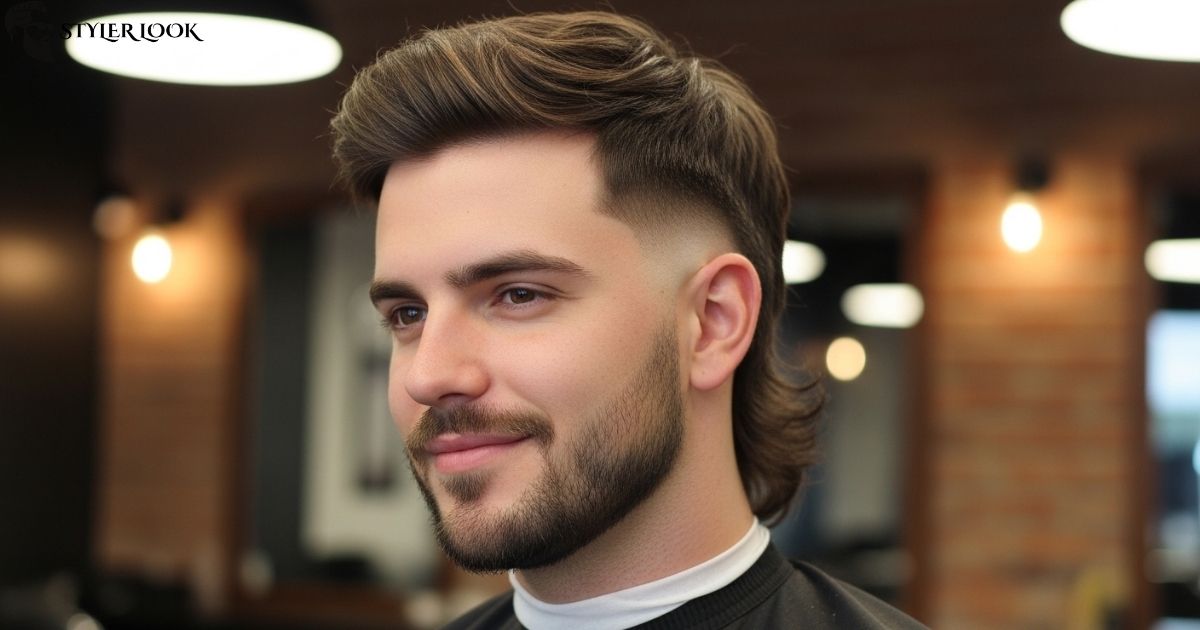
There’s a cut making waves in every barbershop right now, and it’s one you might not have expected. The modern mullet fade has shed every cringe-worthy reputation it once carried and replaced it with edge, intention, and real style. Whether you’re stepping into a chair for the first time or ready to upgrade your current look, this guide breaks down everything you need to know: the variations, the maintenance, the celebrities wearing it, and exactly what to tell your barber.
Why the Modern Mullet Fade Is Trending Now

Walk into any barbershop in 2026 and you’ll hear it requested constantly, the mullet fade. But why now?
The answer is a mix of cultural forces. TikTok videos tagged “mullet fade” have racked up hundreds of millions of views, turning the style into one of the most searched haircuts online. Gen Z and millennials are drawn to the look because it blends nostalgia with rebellion, it nods to ’80s and ’90s sports and music culture while rejecting the overly polished grooming trends of the 2010s.
Barber surveys back this up. A significant majority of barbers report that clients are asking for fade mullets more frequently than ever, driven by a desire for self-expression that suits both streetwear aesthetics and live music culture.
Beyond TikTok, celebrities from Paul Mescal to Post Malone have been spotted rocking tailored versions of the cut, signaling that the mullet is no longer a joke, it’s a genuine style statement.
Read More: Sharp High Taper Fade Haircuts for Men – Trending Style Guide
Modern Mullet Fade vs. Classic Mullet: Key Differences

Understanding the difference between the two is important before you commit to the chair.
| Feature | Classic Mullet | Modern Mullet Fade |
| Sides | Cut short with scissors | Faded (skin, taper, or burst) |
| Texture | Often flat or unstyled | Layered and textured on top |
| Back Length | Long and unshaped | Long but blended and intentional |
| Vibe | Retro, dated | Contemporary, sharp, versatile |
| Occasion | Counter-culture | Wearable daily and even professionally |
| Maintenance | Low | Moderate (fade touch-ups every 3–4 weeks) |
The key distinction is the fade. Where the classic mullet simply had shorter sides, the modern version uses precise clipper work, skin fades, taper fades, drop fades, or burst fades, to create a seamless and intentional-looking transition. Layered texture on top replaces the flat, block-cut crown of the original. The result is a haircut that feels deliberate rather than accidental.
Read More: Low Taper Fade White Male Haircut: Style and Complete Guide
Popular Mullet Fade Variations to Know
The mullet fade is not a one-size-fits-all cut. Here are the most popular variations requested today:
Skin Fade Mullet

The most dramatic version. The sides are shaved all the way down to the skin, creating a bold contrast against the longer back. Best for guys who want maximum visual impact.
Taper Fade Mullet

A more gradual transition from short to long. The taper can be set low (near the ear), mid, or high on the sides. This is the most versatile option and works across almost every hair type and face shape.
Drop Fade Mullet

The fade drops lower behind the ear, following the curve of the head. This creates a more natural, flowing shape that works especially well for guys with rounded head shapes.
Burst Fade Mullet

The fade radiates outward in a semicircle around the ear. This variation adds serious dimension and looks exceptional on curly or wavy hair.
Shag Mullet

No fade, but still very much a modern mullet. Choppy, voluminous layers from crown to nape give it a ’70s rock influence. Add a textured fringe and you’ve got a vintage-modern hybrid that’s extremely on-trend.
Read More: Low Taper Fade Textured Fringe – Complete Style Guide
Quiff Mullet Fade

Combines the upswept height of a quiff with the longer back of a mullet. Perfect for anyone who wants structure and attitude in one cut.
Modern Mullet Fades by Hair Type
One of the biggest reasons the mullet fade is dominating right now is its adaptability across hair textures.
Straight Hair: Crisp lines and tight fades look exceptionally clean on straight hair. A skin or taper fade paired with a structured top creates a sharp, polished mullet. Light pomade or matte clay adds definition without weighing it down.
Curly Hair: Curls thrive in a mullet shape. The burst fade is the go-to variation here, adding a starburst dimension around the ears that highlights the curl pattern. Use a curl cream or lightweight styling product to define spirals in the back.
Wavy Hair: Wavy texture naturally adds movement to the mullet back, giving it that windswept, lived-in quality. Sea salt spray enhances the natural wave pattern and keeps the style looking effortless.
Thick or Coarse Hair: Strategically thinned layers and razored ends keep the style from becoming bulky. The volume can be directed to the back, which actually enhances the mullet’s signature silhouette.
Fine Hair: A textured, choppy cut on top with a low taper fade works best. Avoid heavy styling products. Volumizing mousse and a light diffuse-dry adds body without making thin hair look limp.
Face Shape and Mullet Compatibility Guide
Matching your mullet style to your face shape makes all the difference between a cut that looks intentional and one that looks off.
| Face Shape | Best Mullet Approach |
| Round | High fade + added height on top to elongate the face |
| Oval | Most versatile, almost any variation works well |
| Square | Softer fade + mid-length layers to balance strong jaw |
| Oblong/Rectangle | Avoid too much volume on top; keep height minimal |
| Heart-Shaped | Low fade + fuller back to balance a wider forehead |
| Diamond | Textured fringe up front + moderate back length |
For round faces, the goal is to create angles and vertical length. A high fade with volume on top stretches the face visually. Square faces benefit from slightly curved layers that soften a prominent jawline. Oval faces are the lucky ones, they can pull off nearly every variation from a choppy rock-inspired cut to a high-contrast skin fade.
Modern Mullet Fade for Every Personality
The beauty of this cut is how much it adapts to the person wearing it. It’s not a one-personality hairstyle.
- The Minimalist: Go for a low taper fade with a short, neat back. Clean, quiet, and surprisingly office-appropriate.
- The Creative: A burst fade with textured layers and a slightly longer back that moves when you do. Pair it with bold color or bleached tips.
- The Musician/Artist: A shag mullet with choppy fringe and lived-in texture. Think indie concert, not accountant.
- The Athlete: Short mullet fade, barely touches the collar, sides tight, top textured. Sweat-proof and sharp.
- The Trendsetter: Mohawk-mullet hybrid or a mullet faux hawk with a skin fade. Maximum impact, zero apologies.
Styling & Maintenance Tips: From Barber to Daily Routine
Getting the cut is only half the job. Here’s how to keep it looking fresh.
At the Barber
- Schedule a fade touch-up every 3–4 weeks to keep the sides crisp
- The back can go 5–6 weeks before it needs reshaping
- Wavy or shag mullets can stretch to 6–8 weeks between visits
Daily Styling Routine
- Start with slightly damp hair, product grips better than on dry hair
- Work a small amount of matte clay or texturizing cream through the top and crown
- Use a blow dryer on low heat to build volume at the roots if needed
- Scrunch the back section with your fingers to activate natural movement
- Finish with a light-hold spray to lock in the shape without stiffness
Product picks by hair type:
- Straight hair → Matte clay or light pomade
- Curly hair → Curl cream or defining gel
- Wavy hair → Sea salt spray
- Fine hair → Volumizing mousse
What to Tell Your Barber: The Mullet Fade Breakdown
Walking in without a plan leads to miscommunication. Here’s exactly what to communicate:
“I want a modern mullet fade, leave the back longer [specify: just above collar / mid-neck / shoulder], keep the top textured, and fade the sides [low / mid / high]. I want a [skin / taper / drop / burst] fade. Can you show me what works best for my face shape?”
Better yet, bring reference photos. Screenshots of celebrities or specific styles you’ve seen online are invaluable. Barbers can interpret your words differently, a visual removes all the guesswork.
Questions to answer before sitting down:
- How long do you want the back? (just above collar, mid-neck, or longer)
- How high should the fade start?
- Do you want a line-up or natural edge at the hairline?
- Skin fade or taper?
- Textured/messy or clean/sleek on top?
Is the Mullet Fade Professional? Can You Wear It to Work?
Short answer: yes, with the right execution.
The key variables are fade height and back length. A low taper fade with a back that hits just above the collar reads clean and modern in almost any office environment. The cut looks intentional, not sloppy, which is the real test of professionalism.
Where it gets tricky is with high skin fades or very long backs, which lean more counter-culture. In creative industries, design, music, tech, media, even the bolder variations are unlikely to raise eyebrows.
The bottom line: a well-maintained modern mullet fade is as professional as the person wearing it. Confidence and grooming go hand in hand.
Modern Mullet Fade for Teens & Students

The mullet fade has become a staple among high school and college students, and for good reason. It’s low-maintenance between barber visits, versatile enough to dress up or down, and carries the kind of personality that resonates with younger style culture.
Short mullet fades are particularly popular because they stay manageable during sports and outdoor activities. The low taper variation is also school-appropriate in most environments while still carrying that edge that sets it apart from a basic taper or buzz cut.
For students on a budget, the good news is that fades only need touch-ups every three to four weeks, and the back can grow gracefully in between visits without looking unkempt.
Gender Inclusive & Nonbinary Mullet Styles
The mullet has always carried a certain gender fluidity in its DNA. Today, it’s one of the most embraced cuts across the gender spectrum.
Many nonbinary and gender-nonconforming individuals choose the mullet fade specifically for its bold shape and customizable proportions, it can be styled anywhere on the masculine-to-feminine spectrum depending on length, texture, and fade choice.
Softer variations with a curtain fringe, gentle taper, and wavy back read more androgynous. Sharper skin fades with defined edges project more traditional masculine energy. The cut can be both, and everything in between.
In barbershops and salons alike, stylists are increasingly cutting mullets across gender lines. The mullet doesn’t belong to any one identity, it belongs to anyone confident enough to wear it.
Top Celebrities Rocking the Modern Mullet Fade
Celebrity influence has been a major driver of the mullet’s comeback. Here’s who’s been making it famous:
- Paul Mescal, Named GQ’s Most Stylish Person in 2024, his close-cropped sides with natural curly texture at the back is one of the cleanest real-world examples of a wearable, modern mullet.
- Jacob Elordi, Sports a short, clean mullet with a subtle shaggy back that proves the style works even at red-carpet level.
- Austin Butler, Turned heads at the The Bikeriders Australian premiere with a textured short fringe and longer, shaggy back.
- Post Malone, Consistently rocks high-contrast fade mullets that lean heavily into the rebellious, streetwear-adjacent side of the trend.
- Miley Cyrus, Brought the shaggy, rock-inspired mullet back into mainstream pop culture with a version that felt genuinely punk.
- Billie Eilish, Known for bold color and untamed texture, her mullet variations lean avant-garde and fully expressive.
- Lil Nas X, Has sported versions that combine high fades with longer back sections, making the look feel fashion-forward and festival-ready.
TikTok Transformations & Social Media Inspiration
TikTok has functioned as the mullet’s unofficial PR department. Transformation videos, showing a before-and-after from a standard taper to a full mullet fade, regularly rack up millions of views and comment sections full of people booking their next barber appointment.
The hashtags #mulletfade and #modernmullet have driven enormous search volume, with viewers drawn to the dramatic before-and-after content as much as the finished look itself.
Instagram and Pinterest have followed suit, with barbers showcasing their most technical fade work alongside longer, textured backs. These platforms have also normalized the gender-inclusive side of the style, you’ll find mullet fades on people of all identities, hair types, and aesthetics.
If you’re looking for inspiration before your appointment, search TikTok for “mullet fade transformation” or look up your barber’s Instagram portfolio. Most skilled barbers now post their best mullet work regularly.
FAQ’s
What exactly is a modern mullet fade?
It’s a haircut that combines the classic “short front, long back” mullet shape with a faded or tapered side, the result is cleaner, sharper, and far more wearable than the original.
How often do I need to maintain a mullet fade?
Plan on a trim every 3–4 weeks for the faded sides; the back can go 5–6 weeks between reshaping visits.
Does the mullet fade work on curly hair?
Absolutely, curly hair actually enhances the look, especially with a burst fade that highlights the curl pattern around the ears.
Is the mullet fade appropriate for work?
Yes, when done with a low taper and a conservative back length, it reads as modern and intentional in most professional settings.
What’s the best product for styling a mullet fade?
Matte clay for straight hair, curl cream for curly hair, and sea salt spray for wavy hair are the three most effective options depending on your texture.
Can women and nonbinary people get a mullet fade?
Absolutely. The mullet fade is one of the most gender-inclusive cuts available, and it’s being styled across the full spectrum in barbershops and salons worldwide.
How do I ask for a mullet fade without it going wrong?
Bring a reference photo and be specific about back length, fade height, and whether you want a skin or taper fade. The more detail you give, the better the result.
Conclusion
The modern mullet fade isn’t a trend you need to wait and see about, it’s already here, already polished, and already proving itself in barbershops, on red carpets, and across every social media feed that pays attention to style. What makes it genuinely exciting is how adaptable it is: to your hair type, your face shape, your workplace, and your personality.
Whether you opt for a subtle low taper with a short back or go full burst fade with a longer, textured tail, the mullet fade works when it’s executed with intention. Talk to a skilled barber, bring your reference photos, and don’t overthink it. The confidence this cut projects tends to follow naturally once you see it in the mirror.
Business in the front, confidence everywhere, that’s the modern mullet fade.
