
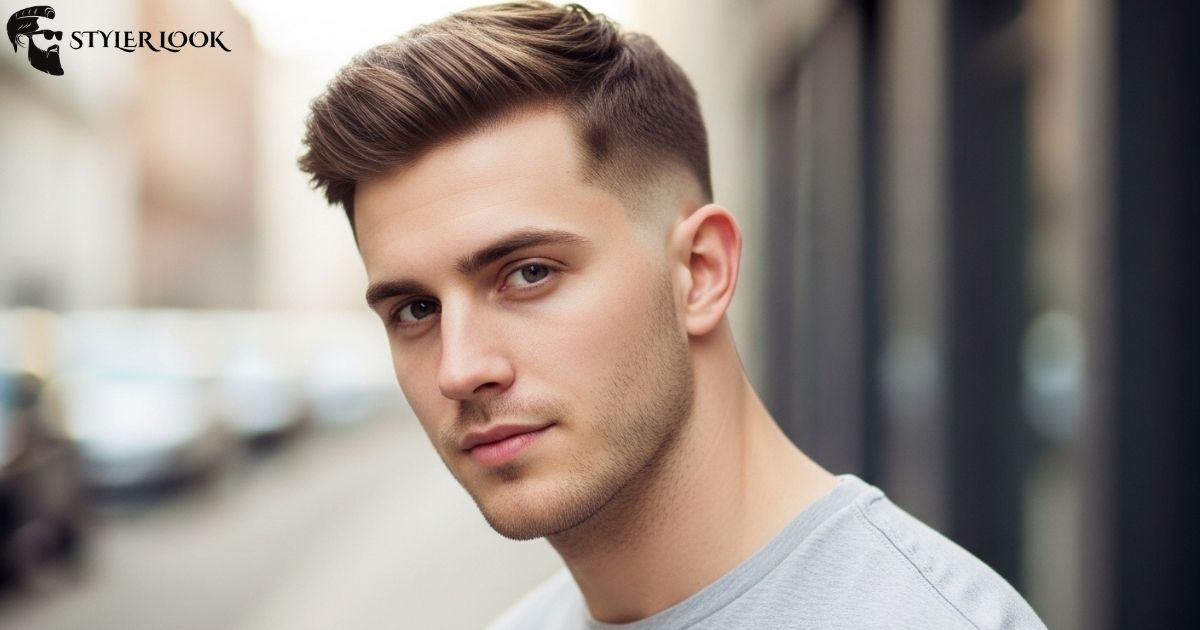
If you’ve been scrolling through barbershop feeds or noticing the same clean, sharp look on guys at the office, the gym, and weekend outings, that’s the low taper fade. It has quietly become one of the most requested men’s haircuts of the decade, and for good reason. For white males especially, this cut offers a rare combination: it’s easy to maintain, works across nearly every setting, and genuinely flatters a wide range of face shapes and hair textures.
This guide covers everything you need to know, from what the cut actually is, to how to ask your barber for it, how to style it daily, and which variations suit your specific look. Whether you’re getting your first fade or refining one you already wear, consider this your go-to reference.
What Is a Low Taper Fade? (Understanding the Low Taper Fade White Male Haircut)

A low taper fade is a men’s haircut where the hair on the sides and back gradually shortens, beginning just above the ear and blending smoothly down toward the neckline. Unlike cuts that dramatically change hair length high up on the head, the low taper keeps things subtle. The transition from longer hair on top to shorter sides happens in a controlled, natural-looking gradient, never a harsh jump.
The word “taper” refers to the gradual length reduction. The word “fade” describes how that reduction is blended until the hair almost disappears into the skin near the bottom. Together, they produce a haircut that looks intentional, polished, and effortless all at once.
For white males, this cut is particularly effective because it creates structure around the sides and neckline without relying on heavy contrast. The result is a clean, defined silhouette that works with rather than against naturally straight or wavy hair.
Read More: Curly Taper Fade Mullet: 15+ Trendy Styles and Care Tips
How the Low Taper Fade Differs from Other Fades

Understanding where the low taper sits among other fade styles helps you choose and communicate your cut more accurately.
| Fade Type | Where It Starts | Visual Effect | Best For |
| Low Taper Fade | Just above the ear | Subtle, natural, professional | Most face shapes; straight/wavy hair |
| Mid Taper Fade | Midpoint between ear and temple | Balanced contrast | Oval and oblong faces |
| High Taper Fade | Near the temple | Bold, high contrast | Round faces needing vertical height |
| Skin/Bald Fade | Varies, fades to skin | Maximum contrast | Thick hair; strong jaw features |
| Burst Fade | Behind the ear in a curved arc | Rounded, artistic | Curly hair; creative styles |
The low fade wins on versatility. It grows out more gracefully, suits professional environments better, and works with finer or straighter hair textures without creating lines that look harsh or overdone.
Why the Low Taper Fade Is Perfect for White Males (Benefits of the Low Taper Fade Haircut)
The low taper fade has surged in popularity across American and European barbershops because it genuinely solves a styling problem many men face: how do you look sharp without spending hours every morning? For white males, the answer is almost always this cut.
1. Compatible with Straight and Wavy Hair Textures

Straight hair is the most forgiving texture for a low taper fade. Each clipper guard transition blends seamlessly because straight strands lie flat, creating a smooth, clean gradient with no awkward frizz or texture breaks. Wavy hair adds an extra layer of appeal, natural movement on top contrasts beautifully against tighter sides, giving the look a relaxed but deliberate feel.
Unlike curly hair, which can sometimes require more specialized fade technique, straight and wavy hair transitions predictably under the clippers. A skilled barber can achieve a flawless blend in a single session.
2. Enhances Common Face Shapes and Features

One of the most underappreciated benefits of this cut is what it does to your face shape. Because the fade starts low and keeps volume on top, it subtly elongates the face, a welcome effect for men with rounder or wider jaw structures. It also creates a clean frame around the ears and jaw, drawing attention upward toward the eyes and cheekbones.
Men with oval or heart-shaped faces often find the low taper fade adds just the right amount of edge without making features look severe. Square jaw? The smooth blend softens it without hiding it. Round face? Extra length on top counterbalances width at the sides.
3. Low Maintenance Yet Stylish

This is the practical reason the low taper fade has become a staple. You don’t need a 20-minute morning routine. A little product on top, maybe a matte clay for texture, a light pomade for shine, and you’re done. The sides stay neat on their own between barber visits, especially for the first two to three weeks after a fresh cut.
Compare that to styles requiring blow-drying, straightening, or daily product application to look presentable, and the low taper fade wins every time for men who value both style and efficiency.
4. Works Across Professional and Casual Settings

Few haircuts cross the office-to-weekend boundary as smoothly as this one. Wear it to a job interview or board meeting with a slick back or side part, it reads as sharp and professional. Head out on a Saturday with a textured, messy top, it looks relaxed and on-trend. The cut itself is a blank canvas; your styling choice changes the entire vibe.
How to Ask for a Low Taper Fade at the Barber (Guide for White Males)
Even the best barber can’t deliver what you want if you can’t communicate it clearly. Many men walk in, say “fade,” and leave disappointed because a fade means different things to different barbers. Here’s how to walk in with confidence.
Steps to Communicate Your Fade Style Clearly
Step 1, Bring a reference photo. This is the single most effective thing you can do. Screenshots from barbershop Instagram accounts, Pinterest boards, or this very guide work perfectly. Barbers are visual professionals, a photo eliminates ambiguity immediately.
Step 2, State the fade level. Say specifically: “I want a low taper fade, starting just above the ear.” This tells the barber exactly where the fade should begin.
Step 3, Describe the transition. Do you want the sides to blend all the way to skin (a skin fade), or to a short but visible stubble? A guard 1 or guard 0.5 finish gives a tighter look; a guard 2 is softer. If you’re unsure, ask the barber what they recommend for your hair texture.
Step 4, Explain the top. The fade is only one part of the haircut. Tell your barber how much length you want on top, whether you’d like texture, a specific parting, or a particular style like a crop, slick back, or quiff.
Step 5, Confirm the neckline. Ask for either a tapered neckline (natural, rounded shape) or a blocked neckline (sharp, squared-off edge). Most low taper fades work well with either, but the tapered neckline is generally more versatile and grows out more cleanly.
Useful phrases to use at the barber:
- “Low taper fade, starting just above the ear, blending to a 0.5 at the bottom.”
- “Keep the top around 2–3 inches and leave me enough to style.”
- “Natural neckline, please, nothing too squared off.”
Hair Type and Face Shape Suitability for Low Taper Fade White Male Haircut
Not every haircut works equally well for every person. The good news is that the low taper fade is one of the most adaptable cuts in men’s grooming, but knowing how your specific hair type and face shape interact with it helps you get a truly tailored result.
Best Hair Types for the Low Taper Fade Haircut

| Hair Type | How It Works With Low Taper Fade | Recommended Top Style |
| Fine & Straight | Blends smoothly; looks very clean | Textured crop, French crop |
| Medium & Straight | Classic compatibility; lots of styling options | Slick back, side part, quiff |
| Thick & Straight | Creates strong contrast; looks bold | Crew cut, textured crop |
| Wavy | Natural movement adds relaxed character | Tousled texture, forward sweep |
| Slightly Curly | Curls on top contrast beautifully with tight sides | Curly top, defined waves |
Fine hair benefits especially from the low taper fade because the shorter sides create the illusion of more volume on top. Thick hair gets the opposite benefit, the fade reduces bulk, making everything look more manageable and intentional.
Face Shapes That Complement the Low Taper Fade
| Face Shape | Why It Works | Best Variation |
| Oval | Natural balance; suits almost anything | Any, this is the most versatile match |
| Round | Top length adds vertical visual height | Textured quiff or crop on top |
| Square | Smooth fade softens strong jawline | Side part or slick back |
| Oblong/Rectangular | Low fade doesn’t add more length | Textured crop or fringe |
| Heart/Diamond | Creates lower visual weight to balance wider forehead | Crew cut or buzz cut top |
| Triangle | Volume on top, clean sides balance wide jaw | Textured volume on top |
Styling and Maintenance Guide for Low Taper Fade White Male Haircut
A great cut deserves an equally great care routine. The low taper fade looks sharp right after the barber, but with the right daily habits and maintenance schedule, it can stay fresh for weeks.
Daily Styling Routine for the Low Taper Fade Hairstyle

Morning routine (5–10 minutes):
- Dampen hair, Work with slightly damp hair for most products. Bone-dry hair makes clay and wax difficult to distribute.
- Apply product, Use a dime-sized amount. Rub it between your palms to warm it up before working it through the hair.
- Style the top, Use your fingers or a comb depending on your preferred finish. Finger styling creates texture and movement; a comb gives clean, structured definition.
- Finish, Optionally use a light-hold hairspray to lock everything in place, especially for professional settings.
Product guide by style:
| Desired Finish | Best Product | Hold Level |
| Textured, matte look | Matte clay or fiber | Medium–Strong |
| Slick, polished shine | Pomade (water-based) | Medium |
| Natural, effortless | Sea salt spray or light cream | Light |
| Structured with volume | Blow-dry with round brush + volumizing mousse | Medium |
Weekly Grooming and Barber Maintenance
- Wash hair 2–3 times per week. Over-washing strips natural oils and can make fine hair look flat and limp.
- Use a conditioner on medium to longer top lengths to maintain softness and reduce frizz.
- Book barber appointments every 2–4 weeks. The sides and neckline of a low taper fade start to blur and lose definition after about 3 weeks. For a consistently sharp look, two-week touch-ups are ideal. If budget or time is a concern, a 4-week schedule with neckline clean-ups at home is workable.
- Trim neckline stray hairs between visits using a small trimmer or an electric shaver along the natural hairline.
Popular Variations and Style Inspiration for Low Taper Fade White Male Haircut
The low taper fade is a foundation, not a finished product. What you put on top is where your personality comes in. Here are the seven most popular variations for white males right now.
1. Low Taper Fade with Textured Crop

The textured crop pairs choppy, layered hair on top with a clean low fade on the sides. The fringe (front section) sits forward over the forehead, and the overall texture gives the look a modern, European feel. It’s effortless to style, just work in some matte clay and tousle the top with your fingers.
Best for: Fine to medium straight or wavy hair; oval, round, and oblong face shapes.
2. Low Taper Fade with Slick Back Style

One of the most versatile looks in men’s grooming. The hair on top is swept backward using a comb and a medium-hold water-based pomade, creating a smooth, controlled finish. Paired with the low taper fade, it reads as sharp and professional in formal settings, and effortlessly cool in casual ones.
Best for: Medium to thick straight hair; square and oval face shapes.
3. Low Taper Fade with Fringe (Forward Sweep)

The fringe style keeps the hair swept toward the forehead, creating a youthful and fashion-forward look. Variations include a straight blunt fringe, a swept side fringe, or a messier textured fringe. This style also helps balance wider foreheads by drawing the eye down and forward.
Best for: Straight or wavy hair; heart, oblong, and round face shapes.
4. Low Taper Fade with Buzz Cut or Crew Cut

A minimalist powerhouse. The buzz or crew cut keeps the top short, typically half an inch to an inch, and the low taper fade adds definition to the sides. The result is an ultra-clean, masculine look that requires almost zero morning effort. It also photographs exceptionally well and works across virtually all settings.
Best for: Thick or fine hair; oval, square, and heart face shapes.
5. Low Taper Fade White Male with Curly or Wavy Top Style

White males with naturally wavy or loosely curly hair can embrace that texture on top while keeping sides clean with the low taper fade. The contrast between the defined, moving texture on top and the smooth sides is visually striking. Use a curl-defining cream or a light mousse to encourage natural wave patterns, then let it air dry or diffuse.
Best for: Wavy or naturally curly hair; oval and round face shapes.
6. Low Taper Fade White Male with Side Part (Classic Gentleman’s Look)

The side part is timeless. A clean, defined parting line combed to one side, combined with a low taper fade, creates a look that bridges classic barbershop tradition with contemporary grooming. Add a light hold pomade for a slightly glossy finish, or a matte paste for a more modern, drier result.
Best for: Straight to wavy medium-thick hair; square, oval, and oblong face shapes; formal and professional environments.
7. Creative Styling Add-Ons and Enhancements for Low Taper Fade White Male Haircut

Beyond the base variations, there are several ways to personalize your low taper fade further:
- Hard part / razor line: A shaved or razor-cut parting line adds precision and contrast, creating a visual separation between sections of hair.
- Beard pairing: A short beard or well-groomed stubble complements the low taper fade naturally. The fade can be blended down into a beard for a seamless transition.
- Color and highlights: Ash blonde, soft brown, or subtle highlights on the top section add dimension and visual interest without requiring a dramatic change.
- Textured quiff or blowout: Blow-dry the top backward and upward for volume, then use a medium-hold product to shape a soft quiff. Adds height and works particularly well for rounder face shapes.
Common Mistakes to Avoid with a Low Taper Fade White Male Haircut
Even a great cut can go wrong if common pitfalls aren’t avoided. These are the mistakes that most often lead to disappointment with a low taper fade.
Barbering and Maintenance Mistakes to Watch Out For
1. Not bringing a reference photo. Verbal descriptions of fades are notoriously imprecise. “Short on the sides” means something completely different to different barbers. A photo removes the guesswork and ensures you’re on the same page from the first snip.
2. Choosing the wrong fade level for your face shape. A high fade on an already long face can look unbalanced. A very low, subtle fade on a round face doesn’t add the vertical dimension that would be most flattering. Match the fade starting point to your face shape, as outlined in the table above.
3. Going too long between barber visits. The low taper fade is one of the cleanest-looking haircuts when fresh, and one of the most noticeable when it’s grown out without maintenance. After about three weeks, the blending starts to disappear and the sides look blocky. Regular visits are non-negotiable for this cut.
4. Using the wrong product for your hair texture. Heavy waxes or thick pomades can weigh down fine hair and make it look greasy and flat. Thick hair, on the other hand, often needs a stronger hold to stay in place. Match your product to your texture, light creams and sprays for fine hair, stronger clays and waxes for thick hair.
5. Over-washing the hair. Daily shampooing strips the scalp of its natural oils, leading to dry, dull hair that’s harder to style. Two to three washes per week is the sweet spot for most men.
6. Ignoring the neckline between visits. The neckline is the first part of a haircut to look untidy as hair grows. A quick cleanup with a trimmer every week or two keeps things looking intentional and sharp even between full barber appointments.
7. Letting the barber go too short without consultation. If this is your first low taper fade, be conservative. You can always go shorter next time, but you can’t add length back. Start with a guard 1 or 1.5 at the fade line and adjust based on how you feel about the result.
FAQ’s
What is a low taper fade?
A low taper fade is a men’s haircut where hair gradually shortens starting just above the ear, blending smoothly into the skin toward the neckline for a clean, subtle finish.
Is a low taper fade good for white males with straight hair?
Yes, straight hair is actually ideal for a low taper fade because it blends seamlessly at every guard length, creating a smooth, polished gradient with no texture disruption.
How often should I get a low taper fade touched up?
Most barbers recommend every 2–4 weeks to keep the blend sharp and the neckline clean; the shorter your preferred sides, the more frequently you’ll need a touch-up.
What products work best for styling a low taper fade?
Matte clay works for textured looks, water-based pomade for a slick finish, and sea salt spray for natural, effortless movement, match the product to your desired style and hair thickness.
Can I get a low taper fade with a beard?
Absolutely, the low taper fade pairs extremely well with a beard, and a skilled barber can blend the fade seamlessly into your facial hair for a connected, refined look.
What face shapes suit the low taper fade best?
The low taper fade flatters oval, square, oblong, and round face shapes; oval faces have the most flexibility, while round faces benefit most from added height on top.
Does a low taper fade work on fine hair?
Yes, the low taper fade actually creates the illusion of more volume for fine hair by reducing bulk on the sides and leaving more length on top to style upward.
What’s the difference between a low taper fade and a low fade?
A low fade refers to the height of where the fade begins; a low taper fade specifically means the hair also tapers (gradually reduces in length) as it descends, combining both gradual shortening and blending to the skin.
How do I tell my barber I want a low taper fade?
Say: “I’d like a low taper fade starting just above the ear, blending down to a [0 or 1] at the neckline”, and bring a reference photo to eliminate any ambiguity.
Is the low taper fade professional enough for corporate settings?
Yes, when styled with a side part or slick back, the low taper fade is one of the cleanest and most professional men’s haircuts available, appropriate for office, interviews, and formal events.
Conclusion
The low taper fade white male haircut earns its status as one of the most popular and enduring men’s styles for a straightforward reason: it simply works. It works for fine hair and thick hair. It works for round faces and square jaws. It works in a boardroom on Monday and at a backyard cookout on Saturday. Very few cuts can make that claim honestly.
What separates men who wear this cut well from those who don’t isn’t the fade itself, it’s the knowledge behind it. Knowing your face shape, communicating clearly with your barber, choosing the right variation for your hair texture, and maintaining a consistent grooming routine are the real differentiators.
Use this guide as your starting point. Save a reference photo of the variation that speaks to your personal style, book your next barber appointment, and walk in knowing exactly what you want. A sharp low taper fade is one of the easiest grooming upgrades you can make, and once you try it, it’s hard to go back to anything else.
