
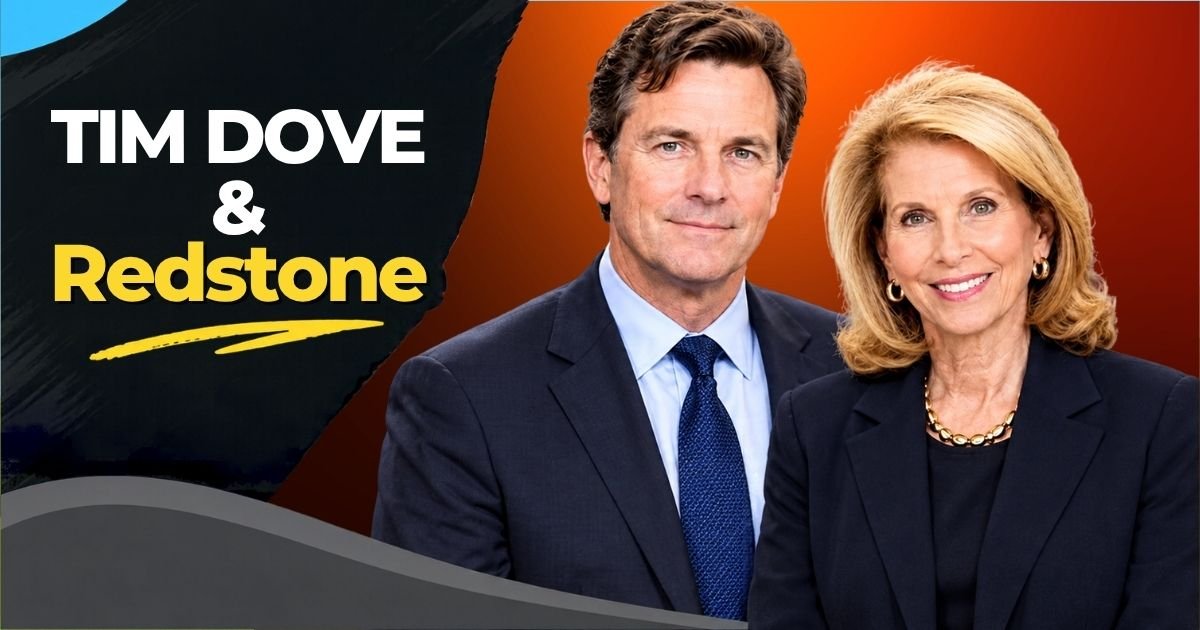
Typing Tim Dove and Shari Redstone into a search bar suggests a shared story. Most pages that rank for it never say what that story is. The public record is simpler. Shari Redstone is a media executive who spent decades at the center of Viacom, CBS and Paramount. Timothy L. Dove is a retired oil and gas executive who led Pioneer Natural Resources. No credible source shows that the two worked together.
Quick answer: Shari Redstone is a media and entertainment executive tied to National Amusements and Paramount. Tim Dove is the former CEO of Pioneer Natural Resources, an energy company. Verified public records do not show a business or personal relationship between them.
This guide was checked on October 9, 2026. It explains who each person is, why the names get paired, and how the media business has changed since Redstone’s era at Paramount ended.
Bio/Wiki
| Detail | Shari Redstone | Tim Dove |
| Industry | Media and entertainment | Oil and gas |
| Best known for | National Amusements, Viacom, CBS, Paramount | CEO of Pioneer Natural Resources |
| Education | Tufts University, Boston University | MIT, University of Chicago |
| Current status | Philanthropist and chair of Sipur Studios | Retired from Pioneer in 2019 |
| Documented link to the other | None found | None found |
Who Is Shari Redstone?
Shari Ellin Redstone is an American businesswoman and media executive. She is the daughter of Sumner Redstone, who ran Viacom and CBS for decades, and the granddaughter of Michael Redstone, who built the family’s cinema business. For years she helped decide how the Redstone family used its voting power inside some of the biggest names in entertainment.
Shari Redstone’s Early Life and Education
Redstone was born on April 14, 1954, in Washington, D.C. Her parents are Sumner Redstone and Phyllis Gloria Raphael, and her brother is Brent Redstone.
She studied at Tufts University, then earned a law degree and a master’s in tax law from Boston University. Law came before the media. From 1978 to 1993 she practiced corporate law, estate planning and criminal law. That training shaped how she later handled boards, contracts and family ownership.
From National Amusements to Paramount Global
National Amusements, Inc. (NAI) is the private company that held the Redstone family’s controlling stake in Viacom and CBS. Here is how her path unfolded:
- 1994: Joins NAI as executive vice president and becomes a CBS director.
- 2000: Becomes NAI president.
- 2006: Takes the non-executive vice chair role at Viacom, alongside her vice chair role at CBS.
- 2011: Co-founds Advancit Capital, an early-stage investment firm focused on media and technology.
- December 4, 2019: CBS and Viacom reunite as ViacomCBS, with Redstone as chair.
- August 11, 2020: Sumner Redstone dies, and his holdings move to a trust she leads.
- February 16, 2022: ViacomCBS is renamed Paramount Global.
- August 7, 2025: The Skydance deal closes and her time on Paramount’s board ends.
Read More: Jessica Chastain and Mike Krieger
Why Shari Redstone Still Draws Attention
Several things keep her in the news even after the sale:
- The sale itself. The Skydance transaction ended decades of Redstone control. NAI received about $1.75 billion in cash.
- Political scrutiny. The FCC approved the merger on July 24, 2025, after Paramount settled a lawsuit over a 60 Minutes interview. Critics debated whether the two events were linked.
- A second act. She became chair of the Israeli studio Sipur in September 2025 and leads the Redstone Family Foundation, which funds work against antisemitism and racism. The Lappin Foundation honored her with its Legacy of Light Award in March 2026.
- Open legacy questions. The company she steered now sits inside a much larger group, covered later in this article.
Who Is Tim Dove?
Timothy L. Dove is a former chief executive of Pioneer Natural Resources, a Texas oil and gas producer focused on the Permian Basin. He is the executive whose name appears most often in business records under this search term.
What We Know About Tim Dove
Dove’s path is typical of a long-serving energy executive. He studied mechanical engineering at MIT and later earned an MBA from the University of Chicago. His career then moved in steps:
- 1994: Joins Parker & Parsley as vice president of business development. He becomes a senior vice president in 1996.
- 1997: Becomes executive vice president of business development when Pioneer forms through the merger with Mesa.
- 2000: Named executive vice president and chief financial officer.
- 2004: Becomes president and chief operating officer.
- 2013: Elected to Pioneer’s board.
- 2017: Takes over from Scott Sheffield as president and CEO, following a transition plan announced in 2016.
- February 2019: Retires. Sheffield returns as CEO.
After his exit, Exxon Mobil closed its roughly $60 billion purchase of Pioneer on May 3, 2024. Outside the company, Dove has served on the board of trustees of the Jesuit Dallas Foundation and on an MIT committee.
Why Information on Tim Dove Is Hard to Find
Four things make him harder to research than Redstone:
- A common name. Tim Dove and Timothy Dove can point to different people.
- Retirement. He left the CEO job in 2019, so fresh interviews and profiles are rare.
- An acquired employer. When Exxon absorbed Pioneer, much of the old executive content stopped being updated.
- Thin copy-paste pages. Many sites repeat the same few facts without checking them.
How to Verify a Name Online
Use this quick routine for any executive:
- Search the full name plus the company, such as Timothy L. Dove Pioneer Natural Resources.
- Look for proxy statements and press releases on SEC EDGAR.
- Read the company’s own announcements.
- Check established outlets such as Reuters, Bloomberg or trade publications.
- Match at least two independent sources.
- Check dates. Titles change, and old pages stay online.
Why Are Their Names Mentioned Together?
The short answer: search systems connect names that appear near each other, not names that share a relationship.
Business Networks and Overlap
Both people reached the top of large American companies. Both led organizations through major ownership changes. Both also appear in lists of business leaders.
Their careers even share a theme: leadership handoffs. Dove took over from a founding CEO and later stepped aside so that the same founder could return. Redstone moved from vice chair to chair, then sold the control her family had held for generations.
These are parallels, not connections. Two people can face similar boardroom moments in different industries without ever meeting.
Why a Search Pairing Isn’t a Relationship
Search tools and AI summaries lean on co-occurrence. If two names show up on the same page, a system may treat them as related. Autocomplete, related searches and pages that stack unrelated names together can reinforce the pattern.
A fair test is simple. Does a filing, a press release or a court record name both people in the same context? For Tim Dove and Shari Redstone, the sources reviewed for this article say no.
Spotting Low-Quality Claims
Watch for these red flags:
- No named source and no date
- Phrases like reportedly or insiders say with nothing behind them
- Claims of friendship, partnership or investment with no filing to support them
- Outdated titles, such as calling Redstone Paramount’s current controlling shareholder
- The same text repeated across several sites
- No author, no editorial standards and no way to contact the publisher
Shari Redstone’s Role in the Media Industry
Redstone’s influence came less from running daily operations and more from ownership, board seats and timing.
Family Control and Governance
Paramount’s old structure explains her power. NAI held about 77% of the company’s Class A voting shares, even though that stake was a much smaller share of the company’s total value. Public investors mostly held Class B shares, which carry no vote. That made Paramount a controlled company, so a major sale could move ahead without a vote from minority shareholders.
Supporters saw a steady owner who could think long term. Critics saw a structure that let one family outweigh thousands of investors. Both views are part of the story, and governance experts still point to Paramount as a case study.
Case Study: The 2019 Viacom and CBS Reunion
Viacom and CBS were once one company. They split at the end of 2005, and both stayed under NAI control. Redstone spent years arguing they were stronger together.
- January 2018: The Wall Street Journal reports that she is pushing for a merger and for new CBS directors.
- August 13, 2019: The two companies announce a merger, with Redstone as chair of the new company.
- December 4, 2019: The deal closes and ViacomCBS begins operating under CEO Bob Bakish.
- January 2021: A Delaware judge allows former CBS shareholders to pursue claims that she pressured CBS into the deal.
The logic was scale. A bigger content library, more studios and a stronger bargaining position suited the streaming race. The shareholder claims were allegations, so readers who want outcomes should check court records rather than commentary.
Shari Redstone’s Influence on U.S. Entertainment
Her reach touched almost every part of the business:
- Cinemas: NAI’s theater chain, including Showcase Cinemas.
- Television: CBS, MTV, Comedy Central and Nickelodeon.
- Film: Paramount Pictures.
- Streaming: Paramount+ and Pluto TV.
- News: CBS News, which drew political attention during the sale.
When it came time to sell, reports said she favored a buyer that would keep Paramount in one piece rather than bids that would have broken it apart.
Corporate Leadership and Decision-Making
Who Really Makes the Call?
Big corporate decisions rarely come from one person. They pass through controlling shareholders, boards, special committees, CEOs and regulators.
Paramount shows this clearly. In 2024, a special committee had to approve the Skydance terms even though Redstone controlled NAI. Reports said CEO Bob Bakish left in April 2024 after clashing with her over the deal.
Pioneer shows the same pattern. Its board handled the 2019 change: Dove retired, Sheffield returned and lead director Ken Thompson became chairman. In both cases, boards and owners drove the outcome. A name that merely shares a search result had no part in it.
Why Professional Networks Matter
Networks shape who gets recruited, who sits on boards and who hears about deals early. Redstone pushed for new CBS directors in 2018. Dove’s network ran through Dallas energy circles and MIT.
Still, a network is not a partnership. Many leaders move in overlapping circles without doing business together. Proof needs a document, not a hunch.
The Changing Entertainment Business
From Cable to Streaming
Cable bundles once paid for entire networks. Viewers then moved to streaming, advertisers followed, and every major studio had to build its own app.
Paramount+ is Paramount’s answer. In the first quarter of 2026, the company reported direct-to-consumer revenue of $2.4 billion, up 11% from a year earlier. Paramount+ revenue grew 17%. Streaming profit now matters as much as ratings.
Mergers, Restructuring, and Survival
Scale has become the survival strategy. Here is the recent run:
- 2019: CBS and Viacom combine.
- 2025: Skydance takes control of Paramount in an $8 billion transaction.
- October 6, 2026: Paramount Skydance completes its roughly $110 billion acquisition of Warner Bros. Discovery. The combined company is named Skydance.
The new group brings together two major film studios, CBS, HBO, CNN, Paramount+ and HBO Max. Energy saw a similar wave of consolidation when Exxon bought Pioneer.
Any article that still calls Redstone the head of Paramount is out of date.
Read More: Tom Kennedy vs Anna Wintour
What Can Be Learned From Their Professional Context?
Their stories offer practical lessons for readers, students and researchers:
- Match titles to dates. Roles change, and old pages do not update themselves.
- Ownership shapes power. Voting structures can matter more than job titles.
- Industry context explains decisions. Streaming pressure and energy consolidation drove very different choices.
- Leadership handoffs are rarely tidy. Both Pioneer and Paramount show how boards manage transitions.
- Co-occurrence is not a connection. Two names on one page prove nothing.
- Primary sources beat summaries. Filings and announcements settle disputes faster than commentary.
Public Interest and Media Coverage
Reliable Sources for Researching Tim Dove and Shari Redstone
Start with sources that can be checked:
- SEC EDGAR: proxy statements, annual reports and current reports
- Company investor pages: official announcements and leadership bios
- Wire services: Reuters, the Associated Press and Bloomberg
- Trade press: Variety, The Hollywood Reporter and Deadline for media; Hart Energy and Oil & Gas Journal for energy
- Court records: Delaware Chancery filings for governance disputes
- Organization pages: the Redstone Family Foundation for her current work
This article draws on SEC filings, company announcements and major news outlets, and was last checked on October 9, 2026.
Confirmed Facts vs. Online Speculation
| Claim | Status |
| Redstone chaired Paramount after the 2019 merger | Confirmed |
| The Skydance deal for NAI and Paramount closed on August 7, 2025 | Confirmed |
| Dove was CEO of Pioneer and retired in February 2019 | Confirmed |
| Exxon Mobil bought Pioneer in May 2024 | Confirmed |
| Dove and Redstone worked together | No public evidence found |
| Dove served on a board tied to the Redstone companies | No public evidence found |
| Redstone still controls Paramount | Outdated since 2025 |
Conclusion
Tim Dove and Shari Redstone built careers in different worlds. Dove rose through the ranks of an oil and gas producer and led Pioneer Natural Resources until 2019. Redstone moved from law to the top of a media empire, shaped the 2019 Viacom and CBS reunion, and then sold her family’s control of Paramount in 2025.
What the record does not show is a partnership between them. That gap matters. A search pairing is a clue about how algorithms group names, not proof of a real-world tie.
FAQs
Who is Shari Redstone?
Shari Redstone is an American media executive and former chair of Paramount Global. She led National Amusements and now chairs Sipur Studios and runs the Redstone Family Foundation.
Who is Tim Dove?
Timothy L. Dove is the former president and CEO of Pioneer Natural Resources. He retired in February 2019.
Are Tim Dove and Shari Redstone connected?
No public record shows a business or personal link. Their names appear together mainly because of how search engines group related terms.
Does Shari Redstone still own Paramount?
No. Her family’s company, National Amusements, sold its controlling stake to a Skydance-led group, and the deal closed on August 7, 2025.
What is Shari Redstone doing now?
She chairs the Israeli studio Sipur and leads the Redstone Family Foundation. She received the Lappin Foundation’s Legacy of Light Award in March 2026.
Is Tim Dove still the CEO of Pioneer Natural Resources?
No. He retired in 2019, and Exxon Mobil completed its acquisition of Pioneer on May 3, 2024.
What happened to Paramount in 2026?
Paramount Skydance completed its roughly $110 billion acquisition of Warner Bros. Discovery on October 6, 2026. The combined company is called Skydance.
How can I verify claims about business leaders?
Check SEC filings, company press releases and established news outlets. Trust a claim only when at least two independent sources support it.
