
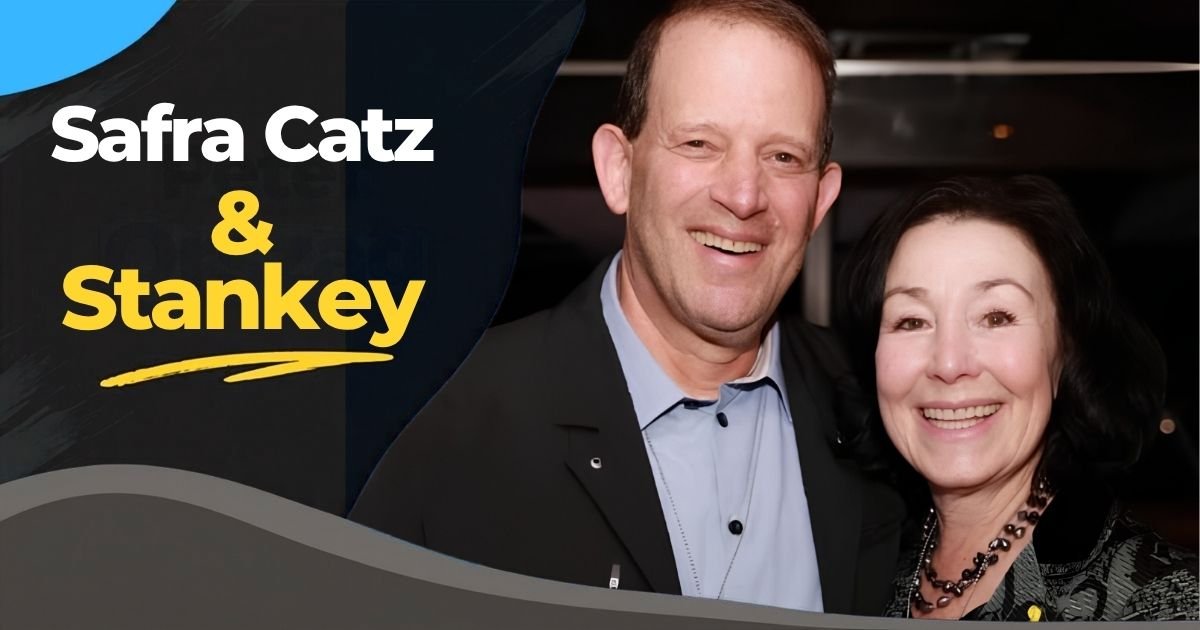
Two of America’s biggest technology and telecommunications companies are being shaped by leaders who built their careers from the inside out. Safra Catz spent more than two decades climbing Oracle’s ranks before becoming one of the longest serving CEOs in tech history. John Stankey has spent over 40 years at AT&T, moving through nearly every division before taking the top job.
In 2026, both leaders occupy pivotal positions. Catz now serves as Oracle’s Executive Vice Chair after stepping down as CEO in September 2025. Stankey remains AT&T’s Chairman and CEO, steering the company through its biggest strategic reset in decades. This article looks at who they are, how they got there, and what their current roles reveal about corporate leadership in 2026.
Who Is Safra Catz?
Safra Catz is an Israeli American business executive widely regarded as one of the most influential figures in enterprise technology. She was born in Holon, Israel, in December 1961 and moved with her family to Brookline, Massachusetts, at age six. She built her reputation at Oracle Corporation, where she worked for more than 25 years in finance, operations, and executive leadership before becoming CEO in 2014.
Catz is known for a disciplined, numbers-first leadership style. Colleagues and business journalists have described her as detail oriented, private, and deeply focused on financial performance rather than public visibility. That approach helped her guide Oracle through its transformation from a database software company into a cloud and AI infrastructure provider.
Safra Catz’s Early Career and Finance Background
Catz earned a bachelor’s degree from the Wharton School at the University of Pennsylvania in 1983 and a J.D. from the University of Pennsylvania Law School in 1986. Rather than practicing law, she moved directly into investment banking.
She spent 13 years at Donaldson, Lufkin & Jenrette, working her way up to senior vice president and eventually managing director in the firm’s investment banking division. That background in deal structuring, valuation, and financial strategy became the foundation for what would later define her entire career at Oracle:
- Deep expertise in mergers and acquisitions
- Strong command of corporate finance and balance sheet management
- A results-driven, execution-focused leadership approach
How Safra Catz Built Her Career at Oracle
Catz joined Oracle in April 1999 as senior vice president, working directly under founder Larry Ellison. Within two years she had joined Oracle’s board of directors, and by 2004 she was named president of the company. She later took on the chief financial officer role, giving her control over both strategy and the balance sheet at the same time.
This dual command of operations and finance is unusual in large public companies, and it gave Catz outsized influence over how Oracle allocated capital for years before she ever held the CEO title.
Read More: Sean Connolly and Ed Sheeran
Oracle Acquisitions and Business Strategy
Catz is widely credited as the architect behind Oracle’s acquisition-driven growth strategy. Over the course of her career, she is estimated to have overseen more than 130 acquisitions, a pace that reshaped Oracle’s product portfolio repeatedly.
Some of the most significant deals during her tenure include:
- PeopleSoft (2005), a $10.3 billion acquisition that expanded Oracle’s enterprise applications business
- Sun Microsystems (2010), which brought hardware and Java technology into Oracle’s ecosystem
- NetSuite (2016), Oracle’s move into cloud-based ERP for mid-sized businesses
- Cerner, later rebranded Oracle Health, which pushed Oracle deeper into healthcare technology
More recently, Catz played a central role in positioning Oracle as critical infrastructure for the AI boom, striking large cloud computing agreements with companies including OpenAI, Nvidia, AMD, Meta, and xAI. These deals helped push Oracle’s remaining performance obligations, essentially its contracted future revenue, into the hundreds of billions of dollars.
From Oracle CEO to Executive Vice Chair
Catz became co-CEO alongside Mark Hurd in September 2014, then sole CEO in 2019 after Hurd stepped down due to health reasons. She led Oracle as CEO for roughly 11 years, a tenure during which the company’s stock value climbed dramatically and Oracle repositioned itself as a serious competitor in cloud infrastructure.
In September 2025, Oracle announced a leadership transition. Catz moved into the newly created role of Executive Vice Chair, while Clay Magouyrk and Mike Sicilia were promoted to co-CEOs to lead the company’s next phase of AI-driven growth. Larry Ellison, Oracle’s chairman and chief technology officer, said Catz would continue helping guide the company’s overall direction from her new board leadership position.
Who Is John Stankey?
John Stankey is the chairman and chief executive officer of AT&T Inc., one of the largest telecommunications companies in the United States. He has spent his entire professional career at AT&T and its predecessor companies, joining in 1985 and rising through operations, technology, and strategy roles over four decades.
Unlike executives who are brought in from outside to shake up a struggling business, Stankey represents a rare case of an insider given full authority to remake the company he grew up inside. That internal knowledge has shaped how he approached AT&T’s most difficult strategic decisions.
John Stankey’s Long Career Across AT&T
Stankey holds a bachelor’s degree in finance from Loyola Marymount University and an MBA from UCLA. He began his AT&T career at what was then Pacific Bell in 1985, and over the following decades held a remarkable range of leadership positions, including:
- Chief Information Officer
- Chief Technology Officer
- Chief Strategy Officer
- CEO of AT&T Business Solutions
- CEO of AT&T Operations
- CEO of AT&T Entertainment Group
- CEO of WarnerMedia
That breadth of experience across engineering, strategy, and media gave him a rare 360 degree view of AT&T’s businesses before he ever became CEO.
John Stankey’s Climb Through AT&T
Stankey’s path to the top wasn’t fast. It took more than three decades of steady advancement through technical, operational, and strategic roles before he reached the company’s highest office. Along the way, he was directly involved in some of AT&T’s most consequential decisions, including the company’s push into pay TV and its later acquisition of Time Warner.
From Technology Executive to AT&T CEO
Stankey became president and chief operating officer of AT&T in October 2019 while simultaneously serving as CEO of WarnerMedia. On July 1, 2020, he officially succeeded Randall Stephenson as CEO of AT&T Inc. In February 2025, he was also elected chairman of the board, consolidating both top leadership titles under one executive.
His engineering and technology background set him apart from many telecom CEOs who come primarily from finance or sales. That technical fluency has directly influenced how AT&T has approached network investment and AI adoption under his leadership.
AT&T and the Shift Away From DirecTV
One of Stankey’s defining moves was pulling AT&T out of the media and entertainment business entirely. AT&T had acquired DirecTV in 2015 for $48.5 billion, a deal made before Stankey became CEO, but the pay TV business struggled with subscriber losses in the years that followed as streaming reshaped how people watch television.
Under Stankey, AT&T:
- Spun off WarnerMedia, which merged with Discovery in 2022 to form Warner Bros. Discovery
- Sold its remaining 70% stake in DirecTV to private equity firm TPG, a transaction that closed in July 2025
- Redirected capital and management focus entirely toward wireless and fiber connectivity
This was a clear reversal of the media diversification strategy AT&T had pursued for nearly a decade, and it reflects Stankey’s belief that AT&T’s future lies in being a connectivity company, not an entertainment conglomerate.
What Stankey Changed Inside AT&T
Beyond selling off non-core assets, Stankey has worked to change how AT&T operates day to day. He has spoken publicly about reshaping the company’s internal culture to be faster moving and less bureaucratic than the AT&T of prior decades.
A Customer-Focused Business Strategy
Stankey has repeatedly described AT&T’s current approach as an investment-led, customer-centric strategy. In practice, this means prioritizing converged connectivity, getting customers to bundle fiber internet and wireless service from a single provider, rather than chasing unrelated business lines.
AT&T’s own first-quarter 2026 results reflected this focus, with the company reporting its fastest-ever year-over-year growth in advanced connectivity convergence and nearly 45% of advanced fiber internet subscribers also choosing AT&T wireless service. Between 2021 and 2025, AT&T invested more than $150 billion in its wireless and fiber networks, making it one of the largest annual capital investors in the country.
AI and Technology at AT&T
Given his background as a former chief technology officer, Stankey has pushed AT&T to integrate artificial intelligence across network operations, customer service, and internal decision-making. He has spoken about encouraging teams to adopt AI tools to reshape both products and day-to-day performance, framing it as essential to staying competitive rather than optional.
Safra Catz and John Stankey: A Side-by-Side Look
While Catz and Stankey lead very different companies, their leadership stories share some interesting parallels and equally interesting contrasts.
Different Industries, Similar Corporate Responsibilities
Oracle competes in cloud computing, enterprise software, and AI infrastructure. AT&T competes in wireless service, fiber broadband, and network infrastructure. Despite operating in different sectors, both leaders have carried similar core responsibilities:
- Overseeing multibillion dollar capital allocation decisions
- Managing large scale acquisitions or divestitures
- Positioning their companies for the AI era
- Answering directly to public shareholders and boards of directors
Two Different Paths to Corporate Leadership
Catz came from outside AT&T’s world entirely, an investment banker who joined Oracle already fluent in deal-making and corporate finance. Stankey, by contrast, is a pure company lifer who spent 35 years inside AT&T’s operations before becoming CEO.
This difference shows up in their leadership styles. Catz’s background produced a finance-first, acquisition-heavy growth strategy. Stankey’s engineering and operations background produced a network-first, back-to-basics strategy focused on shedding unrelated businesses rather than acquiring new ones.
Safra Catz and John Stankey in 2026
By 2026, both executives had reached defining moments in their careers, though from opposite directions. Catz voluntarily transitioned out of the CEO seat after more than a decade at the top, choosing a governance role rather than stepping away from the company entirely. Stankey, meanwhile, remains firmly in the CEO chair, having recently added the chairman title as well, giving him even more direct control over AT&T’s board-level decisions.
Read More: Miguel Patricio and Albert Bourla
Where Each Leader Stands in 2026
Understanding where Catz and Stankey stand today helps clarify what comes next for both Oracle and AT&T.
Safra Catz’s Current Role at Oracle
As Executive Vice Chair, Catz no longer runs Oracle’s day-to-day operations, a responsibility now shared by co-CEOs Clay Magouyrk and Mike Sicilia. However, she continues to work alongside Chairman Larry Ellison to guide Oracle’s overall direction and has been actively introducing the new co-CEOs to major customers. In 2026, she was also appointed to the President’s Council of Advisors on Science and Technology, extending her influence into national technology policy.
John Stankey’s Current Role at AT&T
Stankey continues to serve as both chairman and CEO of AT&T, a dual role he has held since early 2025. He remains the company’s primary voice with investors, regularly updating shareholders at major financial conferences throughout 2026 about AT&T’s multi-year connectivity growth plan and capital return commitments.
What Their 2026 Positions Show
Catz’s move to Executive Vice Chair and Stankey’s consolidation of the chairman and CEO titles represent two very different models of executive succession and control. One shows a leader deliberately stepping back to make room for the next generation while staying involved at the board level. The other shows a leader deepening his authority after proving out a multi-year turnaround strategy. Together, they illustrate how large public companies are approaching leadership transitions and governance differently depending on where each business sits in its growth cycle.
Conclusion
Safra Catz and John Stankey represent two distinct but equally instructive models of modern corporate leadership. Catz built her influence through finance and acquisitions before stepping into a board-level role, while Stankey rose through operations and technology to consolidate control as both chairman and CEO.
Their 2026 positions, one stepping back into governance, the other deepening executive authority, offer a useful lens for understanding how different companies structure leadership as they navigate the AI era. Oracle and AT&T operate in different industries, but both are being shaped by executives who spent decades earning their seat at the top.
Frequently Asked Questions
Is Safra Catz still CEO of Oracle in 2026?
No. Catz stepped down as CEO in September 2025 and now serves as Oracle’s Executive Vice Chair, while Clay Magouyrk and Mike Sicilia serve as co-CEOs.
Who replaced Safra Catz as Oracle CEO?
Clay Magouyrk and Mike Sicilia were named co-CEOs of Oracle in September 2025, taking over day-to-day leadership from Catz.
Is John Stankey still CEO of AT&T?
Yes. Stankey remains AT&T’s CEO and has also served as chairman of the board since February 2025.
Why did AT&T sell DirecTV?
AT&T sold its remaining stake in DirecTV to refocus entirely on its core wireless and fiber connectivity business, moving away from pay TV and media ownership. The sale to TPG closed in July 2025.
What is Safra Catz best known for?
Catz is best known for leading Oracle’s acquisition strategy, including over 130 deals, and for guiding the company’s shift into cloud computing and AI infrastructure during her decade as CEO.
What industries do Oracle and AT&T compete in?
Oracle competes in cloud computing, enterprise software, and AI infrastructure, while AT&T competes in wireless telecommunications and fiber broadband connectivity.

Jettson Cole is a style enthusiast and hair trend curator, sharing expert tips to help you look sharp and feel confident every day.