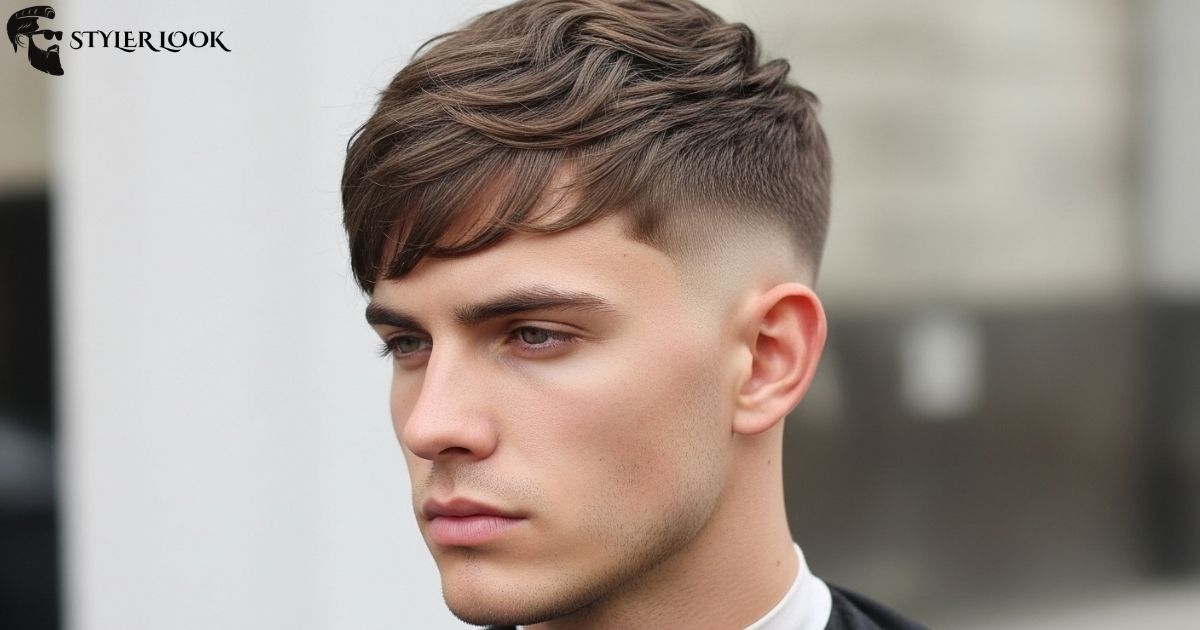
You’ve probably spotted it on someone at the gym, at work, or scrolling through your feed. That clean, sharp fade at the sides. A bit of textured hair tumbling forward at the front. It looks effortless. It looks intentional. And somehow, it works on almost every guy who tries it.
That’s the magic of the low taper fade textured fringe. It’s not a trend that burns bright and disappears. It’s a go-to modern men’s haircut that keeps evolving, keeps looking fresh, and keeps showing up in barbershops everywhere in 2025.
Whether you’re thinking about switching up your look or just want to understand why this style works so well, you’re in the right place. This guide covers everything, from the structure of the cut to 15 real variations you can walk in and request today.
Understanding the Low Taper Fade with Textured Fringe
Let’s start with the basics. A lot of guys hear “taper fade” and “textured fringe” and assume it’s one complicated thing. It’s actually two complementary elements working together. Understanding each one separately makes the whole style click.
How the Low Taper Works
A taper fade is a gradual reduction in hair length. It starts fuller at the top and gets progressively shorter as it moves toward the ears and the neckline. The “low” part tells you where the fade begins. In a low taper, the transition starts close to the natural hairline, right around the ear level or just above it.
This keeps the sides looking relatively full while still giving you that clean, shaped silhouette. It’s subtle compared to a mid or high taper. That subtlety is actually what makes it so versatile. You get structure without looking overly groomed or severe. It works just as well in a boardroom as it does at a weekend brunch.
Read More: High Taper Fade Black Male – Stylish Haircut for Modern Looks
What “Textured Fringe” Really Means

The fringe is the hair at the front of your head that falls toward your forehead. A textured fringe isn’t blunt or flat. It has movement, variation, and intentional unevenness. Think of it as hair that looks like it has a personality.
Texture is created through point cutting, razor work, or product styling. The result is a fringe that sits forward with depth and dimension rather than lying flat like a curtain. It can be short, long, swept to the side, or pushed loosely forward. That flexibility is exactly why the textured fringe hairstyle pairs so naturally with a low taper fade.
Inside the Structure of a Low Taper Fade Textured Fringe
Knowing what makes this cut work technically helps you appreciate why it looks so good and communicate better with your barber.
Zones and Fade Transition Explained

Think of the haircut in three zones. The top section is where your fringe lives. This is where the most length is kept, and where texture and styling happen. The sides are where the taper fade does its job, transitioning from the length on top down to close-cropped hair near the ears. The neckline is cleaned up tight, finishing the whole look with a precise edge.
The magic of a low taper fade textured fringe is in how seamlessly these zones connect. The fade doesn’t jump harshly from short to long. It blends gradually, which is what gives the cut its polished, cohesive appearance. A skilled barber uses clipper guards in descending sizes and blending shears to make that transition invisible to the eye.
Best Face Shapes for a Low Taper Fade Textured Fringe

One of the biggest reasons this style is so popular is that it genuinely suits a wide range of faces. But certain face shapes do get a little extra from this cut.
If you have an oval face, you’re in luck. Oval faces are considered the most balanced, and this haircut enhances that balance by keeping the sides proportional and drawing attention to the front fringe. If your face is more round, the low taper helps elongate your appearance by keeping the sides tighter and allowing the fringe to add some forward projection. For square faces, the softer texture of the fringe works to offset a strong jawline. It adds movement where the face would otherwise look angular and rigid.
Diamond and heart-shaped faces also do well with this cut. The fringe can be styled to add width at the forehead, which balances out a narrower chin. The one face shape that needs a bit more care is the oblong or long face. In that case, you’d want to keep the fringe shorter so it doesn’t visually lengthen the face further.
Ideal Hair Types for the Textured Fringe Haircut

Thick hair loves this cut. There’s enough natural density to hold texture and create that layered fringe look without much product. Fine hair can also work, but you’ll want a skilled barber who knows how to cut in texture rather than relying on bulk. The right product makes a huge difference too.
Curly and wavy hair actually produces some of the most striking versions of this style. Natural curl patterns add automatic texture to the fringe, making styling easier and giving the look a more organic feel. Straight hair works beautifully too, especially with the right paste or clay to define individual strands. Don’t let anyone tell you this style is only for one hair type.
Low Taper Textured Fringe: 15 Variations You Can Try
Here’s where it gets really useful. These aren’t just names on a list. Each variation has a distinct character, and knowing the differences helps you walk into your next appointment with confidence.
1. Classic Low Taper Textured Fringe

This is the standard. Moderate length on top, textured fringe pushed slightly forward, clean low fade on the sides. It’s polished without trying too hard. This version suits almost every hair type and occasion.
2. Messy Low Taper Fade with Textured Fringe

Everything loosened up. The fringe falls forward with a bit of intentional disorder. Product is used lightly, just enough to separate strands and add grip. This version reads casual and relaxed, ideal for guys who want low-effort style with high-effort results.
3. Side-Swept Taper Fade with Textured Fringe

The fringe sweeps to one side rather than falling straight forward. This creates a strong directional flow that works especially well on guys with asymmetric features or a natural hair part. It adds elegance without formality.
4. Choppy Low Taper Textured Fringe

Point cutting is the star here. The fringe ends are cut at irregular angles, creating a choppy, broken finish at the front. It’s got an edge to it. Works well with thicker hair and suits guys who want something with more character.
5. Long Low Taper Textured Fringe

The fringe extends past the eyebrows, sometimes close to the bridge of the nose. The fade stays tight and low on the sides, which creates a contrast between the length on top and the clean sides. Bold and intentional.
6. Short Low Taper Textured Fringe

Fringe sits right at or just above the eyebrow line. It’s clean, neat, and easy to maintain. Great for guys who want the texture without committing to a lot of length up front.
7. Wavy Low Taper Fade with Textured Fringe

Natural wave patterns are embraced and enhanced rather than controlled. The fringe has an organic, flowing quality. A little sea salt spray or curl cream goes a long way here. This version suits wavy and loosely curly hair perfectly.
8. Curved Fringe with Low Taper Fade

The fringe is cut so it follows the natural arc of the forehead. This creates a soft, rounded shape at the front that frames the face gently. It’s a subtler version that works well on guys who want refinement without drama.
9. Spiky Textured Fringe with Low Taper Fade

Product is used more generously here, pushing individual sections of the fringe upward and forward to create pointed, defined spikes. It has a bit of a throwback feel but updated and modern with the low fade backdrop.
10. Caesar-Inspired Low Taper Textured Fringe

Inspired by the Caesar fringe haircut, this version keeps the fringe horizontal and relatively short with a flat, forward-facing shape. Texture is added through product and cutting technique to modernize what was originally a very structured style.
11. Blunt Textured Fringe with Low Taper Fade

The fringe is cut with a straighter edge at the bottom but still has internal texture and movement. It sits forward with weight and presence. This one’s confident. It works beautifully with thick, straight hair and makes a strong visual statement.
12. Drop Taper Fade with Textured Fringe

The drop taper fade style means the fade line curves downward behind the ear rather than following a straight horizontal line. This creates an arc shape on the side of the head that pairs dramatically with a textured fringe up top. It’s a more detailed, artistic variation.
13. Low Skin Taper Fade with Textured Fringe

The fade goes all the way down to the skin at the lowest point. This creates maximum contrast between the shaved sides and the textured length on top. It’s sharper and more defined than a standard low fade, ideal for guys who want something that makes a real impact.
14. Low Burst Taper Fade with Fringe

The burst taper fade fringe radiates outward from behind the ear in a semi-circular pattern. It frames the ear and curves upward toward the temple. Combined with a textured fringe, it creates a style that’s dynamic and eye-catching from every angle.
15. Low Taper Textured Fringe with Design Detail

A line, pattern, or geometric shape is shaved into the fade area for an extra layer of personalization. This could be a single curved line near the temple or an intricate pattern along the hairline. It turns a great haircut into something uniquely yours.
Communicating the Perfect Low Taper Fade with Textured Fringe
Getting exactly what you want from your barber starts with how well you can describe it. This is where a lot of guys fall short, not because they don’t know what they want, but because they don’t know how to say it.
Using the Right Barber Terms and Visual References
Start with the basics. Tell your barber you want a low taper fade and specify where you want the fade to start, right at the natural hairline. Then explain the top. Mention the length you want to keep, whether it’s 2 inches or 3, and say you want texture through the fringe rather than a blunt or one-length cut.
Bring a reference photo. This isn’t admitting defeat. It’s efficient communication. A photo tells your barber everything in a second that would take three minutes to describe. Save a few images that match what you’re going for and show them confidently. A good barber will appreciate the clarity and use the image as a starting point rather than a rigid blueprint.
Mastering the Low Taper Fade and Textured Fringe Combination
Understanding how your barber achieves this look gives you a much better appreciation for the craft and helps you make smart decisions about what to ask for.
Layering, Blending, and Detailing Techniques
Layering is at the heart of the textured fringe. Rather than cutting all the hair to one uniform length, the barber removes weight from underneath while leaving length on top. This creates movement and dimension. The fringe can fall forward without looking heavy or flat.
Blending is what makes the fade seamless. Starting with a longer clipper guard near the top of the sides and gradually moving to shorter guards as the barber works downward, the transition becomes smooth and natural. No harsh lines, no visible jumps in length.
Detailing happens at the finish. The neckline gets edged up cleanly. The sideburns are shaped. The hairline around the temples is defined. These small finishing steps are what separate a truly polished result from a serviceable one.
Styling the Low Taper Fade with Textured Fringe for Everyday Wear
You’ve got the cut. Now let’s talk about how to style it each morning without it becoming a production.
Finishing with Texture and Hold
Start with slightly damp hair. Bone dry hair doesn’t respond as well to product. Apply a small amount of matte clay or texture paste, about the size of a thumbnail. Work it between your palms first, then distribute it through the fringe using your fingers rather than a comb.
Use your fingers to push the fringe forward and slightly tousle the ends. If you want more definition, use a blow dryer on medium heat while directing the fringe forward with your hand. Finish with a light touch of hairspray if you need the style to hold through a long day. The goal is to look like you made some effort but not too much.
Keeping Your Low Taper Fade with Textured Fringe Fresh
A haircut is only as good as the maintenance behind it. This style rewards consistency.
Simple Routine for Long-Lasting Texture and Shape
Book a trim every three to four weeks. The fade area grows out fastest, and once it loses its shape, the whole cut starts to look unintentional. Between appointments, keep the neckline and temple hairline clean if your barber trusts you with a trimmer at home.
Wash your hair two to three times per week with a gentle shampoo. Over-washing strips natural oils that actually help textured hair behave better. Use a conditioner on the lengths to keep the fringe manageable and reduce frizz. On non-wash days, a small amount of dry shampoo at the roots adds volume and refreshes the style without requiring a full routine.
Adapting the Low Taper Textured Fringe to Your Daily Routine
One of the genuinely underrated things about this haircut is how adaptable it is depending on where you’re headed.
Professional, Casual, and Sporty Styling Options
For work or formal settings, keep the fringe neat and defined. Use a clay with a slight sheen rather than a fully matte finish. Push the fringe forward cleanly and smooth down any stray pieces. The low taper keeps the sides sharp, and a controlled fringe reads as polished and put-together.
For casual days, let it go a little. Use less product, let the fringe sit more loosely, and skip the blow dryer. That messier, relaxed version of the cut still looks intentional because the fade underneath keeps things grounded.
For sport or active wear, pull the fringe slightly back or use a headband to keep it off your face. Post-workout, a quick towel scrunch and a small amount of product brings the texture right back without needing a full restyle.
FAQ’s
What is the difference between a low taper and a mid taper fade?
A low taper starts fading near the natural hairline, keeping more length on the sides. A mid taper begins higher, around the temples, creating a more noticeable contrast between the top and sides.
Is a textured fringe good for thin hair?
Yes, texture cutting actually adds the illusion of volume and thickness. Ask your barber to use point cutting and layering techniques to build body into finer hair without relying on bulk.
How do I ask my barber for this style?
Say you want a low taper fade starting at the natural hairline with a textured fringe on top. Bring a reference photo and mention the length you want to keep. Clear communication makes a huge difference.
How often should I get a trim to maintain the fade?
Every three to four weeks is the sweet spot for keeping the fade sharp and the fringe at the right length. Waiting longer than five weeks usually means the shape starts to look grown out.
What products work best for styling a textured fringe?
Matte clay, texture paste, or a light pomade work best. Avoid heavy gels that make the fringe stiff or greasy. A sea salt spray before blow drying adds natural-looking texture and volume.
Conclusion
The low taper fade textured fringe isn’t just a haircut. It’s a style decision that says you care about how you look without being precious about it. It’s sharp and clean where it needs to be. Loose and lived-in where it should be. And flexible enough to go from Monday morning meetings to Saturday afternoon plans without missing a beat.
You’ve got 15 variations to explore, the right language to use with your barber, and a clear styling routine to follow. The only thing left is to book the appointment and walk in with confidence. Your next great haircut is one conversation away.
