
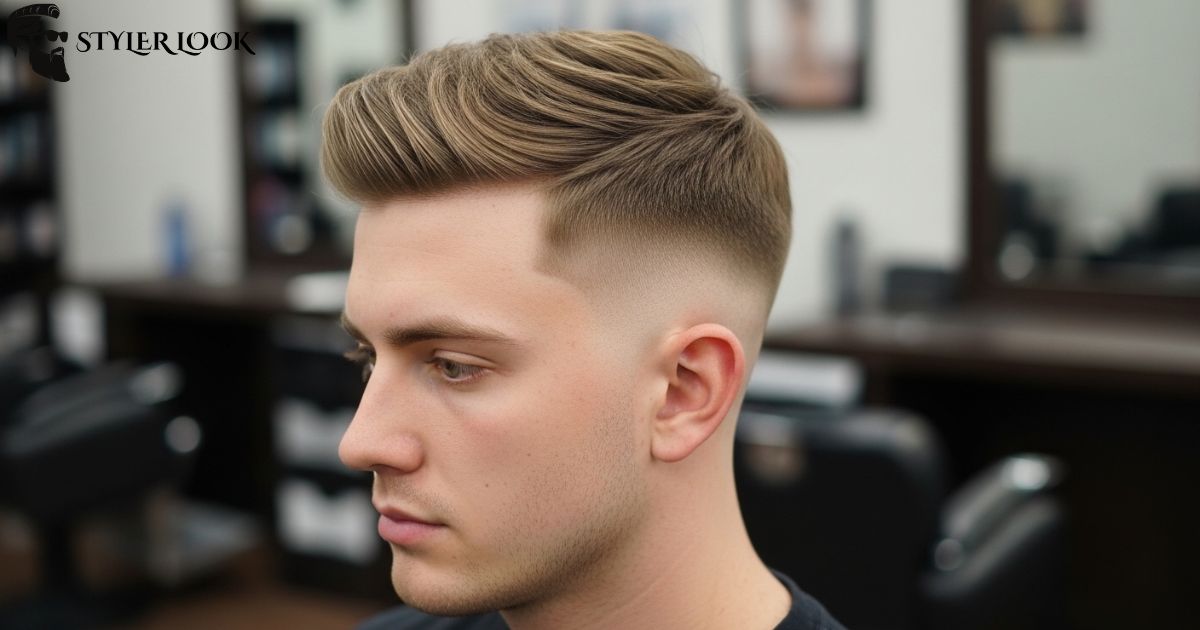
The low taper fade isn’t simply a passing trend, it’s a classic upgrade that brings sharpness, sophistication, and a subtle edge to your appearance. Starting low on the sides, the cut gradually blends into the skin, creating a clean, polished finish that fits just as well in a professional setting as it does during casual outings.
What sets the low taper fade apart is its flexibility. Whether you prefer a polished, business-ready look or a more modern, stylish vibe, this haircut easily adapts to your personality and lifestyle. It’s an ideal choice for men who want to look neat and put-together without putting in too much effort.
What Is a Low Fade Haircut?
You’ve probably seen it a hundred times without even knowing the name. That clean, gradual taper starting just above the ear, the sides going shorter as they move down toward the neck, the top staying full and styled. That’s the low fade haircut, and it’s one of the most requested styles in barbershops around the world right now.
It’s not just a trend. It’s a staple. The low fade works because it’s subtle enough for the office and sharp enough for a night out. It bridges the gap between polished and laid-back without trying too hard. Whether you’re rocking a full beard or keeping things clean-shaven, this cut adapts.
Defining Features of a Low Fade
What separates a low fade from every other fade variation comes down to a few specific characteristics. Once you understand them, you’ll never confuse it with anything else again.
Starting Point:
The fade begins very close to the neckline, usually just one to two inches above the ear. This is the lowest possible starting point, hence the name.
Blend:
The hair gradually transitions from short at the bottom to longer at the top. There’s no harsh line, no dramatic jump. It’s a smooth, seamless blend that looks intentional and refined.
Contrast:
The sides stay noticeably shorter than the top. This contrast is what gives the style its modern, structured feel without looking aggressive or overly groomed.
Professional Look:
Because the fade starts so low, the overall silhouette remains conservative. It reads as clean and put-together in professional settings without screaming “I spent an hour at the barbershop.”
Customization:
This is where things get exciting. The low fade is essentially a foundation. You build on top of it with curls, waves, a pompadour, braids, a comb over, or whatever fits your personality and hair type.
Read More: Mid Fade Haircut: 19 Styles That Stay Sharp Longer
Taper vs. Fade: What’s the Difference?

People mix these two up constantly, and honestly, it’s understandable. Both involve shorter hair on the sides. Both create that clean, tapered look. But they’re not the same thing.
A taper is a gradual length reduction. The hair gets shorter as you move down, but it doesn’t necessarily reach skin level. A fade, on the other hand, goes all the way down to the skin or very close to it. Think of a taper as a fade’s more conservative older cousin. Both are great. They serve different purposes depending on how sharp you want the finish to be.
Low Fade vs Mid Fade vs High Fade

Here’s a breakdown that’ll clear up the confusion once and for all. A low fade starts just above the ear and near the neckline. It’s subtle. It keeps most of the length on the sides intact while still creating contrast. A mid fade begins around the temple area, roughly halfway up the head.
It’s more noticeable and creates a stronger visual contrast between the top and sides. A high fade starts near the top of the head, very close to where the hair on top begins. It’s the boldest option and gives the most dramatic, skin-heavy look. The lower the fade, the more understated and versatile the style. The higher it goes, the more statement it makes.
Best Low Fade Haircuts for Men in 2026
1. Classic Low Fade

This is the original. No frills, no gimmicks. Just a clean low fade haircut with the hair on top left at a medium length. It suits almost every hair type and face shape. If you’re new to fades, start here.
2. Low Fade with Curly Hair

Curly hair and low fades are a match made in barbershop heaven. The tight sides let the curls on top breathe and expand naturally. The contrast between the fade and the curl pattern creates visual texture that looks effortlessly cool. Ask your barber to keep the top at least two to three inches so the curls have room to do their thing.
3. Low Fade with Straight Hair

Straight hair benefits from the low fade because it adds dimension to what can otherwise look flat. Pair it with a side part or a textured top to create movement. A little pomade goes a long way here.
4. Low Fade with Wavy Hair

Wavy hair sits in a sweet spot between straight and curly, and it looks outstanding with a subtle low fade. The waves cascade naturally from the longer top section, while the fade keeps the sides clean and defined. Sea salt spray is your best friend with this one.
5. Low Taper Fade

The low taper fade is a gentler version of the standard low fade. The hair doesn’t drop quite as close to the skin. It’s perfect for professional environments where you want groomed edges without anything too dramatic. It’s the kind of haircut that works equally well on a Monday morning and a Saturday night.
6. Low Skin Fade

Now we’re turning up the sharpness. A low skin fade goes right down to the skin at the base, creating a razor-clean finish that looks incredibly crisp. This style demands regular maintenance, but the payoff is a cut that looks fresh and precise every single day.
7. Low Drop Fade

The drop fade follows the natural curve of the head, dropping lower behind the ear than on the sides. This creates an arc-like shape that’s visually distinctive without being loud. It’s a creative twist on the classic that a lot of guys are gravitating toward in 2026.
8. Buzz Cut with Low Fade

Keep the top uniformly short with a buzz cut, then let the fade do the work on the sides. This combo is low-maintenance, masculine, and surprisingly versatile. It suits almost every face shape and works particularly well in warm weather when you want to keep things minimal.
9. Pompadour with Low Fade

The pompadour with a low fade is one of the most stylish men’s haircuts you can walk out of a barbershop with. The volume on top, swept back and upward, plays beautifully against the clean, tapered sides. It’s retro and modern at the same time. Use a strong-hold pomade to keep that pomp in place.
10. Fringe with Low Fade

Fringe swept forward over the forehead, paired with a low fade on the sides, gives you a European-influenced look that’s been gaining serious traction lately. It softens the overall appearance while still maintaining that sharp side contrast. Works especially well on guys with oval or square face shapes.
11. Faux Hawk with Low Fade

You want edge without commitment? The faux hawk with a low fade delivers exactly that. The center strip of hair stands taller and more defined than the sides, mimicking the mohawk look without shaving the sides completely. It’s bold, it’s fun, and it actually suits more face shapes than you’d expect.
12. Undercut with Low Fade

The undercut creates a strong disconnection between the top and sides. Add a low fade into the mix and you get a hybrid that blends hard contrast with subtle graduation. The result is a modern, structured style that photographs incredibly well.
13. Comb Over with Low Fade

The comb over low fade has become one of the defining hairstyles of the last decade. The hair on top is grown slightly longer on one side and combed across for a neat, deliberate finish. The low fade keeps the sides tight without competing with the top. It’s clean, it’s classic, and it ages incredibly well.
14. Spiky Hair with Low Fade

Got thick, dense hair? Spike it up and pair it with a low fade. The textured, jagged tips on top contrast beautifully with the smooth gradient on the sides. A matte clay or fiber cream will give you that piecey, defined texture without looking stiff or helmet-like.
15. Afro Low Fade

For men with natural Afro-textured hair, the low fade is an excellent way to maintain volume and shape on top while keeping the sides neat. It lets the afro’s natural fullness take center stage while the fade provides a clean, well-groomed border. This is a style rooted in culture and worn with pride.
16. Low Fade with Beard

A low fade with beard is one of the most masculine and balanced combinations in men’s grooming. The fade on the sides flows seamlessly into the beard line, creating a continuous, connected look. Keep the beard well-shaped and groomed to let the fade’s clean lines work their full effect.
17. Low Fade with Design (Hard Part/Lines)

Want to personalize your cut? Ask your barber to add a hard part or a geometric design into the fade. A shaved line along the part, or a subtle pattern cut into the fade itself, adds an artistic dimension that makes your haircut completely your own. It’s becoming one of the standout low fade haircut with design ideas in 2026.
Celebrities Rocking the Low Fade
1. Zayn Malik

Zayn has consistently pushed men’s hair in creative directions. His use of low fades with textured tops and defined shapes has made him a regular reference point in barbershops. When clients bring in a photo, it’s often Zayn.
2. Michael B. Jordan

Michael B. Jordan keeps it clean, sharp, and consistently impressive. He gravitates toward low skin fades paired with well-groomed beards. His style communicates confidence without trying too hard, which is exactly the kind of energy a great low fade projects.
3. David Beckham

Beckham has worn essentially every haircut at some point, but his low fade comb over remains one of his most iconic looks. It’s professional, polished, and adaptable enough to take from a training session to a red carpet without missing a beat.
4. Drake

Drake is practically a walking advertisement for the low fade with beard combination. His cuts are always clean, always deliberate, and always well-maintained. He’s helped make the style synonymous with modern masculinity.
Benefits of a Low Fade Haircut
Clean and Modern Look
There’s something about a fresh low fade that just signals effort. It tells the world you care about how you present yourself without going overboard. It’s the kind of cut that looks sharp in a job interview and equally sharp at a weekend brunch.
Works with Most Face Shapes and Hair Types
Unlike some cuts that only flatter specific features, the low fade is genuinely adaptable. It complements oval faces, softens square jawlines, adds structure to round faces, and narrows longer face shapes when paired with the right top style. It also works across hair textures, from fine and straight to thick and coily.
Easy to Maintain
Between barber visits, a low fade holds its shape better than higher fade variations. Because it starts lower, the grow-out is less noticeable. You can stretch your appointments a bit further without your cut looking ragged.
Choosing the Right Low Fade for Your Face Shape
1. Oval Face
Congratulations. Oval is the most versatile face shape for haircuts. Almost any low fade variation works for you. Experiment freely. A pompadour, comb over, or textured top will all look great.
2. Round Face
You want to add length and reduce width. Go for styles that add height on top, like a faux hawk or a pompadour. Avoid cuts that add width to the sides. A clean low fade keeps the sides tight, which helps elongate the overall appearance.
3. Square Face
Your jawline is already strong. You don’t need to amplify it. A low fade with softer styling on top, like fringe or waves, will balance the angular features nicely. Avoid very blunt tops that echo the squareness of the jaw.
4. Long/Oblong Face
Avoid adding too much height on top, as it will make your face look even longer. Go for styles with more width on the sides, like a textured crop or wavy top. A low fade with a fuller top section works well here.
How to Ask Your Barber for a Low Fade
What to Say
Walk in and say exactly this: “I’d like a low fade, starting just above the ear, with a smooth blend up to the top.” Simple, clear, and effective. Most experienced barbers will know exactly what you mean. If you want extra precision, add the length you want on top.
Reference Haircut Numbers
Clippers use numbered guards. A number one is very short, almost skin level. A number two is slightly longer. For a low fade, the base is typically cut with a zero or one, graduating up to a three or four where it meets the longer hair on top. Knowing these numbers helps you communicate more precisely.
Bring Inspiration Photos
Seriously, don’t skip this step. A photo communicates in seconds what words might take minutes to explain. Find a photo of the exact style you want and show it to your barber. It removes ambiguity and gets you closer to the cut you actually want.
Maintenance Tips for Low Fade Haircuts
How Often to Get It Trimmed
For a low skin fade, you’ll want a fresh cut every two to three weeks. For a standard low fade, three to four weeks is usually enough to keep things looking sharp. The lower and tighter the fade, the more frequent the upkeep.
Best Styling Products
The right product depends on your hair type and the style on top. Pomade works brilliantly for comb overs and slick looks. Matte clay is ideal for textured, natural styles. Sea salt spray adds definition to waves. For curls, a light curl cream or mousse keeps the texture intact without crunch.
Daily Grooming Tips
Wash your hair regularly, but not necessarily every single day. Over-washing strips natural oils and can make your hair drier and harder to style. Use a good conditioner if your hair is medium to long on top. Brush or comb through when damp, not when dry, to avoid breakage and frizz.
Final Thoughts
The low fade haircut has earned its place as one of the most enduring, adaptable, and universally flattering cuts in men’s grooming. It’s not here because of a fleeting trend. It’s here because it genuinely works, for almost every man, in almost every setting.
Whether you’re going for something classic and understated or something bold and textured, there’s a low fade variation that fits your face, your hair type, and your lifestyle. The only real question is which one you’re going to try first. Book the appointment, bring the photo, and trust the process. A great barber and the right low fade can genuinely change how you carry yourself.
FAQ’s
What is the difference between a low fade and a taper?
A taper gradually reduces hair length but doesn’t always reach the skin. A low fade blends all the way down to the skin or near-skin level, starting just above the ear.
How often should I get a low fade touched up?
For a skin fade, every two to three weeks. For a standard low fade, every three to four weeks keeps it looking fresh and clean.
Is a low fade suitable for all hair types?
Yes. The low fade works with straight, wavy, curly, and coily hair. The styling on top changes, but the fade itself adapts to any texture.
Can I get a low fade if I have a beard?
Absolutely. A low fade with a beard is one of the most popular and balanced combinations in men’s grooming. The fade transitions naturally into the beard line.
What products should I use to style a low fade haircut?
It depends on the top style. Pomade for slick looks, matte clay for texture, sea salt spray for waves, and curl cream for natural coily hair.
