
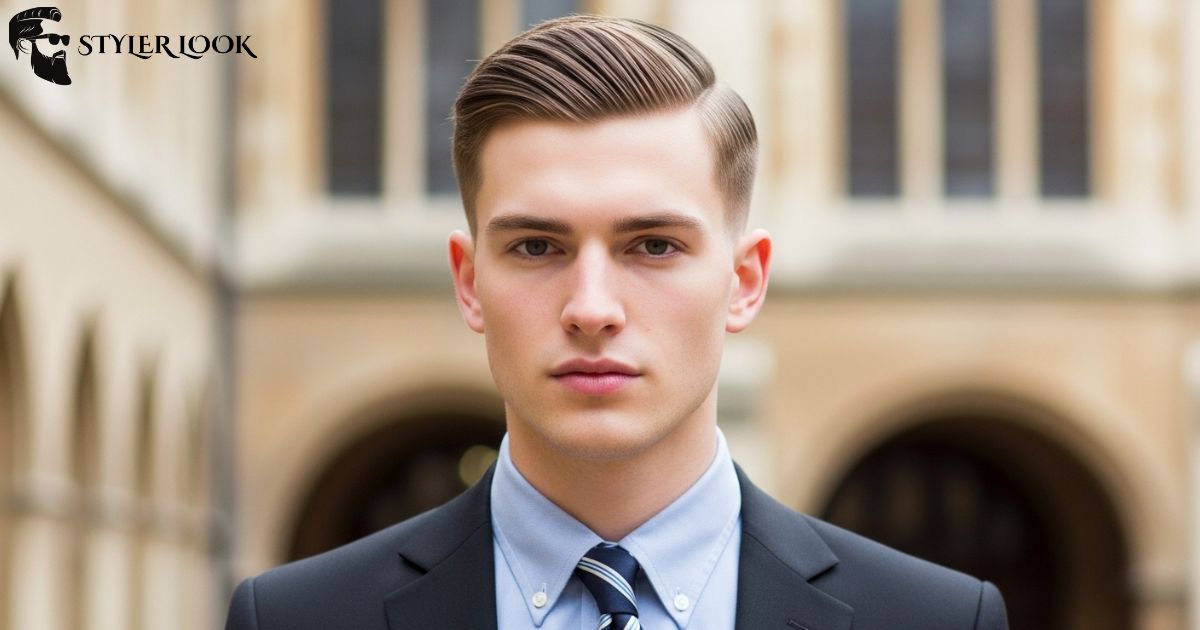
You’ve seen it before. That sharp, clean look on the guy who walks into a room and just looks like he has everything together. That’s the Ivy League haircut doing its job. It started on the campuses of Harvard, Yale, and Princeton in the 1950s. Students wore it like a badge of discipline and refinement.
Decades later, it’s still here. Still relevant. Still turning heads. The cut keeps the sides short and tapered while leaving enough length on top to style. It works in a boardroom. It works at a wedding. It even works on a lazy Sunday. That’s the real power of this look. It fits everywhere without ever trying too hard.
What Is an Ivy League Haircut?
You’ve probably seen it a hundred times without knowing its name. That clean, polished look where the hair on top is slightly longer, neatly styled to the side or back, with short, tapered sides? That’s the Ivy League haircut. It’s the kind of cut that makes a man look put-together whether he’s heading into a boardroom or grabbing brunch on a Sunday.
The name itself traces back to the prestigious universities of the American Northeast. Think Harvard, Yale, Princeton. Students at these schools in the mid-20th century wore this style as almost a uniform. It was neat, it was disciplined, and it communicated something without saying a word.
At its core, the Ivy League haircut is a refined variation of the crew cut. The difference is that it leaves enough length on top to style, usually between one and three inches. The sides are tapered or faded short, and the whole thing comes together with a side part or a brushed-back finish. It’s a short sides, long top haircut done with intention and precision.
What makes it stand out from other professional men’s hairstyles is its versatility. It works with a suit and tie just as naturally as it works with a casual button-down. It suits most face shapes, adapts well to different hair textures, and requires only minimal effort to maintain once you’ve got the cut right.
Read More: Low Fade vs Mid Fade vs High Fade: Key Differences Explained
22 Best Ivy League Haircut Styles for Men
1. Classic Ivy League Haircut
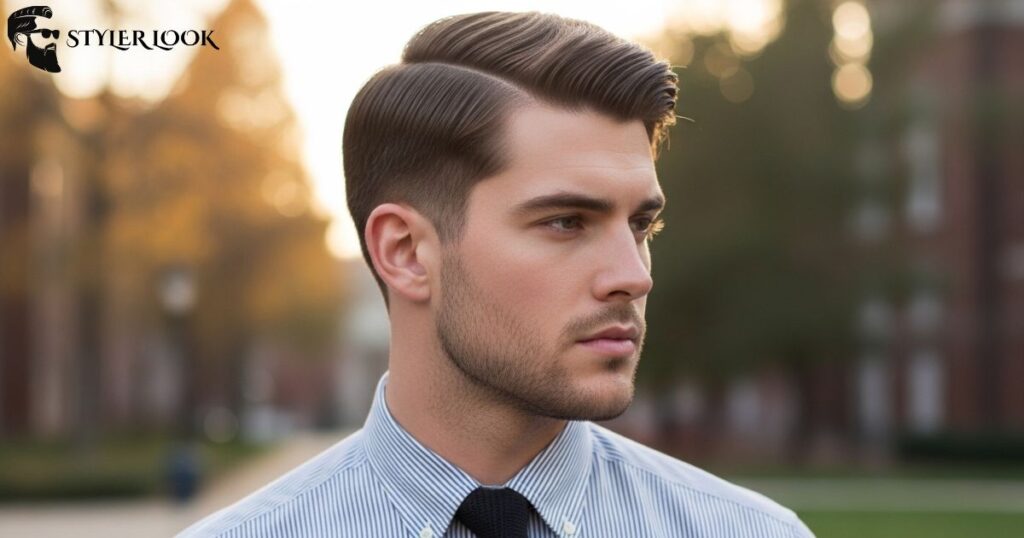
This is the one that started it all. Short on the sides, slightly longer on top, styled neatly to one side with a clean part. It’s a traditional men’s haircut that never goes out of fashion. If you’re stepping into your first Ivy League cut, this is where you begin.
2. Modern Textured Ivy League
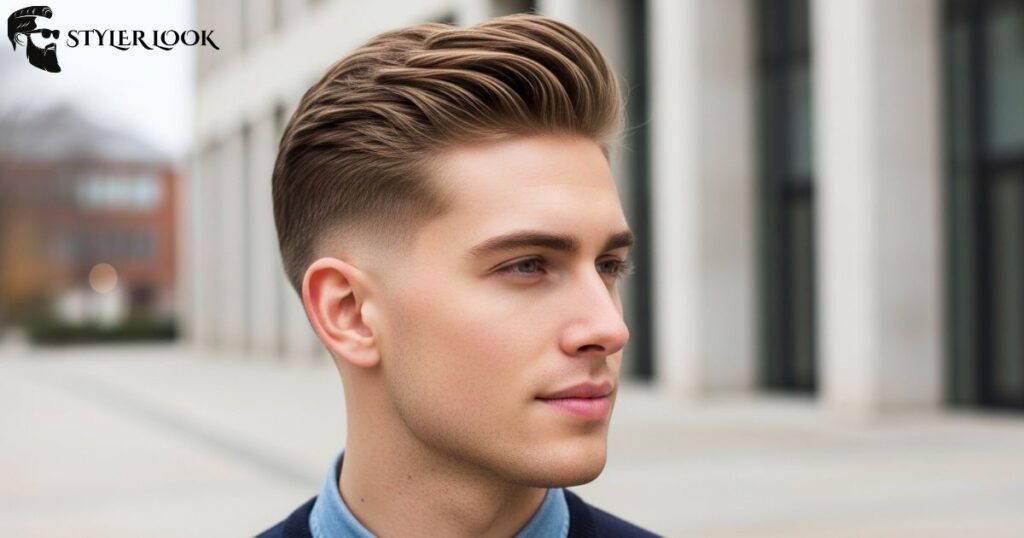
The modern version adds texture to the top. Instead of pressing everything flat, you work in a matte product and let the hair sit with a bit of natural movement. It’s still polished, but it has personality. This is a textured men’s hairstyle that bridges classic and contemporary without trying too hard.
3. Ivy League with Taper Fade
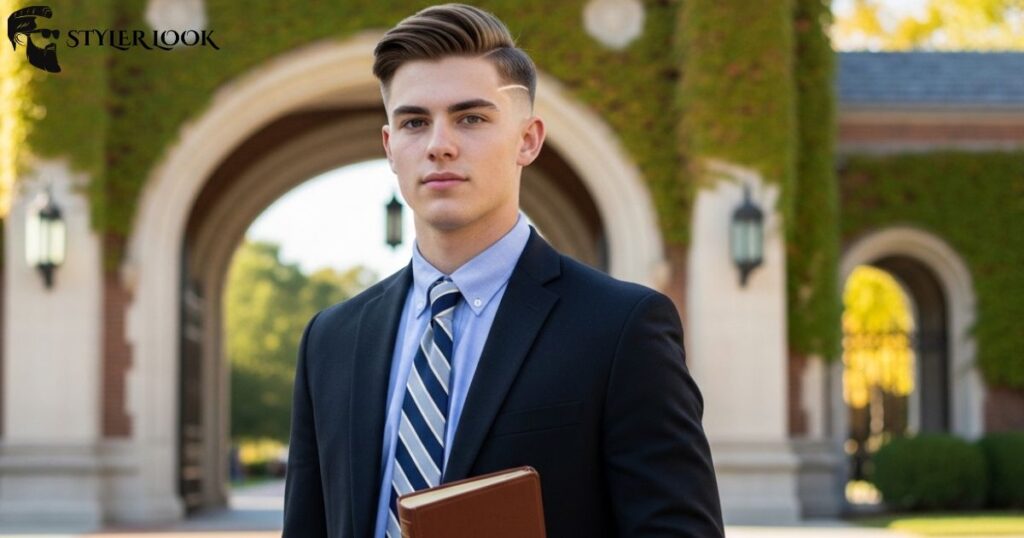
Here the sides fade gradually from skin or very short stubble up to the longer hair on top. The Ivy League haircut with taper fade is clean without being severe. It’s a great choice if you want a modern edge while keeping the overall shape traditional.
4. Ivy League Fade Haircut
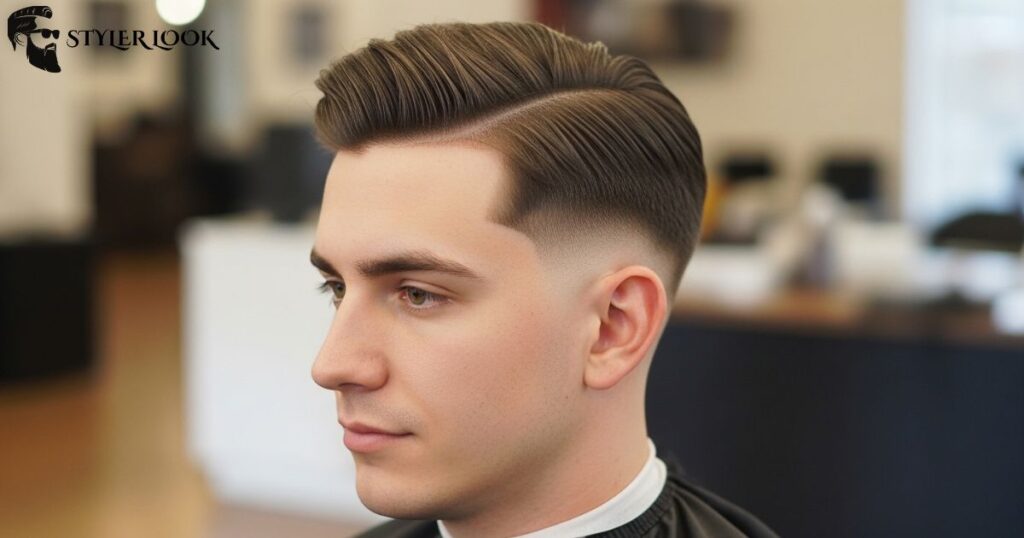
Similar to the taper fade but more dramatic. The fade is higher on the sides, creating a sharper contrast between the short sides and the styled top. It’s bold, clean, and works especially well on men with thicker hair who want their style to make a statement.
5. Ivy League Crew Cut
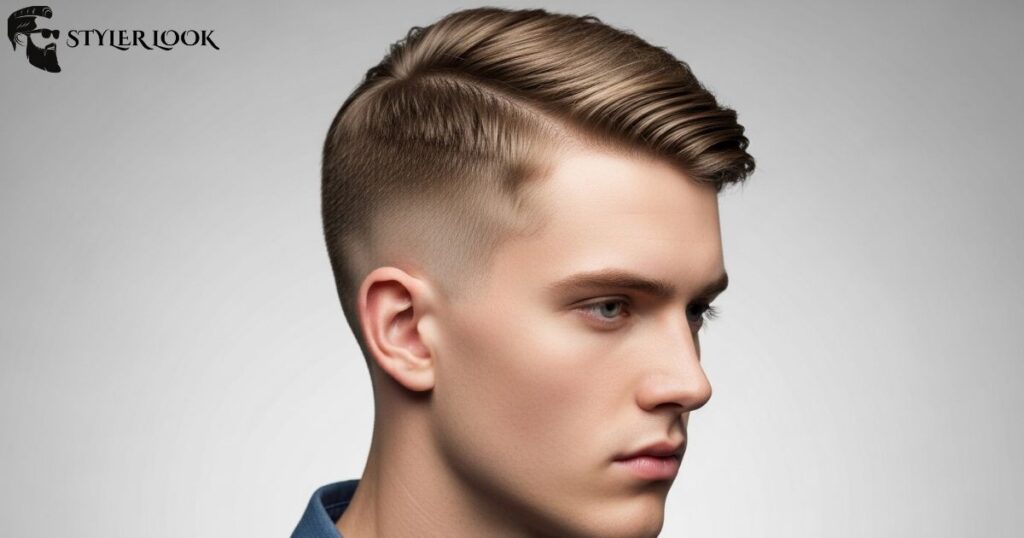
This sits right at the intersection of two classic styles. It’s slightly longer than a standard crew cut but keeps the same military-inspired discipline. If you want something low-maintenance and sharp, this crew cut variation is your best bet.
6. Curly Ivy League Haircut
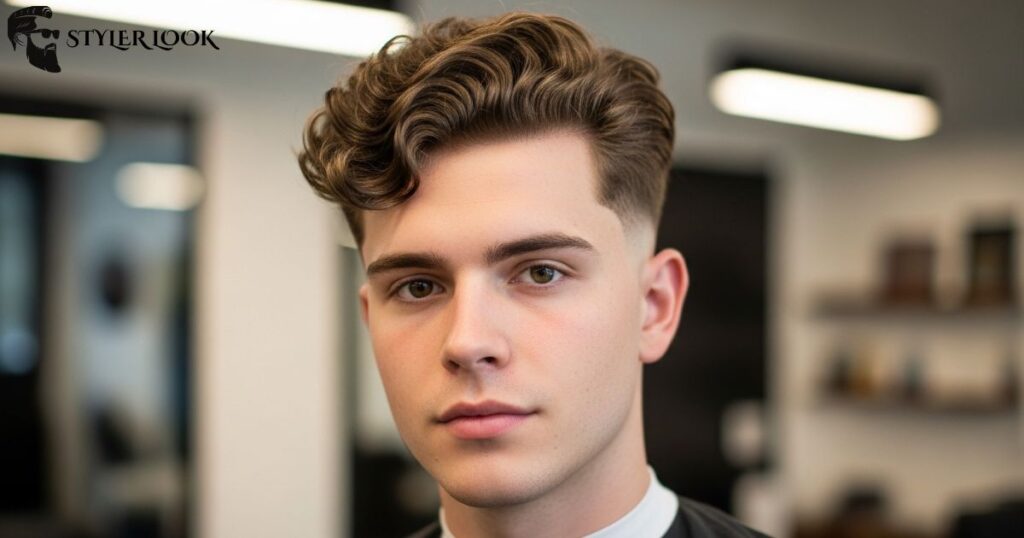
Curly hair and the Ivy League cut are a surprisingly great pairing. The curls on top add natural volume and texture, while the tapered sides keep everything controlled. The key here is using a curl-defining cream to let the natural pattern do the work. The result is effortlessly cool.
7. Long Ivy League Style
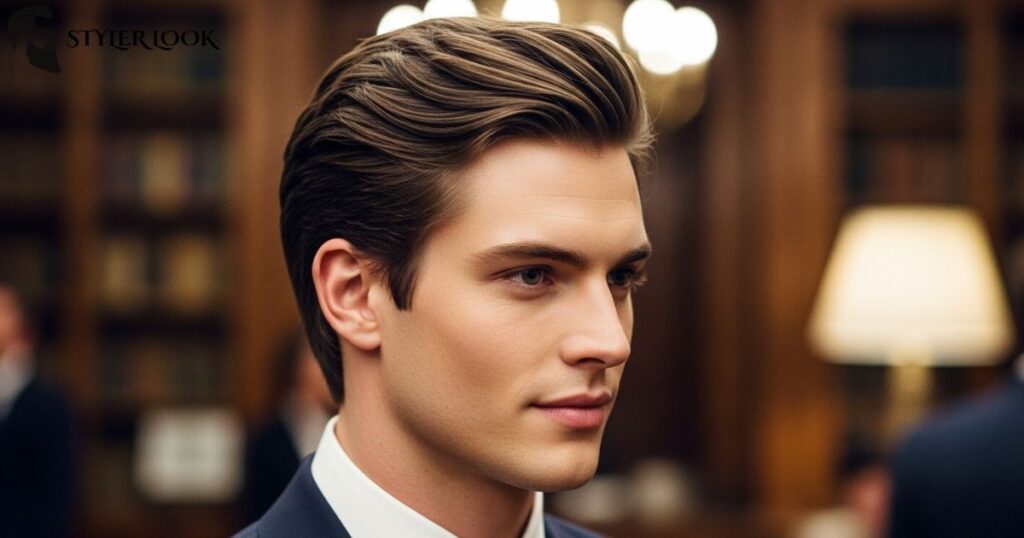
Push the top length to two or three inches and you get a more relaxed, flowing version of the cut. It still holds the same structure but gives you more to work with when styling. A medium-hold pomade swept to one side does the job beautifully.
8. Short Ivy League with Hard Part
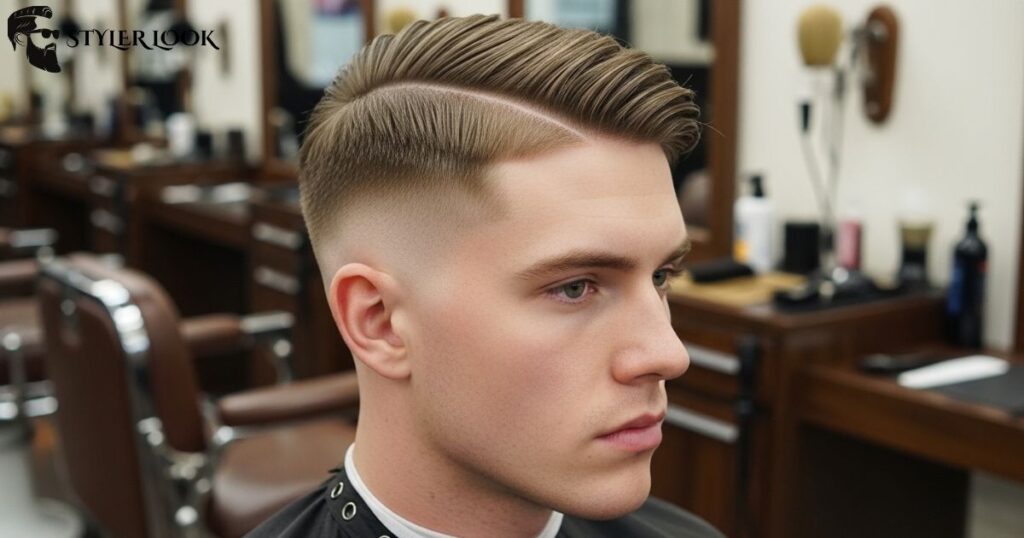
A razor-sharp line shaved into the part takes this style to another level. The hard part creates a defined boundary that makes the side part hairstyle look incredibly precise. It’s a small detail with a big visual impact.
9. Brushed Up Ivy League
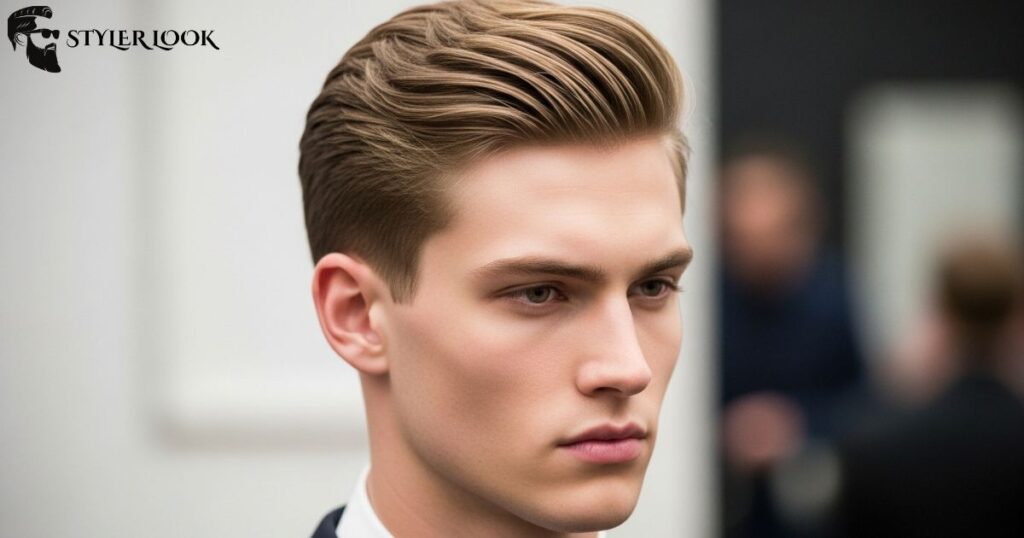
Instead of sweeping the top to the side, you brush it backward and slightly upward. It adds volume and a subtle lift that reads as confident and modern. This works best with a light pomade or a volumizing mousse for men with finer hair.
10. Side-Swept Ivy League with Low Taper
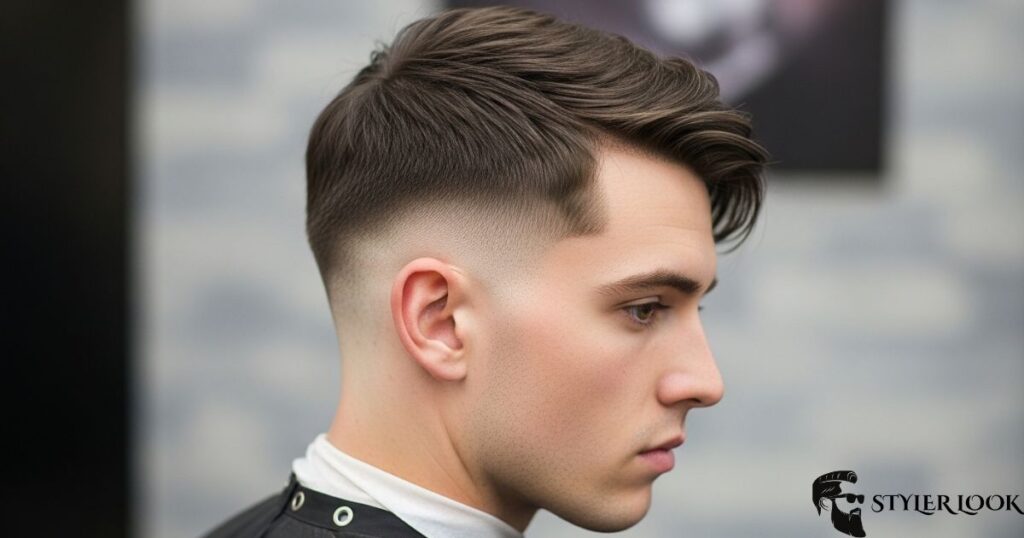
The low taper fade haircut keeps the sides natural-looking while still being neat. Combine that with a side-swept top and you get a hairstyle that feels relaxed but remains sharp. It’s a polished hairstyle for men who don’t want to look like they’re trying too hard.
11. Ivy League Undercut
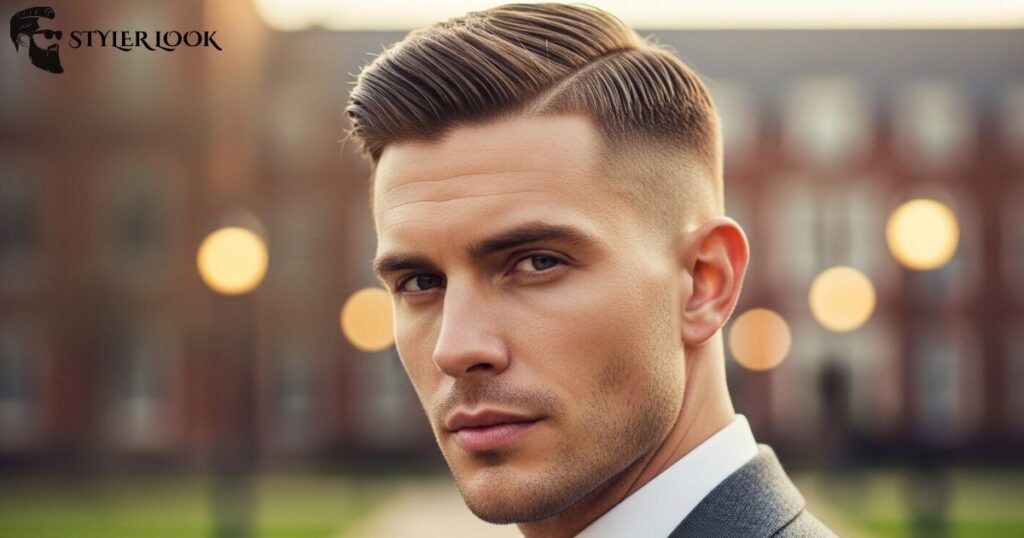
The undercut takes the contrast up a notch. The sides are cut close or even shaved, creating a dramatic disconnect from the longer top. It’s a bolder take on the classic that suits men who lean toward edgier style choices.
12. Ivy League Pompadour
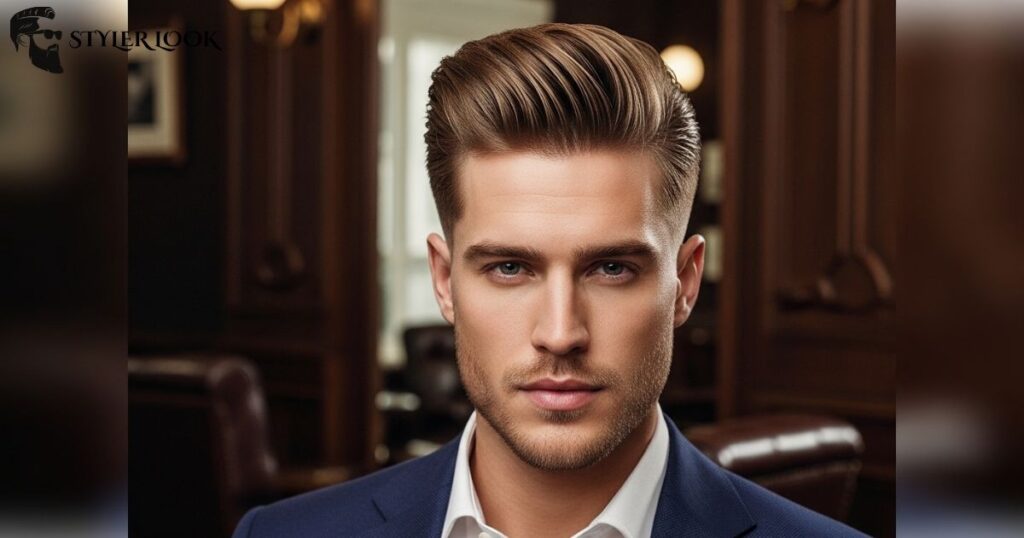
Sweep the top hair upward and forward before letting it fall back elegantly. This brings in a touch of vintage flair. It’s a formal men’s haircut option that works well for events, weddings, or any occasion where you want to look polished and memorable.
13. Wavy Ivy League with Taper
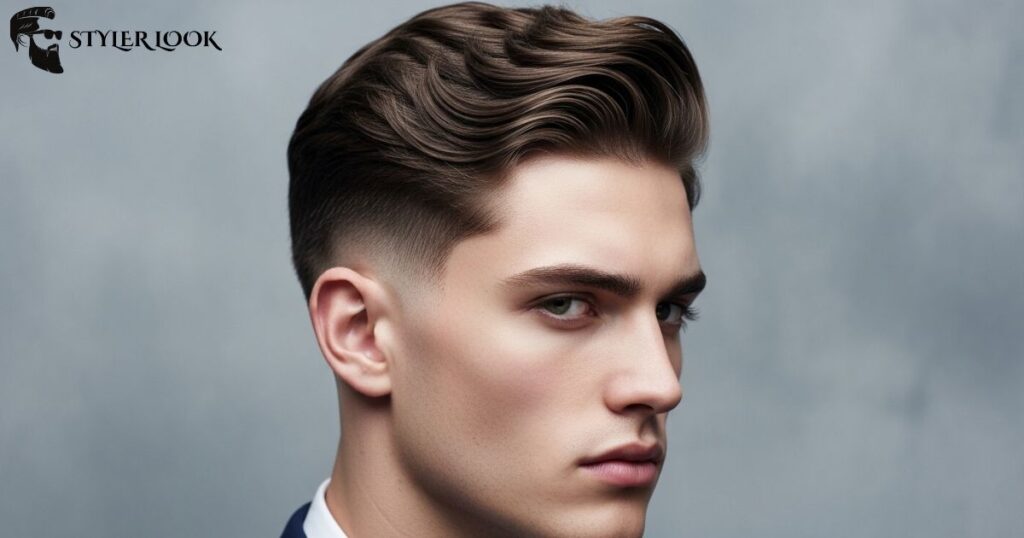
Natural waves on top add movement and depth to the cut. The tapered sides keep it from looking wild. You don’t need to fight your waves here. Work with them using a light hold cream and let the natural texture shine.
14. Ivy League with Fringe
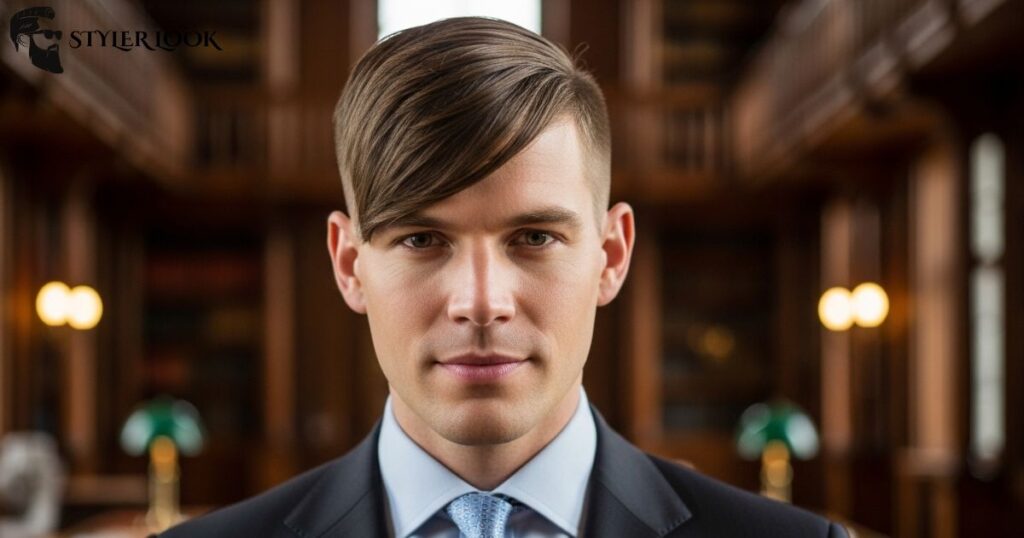
A soft fringe falling slightly forward softens the overall look. It’s a more relaxed interpretation of the classic style and works well for men with oval or oblong face shapes who want to balance their features.
15. Messy Ivy League Look
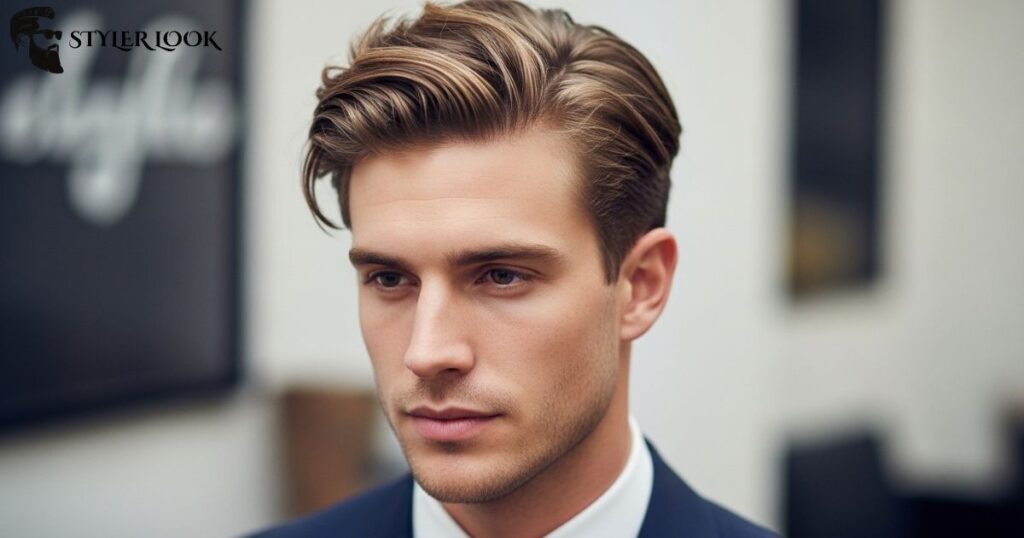
Not everything needs to be perfectly placed. The messy version uses a matte clay to create a lived-in, effortless feel. The structure is still there, the cut is still clean, but the finish is casual. Think Sunday morning with a coffee in hand.
16. Ivy League for Thinning Hair
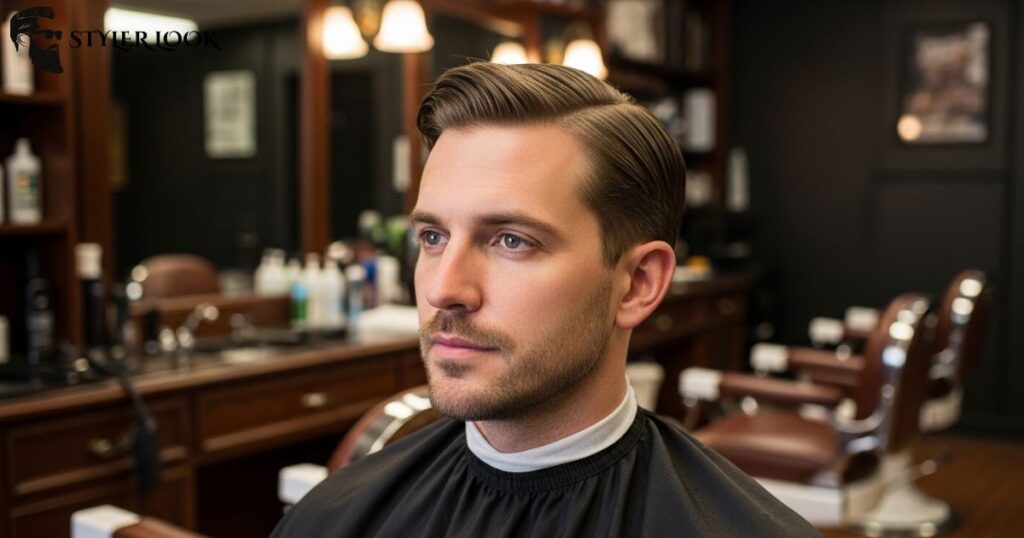
This is one of the best options for men dealing with thinning hair. Keeping the sides short draws attention away from the scalp and toward the styled top. Use a volumizing product and style with a side part to create the illusion of fullness. The Ivy League haircut for thinning hair works because it flatters rather than exposes.
17. Ivy League for Round Faces
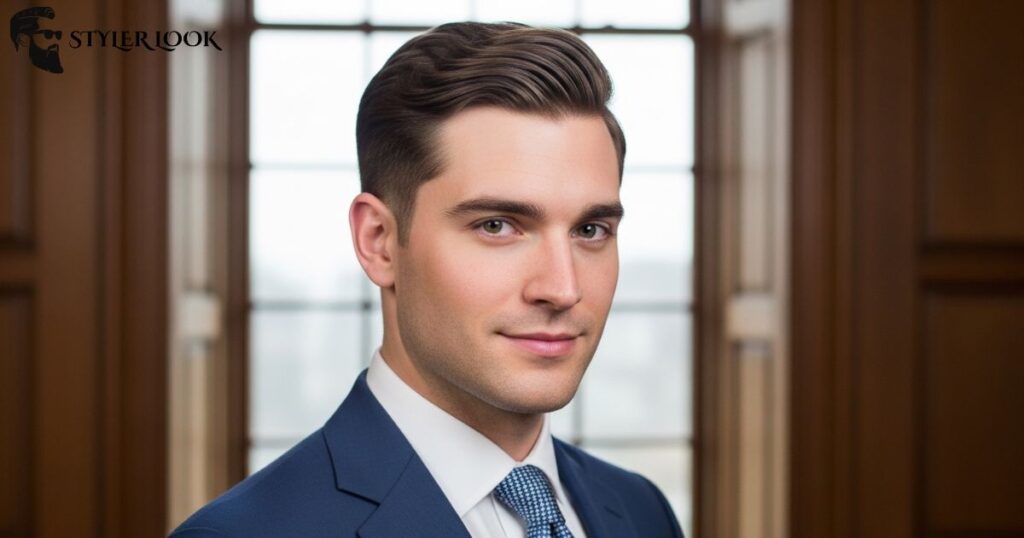
A side part and slight height on top elongate the face visually. This makes the Ivy League one of the most flattering choices for men with rounder face shapes. Avoid too much width on the sides and keep the top styled upward rather than flat.
18. Ivy League for Asian Hair
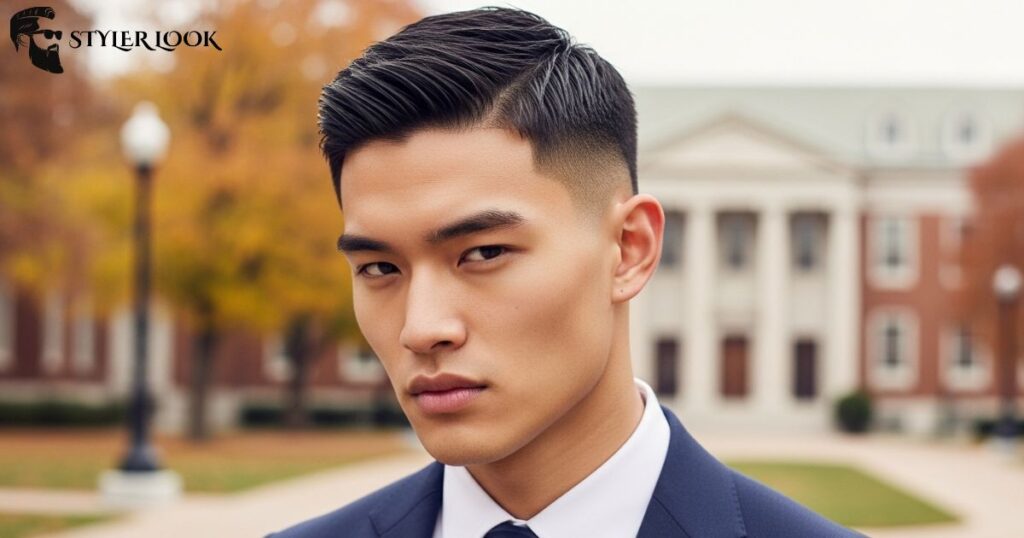
Asian hair tends to be thicker and straighter, which actually holds the Ivy League shape beautifully. The key is asking your barber to thin out the top slightly if needed, so it doesn’t sit too heavy. A lightweight pomade keeps it in place without adding unnecessary weight.
19. Low-Maintenance Ivy League
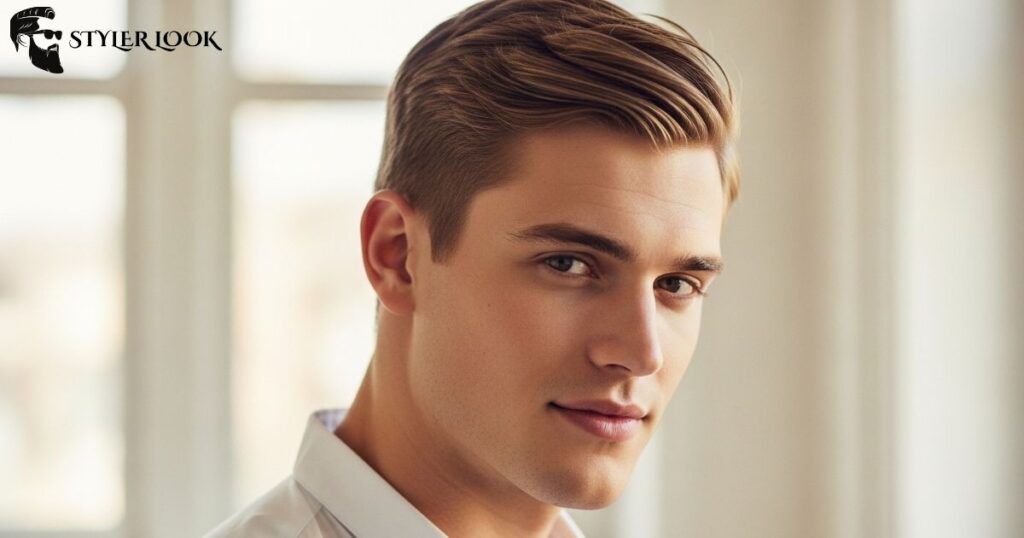
A well-executed cut means you spend less time styling every morning. Ask for a slightly shorter top so the hair naturally falls into place. A small amount of product and a quick comb is all it takes. This is the low maintenance Ivy League hairstyle at its best.
20. Ivy League with Beard
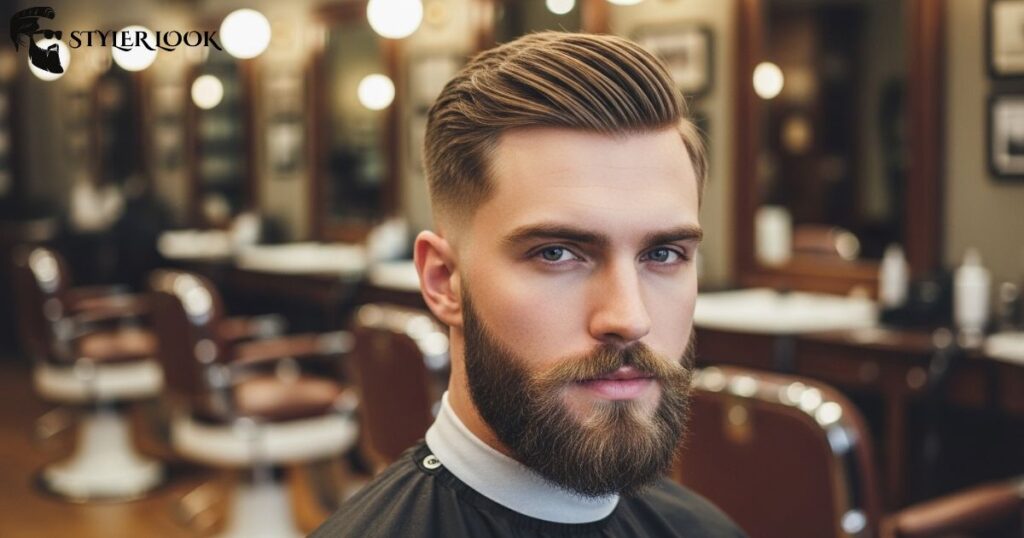
Pairing the clean-cut Ivy League with a well-groomed beard creates a beautiful contrast. The neatness of the haircut balances the ruggedness of facial hair. Whether it’s a short stubble or a full beard, the combination reads as masculine and intentional.
21. Military Ivy League Haircut
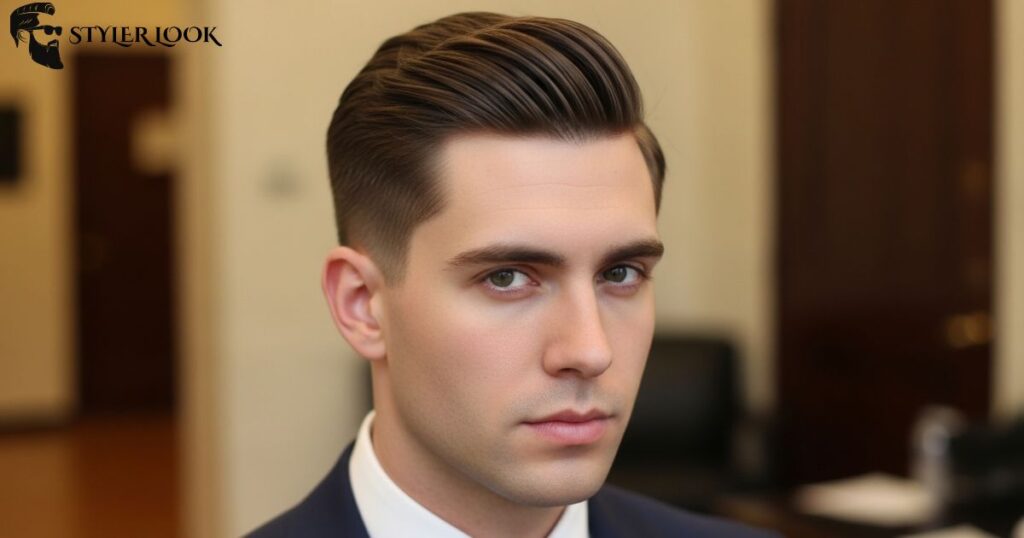
Think high and tight, but with just enough length on top to style. It’s disciplined, clean, and demands respect. This version strips everything back to pure function and form, making it ideal for men who prefer a no-nonsense approach to grooming.
22. Ivy League Comb Over
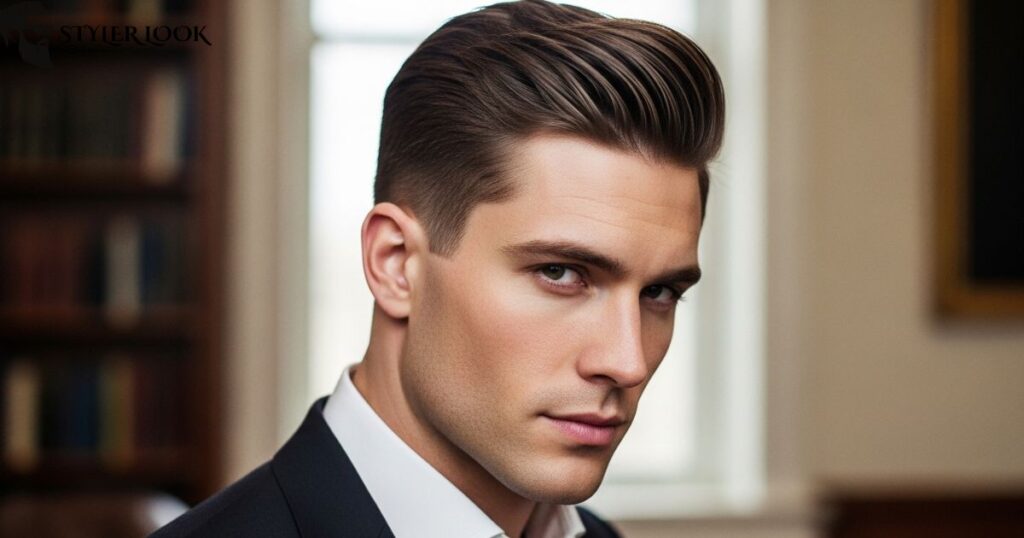
The comb over version sweeps the longer top hair across the head with a defined part. It’s a preppy hairstyle for men that has been reimagined for the modern age. Done right, it looks incredibly sharp without a single hair out of place.
Ivy League Haircut vs Other Popular Styles
Ivy League vs Crew Cut
The crew cut is shorter and more uniform across the top. The Ivy League haircut offers more length on top, which means more styling options. If the crew cut is a closed fist, the Ivy League is an open hand. Both are clean, but one gives you more creative control.
Ivy League vs Fade Cut
A fade is a technique, not a style. You can actually combine a fade with an Ivy League cut, as seen in several styles above. The difference between Ivy League and fade haircut comes down to the fact that a standalone fade often lacks the structured top that defines the Ivy League look.
Ivy League vs Pompadour
The pompadour is more voluminous and dramatic on top. It’s a showstopper style. The Ivy League is understated and professional. One commands attention in a room, the other earns respect in a meeting. Both have their place, depending on the context.
Ivy League vs Taper Cut
The taper cut focuses primarily on how the sides and back are cut, gradually shortening toward the neckline. The Ivy League incorporates that tapered element but adds the styled top and overall structured shape. Think of the taper as a component that’s often part of the Ivy League, not a competitor to it.
Why the Ivy League Style Remains a Top Choice?
Trends come and go. The Ivy League haircut just keeps showing up. And there’s a reason for that.
It crosses generations without looking dated. A man in his twenties can wear it just as confidently as a man in his fifties. It suits corporate environments, creative industries, and casual settings alike. That kind of universal adaptability is rare in men’s grooming styles.
There’s also something about the psychology of a clean haircut. Research consistently shows that neat, well-groomed appearances are associated with competence and trustworthiness. The Ivy League haircut communicates both without you having to say a word. It’s one of the few timeless haircut styles that actually delivers on its promise.
In 2026, modern Ivy League haircut ideas have expanded the style into new territory while respecting the original blueprint. Barbers are pairing it with skin fades, hard parts, textured finishes, and even bold beard combinations. The core DNA remains intact, but the expression has grown.
How to Ask Your Barber for an Ivy League Haircut?
Knowing how to ask your barber for an Ivy League haircut saves you from walking out with something completely different from what you wanted. Be specific.
Start by saying you want an Ivy League cut. Most barbers will know immediately what you mean. Then specify the details. Tell them how much length you want on top, typically between one and two and a half inches. Mention whether you want a taper or a fade on the sides. Let them know if you want a hard part or a natural side part.
Bring a reference photo. Seriously, this is the single most effective communication tool in a barbershop. It removes ambiguity entirely. You can show them one of the styles from this article and say, that’s the direction I want to go.
Ask about maintenance too. A good barber will tell you how often you’ll need to come back to keep the cut looking sharp, usually every three to four weeks.
How to Style an Ivy League Haircut at Home?
Styling Products You’ll Need
The best products for Ivy League hairstyle depend on the finish you want. For a classic, polished look, go with a medium-hold pomade with a slight shine. For a more modern, matte finish, a clay or paste works better. If your hair is fine, a volumizing mousse before blow-drying adds body. Avoid heavy waxes that make the hair look greasy or weighed down.
Step-by-Step Styling Guide
- Start with a towel-dried, slightly damp head of hair.
- Apply a small amount of your chosen product, about the size of a dime, and distribute it evenly through your hair using your fingers.
- Use a comb to create your part, starting from the eyebrow and working back.
- Comb the top to the side or back, depending on your chosen style.
- Finish with a blow dryer on a low heat setting to lock everything in place.
- For a harder finish, let it air dry after combing. Done.
Final Tips for Pulling Off the Ivy League Look
- Keep your neckline clean between barber visits. A visible, overgrown neckline undoes all the work a great haircut does. Pick up a small trimmer for home touch-ups. It’s a small investment that makes a noticeable difference.
- Match your product to the occasion. A shiny pomade suits formal settings. A matte clay fits casual days. Knowing the difference and switching accordingly is a sign of someone who actually understands men’s grooming.
- Don’t skip the ears. Having the hair around your ears trimmed cleanly is part of what makes an Ivy League cut look deliberate rather than accidental.
- And finally, wear it with confidence. No haircut does its job if the person underneath is slouching.
Conclusion
The Ivy League haircut has earned its place in the permanent rotation of great men’s hairstyles. It’s clean without being bland. It’s professional without being rigid. And it’s flexible enough to work across face shapes, hair textures, ages, and lifestyles.
Whether you go for the classic side part, the modern Ivy League with a taper fade, or a textured variation that suits your personality, you’re choosing a style backed by decades of proven appeal. That’s not something you can say about most trends.
Find a skilled barber, bring a reference photo, and give it a try. You might just find that it becomes the only haircut you ever need.
FAQ’s
What is the difference between an Ivy League haircut and a crew cut?
The Ivy League has more length on top, typically one to three inches, which allows for styling. The crew cut is shorter and more uniform. Both are clean cuts, but the Ivy League gives you more flexibility.
How long should hair be for an Ivy League cut?
The top should be between one and three inches long. The sides are cut short with a taper or fade. This length allows for the side part or swept-back styling that defines the look.
Is the Ivy League haircut good for a round face?
Yes. The side part and added height on top help elongate the face visually, which flatters rounder face shapes. Keep the sides tight to avoid adding width.
Can you get an Ivy League haircut with curly hair?
Absolutely. Curly hair adds natural texture and volume on top, which works beautifully with the Ivy League structure. Use a curl-defining cream and let the natural pattern do most of the work.
How often should you get an Ivy League haircut trimmed?
Every three to four weeks is the standard recommendation to keep the style looking sharp. If you let it go longer, the clean lines start to blur and the overall effect diminishes.
Jettson Cole is a style enthusiast and hair trend curator, sharing expert tips to help you look sharp and feel confident every day.